
Mass Flowmeter
Mass Flowmeter
In industrial process control, the ability to quantify the movement of materials with high precision is fundamental to operational efficiency, safety, and profitability. While volumetric flow measurement is common, it is often insufficient in applications where temperature and pressure fluctuations alter fluid density. A mass flowmeter provides a direct measurement of the mass of a fluid passing through a pipe per unit of time, independent of changes in physical properties. This guide explores the engineering principles, selection criteria, and installation requirements for mass flowmeters in professional B2B environments.
Understanding Mass Flow Measurement Principles
Unlike volumetric flowmeters, which measure the space a fluid occupies (e.g., liters per minute), a mass flowmeter measures the actual weight or mass (e.g., kilograms per hour). This is critical because gases are highly compressible, and liquids expand or contract with temperature changes. There are two primary technologies used for direct mass flow measurement: Coriolis and Thermal.
The Coriolis Principle
Coriolis mass flowmeters operate based on the Coriolis effect. The instrument consists of one or more vibrating tubes. When a fluid flows through these vibrating tubes, it induces a secondary vibration or a "twist" in the tube due to the inertia of the moving mass.
Sensors located at the inlet and outlet of the tubes detect the resulting phase shift in the vibration cycle. This phase shift is directly proportional to the mass flow rate. Because the vibration frequency of the tube itself changes with the density of the fluid, Coriolis meters can simultaneously measure mass flow, density, and temperature. This multi-parameter capability makes them the gold standard for high-accuracy applications.
The Thermal Dispersion Principle
Thermal mass flowmeters are primarily used for gas applications. They operate on the principle of heat transfer. Typically, the meter utilizes two Resistance Temperature Detectors (RTDs). One RTD acts as a reference sensor measuring the ambient temperature of the gas, while the second RTD is heated to a specific temperature above the reference.
As gas flows past the heated sensor, it carries away heat. The amount of energy required to maintain the temperature difference between the two sensors, or the cooling effect itself, is directly proportional to the mass flow rate of the gas. Since this method relies on the molecular properties of the gas to dissipate heat, it measures mass flow without requiring additional pressure or temperature compensation.
Types of Mass Flowmeters and Their Applications
Coriolis Mass Flowmeters
Coriolis meters are renowned for their extreme accuracy (often within ±0.1% of the flow rate). They are used extensively in:
* Custody Transfer: High-value fluids like oil, gas, and chemicals where precise billing is required.
* Chemical Processing: Monitoring reactants in precise stoichiometric ratios.
* Food and Beverage: Measuring ingredients by weight to ensure product consistency.
* Slurry Measurement: Handling abrasive or high-viscosity fluids that would damage mechanical meters.
Thermal Mass Flowmeters
Thermal meters are cost-effective solutions for gas measurement, offering high sensitivity at low flow rates. Common applications include:
* Compressed Air Monitoring: Detecting leaks and optimizing compressor efficiency.
* Natural Gas Measurement: Monitoring fuel consumption in boilers and furnaces.
* Aeration Tanks: Controlling air flow in wastewater treatment processes.
* Flare Gas Measurement: Monitoring emissions in environmental compliance applications.
Practical Selection Criteria for Industrial Applications
Choosing the correct mass flowmeter requires a detailed analysis of the process fluid and the environmental conditions. Engineers should evaluate the following factors:
1. Fluid State: Coriolis meters are versatile, handling liquids, gases, and slurries. Thermal meters are almost exclusively reserved for clean, dry gases.
2. Accuracy Requirements: If the application involves custody transfer or critical chemical dosing, the higher investment of a Coriolis meter is justified. For general process monitoring or leak detection, a thermal meter is often sufficient.
3. Pressure Drop: Thermal meters typically offer a lower pressure drop compared to Coriolis meters, which is beneficial in low-pressure gas systems.
4. Turndown Ratio: Mass flowmeters generally offer high turndown ratios (the ratio between maximum and minimum measurable flow), often exceeding 100:1 for thermal meters and 20:1 for Coriolis meters.
Selection Table: Coriolis vs. Thermal Mass Flowmeters
| Feature | Coriolis Mass Flowmeter | Thermal Mass Flowmeter |
| :— | :— | :— |
| Primary Media | Liquids, Gases, Slurries | Gases Only |
| Typical Accuracy | ±0.1% to ±0.2% of rate | ±1% to ±5% of rate |
| Density Measurement | Yes (High Precision) | No |
| Pressure Drop | Moderate to High | Low |
| Maintenance | Low (No moving parts) | Low (Periodic cleaning) |
| Relative Cost | High | Moderate |
| Line Sizes | 1 mm to 300 mm | 6 mm to 3000+ mm (Insertion) |
Installation and Maintenance Guidelines
Correct installation is paramount to ensuring the long-term accuracy and reliability of a mass flowmeter. While these instruments have no moving parts, they are sensitive to mechanical and environmental factors.
Piping and Orientation
* Coriolis Meters: These should be installed in a way that prevents air from becoming trapped in the tubes (for liquids) or liquid from pooling (for gases). For liquid applications, the tubes should ideally point downward (U-shape) or be installed in a vertical pipe with upward flow. For gas, the tubes should point upward.
* Thermal Meters: These require a specific length of straight pipe upstream and downstream to ensure a stable flow profile. Typically, 10 to 20 diameters upstream and 5 diameters downstream are recommended.
Mechanical Support and Vibration
Coriolis meters are sensitive to external pipe vibrations, which can interfere with the internal tube frequency. It is essential to use robust pipe supports on both sides of the meter. Thermal meters are less sensitive to vibration but must be oriented correctly relative to the flow direction to ensure the sensors are properly submerged in the gas stream.
Calibration and Zeroing
Upon installation, a "zero-point calibration" should be performed under actual process conditions (full pipe, zero flow, process temperature, and pressure). This ensures the meter accounts for any mechanical stresses from the piping. Periodic recalibration in a certified laboratory is recommended every 1 to 3 years, depending on the criticality of the measurement.
Limitations and Common Risks
While mass flowmeters are highly advanced, they are not universal solutions. Engineers must be aware of the following limitations:
* Entrained Air: In Coriolis meters, bubbles or entrained gas in a liquid stream can cause "slug flow," which dampens the tube vibration and leads to significant measurement errors. Advanced digital signal processing (DSP) can mitigate this, but it remains a risk.
* Moisture in Gas: For thermal mass flowmeters, water droplets in the gas stream can cause erratic readings. As droplets hit the heated sensor, they absorb a large amount of energy due to evaporation, which the meter interprets as a massive spike in flow.
* Initial Cost: The capital expenditure for mass flow technology, particularly Coriolis, is significantly higher than for volumetric technologies like vortex or turbine meters. The ROI must be calculated based on improved accuracy and reduced maintenance.
Integrating Flow and Level Measurement in Process Automation
In many industrial facilities, mass flowmeters work in tandem with level measurement instruments to provide a complete picture of material inventory. While a mass flowmeter tracks the movement of product into or out of a vessel, level sensors provide the static inventory data.
For example, in a chemical reactor, a Coriolis meter might dose precise masses of reactants, while a radar or ultrasonic level sensor monitors the total volume to prevent overfills. Discrepancies between flow-based "mass balance" calculations and actual level readings can help identify leaks, evaporation losses, or sensor drift. For high-performance instrumentation across these categories, engineers often Review product options and application support to ensure compatibility between flow and level systems.
Frequently Asked Questions (FAQs)
Q: Does a Coriolis meter require straight pipe runs?
A: Generally, no. Unlike most flow technologies, Coriolis meters are largely unaffected by flow profile distortions, meaning they do not strictly require long straight pipe runs. However, good engineering practice suggests avoiding placing them immediately after high-turbulence components like pumps.
Q: Can a mass flowmeter measure steam?
A: Coriolis meters can measure high-pressure steam, but they are often cost-prohibitive for large steam lines. Thermal meters are generally not used for steam due to the high moisture content and temperature. Vortex meters with multivariable compensation are more common for steam mass flow.
Q: How does fluid viscosity affect mass flowmeters?
A: Coriolis meters are excellent for high-viscosity fluids. In fact, they perform better with viscous liquids than many other technologies because viscosity helps dampen erratic flow profiles. Thermal meters are unaffected by viscosity as they only measure gas.
Q: Is a mass flowmeter suitable for hygienic applications?
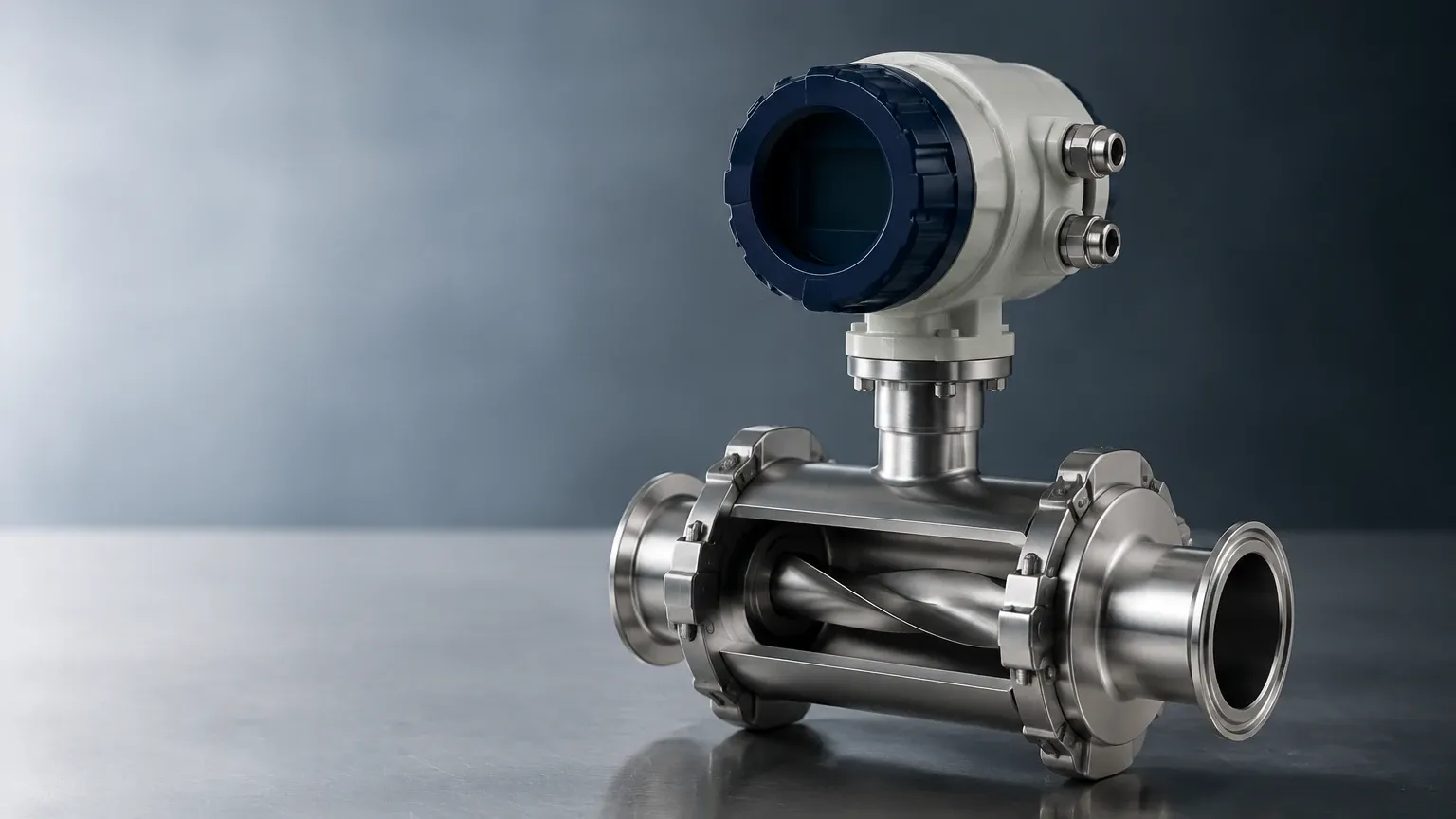
A: Yes, many Coriolis meters are designed with 316L stainless steel or Hastelloy tubes and polished surfaces, making them suitable for CIP (Clean-in-Place) processes in the pharmaceutical and food industries.
By understanding these principles and constraints, technical buyers and engineers can effectively implement mass flow technology to enhance process precision and operational reliability.


