Memosens Cps16d
Memosens Cps16d
In the landscape of industrial process automation, the accuracy of analytical data is as critical as the precision of physical measurements. The Memosens CPS16D represents a significant advancement in liquid analysis, combining pH and ORP (oxidation-reduction potential) measurement into a single, digital sensor. For process engineers and plant operators, understanding the underlying principles of this technology, its integration with other instrumentation such as level meters, and its specific application boundaries is essential for maintaining process stability and safety.
Measurement Principles of pH and ORP
To appreciate the utility of the Memosens CPS16D, one must first understand the potentiometric measurement principles it employs.
The pH Measurement Principle
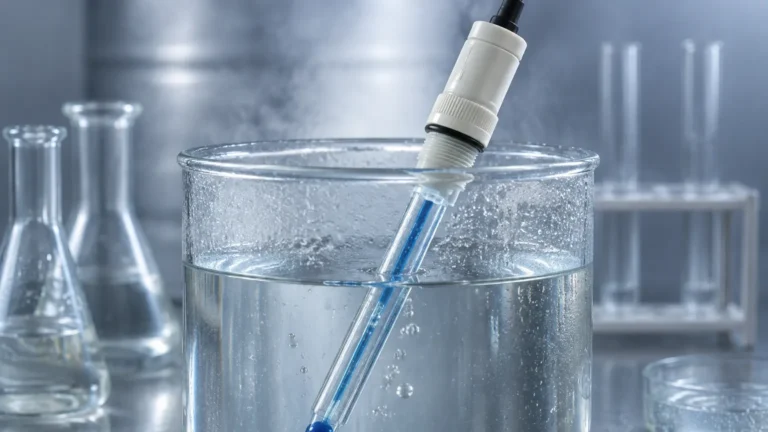
pH measurement is based on the Nernst equation. A pH-sensitive glass membrane develops an electrical potential relative to the hydrogen ion concentration (activity) in the medium. This potential is measured against a stable reference electrode. The CPS16D utilizes a combined electrode design where both the glass sensing electrode and the reference system are housed within a single sensor body. The potential difference between these two points is converted into a pH value, typically ranging from 0 to 14.
The ORP (Redox) Measurement Principle
ORP measurement determines the oxidizing or reducing capability of a solution. This is achieved by measuring the potential at a noble metal electrode (usually platinum or gold). In the CPS16D, a platinum element is integrated into the sensor. When the sensor is immersed in a medium, an exchange of electrons occurs between the platinum surface and the ions in the liquid, creating a measurable voltage. This is critical in applications like wastewater treatment (denitrification) or chemical bleaching, where the balance of chemical reactions must be monitored.
The Memosens Digital Advantage
The "Memosens" designation refers to a specific digital technology that has revolutionized how sensors communicate with transmitters. Traditional analog sensors transmit low-voltage signals over high-impedance cables, which are highly susceptible to electromagnetic interference, moisture, and corrosion at the connector points.
Inductive Signal Transfer
The Memosens CPS16D utilizes a non-contact, inductive coupling between the sensor head and the cable. This eliminates the metallic contacts that often fail in harsh industrial environments. Because the signal is digitized within the sensor head before transmission, it is immune to environmental noise and cable length limitations.
Data Storage and Calibration
Each Memosens CPS16D sensor contains an integrated microprocessor. This chip stores vital information, including:
* Calibration constants and slope.
* Total hours of operation.
* Operation under extreme temperatures.
* Serial number and manufacturing data.
This allows for "Lab-to-Process" calibration. Technicians can calibrate sensors in a controlled laboratory environment and then simply swap them out in the field. The transmitter automatically recognizes the new sensor and uploads the calibration data, significantly reducing downtime and improving safety by minimizing the time personnel spend in hazardous areas.
Integration with Level Measurement Systems
In complex process vessels, analytical measurements rarely exist in isolation. For instance, in a chemical reactor or a neutralizing tank, monitoring the pH and ORP is as vital as monitoring the liquid level. This is where the synergy between analytical sensors and industrial level measurement instruments becomes apparent.
Reliable level measurement, such as that provided by radar or ultrasonic sensors found on the Main Page, ensures that the analytical sensors remain properly submerged. If a tank level drops below the immersion depth of the CPS16D, the sensor will dry out, leading to erroneous readings and potential damage to the reference system. Conversely, if a level transmitter detects an overfill condition, the analytical data can help determine if the overflowing substance requires specific neutralization before entering secondary containment.
Integrating these data streams into a centralized PLC (Programmable Logic Controller) or DCS (Distributed Control System) allows for automated dosing. For example, a Welk ultrasonic level transmitter might monitor the volume of an effluent tank, while the Memosens CPS16D monitors the pH. The system can then calculate the exact amount of neutralizing agent required based on both the chemical concentration and the total volume of the liquid.
Technical Specifications and Selection Criteria
When selecting a Memosens CPS16D for a specific application, engineers must evaluate several technical parameters. The CPS16D is designed for standard applications in process technology and water treatment.
| Feature | Specification |
| :— | :— |
| Measurement Range | pH 0 to 14; ORP -1500 mV to +1500 mV |
| Process Temperature | 0 to 135 °C (32 to 275 °F) |
| Process Pressure | 0 to 16 bar (0 to 232 psi) absolute |
| Reference System | Ag/AgCl with PTFE ring diaphragm |
| Electrolyte | Highly stabilized gel |
| Materials | Glass, PTFE, Platinum, FKM (O-rings) |
| Connection | Memosens plug-in head |
Selection Considerations
1. Diaphragm Type: The CPS16D features a large-surface PTFE ring diaphragm. This is particularly effective in preventing clogging in media with high solids content or oily components.
2. Electrolyte Stability: The gel electrolyte used in this sensor is pressurized and stabilized, making it suitable for applications where pressure fluctuations occur.
3. Simultaneous Measurement: The ability to measure pH and ORP simultaneously with one sensor reduces the number of process penetrations required, lowering the risk of leaks and reducing installation costs.
Installation and Calibration Best Practices
Proper installation is paramount to the longevity and accuracy of the Memosens CPS16D.
Mounting Position
The sensor should be installed at an angle of at least 15° from the horizontal. This ensures that the air bubble inside the glass bulb does not interfere with the internal buffer, which would break the electrical circuit. In most industrial setups, an angle of 45° to 90° (vertical) is preferred.
Immersion Assemblies
For tank installations, the sensor is typically housed in an immersion assembly. This assembly protects the sensor from mechanical stress and allows it to be positioned at the correct depth. When used in conjunction with level measurement, the immersion depth should be set relative to the "Low Level" alarm setpoint of the level transmitter to ensure the sensor is always wetted.
Calibration Procedures
Calibration should be performed using standard buffer solutions (e.g., pH 4.0 and pH 7.0). Because the CPS16D is a Memosens device, the calibration is stored in the sensor itself.
1. Cleaning: Before calibration, clean the sensor with a suitable cleaning agent (e.g., dilute HCl for lime scale or detergents for oils).
2. Buffer Immersion: Immerse the sensor in the first buffer and wait for the temperature to stabilize.
3. Adjustment: Confirm the value on the transmitter or calibration software.
4. Repeat: Rinse with deionized water and repeat for the second buffer.
Limitations and Operational Boundaries
While the Memosens CPS16D is a robust instrument, it has specific limitations that must be recognized to avoid premature failure.
* Hydrofluoric Acid (HF): Like all glass-membrane pH sensors, the CPS16D is susceptible to attack by hydrofluoric acid. Even low concentrations of HF will dissolve the glass membrane over time.
* Extreme Alkalinity: In very high pH ranges (above pH 12), the "sodium error" can occur, where the sensor responds to sodium ions as if they were hydrogen ions, leading to a lower-than-actual pH reading.
* Dehydration: If the sensor is left in a dry environment, the hydration layer on the glass membrane will disappear. While it can often be regenerated by soaking in KCl solution, prolonged dehydration can permanently damage the reference system.
* Temperature Shocks: Rapid changes in temperature (thermal shock) can cause the glass bulb to crack. Process transitions should be managed to allow the sensor to adjust gradually.
Maintenance Guidance
Maintenance intervals for the CPS16D depend heavily on the process medium. In clean water applications, calibration may only be required every few months. In heavy chemical processing, weekly cleaning and calibration might be necessary.
Maintenance Checklist:
* Visual Inspection: Check for cracks in the glass bulb or fouling on the PTFE diaphragm.
* Response Time: If the sensor takes an unusually long time to stabilize during calibration, the diaphragm may be clogged or the electrolyte may be depleted.
* Cable Check: Although Memosens cables are robust, inspect the outer jacket for chemical degradation or mechanical wear.
Frequently Asked Questions (FAQ)
Q: Can the Memosens CPS16D be used in hazardous areas?
A: Yes, when used with an appropriately rated Memosens cable and an intrinsically safe transmitter, the CPS16D is suitable for use in explosive atmospheres (ATEX, FM, CSA approvals).
Q: How long does a CPS16D sensor typically last?
A: Lifespan varies by application. In mild water treatment, it can last 12 to 24 months. In high-temperature, high-pressure chemical processes, the lifespan may be reduced to 3 to 6 months.
Q: Is it possible to use the CPS16D with an analog transmitter?
A: No. The CPS16D is a purely digital sensor and requires a transmitter that supports the Memosens protocol.
Q: How does temperature compensation work in the CPS16D?
A: The sensor includes an integrated NTC (Negative Temperature Coefficient) thermistor. This measures the process temperature at the point of pH measurement, allowing the transmitter to automatically compensate for the temperature-dependent slope of the Nernst equation.
Q: What should I do if the ORP reading is drifting?
A: Drifting ORP readings are often caused by a contaminated platinum surface. Cleaning the platinum element with a non-abrasive cloth and a mild cleaning agent usually resolves the issue. If the drift persists, check the reference system for poisoning.
By understanding the technical nuances of the Memosens CPS16D and ensuring its proper integration with physical measurement tools like level meters, industrial facilities can achieve a higher standard of process control and operational efficiency. For further information on integrating analytical and level measurement solutions, engineers are encouraged to review product options and application support on the Welk Main Page.