Metering Skids
Metering Skids
In modern industrial processing, the accuracy of fluid measurement is paramount for both operational efficiency and financial accountability. Metering skids represent the pinnacle of integrated fluid management, providing a pre-engineered, modular solution for measuring the flow, level, and quality of liquids and gases. These systems are essential in sectors such as oil and gas, chemical processing, and water treatment, where precision is not merely a preference but a regulatory and economic requirement.
As a specialized manufacturer of industrial level measurement instruments, Welk provides the critical sensor technology—including radar level meters, ultrasonic sensors, and hydrostatic transmitters—that ensures these skids operate with maximum reliability. This guide explores the engineering principles, selection criteria, and installation best practices for metering skids, with a specific focus on the integration of level measurement technologies.
The Role of Metering Skids in Industrial Automation
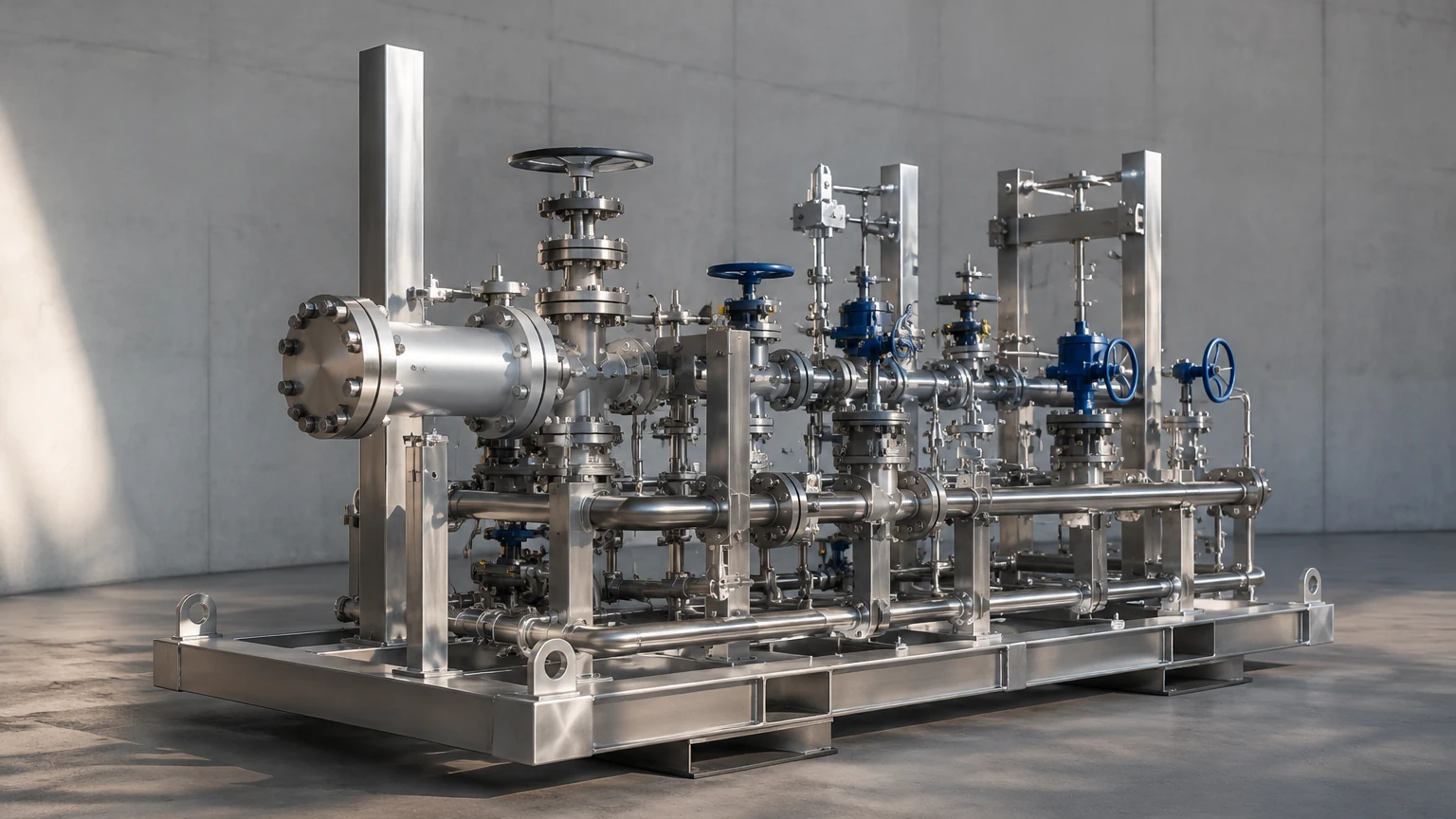
A metering skid is a self-contained, frame-mounted system designed to measure the quantity and quality of fluids as they move through a process line. Unlike field-assembled systems, these skids are fabricated in a controlled factory environment, allowing for rigorous testing before they reach the site. This modular approach reduces onsite construction time and ensures that all components—piping, valves, flow meters, level sensors, and control systems—are perfectly synchronized.
While flow measurement is often the primary function of a metering skid, level measurement plays a vital supporting role. In many applications, such as chemical dosing or custody transfer from storage tanks, the level of the fluid in a buffer tank or separator is a critical variable. Accurate level data prevents pump cavitation, manages inventory, and provides secondary verification of flow totals.
Core Measurement Principles
Before selecting a configuration for metering skids, it is essential to understand the underlying physics of the measurement technologies employed. In the context of level measurement within these systems, three primary principles dominate: radar, ultrasonic, and hydrostatic pressure.
1. Radar Level Measurement (FMCW and Pulse)
Radar level meters operate on the principle of electromagnetic wave reflection. The sensor emits a high-frequency signal (typically in the GHz range) toward the liquid surface. When the signal hits the surface, it is reflected back to the antenna.
* Frequency Modulated Continuous Wave (FMCW): This technology varies the frequency of the emitted signal. By measuring the frequency difference between the emitted and received signal, the system calculates the distance with extreme precision (often within ±1 mm). This is the preferred method for high-accuracy custody transfer applications within metering skids.
* Pulse Radar: This method measures the "Time of Flight" (ToF) of a short microwave pulse. While slightly less precise than FMCW, it is highly robust and energy-efficient.
2. Ultrasonic Level Measurement
Ultrasonic sensors use sound waves rather than electromagnetic waves. The transducer emits a mechanical sound pulse that travels through the air, reflects off the liquid surface, and returns. The distance is calculated based on the speed of sound. Because the speed of sound is affected by air temperature, these sensors include integrated temperature compensation. This technology is ideal for water treatment skids where the media is non-volatile and the environment is relatively stable.
3. Hydrostatic Level Measurement
This principle relies on the relationship between liquid height and the pressure exerted at the bottom of a vessel. A hydrostatic transmitter measures the head pressure of the liquid column. Since pressure is directly proportional to the height and density of the fluid ($P = \rho gh$), the level can be determined accurately. This is a contact-based method often used in deep tanks or pressurized vessels within a skid assembly.
Integration of Level Sensors in Metering Skids
In a complex metering skid, level sensors are rarely used in isolation. They are integrated into a broader control architecture to ensure process safety and data integrity.
Inventory Management and Balancing
In custody transfer skids, level meters provide a "check" against flow meter readings. For instance, if a flow meter indicates that 5,000 liters have been pumped out of a tank, the radar level meter on that tank should show a corresponding drop in volume. Any discrepancy can signal a leak, a calibration error, or air entrainment in the lines.
Pump Protection
Many metering skids include booster or dosing pumps. If the fluid level in the supply vessel drops too low, the pump may run dry, leading to catastrophic mechanical failure. Level switches or continuous level transmitters provide the "Low-Low" alarm signals required to trigger an emergency shutdown (ESD).
Phase Separation
In oil and gas metering skids, separators are used to divide oil, water, and gas. Level sensors are required to detect the interface between these different fluids, ensuring that each phase is directed to the correct metering stream.
Practical Selection Table for Level Instruments
Choosing the right instrument for a metering skid depends on the media, environmental conditions, and required accuracy. The following table provides a comparison of the primary technologies offered by Welk.
| Technology | Accuracy | Range (m) | Media Compatibility | Pressure/Temp Limits | Best Use Case |
| :— | :— | :— | :— | :— | :— |
| 80GHz Radar | ±1 mm | Up to 120m | Corrosive, volatile, foam-prone | High (up to 160 bar / 250°C) | Custody transfer, chemical skids |
| Ultrasonic | ±0.25% | 0.5m – 20m | Water, wastewater, simple acids | Low (Atmospheric) | Water treatment, open channel skids |
| Hydrostatic | ±0.1% | 1m – 200m | Slurries, oils, water | Medium (up to 40 bar) | Deep tank inventory, ballast skids |
| Magnetic Gauge| ±5 mm | 0.3m – 6m | Clean liquids, LPG | High (up to 320 bar) | Visual local indication, high-pressure gas |
For a comprehensive look at how these instruments integrate into larger systems, you can Review product options and application support on our main page.
Installation Considerations for Metering Skids
The performance of a metering skid is highly dependent on correct installation. Even the most advanced radar level meter will fail if it is poorly positioned.
1. Nozzle Geometry: For radar and ultrasonic sensors, the mounting nozzle should be short and wide enough to prevent the signal from reflecting off the nozzle walls. A common rule of thumb is that the nozzle height should not exceed its diameter.
2. Obstruction Clearance: Sensors must be placed away from internal tank structures like ladders, heating coils, or agitators. These objects create "false echoes" that can confuse the signal processing algorithm.
3. Stilling Wells: In skids where the liquid surface is turbulent due to high flow rates or mixing, a stilling well (a perforated pipe) should be used. This provides a calm surface for the level meter to measure, ensuring a stable reading.
4. Vibration Isolation: Metering skids often contain pumps and valves that generate significant vibration. Level sensors should be mounted using vibration-dampening gaskets or on sections of the skid that are mechanically isolated from the primary vibration sources.
5. Grounding and Shielding: To prevent electromagnetic interference (EMI) from affecting the 4-20mA or Modbus signals, all instrumentation cabling must be properly shielded and grounded at a single point.
Limitations and Common Risks
While metering skids are robust, engineers must be aware of certain limitations:
* Foam and Steam: Excessive foam can absorb ultrasonic and radar signals, leading to signal loss. In these cases, high-frequency 80GHz radar or guided wave radar is often necessary.
* Media Density Changes: Hydrostatic level transmitters are sensitive to changes in fluid density. If the skid is used for different fluids without recalibration, the level reading will be inaccurate.
* Ambient Temperature Extremes: In outdoor installations, extreme cold can affect the electronics of the sensors. Welk recommends using integrated heaters or sunshades for instruments in harsh climates.
* Communication Latency: In high-speed dosing skids, the update rate of the level sensor must be fast enough to keep pace with the control loop. Standard sensors may have a damping factor that needs to be adjusted for real-time control.
Frequently Asked Questions (FAQs)
Q: Can a metering skid handle multiple types of fluids?
A: Yes, but the instrumentation must be compatible with all fluids. For example, if a skid handles both acidic and alkaline chemicals, the wetted parts of the level and flow sensors must be made of resistant materials like PTFE or Hastelloy.
Q: What is the difference between a flow meter and a metering skid?
A: A flow meter is a single component that measures velocity or mass. A metering skid is a complete system that includes the flow meter, level sensors, valves, piping, and the PLC/control panel required to manage the entire process.
Q: How often should the level sensors in a skid be calibrated?
A: Most industrial level meters are designed for long-term stability. However, for custody transfer applications, annual calibration is typically required to comply with weights and measures regulations.
Q: Are radar level meters safe for explosive environments?
A: Yes, Welk provides radar and ultrasonic sensors with ATEX, IECEx, and CNEx certifications for use in Zone 0, 1, and 2 hazardous areas, which are common in oil and gas metering skids.
Conclusion
Metering skids are the backbone of precision fluid handling in the B2B industrial sector. By integrating advanced level measurement technologies with robust flow control, these systems provide the reliability and accuracy required for modern process automation. Whether you are managing water treatment or high-value chemical dosing, selecting the right level sensor is the first step toward a successful skid installation. For detailed specifications and engineering support regarding level measurement components, visit our Main Page to explore our full range of solutions.