Micropilot Fmr62
Micropilot Fmr62
In the landscape of industrial process automation, the demand for high-precision, non-contact level measurement has led to significant technological advancements. Among these, the Micropilot FMR62 stands as a specialized instrument designed for aggressive liquids and applications requiring high-frequency radar technology. As an 80GHz radar sensor, it addresses specific engineering challenges that traditional 6GHz or 26GHz sensors often struggle to resolve, particularly in environments with complex internal geometries or extreme process conditions.
Measurement Principles: The Power of 80GHz FMCW
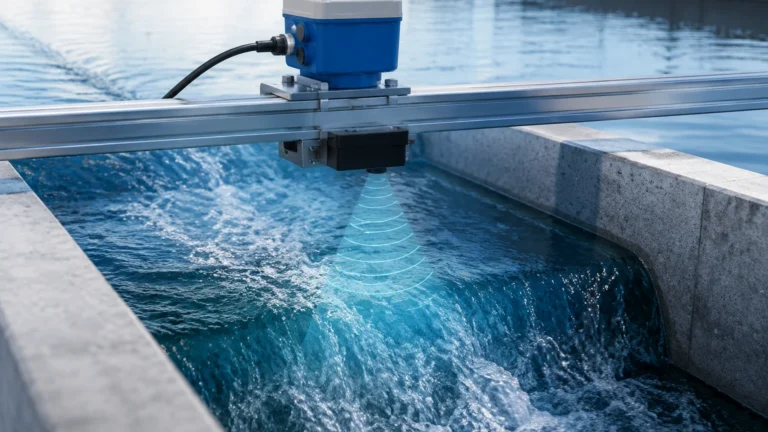
To understand the application of the Micropilot FMR62, one must first understand the underlying physics of Frequency Modulated Continuous Wave (FMCW) radar. Unlike pulse radar, which measures the time-of-flight of a single microwave burst, FMCW radar transmits a continuous signal with a frequency that changes linearly over time—a process known as a "sweep."
When the transmitted signal hits the surface of the medium, it is reflected back to the sensor. Because the transmitter is constantly changing its frequency, there is a measurable difference between the frequency being transmitted at that moment and the frequency of the reflected signal that has just returned. This difference, known as the "beat frequency," is directly proportional to the distance between the sensor and the material surface.
The Advantage of High Frequency
The transition to the 80GHz W-band frequency offers several technical advantages:
1. Narrow Beam Angle: The beam angle of a radar sensor is inversely proportional to its frequency and the size of its antenna. At 80GHz, the Micropilot FMR62 can achieve beam angles as narrow as 3 to 8 degrees. This allows the signal to bypass internal tank obstructions such as agitators, heating coils, and ladders without generating false echoes.
2. Smaller Process Connections: High-frequency waves allow for smaller antenna designs. This means high-precision radar can be installed on process connections as small as G¾" or 1", which was previously impossible with lower-frequency units that required large horn antennas to achieve focus.
3. Improved Sensitivity: 80GHz radar provides better reflection from media with low dielectric constants (DK). It also performs more reliably in the presence of surface turbulence or foam, as the shorter wavelength is less likely to be completely absorbed or scattered by minor surface irregularities.
Key Evaluation Criteria for Micropilot FMR62
When evaluating the Micropilot FMR62 for a specific project, engineers must consider several critical factors to ensure the instrument meets the operational demands of the facility. This model is specifically engineered for aggressive media and high-temperature/high-pressure applications.
1. Media Compatibility
The FMR62 often features a flush-mounted, PTFE-filled horn antenna or a drip-off antenna design. This makes it highly resistant to corrosive chemicals. The materials in contact with the process—typically PTFE, 316L stainless steel, or specialized alloys—must be cross-referenced with the chemical properties of the liquid being measured.
2. Process Conditions
The instrument is designed to withstand extreme environments. It can operate in temperatures ranging from -40°C to +450°C and pressures up to 160 bar (16 MPa). This makes it suitable for reactors, storage tanks, and buffer tanks in the petrochemical and chemical industries.
3. Accuracy and Range
With a measuring range of up to 80 meters and a standard accuracy of ±1 mm, the FMR62 is often used in applications where inventory control and precise process management are paramount. For engineers seeking a broader range of industrial measurement technologies, including ultrasonic and hydrostatic alternatives, the Main Page provides a comprehensive catalog of professional-grade instruments.
Technical Selection Table
| Feature | Micropilot FMR62 Specifications |
| :— | :— |
| Measurement Principle | FMCW Radar (80 GHz) |
| Max. Measuring Range | 80 m (262 ft) |
| Measurement Accuracy | ±1 mm (0.04 in) |
| Process Temperature | -40 to +450 °C (-40 to +842 °F) |
| Process Pressure | Vacuum to 160 bar (2,320 psi) |
| Main Material (Wetted) | PTFE, 316L, Alloy C22 |
| Beam Angle | 3° (with 80mm antenna) to 8° (with 40mm antenna) |
| Output | 4…20 mA HART, PROFIBUS PA, FOUNDATION Fieldbus |
Installation Considerations
Proper installation is the most critical factor in the long-term reliability of a radar level transmitter. While the 80GHz frequency of the Micropilot FMR62 is more forgiving than lower frequencies, specific guidelines must be followed.
* Nozzle Height and Diameter: The antenna should ideally extend beyond the nozzle to prevent signal interference from the nozzle edge. However, due to the narrow beam of the 80GHz signal, the FMR62 can often be installed in longer nozzles than 26GHz units, provided the nozzle is smooth and free of burrs.
* Positioning: The sensor should not be mounted in the center of a tank (to avoid multiple reflections from the tank walls) or too close to the wall (to avoid signal attenuation). A common rule of thumb is to place the sensor at 1/6th of the tank diameter from the wall.
* Avoiding Obstructions: Even with a 3-degree beam, the signal path should be kept clear of filling streams and internal structures. If an obstruction is unavoidable, the transmitter’s software allows for "envelope curve" mapping to mask out static interference echoes.
* Orientation: For tanks with agitators, the sensor should be oriented so that the radar beam hits the surface of the liquid where there is the least amount of turbulence, and the polarization of the signal should be adjusted to minimize the impact of the agitator blades.
Limitations and Common Risks
Despite its advanced capabilities, the Micropilot FMR62 is not a universal solution for every level measurement scenario. Engineers should be aware of the following limitations:
* Extremely Low Dielectric Constants: While 80GHz is sensitive, media with a dielectric constant (εr) below 1.4 may require a guided wave radar (GWR) or a bypass pipe to ensure a strong enough return signal.
* Heavy Foam: While thin layers of foam are often transparent to 80GHz waves, dense, thick foam (like that found in some fermentation processes) can absorb the radar signal entirely, leading to a loss of echo. In these cases, mechanical or hydrostatic methods might be more reliable.
* Heavy Build-up: Although the PTFE flush-mount design minimizes sticking, extreme crystallization or heavy coating on the antenna face will eventually attenuate the signal. Regular inspection or the use of an integrated air purge system may be necessary.
* Dust and Vapor: While radar is generally unaffected by dust and vapor compared to ultrasonic sensors, extremely high concentrations of steam or dust can cause signal scattering at 80GHz. In such specialized cases, consulting with a manufacturer like Welk for a customized frequency solution is recommended.
Integration and Digital Transformation
Modern iterations of the Micropilot FMR62 often include features like Heartbeat Technology, which provides continuous self-diagnostics and verification without interrupting the process. This aligns with Industry 4.0 trends, allowing maintenance teams to move from reactive to predictive maintenance strategies. The data can be integrated into higher-level systems via HART, PROFIBUS, or FOUNDATION Fieldbus, providing not just level data but also device health status.
For industrial operators looking to optimize their entire facility, it is often beneficial to compare radar solutions with other technologies. You can Review product options and application support to see how different measurement principles, such as magnetic level gauges or ultrasonic sensors, can complement radar in a multi-layered safety and monitoring system.
Frequently Asked Questions (FAQ)
Q: Can the Micropilot FMR62 be used for solids?
A: While the FMR62 is optimized for liquids, 80GHz technology is also used in the FMR67, which is the sister model specifically designed for bulk solids. The FMR62 can measure liquids with some suspended solids, but for silos and powders, a solids-specific version is preferred.
Q: Does the sensor require recalibration after installation?
A: Radar sensors are generally factory-calibrated. However, a "field calibration" or "empty tank mapping" is highly recommended during commissioning to account for the specific geometry and internal obstructions of the vessel.
Q: How does 80GHz radar handle condensation?
A: The FMR62 typically uses a drip-off antenna design or a flush-mounted PTFE antenna. The high frequency and the surface tension of the PTFE help prevent water droplets from forming a continuous film, which minimizes the impact of condensation on the signal.
Q: Is it suitable for SIL-rated safety loops?
A: Yes, the Micropilot FMR62 is typically developed according to IEC 61508 and is suitable for use in SIL2 (standard) or SIL3 (with homogeneous redundancy) safety systems.
By carefully selecting the appropriate antenna type and process connection, and by adhering to rigorous installation standards, the Micropilot FMR62 provides a robust solution for the most demanding liquid level measurement tasks in modern industry.