Water Level Sensors for Water Tanks
Water Level Sensors for Water Tanks
In industrial process control and water management, the selection of appropriate water level sensors for water tanks is a critical engineering decision. Whether the application involves municipal water treatment, chemical storage, or industrial cooling systems, the accuracy and reliability of level data directly impact operational efficiency and safety. This guide examines the primary measurement principles, technical specifications, and selection criteria necessary for implementing robust level monitoring solutions.
Understanding Measurement Principles for Tank Level Monitoring
Before selecting a specific instrument, it is essential to understand the physics behind how different sensors interact with the liquid medium. Level measurement is generally categorized into contact and non-contact methods.
Hydrostatic Pressure Principle
The hydrostatic method relies on the relationship between the height of a liquid column and the pressure exerted at the base. The formula $P = \rho \cdot g \cdot h$ (where $P$ is pressure, $\rho$ is liquid density, $g$ is gravity, and $h$ is height) allows for precise level calculation. Hydrostatic transmitters are typically submerged at the bottom of the tank or mounted to a flange at the base. These sensors are highly effective for deep reservoirs and vented tanks where the liquid density remains constant.
Ultrasonic Time-of-Flight (ToF)
Ultrasonic sensors emit high-frequency sound waves that travel through the air, reflect off the water surface, and return to the transducer. By measuring the time taken for the pulse to return, the sensor calculates the distance to the liquid. As a non-contact technology, it is ideal for corrosive or dirty water that might damage submerged components. However, it is sensitive to environmental factors such as temperature fluctuations and surface foam.
Radar (Microwave) Technology
Radar level meters operate similarly to ultrasonic sensors but use electromagnetic waves (microwaves) instead of sound. These waves travel at the speed of light and are largely unaffected by air temperature, pressure, or vapor. High-frequency radar (e.g., 80GHz) offers a narrow beam angle, which is particularly useful in tanks with internal obstructions like agitators or ladders.
Magnetic and Float Principles
Mechanical level measurement often utilizes a float containing a magnet. As the water level changes, the float moves along a stem or within a bypass chamber. This movement triggers reed switches or interacts with a magnetostrictive wire to provide a level signal. These are often used for visual indication and point-level control.
Key Technologies for Water Level Sensors for Water Tanks
When evaluating water level sensors for water tanks, engineers must choose a technology that aligns with the tank's physical structure and the water's characteristics.
1. Submersible Hydrostatic Transmitters
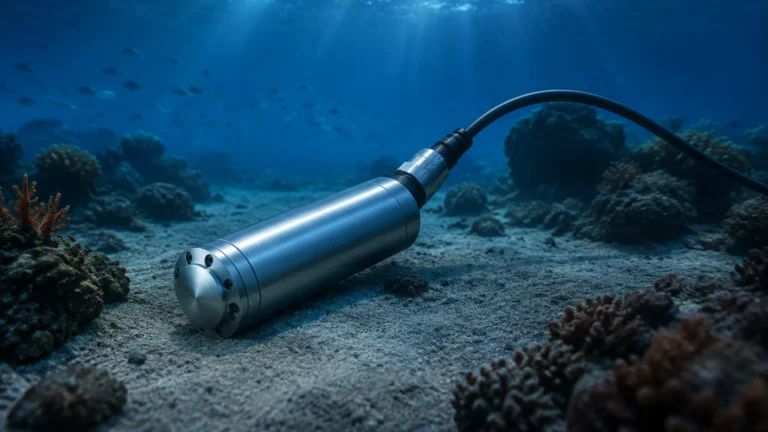
These are the most common choice for deep boreholes and large storage tanks. They consist of a sensing element protected by a stainless steel housing. A critical component is the vented cable, which allows the sensor to compensate for changes in atmospheric pressure, ensuring that the measurement reflects only the liquid head pressure.
2. Non-Contact Ultrasonic Sensors
For tanks up to 15 or 20 meters in height, ultrasonic sensors provide a cost-effective, maintenance-free solution. Since they do not touch the water, they are not subject to scaling or corrosion. They are frequently used in wastewater sumps and plastic chemical tanks.
3. High-Frequency Radar Level Meters
Radar is the premium choice for precision. Modern 80GHz radar sensors can measure levels with accuracy up to ±2mm. They are particularly effective in enclosed metal tanks where condensation or steam might interfere with ultrasonic signals. Their narrow beam allows them to be installed in small nozzles without interference from the tank walls.
4. Capacitance Level Sensors
These sensors measure the change in capacitance between two electrodes (or one electrode and the tank wall) as the water level rises. While less common for clean water, they are robust in high-pressure or high-temperature industrial water applications.
Selection Criteria: Matching Sensors to Tank Applications
Choosing the right sensor requires a thorough analysis of the application environment. The following factors should be confirmed during the specification phase:
* Tank Geometry and Material: Is the tank open to the atmosphere or pressurized? Is it made of plastic (allowing for through-wall measurement in some cases) or metal? The presence of internal baffles or cooling coils will dictate whether a narrow-beam radar or a submersible sensor is required.
* Water Characteristics: Clean potable water is easy to measure. However, if the tank contains wastewater with solids, foam, or fluctuating density, non-contact radar or robust hydrostatic sensors are preferred.
* Measurement Range: For shallow tanks (under 2 meters), ultrasonic sensors may have a "dead zone" (blocking distance) that prevents measurement near the top. For very deep tanks (over 30 meters), radar or hydrostatic sensors are more appropriate.
* Output and Integration: Most industrial sensors provide a 4-20mA analog signal, often with HART protocol for digital diagnostics. For remote sites, RS485 (Modbus) or wireless IoT integration may be necessary.
Technical Comparison and Selection Table
The following table provides a general comparison of the most common technologies used for water tank level monitoring.
| Feature | Hydrostatic | Ultrasonic | Radar (80GHz) | Magnetic Gauge |
| :— | :— | :— | :— | :— |
| Measurement Type | Contact (Submerged) | Non-Contact | Non-Contact | Contact (Bypass) |
| Typical Accuracy | ±0.25% to ±0.5% | ±0.25% | ±2mm | ±5mm to ±10mm |
| Max Range | 200m+ | 20m | 120m | 6m (Standard) |
| Media Influence | Density sensitive | Temp/Vapor sensitive | Largely unaffected | Density sensitive |
| Installation | Top-down (cable) | Top-mount (thread/flange) | Top-mount (thread/flange) | Side-mount (flange) |
| Maintenance | Moderate (cleaning) | Low | Very Low | Low to Moderate |
Installation Guidelines and Best Practices
Proper installation is as important as sensor selection. Even the most advanced radar level meter will fail if positioned incorrectly.
1. Avoid the Fill Stream: Never install a sensor directly in the path of the incoming water. The turbulence and air entrainment will cause erratic readings and may physically damage submerged sensors.
2. Mind the Dead Zone: For ultrasonic and radar sensors, ensure the maximum water level does not enter the sensor's blocking distance (typically 0.25m to 0.5m). If necessary, use a mounting bracket to raise the sensor above the tank top.
3. Stilling Wells: In tanks with high turbulence or heavy foam, installing the sensor inside a stilling well (a vertical pipe) can provide a calm surface for more accurate measurement.
4. Cable Protection: For hydrostatic sensors, ensure the vented cable is not kinked or blocked. Use a junction box with a desiccant cartridge to prevent moisture from entering the vent tube, which can lead to sensor drift or failure.
5. Orientation: Ensure ultrasonic and radar transducers are mounted perfectly perpendicular to the liquid surface to maximize signal return.
Limitations and Potential Challenges in Level Measurement
While modern instrumentation is highly reliable, certain conditions present challenges:
* Foam: Heavy surface foam absorbs ultrasonic waves and can scatter radar signals. In these cases, hydrostatic sensors are often the most reliable choice as they measure the weight of the liquid regardless of surface conditions.
* Vapor and Condensation: In hot water tanks, condensation can build up on the face of non-contact sensors. Many Welk radar sensors feature specialized antenna designs (like PTFE drop antennas) to shed condensation and maintain signal integrity.
* Vacuum Conditions: Hydrostatic sensors designed for atmospheric tanks will provide false readings in vacuum-sealed tanks unless a differential pressure setup is used.
* Scaling: In hard water applications, calcium deposits can build up on submerged sensors or floats. Regular maintenance and cleaning schedules are required to ensure the sensing elements move freely or transmit correctly.
Frequently Asked Questions (FAQs)
Q: Can I use one sensor for different types of liquids?
A: Non-contact sensors like radar are versatile because they don't touch the liquid. However, hydrostatic sensors are calibrated for specific densities. If you switch from water to a heavier liquid, the hydrostatic sensor must be recalibrated.
Q: How do I handle level measurement in a tank with an agitator?
A: Radar with a narrow beam angle is the best choice to "miss" the agitator blades. Alternatively, a hydrostatic sensor is unaffected by the mechanical movement above it, provided the sensor is secured so it doesn't swing.
Q: What is the typical lifespan of a water level sensor?
A: In clean water applications, a high-quality sensor from a professional manufacturer like Welk can last 7 to 10 years or more. Submersible sensors in harsh wastewater may require replacement or service every 3 to 5 years.
Q: Is wireless transmission available for these sensors?
A: Yes, many modern systems integrate 4-20mA sensors with wireless gateways using LoRaWAN, NB-IoT, or cellular networks for remote monitoring of water tanks in agricultural or distributed municipal settings.
Conclusion
Selecting the right water level sensors for water tanks requires balancing technical requirements with budget constraints. For most standard industrial applications, ultrasonic and hydrostatic sensors offer an excellent balance of cost and performance. For high-precision requirements or challenging environments involving steam and narrow spaces, 80GHz radar technology is the industry standard.
As a professional manufacturer, Welk provides a comprehensive range of level measurement instruments tailored to these diverse needs. To explore specific product specifications or consult with an applications engineer regarding your tank configuration, please visit our Main Page for detailed technical documentation and support.