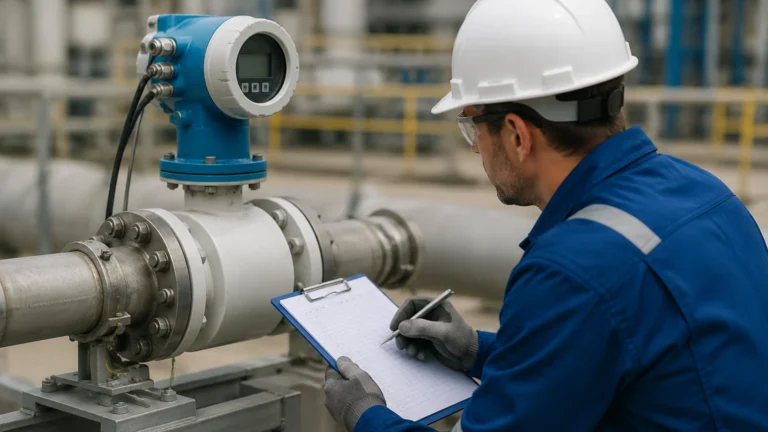
Nir Process Analyzer
Nir Process Analyzer
In modern industrial automation, the ability to monitor chemical composition in real-time is as critical as monitoring physical parameters like pressure, temperature, and liquid level. A Near-Infrared (NIR) process analyzer is a sophisticated analytical instrument used to determine the chemical and physical properties of materials directly within a production line. Unlike laboratory-based analysis, which requires manual sampling and time-consuming testing, NIR process analyzers provide continuous data, enabling immediate process adjustments and tighter quality control.
This guide explores the fundamental principles of NIR spectroscopy, the hardware configurations used in industrial environments, and how these systems integrate with other process instruments, such as those found on the Main Page of industrial measurement catalogs.
Measurement Principles of NIR Spectroscopy
To effectively select and implement an nir process analyzer, it is essential to understand the underlying physics of near-infrared spectroscopy. NIR radiation occupies the electromagnetic spectrum between the visible and mid-infrared regions, typically defined from 780 nm to 2500 nm (12,800 to 4,000 cm⁻¹).
Molecular Vibrations and Overtones
NIR spectroscopy primarily measures the vibrations of molecular bonds, specifically the overtones and combination bands of fundamental vibrations. The most common bonds analyzed are those involving hydrogen, such as C-H, O-H, N-H, and S-H. When NIR light interacts with a sample, specific wavelengths are absorbed based on the chemical structure and concentration of the molecules present.
1. Absorption: The energy of the photon matches the energy required to transition a molecule to a higher vibrational state. This results in an absorption spectrum that acts as a "fingerprint" for the material.
2. Scattering: In solids and slurries, light is scattered by particles. Process analyzers must account for this through advanced optical designs and mathematical algorithms.
3. Transmission and Reflectance: Depending on the sample's opacity, the analyzer may measure light that passes through the sample (transmission) or light that bounces off the surface (reflectance).
Quantitative Analysis and Chemometrics
Because NIR spectra consist of broad, overlapping peaks, they are rarely interpreted by simple visual inspection. Instead, they require chemometrics—the application of mathematical and statistical methods—to extract quantitative data. A calibration model is developed by correlating NIR spectral data with known laboratory reference values (e.g., moisture content, protein levels, or chemical concentration). Once calibrated, the nir process analyzer can predict these values in real-time with high precision.
Hardware Configurations for Industrial NIR Analysis
Industrial environments demand robust hardware capable of withstanding vibration, temperature fluctuations, and corrosive atmospheres. NIR process analyzers are generally categorized by their optical bench design.
Filter-Based Analyzers
These use discrete optical filters to select specific wavelengths. They are highly robust and cost-effective but are limited to measuring a few specific parameters. They are often used for simple moisture or fat measurements in food processing.
Diode Array (DA) Spectrometers
DA systems use a stationary grating to disperse light across a fixed array of detectors (usually InGaAs). Because they have no moving parts, they are extremely fast and vibration-resistant, making them ideal for high-speed conveyor belts or turbulent liquid streams.
Fourier Transform (FT-NIR) Spectrometers
FT-NIR instruments use an interferometer to collect spectral data. They offer superior wavelength accuracy and high resolution, which is necessary for complex chemical mixtures. While traditionally more sensitive to vibration, modern industrial versions are ruggedized for plant-floor installation.
Acousto-Optic Tunable Filter (AOTF)
AOTF analyzers use a crystal that changes its optical properties in response to radio frequency (RF) signals. This allows for rapid, electronic wavelength selection without moving parts, providing a balance between speed and flexibility.
Synergy Between Composition Analysis and Level Measurement
In a comprehensive process control strategy, chemical analysis and physical measurement must work in tandem. While an nir process analyzer monitors *what* is in the tank, level meters—such as the radar and ultrasonic sensors detailed on the Main Page—monitor *how much* is in the tank.
Integrated Process Control
In a chemical reactor, for example, a Welk radar level meter provides precise data on the volume of reactants to prevent overfilling and manage inventory. Simultaneously, an NIR probe inserted into the reactor monitors the conversion rate of the reaction. If the NIR analyzer detects that the reaction has reached completion, the control system can trigger the discharge valve, regardless of the level. Conversely, if the level meter indicates a sudden drop in volume due to a leak, the NIR data can help determine if the leakage has altered the concentration of the remaining batch.
Wastewater and Environmental Monitoring
In water treatment, hydrostatic level transmitters monitor the depth of basins, while NIR analyzers can be used to detect organic loading or oil-in-water concentrations. Combining these data points allows operators to optimize chemical dosing and ensure environmental compliance.
Selection Criteria for NIR Process Analyzers
Choosing the right nir process analyzer requires an evaluation of the sample matrix, the installation environment, and the required precision. The following table provides a comparison of common configurations.
| Feature | Transmission Probe | Reflectance Head | Transflectance Probe |
| :— | :— | :— | :— |
| Application | Clear liquids, gases | Solids, powders, slurries | Opaque liquids, emulsions |
| Pathlength | Fixed (1 mm to 20 mm) | Surface interaction | Variable/Fixed |
| Installation | In-line (Pipe) | Over-belt or Flange | In-tank or Pipe |
| Maintenance | Moderate (Fouling) | Low | Moderate |
| Complexity | High (Requires clear path) | Moderate | High |
Key Evaluation Factors
* Wavelength Range: Ensure the analyzer covers the specific absorption bands of your target molecules (e.g., 1400-1500 nm for O-H bonds in moisture).
* Optical Interface: For liquids, fiber-optic probes are common. For solids on a conveyor, non-contact reflectance heads are preferred.
* Environmental Rating: Analyzers installed in hazardous areas must meet ATEX or IECEx requirements. For outdoor installations, NEMA 4X or IP66 ratings are necessary to protect against dust and moisture.
* Communication Protocols: The analyzer should support industrial standards like Modbus, OPC UA, or 4-20 mA HART to integrate with the facility's PLC or DCS.

Installation and Engineering Best Practices
Successful implementation of an nir process analyzer depends heavily on proper installation and sampling representative of the entire process stream.
Probe Placement
The optical probe must be placed where the product is well-mixed and flowing. In pipes, this is typically after a pump or a static mixer. Avoid areas where air bubbles or sediment can accumulate, as these will interfere with the optical path and cause "noise" in the spectral data.
Temperature and Pressure Management
NIR spectra are sensitive to temperature changes, which can cause shifts in absorption peaks. Many modern analyzers include internal temperature compensation, but it is often best to install the probe in a temperature-controlled bypass loop if the process fluid fluctuates significantly. Similarly, ensure the probe's pressure rating exceeds the maximum possible process pressure (e.g., 16 bar or 40 bar depending on the application).
Fiber Optic Cables
In many setups, the analyzer's electronics are housed in a controlled environment, while the probe is located in the process line. Fiber optic cables connect the two. These cables must be protected by armored conduit to prevent physical damage and should be kept within their specified bend radius to avoid signal loss.
Limitations and Maintenance Requirements
While powerful, the nir process analyzer is not a universal solution. It has specific limitations that engineers must account for during the design phase.
1. Sensitivity to Matrix Changes: If the background composition of the process changes significantly (e.g., a new raw material supplier), the chemometric model may need to be updated.
2. Detection Limits: NIR is generally not suitable for trace analysis (parts per billion). It is most effective for concentrations above 0.1%.
3. Window Fouling: In liquid applications, the buildup of film or scale on the optical window will degrade the signal. Automated cleaning systems (using high-pressure air or solvent) or mechanical wipers are often required.
4. Calibration Maintenance: Unlike a level meter that might only need an annual zero-point check, an NIR analyzer requires periodic validation against laboratory reference methods to ensure the model remains accurate over time.
Frequently Asked Questions (FAQ)
Q: Can an NIR analyzer measure inorganic compounds?
A: NIR is primarily used for organic compounds (C-H, O-H, N-H). It cannot directly measure minerals or metals unless they are part of a complex that affects the water or organic bands.
Q: How often does an nir process analyzer need calibration?
A: The initial calibration is a significant project. Once established, the model should be validated monthly or quarterly. A full recalibration is only necessary if the process chemistry changes fundamentally.
Q: What is the difference between In-line, On-line, and At-line analysis?
A: In-line means the sensor is directly in the process stream (e.g., a probe in a pipe). On-line means a sample is diverted to a bypass loop for analysis and then returned. At-line means a technician takes a sample and analyzes it on a benchtop instrument located next to the production line.
Q: How does NIR handle dark or highly colored samples?
A: While visible light is blocked by dark samples, NIR radiation can often penetrate them. However, very dark samples may require a shorter optical pathlength (e.g., 0.5 mm) to allow enough light to reach the detector.
Conclusion
The nir process analyzer is a transformative tool for industrial process optimization, providing the chemical insights necessary for high-efficiency manufacturing. When paired with reliable physical measurement tools—such as the level measurement solutions available on the Main Page—operators gain a complete understanding of their process dynamics. By following strict engineering standards for selection, installation, and chemometric modeling, facilities can achieve significant improvements in product consistency and waste reduction.