Oem Pressure Transducers
Oem Pressure Transducers
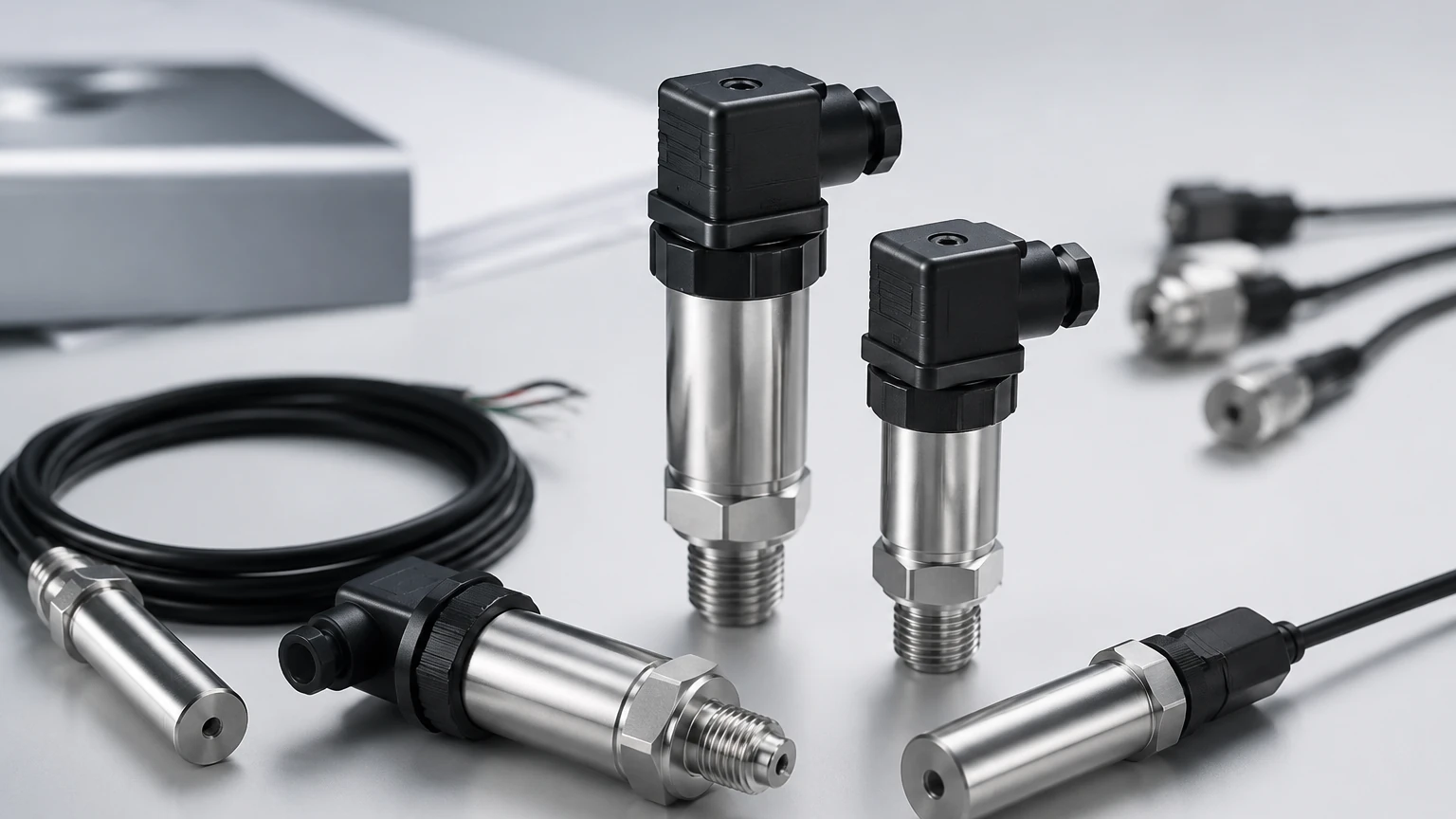
In the landscape of industrial automation and equipment manufacturing, OEM pressure transducers serve as the foundational sensing elements for a vast array of systems. Unlike standard, off-the-shelf pressure transmitters that come in fully enclosed housings with standardized process connections, Original Equipment Manufacturer (OEM) transducers are often supplied as sub-assemblies or specialized components designed for deep integration into a customer's proprietary machinery. From medical ventilators and automotive braking systems to industrial pumps and hydrostatic level measurement devices, these components are critical for converting physical force into a measurable electrical signal.
For engineers and system designers, selecting the right OEM pressure transducer requires a balance between technical performance, mechanical compatibility, and cost-efficiency. This guide explores the fundamental principles, selection criteria, and integration challenges associated with these essential industrial components.
Understanding the Role of OEM Pressure Transducers in Industrial Design
OEM pressure transducers are distinct from end-user instruments. They are typically purchased in high volumes by manufacturers who incorporate them into their own products. Because they are integrated into a larger assembly, they often lack the heavy-duty external housing found on field-mounted transmitters. Instead, they focus on the core sensing element—the diaphragm and the bridge circuit—and provide flexible electrical interfaces like PCB pins, flexible ribbons, or lead wires.
In the context of level measurement, OEM pressure transducers are the heart of hydrostatic level transmitters. By measuring the pressure exerted by a liquid column at a fixed point, the system can calculate the height of the fluid based on its density. Manufacturers like Welk utilize these high-precision sensing elements to build robust Main Page solutions for water treatment, chemical processing, and oil and gas applications.
Core Measurement Principles for OEM Integration
The performance of an OEM pressure transducer is primarily dictated by its sensing technology. Each principle offers specific advantages depending on the media, pressure range, and environmental conditions.
Piezoresistive Silicon Sensors
Piezoresistive technology is perhaps the most common for OEM applications due to its high sensitivity and compact size. These sensors utilize a micromachined silicon diaphragm with ion-implanted resistors. When pressure is applied, the diaphragm deforms, changing the resistance of the bridge circuit.
* Advantages: High sensitivity, excellent linearity, and low cost in high volumes.
* Limitations: Silicon is sensitive to temperature fluctuations, requiring sophisticated compensation circuitry. It also requires an isolation diaphragm (usually stainless steel) and oil filling to protect the silicon from corrosive media.
Ceramic Capacitive Sensors
Ceramic sensors use a dry measuring cell where a ceramic diaphragm and a ceramic substrate form a capacitor. Pressure changes the distance between the plates, altering the capacitance.
* Advantages: Extremely high corrosion resistance and high overpressure capability. Since they do not require oil filling, they are ideal for vacuum applications and food-grade environments.
* Limitations: Generally larger in diameter than silicon sensors, which can limit their use in ultra-compact OEM designs.
Thin-Film Strain Gauges
Thin-film transducers are created by sputtering a metal or polysilicon layer onto a stainless-steel diaphragm. This creates a molecular bond that is exceptionally stable over time.
* Advantages: Exceptional long-term stability and resistance to high-pressure spikes and vibration. They are frequently used in heavy-duty hydraulic systems.
* Limitations: Lower signal output compared to piezoresistive sensors, requiring more amplification.
Technical Selection Criteria for System Engineers
When specifying oem pressure transducers, engineers must look beyond the basic pressure range. The following parameters are critical for successful system integration:
1. Pressure Type and Range
It is essential to define whether the application requires absolute, gauge, or differential pressure measurement.
* Gauge Pressure: Referenced to atmospheric pressure.
* Absolute Pressure: Referenced to a vacuum, necessary for barometric or altitude-sensitive applications.
* Differential Pressure: Measures the difference between two pressure ports, often used in filter monitoring or flow measurement.
Ranges should be selected so that the normal operating pressure is approximately 50% to 75% of the transducer’s full-scale range to ensure longevity and accuracy.
2. Output Signal and Power Supply
OEM transducers offer various electrical interfaces. For digital systems, I2C or SPI protocols allow for direct communication with microcontrollers. For analog systems, ratiometric outputs (e.g., 0.5V to 4.5V) are common in automotive and HVAC applications because they scale with the supply voltage. In industrial environments where long cable runs are necessary, 4-20mA current loops are the standard to minimize noise interference.
3. Accuracy and Total Error Band (TEB)
While many data sheets highlight "Best Fit Straight Line" (BFSL) accuracy, OEM designers should focus on the Total Error Band. TEB includes all potential errors: non-linearity, hysteresis, non-repeatability, and, most importantly, thermal errors over a specific temperature range. In industrial automation, a TEB of <1.0% FS (Full Scale) is often required for reliable process control.
4. Material Compatibility
The wetted parts—the components in direct contact with the media—must be chemically compatible. 316L stainless steel is the standard for water and general industrial fluids. For aggressive chemicals or seawater, Hastelloy C or titanium diaphragms may be necessary. For OEM level measurement applications, ensuring the diaphragm can withstand the specific gravity and acidity of the fluid is paramount.
Integration and Installation Best Practices
Successful integration of an OEM pressure transducer into a larger housing or manifold involves several mechanical and electrical considerations.
Mechanical Porting and Sealing
OEM sensors are often supplied as "capsules" that must be sealed into a manifold. Common sealing methods include:
* O-ring Seals: The most flexible method, allowing for easy replacement. However, the O-ring material (Viton, EPDM, Nitrile) must be compatible with the process fluid.
* Welded Connections: Provides the most robust, leak-proof seal, but requires specialized laser welding equipment and can introduce thermal stress to the sensor if not managed correctly.
Thermal Management
Since pressure sensors are temperature-sensitive, the OEM housing must account for thermal expansion. If the sensor is mounted in a way that constrains the diaphragm or the sensor body, mechanical stress can be misinterpreted as pressure, leading to significant measurement drift.
Electrical Shielding
OEM components often lack the built-in Electromagnetic Interference (EMI) shielding found in finished instruments. Designers must incorporate shielding and filtering at the PCB level to protect the low-level signal from noise generated by motors, solenoids, or wireless transmitters within the same equipment.
Common Risks and Mitigation Strategies
Integrating raw sensors involves risks that are not present when using finished transmitters.
| Risk | Description | Mitigation Strategy |
| :— | :— | :— |
| Overpressure Spikes | Hydraulic hammers or sudden valve closures can exceed the sensor's burst pressure. | Use sensors with a high overpressure rating (e.g., 3x or 4x FS) or install snubber capillaries. |
| Long-term Drift | Sensors can lose calibration over years of service. | Select thin-film or high-quality piezoresistive elements with proven stability data; design for field-recalibration if possible. |
| Media Clogging | Viscous or particulate-heavy fluids can block small pressure ports. | Use flush-diaphragm OEM sensors that eliminate internal cavities where material can build up. |
| Moisture Ingress | Condensation inside the OEM housing can short out electronics. | Ensure the integrated assembly is potted or hermetically sealed, especially for submersible level applications. |
Practical Selection Guide for OEM Sensors
To assist in the initial selection process, the following table compares typical specifications for different OEM pressure transducer configurations used in industrial level and pressure monitoring.
| Feature | Piezoresistive (Oil-Filled) | Ceramic Capacitive | Thin-Film |
| :— | :— | :— | :— |
| Pressure Range | 0.1 bar to 1000 bar | 0.05 bar to 100 bar | 10 bar to 2000 bar |
| Typical Accuracy | 0.1% to 0.5% FS | 0.1% to 0.2% FS | 0.2% to 0.5% FS |
| Temperature Range | -40°C to +125°C | -40°C to +150°C | -40°C to +200°C |
| Shock/Vibration Resistance | Moderate | High | Excellent |
| Best Application | General level/pressure | Corrosive/Vacuum | High-pressure hydraulics |
Frequently Asked Questions
What is the difference between a pressure transducer and a pressure transmitter?
In B2B terminology, a "transducer" typically refers to a component that outputs a low-level voltage signal (like mV or ratiometric V), whereas a "transmitter" is a complete assembly that outputs a conditioned high-level signal, such as 4-20mA or a digital protocol, and is usually housed in a protective casing.
Can OEM pressure transducers be used for level measurement?
Yes. When used in a hydrostatic configuration, the transducer measures the pressure at the bottom of a tank. For every 1 meter (3.28 feet) of water, the pressure increases by approximately 9.8 kPa (1.42 psi). By integrating an OEM sensor into a submersible housing, manufacturers create hydrostatic level sensors.
Why is temperature compensation important for OEM sensors?
Silicon-based piezoresistive sensors are inherently sensitive to temperature. Without compensation, the zero point and the span of the sensor will shift as the ambient or media temperature changes. Most high-quality OEM transducers include an onboard temperature sensor (like a PT100 or an internal thermistor) to allow the system electronics to correct these errors in real-time.
How do I handle the calibration of OEM sensors?
Most OEM sensors are factory-calibrated and provided with a calibration sheet or digital coefficients. However, once the sensor is integrated into a housing or manifold, the mechanical stresses of assembly may cause a slight zero shift. It is standard practice to perform a final "end-of-line" calibration on the completed assembly to ensure accuracy.
Conclusion
Selecting and integrating oem pressure transducers is a critical task for engineering teams developing next-generation industrial equipment. By understanding the underlying measurement principles—whether piezoresistive, ceramic, or thin-film—and carefully accounting for mechanical and thermal integration challenges, manufacturers can ensure high-precision performance and long-term reliability. For those developing complex level measurement systems, leveraging the expertise of established manufacturers like Welk can provide the necessary technical foundation for accurate and cost-effective solutions. Whether the application involves water treatment, chemical processing, or industrial automation, the right OEM sensing element is the key to system success.