Vega Machinery
Vega Machinery
In the landscape of industrial automation and process control, the term "vega machinery" often refers to the integration of high-precision level and pressure measurement instrumentation into complex processing systems. Whether in chemical reactors, water treatment facilities, or food and beverage production lines, the reliability of the machinery depends heavily on the accuracy of the sensors monitoring the media within. As a professional manufacturer of industrial level measurement instruments, Welk provides a range of solutions—from radar and ultrasonic sensors to hydrostatic transmitters—that align with the rigorous standards expected in such high-performance environments.
Understanding the principles behind these technologies is essential for engineers and procurement specialists looking to optimize their process machinery. This guide explores the core measurement principles, selection criteria, and installation best practices for level instrumentation utilized in modern industrial machinery.
Core Principles of Level Measurement
Before selecting instrumentation for any machinery, it is vital to understand the physics governing the measurement. Industrial level sensors are generally categorized into non-contact and contact methods.
Radar Level Measurement (FMCW and Pulse)
Radar technology is a cornerstone of modern process machinery. It operates on the principle of electromagnetic wave reflection. The sensor emits a high-frequency signal (typically in the 26GHz or 80GHz range) toward the medium. When the signal hits the surface of the liquid or solid, it is reflected back to the antenna.
1. Time of Flight (ToF): The instrument measures the time it takes for the pulse to travel to the surface and back. Since the speed of light is constant, the distance can be calculated with extreme precision.
2. Frequency Modulated Continuous Wave (FMCW): In more advanced "vega machinery" applications, FMCW radar is preferred. The sensor emits a continuous signal with a constantly changing frequency. The difference in frequency between the emitted and received signal is proportional to the distance, allowing for higher accuracy and better signal-to-noise ratios in turbulent environments.
Ultrasonic Level Measurement
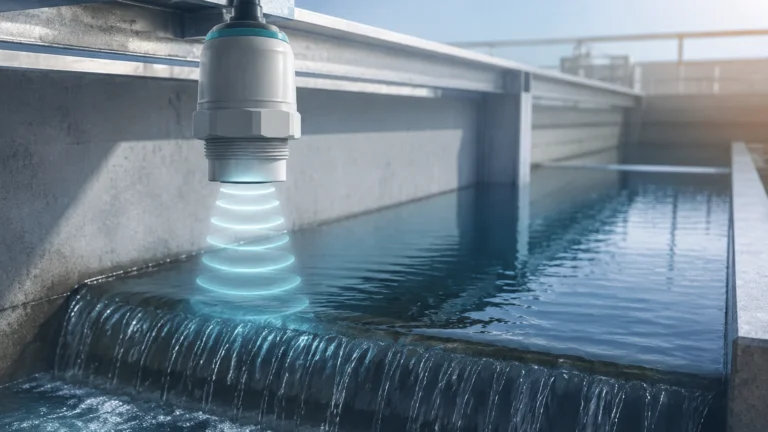
Ultrasonic sensors use mechanical sound waves rather than electromagnetic waves. The transducer emits an ultrasonic pulse that bounces off the surface of the media. This technology is cost-effective and highly reliable for water-based applications and simple storage tanks. However, because sound requires a medium (air) to travel, its speed is affected by air temperature, requiring integrated temperature compensation for accurate readings.
Hydrostatic Level Measurement
Hydrostatic transmitters measure the pressure exerted by a liquid column at the base of a tank. According to Pascal’s Law, the pressure at the bottom of a vessel is directly proportional to the height of the liquid and its specific gravity. This is a contact-based method where the sensor diaphragm must be compatible with the process media. It is widely used in deep wells, reservoirs, and open-vented tanks.
Magnetic Level Gauges and Switches
For visual indication and point-level control, magnetic level gauges utilize a float containing a permanent magnet. As the liquid level rises, the float moves, flipping magnetic flaps on an external scale. Level switches (vibrating fork or float-type) are used as safety devices to prevent overfilling or dry-running of pumps within the machinery.
Selecting Instrumentation for Industrial Machinery
Choosing the right sensor for "vega machinery" configurations requires a detailed analysis of the process conditions. A mismatch between the technology and the environment can lead to signal loss or premature hardware failure.
Key Evaluation Criteria
* Dielectric Constant (εr): For radar sensors, the dielectric constant of the medium determines the strength of the reflected signal. Water has a high εr (~80), making it easy to detect, while hydrocarbons like oil have a low εr (~2), requiring more sensitive radar antennas.
* Process Pressure and Temperature: High-pressure reactors (exceeding 40 bar) or high-temperature processes (above 200°C) require specialized housing and seal materials, such as PTFE or ceramics.
* Vapor and Dust: Ultrasonic waves can be scattered by heavy dust or absorbed by thick foam. In such cases, radar is the superior choice as electromagnetic waves are unaffected by these atmospheric conditions.
* Tank Geometry: Internal obstructions like agitators, heating coils, or ladders can create "false echoes." Advanced software in modern level meters allows for "false signal suppression," where the sensor learns to ignore these static reflections.
Practical Selection Table
| Technology | Best Suited For | Limitations | Typical Accuracy |
| :— | :— | :— | :— |
| 80GHz Radar | Small vessels, narrow nozzles, corrosive media | High initial cost | ±1 mm |
| 26GHz Radar | Large silos, bulk solids, turbulent liquids | Large beam angle | ±3 mm |
| Ultrasonic | Water treatment, open channels | Affected by foam and vacuum | ±0.25% of range |
| Hydrostatic | Deep wells, vented tanks, oils | Requires constant density | ±0.1% to 0.5% Span |
| Magnetic Gauge | High-pressure boilers, visual monitoring | Moving parts may wear | ±5 mm to 10 mm |
Installation Considerations and Best Practices
Proper installation is as critical as the choice of technology. Even the most advanced sensor will fail if positioned incorrectly within the machinery.
1. The Dead Zone (Blocking Distance): Every non-contact sensor has a "dead zone" directly beneath the antenna or transducer where measurement is impossible. Ensure the maximum liquid level never enters this zone (typically 0.1m to 0.5m depending on the model).
2. Nozzle Dimensions: For radar and ultrasonic sensors, the nozzle should be as short and wide as possible to prevent the signal from reflecting off the nozzle walls. For an 80GHz radar, a 50mm (2-inch) nozzle is often sufficient due to the narrow beam angle.
3. Positioning: Avoid installing the sensor directly above the tank inlet. The turbulence and splashing from the filling process will cause erratic readings. Ideally, the sensor should be placed at 1/6th to 1/4th of the tank diameter from the wall.
4. Stilling Wells: In applications with heavy foam or extreme turbulence, installing the sensor inside a stilling well (a vertical pipe) can provide a calm surface for the measurement, significantly improving reliability.

Limitations and Common Risks
While modern instrumentation is highly robust, users should be aware of specific limitations:
* Coating and Buildup: In the chemical industry, media can crystallize or build up on the sensor face. While radar can often "see through" thin films, heavy buildup will eventually attenuate the signal. Regular cleaning or the use of a purging system (air or water) may be necessary.
* Vacuum Conditions: Ultrasonic sensors cannot function in a vacuum because sound waves require a medium for transmission. Radar is the only non-contact option for vacuum-sealed machinery.
* Density Changes: Hydrostatic sensors assume a constant density. If the temperature of the liquid changes significantly, the density—and therefore the calculated level—will change, even if the actual volume remains the same.
Frequently Asked Questions (FAQ)
Q: Can I use a radar sensor for solids like grain or cement?
A: Yes, but it is recommended to use a high-frequency radar (26GHz or 80GHz) with a specialized lens antenna to handle the uneven surfaces and dust common in solids measurement.
Q: What is the benefit of an 80GHz radar over a 26GHz model?
A: The primary benefit is the beam angle. An 80GHz radar has a much narrower beam (often as small as 3 degrees), which allows it to avoid internal obstructions and be installed in smaller nozzles without interference.
Q: How often should level sensors in industrial machinery be calibrated?
A: For standard applications, an annual calibration check is sufficient. However, in regulated industries like pharmaceuticals or food production, semi-annual or quarterly calibrations may be required to ensure compliance with safety and quality standards.
Conclusion
Integrating the right level measurement technology is fundamental to the efficiency and safety of industrial machinery. Whether you are dealing with the complexities of "vega machinery" or standard water storage, selecting a sensor based on the physical properties of the media and the constraints of the environment is paramount.
Welk offers a comprehensive portfolio of level measurement solutions designed to meet these diverse industrial needs. For detailed technical specifications, customized OEM/ODM services, or to explore our full range of radar and ultrasonic sensors, please visit our Main Page to review product options and application support. Ensuring the right fit for your process today prevents costly downtime and maintenance issues tomorrow.