Tri-state Seminar 2025
Tri-state Seminar 2025
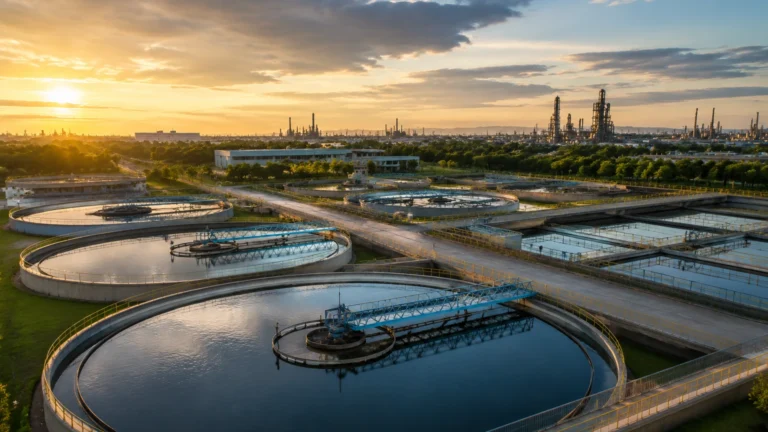
The Tri-state Seminar 2025 stands as a pivotal event for professionals within the water and wastewater industries, particularly those operating across Arizona, California, and Nevada. As regulatory requirements for water conservation and effluent quality tighten, the demand for precise, reliable instrumentation has never been higher. For engineers and facility managers attending the seminar, understanding the evolution of level measurement technology is essential for optimizing plant operations and ensuring environmental compliance.
Industrial level measurement is not a one-size-fits-all discipline. The complexities of wastewater treatment—ranging from turbulent aeration basins to corrosive chemical storage—require a deep understanding of sensor physics. This guide provides a technical overview of the measurement principles, selection criteria, and installation best practices that will be central to the discussions at the tri-state seminar 2025.
Core Measurement Principles: Radar vs. Ultrasonic vs. Hydrostatic
Before selecting an instrument, it is critical to understand the underlying physics of how different sensors interact with the process medium. At the tri-state seminar 2025, much of the technical focus will be on transitioning from legacy mechanical systems to digital, non-contact sensing.
Radar Level Measurement (ToF)
Radar level meters operate on the Time-of-Flight (ToF) principle. The sensor emits a high-frequency microwave signal (typically in the 26GHz or 80GHz range) that travels to the surface of the liquid, reflects, and returns to the antenna. Since microwaves travel at the speed of light, the instrument calculates the distance based on the time elapsed between emission and reception.
* Advantages: Radar is unaffected by air temperature, pressure, or vacuum conditions. It can penetrate steam and dust, making it ideal for sludge digesters and chemical tanks.
* Limitations: While highly accurate, radar can be affected by low dielectric constants of certain fluids, though most water-based liquids provide excellent reflectivity.
Ultrasonic Level Measurement
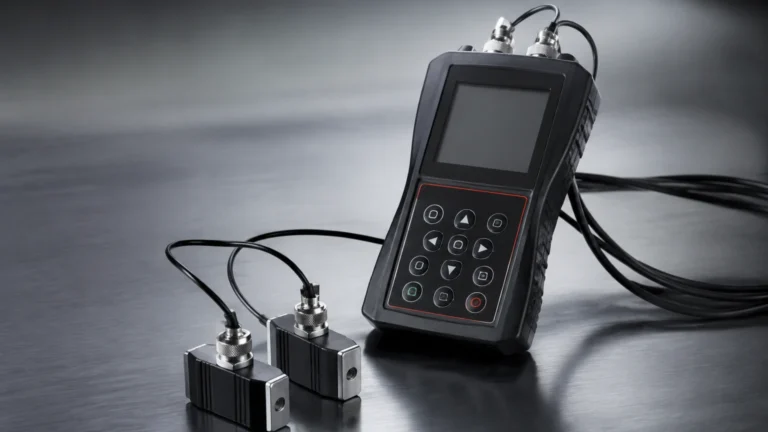
Ultrasonic sensors also use the ToF principle but utilize sound waves instead of electromagnetic waves. A transducer emits an ultrasonic pulse that bounces off the liquid surface. The time taken for the echo to return is proportional to the distance.
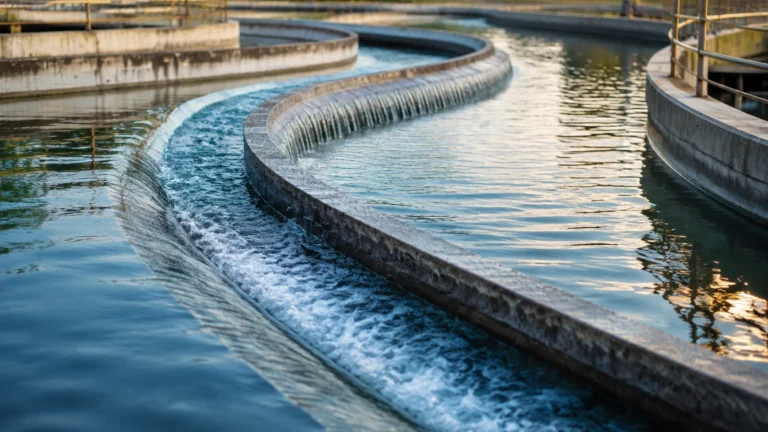
* Advantages: Cost-effective and non-contact. These are widely used in open channel flow measurement and standard water storage tanks.
* Limitations: Sound velocity is dependent on air temperature. While most modern sensors include temperature compensation, extreme gradients or heavy foam can dampen the signal, leading to measurement errors.
Hydrostatic Level Measurement
Hydrostatic transmitters are contact-based sensors that measure the pressure exerted by a liquid column. The principle is based on the formula: $P = \rho \cdot g \cdot h$, where $P$ is pressure, $\rho$ is the density of the liquid, $g$ is gravity, and $h$ is the height of the liquid.
* Advantages: Highly reliable for deep wells, boreholes, and vented tanks where non-contact sensors might struggle with narrow geometries.
* Limitations: Changes in liquid density (due to temperature or concentration changes) will affect the accuracy of the level reading unless the system is recalibrated.
Selection Criteria for Water and Wastewater Applications
Choosing the right technology for a specific application in a water treatment plant requires balancing accuracy, maintenance requirements, and environmental factors. The following table summarizes the selection logic often discussed by instrumentation specialists.
| Application Type | Recommended Technology | Key Reason |
| :— | :— | :— |
| Open Channel Flow | Ultrasonic | Cost-effective, non-contact, standard for flumes/weirs. |
| Chemical Storage | Radar (80GHz) | High chemical resistance, ignores vapor and fumes. |
| Deep Well/Borehole | Hydrostatic | Submersible, unaffected by narrow pipe diameters. |
| Sludge Digesters | Radar | Penetrates foam and heavy steam layers. |
| Aeration Basins | Ultrasonic or Radar | Non-contact prevents fouling from biological growth. |
| Small Buffers | Level Switches | Simple point-level detection for overflow prevention. |
When evaluating equipment for the tri-state seminar 2025, engineers should prioritize sensors that offer digital outputs (such as 4-20mA HART, Modbus, or Profibus) to facilitate integration into modern SCADA systems.
Installation Considerations for Reliable Data Acquisition
Even the most advanced level meter will fail to provide accurate data if installed incorrectly. At the tri-state seminar 2025, technical sessions often highlight that over 50% of field failures are attributed to improper mounting rather than sensor malfunction.
1. Avoiding Obstructions
For non-contact sensors (Radar and Ultrasonic), the "beam angle" is a critical factor. The sensor must be mounted such that the signal path is clear of ladders, pipes, or agitators. If an obstruction is unavoidable, many modern instruments offer "false echo suppression" software to mask out these static reflections.
2. Dead Zone (Blocking Distance)
Every ultrasonic and radar sensor has a "dead zone" or "blocking distance" directly beneath the transducer (typically 0.2m to 0.5m or 8 to 20 inches). The liquid level must never enter this zone, or the sensor will lose track of the surface. Mounting the sensor on a nozzle or a standpipe can help elevate it above the maximum fill level.
3. Positioning in Tanks
Sensors should generally not be mounted in the center of a tank (to avoid multiple reflections from the walls) nor too close to the wall (to avoid signal interference). A position approximately 1/3 of the radius from the tank wall is often recommended for cylindrical vessels.
4. Submersible Cable Protection
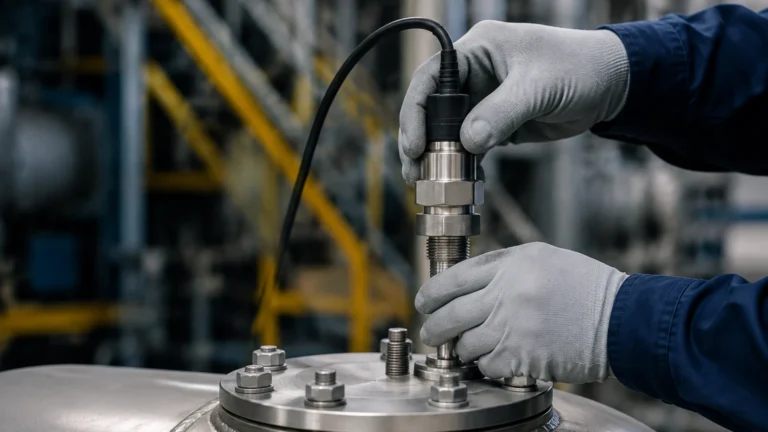
For hydrostatic transmitters used in lift stations, the vent tube in the cable must remain unobstructed to allow for atmospheric pressure compensation. Using a desiccant bellows or a specialized junction box is essential to prevent moisture from entering the tube and causing sensor drift.

Mitigating Risks and Limitations in Process Environments
In the harsh environments typical of the water industry, several factors can compromise measurement integrity. Identifying these risks early is a core component of the engineering reference material provided for the tri-state seminar 2025.
* Foam and Turbulence: Heavy foam can absorb ultrasonic signals. In these cases, high-frequency radar is preferred as it can usually see through the foam to the liquid surface. For extreme turbulence, a stilling well may be required to provide a calm surface for the sensor.
* Build-up and Scaling: In wastewater applications, grease and minerals can build up on contact sensors. Non-contact sensors are the primary solution here, but even they can suffer if the transducer face becomes coated. Choosing sensors with PTFE or other non-stick faces reduces maintenance cycles.
* Environmental Temperature: For outdoor installations, sun shields should be used to prevent the sensor electronics from overheating, which can shorten the lifespan of the internal components.
Frequently Asked Questions (FAQ)
Q: How does the tri-state seminar 2025 address the shift toward IIoT in level measurement?
A: The seminar focuses on how smart sensors can provide more than just a level reading. Modern instruments now provide diagnostic data, such as signal strength and internal temperature, which can be used for predictive maintenance and reducing unplanned downtime.
Q: Can one sensor type be used for all applications in a treatment plant?
A: While radar is becoming increasingly versatile, it is rarely the most cost-effective solution for every point. A hybrid approach—using radar for critical process tanks, ultrasonic for open channels, and hydrostatic for deep wells—is typically the most efficient strategy.
Q: What is the impact of 80GHz radar over older 26GHz models?
A: 80GHz radar offers a much narrower beam angle, which allows for easier installation in tanks with internal obstructions and provides better accuracy in small or narrow vessels.
Q: How often should level meters be calibrated?
A: This depends on the technology and the criticality of the measurement. Hydrostatic sensors may require annual checks due to potential drift, while non-contact radar sensors often remain stable for several years without needing recalibration, provided there is no physical damage to the antenna.
Conclusion
As the industry prepares for the tri-state seminar 2025, the focus remains on leveraging technology to improve operational efficiency and safety. Understanding the nuances of radar, ultrasonic, and hydrostatic measurement allows engineers to design systems that are not only accurate but also resilient to the challenging conditions of the water and wastewater sectors. For those seeking to upgrade their current infrastructure or implement new automation solutions, reviewing the latest hardware options is a vital step. To explore a comprehensive range of industrial measurement solutions, including detailed technical specifications for various sensor types, professionals can visit the Main Page to review product options and application support.