On-site Generation System for Sodium Hydroxide
On-site Generation System for Sodium Hydroxide
Sodium hydroxide (NaOH), commonly known as caustic soda, is a fundamental chemical reagent used extensively in water treatment, pulp and paper manufacturing, textile processing, and chemical synthesis. Traditionally, industrial facilities have relied on bulk deliveries of concentrated caustic soda. However, the shift toward an on-site generation system for sodium hydroxide has gained significant momentum due to the logistical challenges, safety risks, and fluctuating costs associated with transporting and handling high-concentration hazardous chemicals.
Implementing an on-site generation system requires a sophisticated integration of electrochemical cells, brine preparation units, and precise process control. At the heart of this control is the accurate measurement of liquid levels across various stages of the process. For engineers and plant managers, understanding the intersection of electrochemical generation and instrumentation is vital for maintaining system efficiency and safety.
Understanding the Measurement Principles
Before selecting instrumentation for an on-site generation system for sodium hydroxide, it is essential to understand the physical principles of level measurement. Sodium hydroxide is a highly alkaline, corrosive substance that can crystallize or change viscosity based on temperature and concentration. These characteristics dictate the choice of measurement technology.
Radar Level Measurement (Non-Contact)
Radar level meters utilize Frequency Modulated Continuous Wave (FMCW) or pulsed microwave signals. The sensor emits a signal that reflects off the surface of the liquid and returns to the transducer. The time-of-flight (ToF) is used to calculate the distance. Because radar signals do not require a physical medium, they are unaffected by the vapor, pressure, or temperature fluctuations common in caustic storage tanks. For on-site generation, non-contact radar is often the preferred choice to avoid material degradation from the caustic solution.
Ultrasonic Level Measurement
Similar to radar, ultrasonic sensors use ToF principles but rely on sound waves. While cost-effective, ultrasonic measurement can be sensitive to heavy vapors or foam on the surface of the sodium hydroxide. In an on-site generation system for sodium hydroxide, ultrasonic sensors are typically reserved for atmospheric brine tanks or diluted caustic storage where vapor density is low.
Hydrostatic Pressure Measurement
This principle calculates level based on the pressure exerted by the liquid column (P = ρgh). A pressure transmitter is installed at the bottom of the tank. For caustic applications, the diaphragm must be constructed from chemically resistant materials such as Tantalum or Hastelloy-C, often with a PTFE coating, to prevent corrosion. Hydrostatic sensors are highly reliable in vented tanks where the density of the fluid remains relatively constant.
Magnetic Level Gauges
Magnetic level gauges provide both a visual indication and an electronic output. A float containing a magnet moves with the liquid level inside a bypass chamber, flipping magnetic flags on an external scale. This provides a fail-safe visual reference for operators, which is critical during power outages or system maintenance in a chemical generation plant.
Components of an On-site Generation System for Sodium Hydroxide
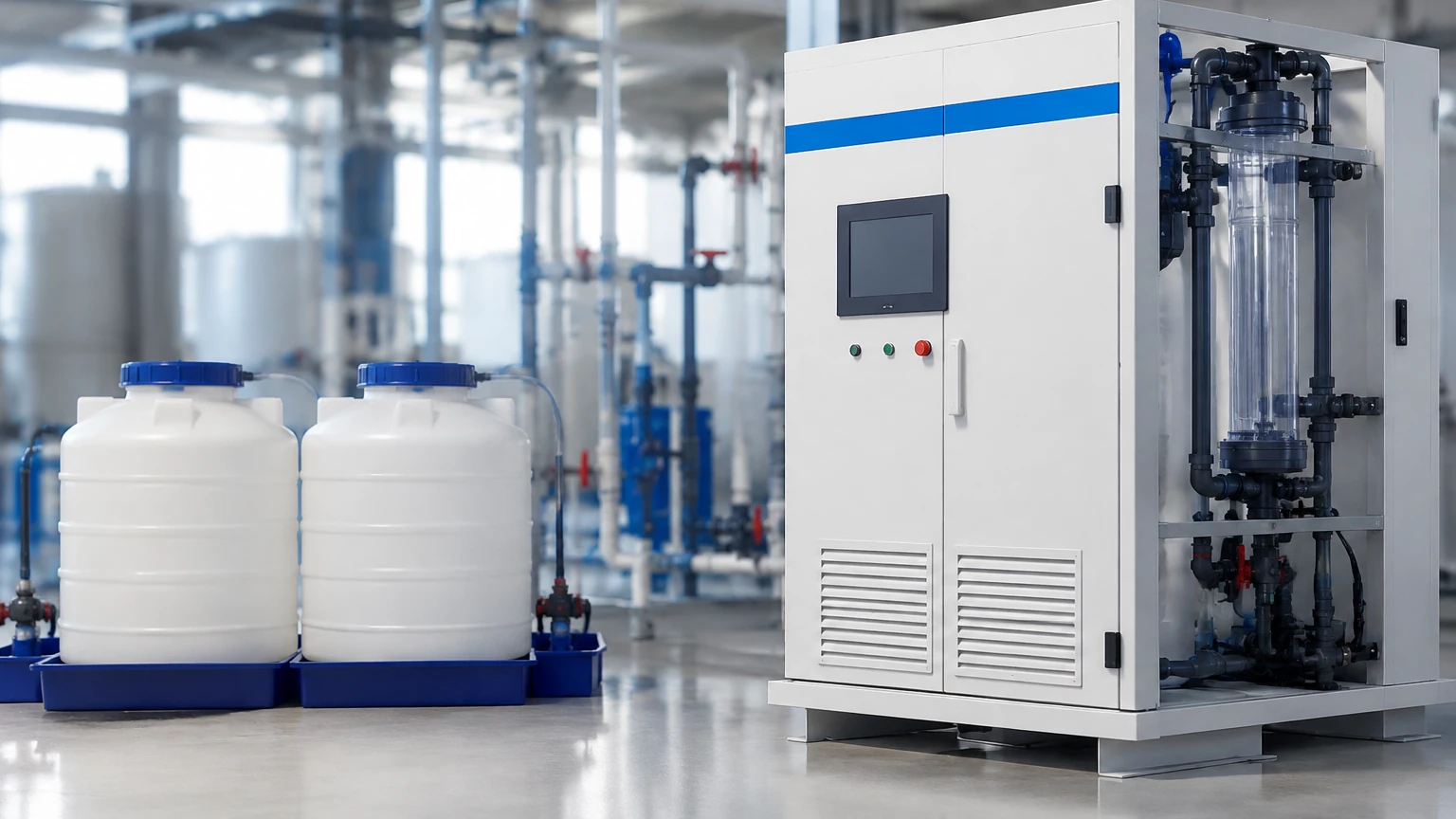
An on-site generation system typically utilizes membrane cell electrolysis. This process involves several distinct stages, each requiring specific level monitoring to ensure continuous operation.
1. Brine Saturation and Softening: Raw salt (NaCl) is dissolved in water to create a saturated brine. Level sensors in the saturation tank ensure a steady supply of raw material. Precise level control prevents the pumps from running dry and maintains the correct salt-to-water ratio.
2. Electrolysis Cell (The Membrane Electrolyzer): The brine is passed through an electrolytic cell divided by a selective membrane. Under an electric current, chloride ions move to the anode to form chlorine gas, while sodium ions pass through the membrane to the cathode, reacting with water to form sodium hydroxide and hydrogen gas.
3. Caustic Recovery and Storage: The resulting sodium hydroxide (usually at a concentration of 10% to 32%) is collected in storage tanks. These tanks must be monitored to manage inventory and prevent overfills, which would pose a significant environmental and safety hazard.
4. Dilution and Distribution: Depending on the application, the caustic may be diluted further. Level transmitters in dilution tanks manage the mixing process by providing feedback to automated control valves.
Practical Selection Table for Level Instrumentation
When designing or maintaining an on-site generation system for sodium hydroxide, the following table serves as a general guide for technology selection based on the specific tank environment.
| Application Stage | Recommended Technology | Key Material Requirement | Reason for Selection |
| :— | :— | :— | :— |
| Raw Brine Tank | Ultrasonic or Radar | PP / PVDF | Cost-effective; brine is less corrosive than pure NaOH. |
| Electrolysis Feed Tank | 80GHz Radar | PTFE Lining | High precision required for process stability; handles vapors well. |
| Caustic Storage (High Conc.) | Non-contact Radar | PTFE / Hastelloy | Prevents sensor corrosion; ignores vapor and surface turbulence. |
| Dilution Tank | Hydrostatic or Radar | Tantalum Diaphragm | Reliable for varying levels; handles agitation during mixing. |
| Waste/Neutralization Pit | Ultrasonic | PVC / PP | Economic solution for large, open-air containment areas. |
Installation Considerations and Material Compatibility
Sodium hydroxide is notoriously difficult to handle. It is highly corrosive to aluminum, zinc, and certain glass types. When installing level meters from a provider like Welk, engineers must adhere to strict material compatibility standards.
* Wetted Parts: All parts in contact with the fluid or its vapors should be made of 316L Stainless Steel (for low concentrations), Hastelloy-C, or plastics like PTFE, PVDF, or PP. For the Main Page of a system design, specifying these materials is the first step in ensuring longevity.
* Vapor Management: Caustic soda can produce mists and vapors, especially if heated. Radar sensors with a "drip-off" antenna design prevent condensate from accumulating on the sensor face, which could otherwise cause signal loss.
* Tank Geometry: Many on-site systems use compact, skid-mounted tanks. Sensors must be installed away from internal baffles, agitators, or the incoming fill stream to avoid false echoes. Radar units with narrow beam angles (e.g., 80GHz) are ideal for these confined spaces.
* Temperature Stability: Sodium hydroxide has a high freezing point at certain concentrations (e.g., 50% NaOH freezes at approximately 12°C). If the system includes heat tracing or insulation to prevent crystallization, the level sensor must be rated for the operating temperature and capable of measuring accurately despite the presence of heating elements.
Limitations and Operational Risks
While an on-site generation system for sodium hydroxide offers many benefits, there are limitations to consider:
* Crystallization: If the temperature drops, NaOH can crystallize on the sensor diaphragm or antenna. This "scaling" can lead to inaccurate readings. Regular inspection or the use of non-contact sensors is recommended.
* Hydrogen Gas Evolution: The electrolysis process produces hydrogen as a byproduct. Level sensors installed in or near the electrolyzer must be explosion-proof (ATEX/IECEx certified) to mitigate the risk of ignition.
* Power Consumption: On-site generation is energy-intensive. Instrumentation must be integrated into a Power Management System (PMS) to ensure that level control logic remains active even if the main electrolysis current is throttled.
Frequently Asked Questions (FAQ)
Q: Why is 80GHz radar preferred over 26GHz for caustic tanks?
A: 80GHz radar has a much narrower beam angle, which allows it to be installed in tanks with internal obstructions or narrow nozzles without interference. It also provides better resolution for small tanks common in on-site skids.
Q: Can I use a standard stainless steel hydrostatic transmitter for sodium hydroxide?
A: Only for very low concentrations at ambient temperatures. For standard industrial concentrations (32% or higher), a PTFE coating or a Tantalum diaphragm is required to prevent the caustic from eating through the sensor membrane.
Q: How does foam affect the on-site generation system for sodium hydroxide?
A: Foam can occur during the brine mixing or dilution stages. Ultrasonic sensors often struggle with foam as it absorbs the sound waves. Radar is generally more robust, but in cases of extremely thick foam, a guided wave radar (GWR) or a displacement-type sensor may be necessary.
Q: What is the typical lifespan of a level sensor in this environment?
A: With proper material selection (e.g., PVDF or PTFE wetted parts), a high-quality radar or ultrasonic sensor can last 5 to 10 years. Using incompatible materials can lead to sensor failure within weeks.
Conclusion
Transitioning to an on-site generation system for sodium hydroxide provides facilities with greater autonomy, improved safety profiles, and long-term cost stability. However, the reliability of these systems depends heavily on the accuracy of their instrumentation. By applying the correct measurement principles—whether through non-contact radar for storage or hydrostatic pressure for dilution—and ensuring strict material compatibility, engineers can maintain a safe and efficient chemical production environment. For those evaluating their current instrumentation needs or planning a new installation, reviewing the technical specifications and product options on the Main Page of an experienced manufacturer is a critical step in the engineering process.
Download On-site Generation System for Sodium Hydroxide as a PDF