Pulp Paper Solutions
Pulp Paper Solutions
In the modern industrial landscape, the pulp and paper industry stands as one of the most challenging environments for process automation and instrumentation. The production process involves a complex sequence of chemical reactions, high-temperature mechanical pulping, and sophisticated water management systems. Reliable pulp paper solutions for level measurement are essential to ensure operational safety, minimize chemical waste, and maintain consistent product quality. From handling corrosive black liquor to monitoring thick pulp stock in agitated chests, selecting the right measurement technology requires a deep understanding of both the physics of the instrument and the characteristics of the medium.
As a professional manufacturer, Welk provides a comprehensive range of industrial level measurement instruments designed to withstand the rigors of paper mill operations. This guide explores the fundamental measurement principles, application-specific selection criteria, and practical installation guidance for engineering professionals seeking robust level monitoring systems.
Core Measurement Principles in Pulp and Paper Applications
Before selecting a specific instrument, it is vital to understand the underlying physical principles that govern different level measurement technologies. In the context of pulp paper solutions, four primary technologies are typically deployed.
1. Radar Level Measurement (Non-Contact)
Radar level meters, particularly those operating at high frequencies like 80 GHz, utilize Frequency Modulated Continuous Wave (FMCW) technology. The instrument emits a high-frequency signal that reflects off the surface of the material. By measuring the frequency shift or time-of-flight, the device calculates the distance to the product surface.
* Advantages: Radar is unaffected by vacuum, high pressure, or temperature fluctuations. It can penetrate heavy steam and dust, which are common in digesters and lime kilns.
* Suitability: Ideal for aggressive chemicals, tall silos of wood chips, and large storage tanks.
2. Ultrasonic Level Sensors
Ultrasonic sensors function by emitting sound waves that bounce off the surface of the liquid or solid. The time taken for the echo to return is proportional to the distance.
* Advantages: Cost-effective and easy to install for non-contact measurement.
* Suitability: Best used in water treatment facilities, open channels, and chemical tanks where steam and foam are minimal.
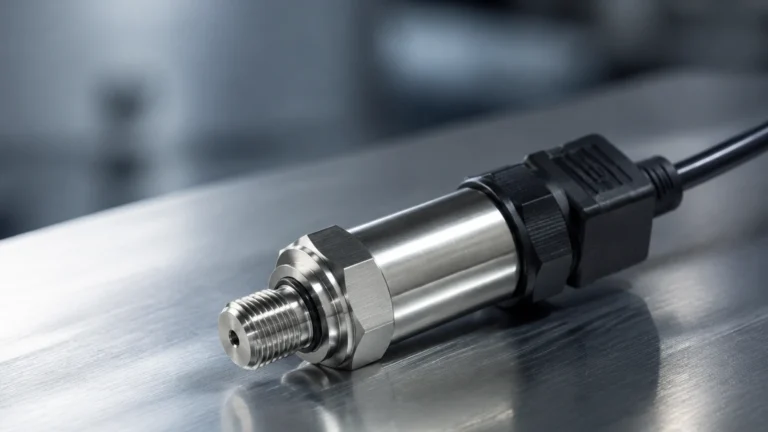
3. Hydrostatic Level Transmitters
These sensors measure the pressure exerted by a liquid column. Based on the formula $P = \rho gh$ (where $P$ is pressure, $\rho$ is density, $g$ is gravity, and $h$ is height), the level is derived from the pressure reading.
* Advantages: Highly reliable for vented tanks and simple to maintain.
* Suitability: Used for water storage, condensate tanks, and clarified liquids with stable densities.
4. Magnetic Level Gauges and Switches
Magnetic gauges use a float containing a magnet that moves with the liquid level, flipping bicolored flaps or triggering a reed switch.
* Advantages: Provides a clear visual indication without requiring power and offers high-pressure resistance.
* Suitability: Excellent for boiler feed water, high-pressure steam drums, and hazardous chemical storage.
Application-Specific Selection for Pulp Paper Solutions
The diversity of fluids in a paper mill—ranging from water and thin acids to viscous pulp and abrasive lime mud—means that no single sensor fits every application. Effective pulp paper solutions must account for the specific characteristics of each process stage.
The Digester and Chemical Recovery
In the kraft process, wood chips are cooked in a digester at high temperatures (up to 170°C) and pressures. The resulting "black liquor" is highly corrosive and prone to scaling. For these applications, non-contact radar with a PTFE-coated antenna is the preferred choice to prevent chemical attack and buildup. You can Review product options and application support on our Main Page to see specific radar configurations designed for high-temperature chemical environments.
Pulp Stock Chests
Pulp stock is non-Newtonian, thick, and often turbulent due to constant agitation. Ultrasonic sensors may struggle here due to surface turbulence and foam. Radar level meters with advanced signal processing can filter out noise from agitator blades, providing a stable reading even in agitated tanks.
Wastewater and Effluent Treatment
Paper mills consume vast quantities of water. Monitoring the level in clarifiers, settling ponds, and flumes is essential for environmental compliance. Ultrasonic sensors are typically the standard here, provided they are equipped with temperature compensation to account for solar heating of the sensor body in outdoor installations.
Technical Selection Table
| Application Stage | Typical Medium | Recommended Technology | Key Consideration |
| :— | :— | :— | :— |
| Wood Chip Silo | Dry Wood Chips | 80GHz Radar | Dust penetration and beam angle |
| Digester | Black Liquor / Steam | High-Temp Radar | Corrosion resistance (PTFE/Ceramic) |
| Stock Chest | Pulp Fiber (3-10% consistency) | Radar (FMCW) | Agitator interference filtering |
| Bleaching Tower | Chlorine Dioxide / Peroxide | Non-contact Radar | Hermetic sealing of electronics |
| Lime Mud Tank | Abrasive Slurry | Hydrostatic (Flush Diaphragm) | Diaphragm material hardness |
| Boiler Drum | High-Pressure Steam/Water | Magnetic Level Gauge | Pressure rating (up to 160 bar) |
Installation Considerations and Best Practices
Proper installation is as critical as instrument selection. Even the most advanced pulp paper solutions will fail if the physical mounting is incorrect.
1. Nozzle Geometry: For radar and ultrasonic sensors, the nozzle height should be kept to a minimum. If the nozzle is too long, it can create internal reflections (ringing) that mask the true level signal near the top of the tank.
2. Agitator Avoidance: Instruments should be mounted away from the direct path of agitator blades. Modern radar units allow for "false echo suppression," where the software "learns" the position of fixed obstructions, but physical clearance remains the best defense against signal noise.
3. Foam Management: Heavy foam can absorb ultrasonic signals and scatter radar waves. If foam is a permanent process feature, a stilling well or a bypass pipe may be required to provide a clear surface for measurement.
4. Environmental Protection: In the wet end of the paper machine, humidity is often near 100%. Ensure all cable glands are properly sealed and use dual-compartment housings to protect the electronics from moisture ingress.

Limitations and Operational Constraints
While modern instrumentation is highly capable, engineers must be aware of specific limitations:
* Dielectric Constant (dk): Radar relies on the dielectric constant of the material. Low dk materials (like some oils or dry wood chips) reflect weaker signals. In these cases, high-sensitivity radar or guided wave radar (GWR) may be necessary.
* Vapor and Steam: While radar handles steam well, extreme high-pressure steam can slightly change the speed of the radar signal, requiring a reference compensation if millimeter precision is needed.
* Build-up: In lime or pulp applications, material can harden on the sensor face. While non-contact sensors are better than contact-based ones, periodic cleaning or the use of air purge systems may be required to maintain accuracy.
Frequently Asked Questions (FAQs)
Q: Can I use ultrasonic sensors for black liquor measurement?
A: Generally, no. Black liquor is often stored at high temperatures and generates significant steam. Steam changes the speed of sound, leading to large errors in ultrasonic readings. Radar is the superior choice for this application.
Q: How do I measure the level of wood chips in a silo where dust is a major factor?
A: High-frequency 80GHz radar is the most effective solution. The narrow beam angle allows it to avoid the silo walls, and the high frequency allows it to penetrate heavy dust clouds that would block ultrasonic or lower-frequency radar signals.
Q: What is the benefit of a flush diaphragm for hydrostatic transmitters in pulp applications?
A: Standard pressure transmitters have a small cavity that can easily become plugged with pulp fibers. A flush diaphragm presents a flat surface to the medium, preventing clogging and making the sensor easier to clean.
Q: Are magnetic level gauges suitable for chemical storage?
A: Yes, provided the materials of construction (such as 316L Stainless Steel, PVC, or PVDF) are compatible with the chemical. They provide a safe, leak-proof way to monitor hazardous liquids because the indicator is completely isolated from the process fluid.
Conclusion
Implementing effective pulp paper solutions requires a balance between technological capability and practical application knowledge. By understanding the strengths and limitations of radar, ultrasonic, hydrostatic, and magnetic measurement principles, mill operators can significantly improve process efficiency and safety.
For engineers and procurement professionals looking to upgrade their facility's instrumentation, the Main Page at https://www.level-meters.com/ offers detailed technical specifications and support for selecting the right Welk products for your specific process requirements. Whether you are managing wood yard inventory or complex chemical recovery cycles, precise level measurement is the foundation of a high-performing paper mill.