Online Water Quality Monitoring
Online Water Quality Monitoring
In modern industrial processes, online water quality monitoring has transitioned from a regulatory requirement to a fundamental component of operational efficiency. Whether in municipal wastewater treatment, chemical processing, or power generation, the ability to analyze water parameters in real-time allows for immediate corrective actions, chemical dosage optimization, and the protection of downstream equipment. However, effective water quality monitoring is not solely dependent on chemical sensors; it requires precise physical measurements, particularly liquid level, to provide context to the analytical data. Without accurate level and flow data, the concentration of pollutants or the efficiency of a treatment cycle cannot be accurately quantified.
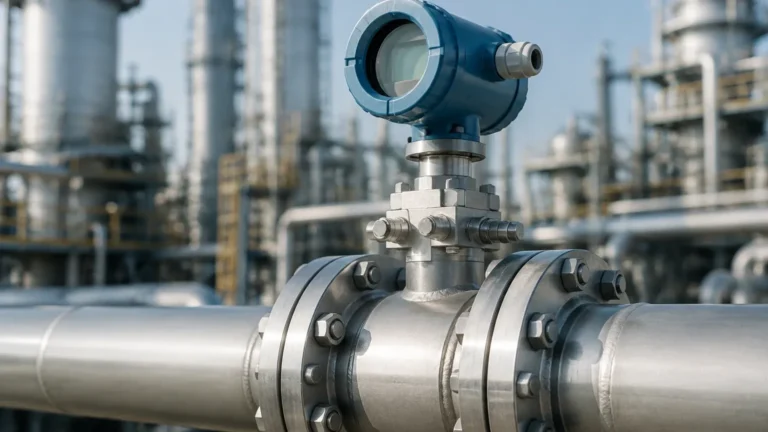
Industrial level measurement instruments, such as those provided by Welk, serve as the backbone for these monitoring systems. By integrating radar level meters, ultrasonic sensors, and hydrostatic transmitters into a broader online water quality monitoring framework, engineers can achieve a holistic view of their water systems. This article explores the technical principles of these instruments, their selection criteria, and their critical role in ensuring water quality and process safety.
The Integration of Level Measurement and Water Quality
Online water quality monitoring involves the continuous measurement of parameters such as pH, dissolved oxygen, turbidity, conductivity, and chemical oxygen demand (COD). While these chemical parameters define the "what" of the water quality, level measurement defines the "where" and "how much."
In a typical water treatment plant, level sensors are used to:
1. Calculate Flow Rates: In open channels (using flumes or weirs), the level of the water is directly proportional to the flow rate. Accurate flow data is essential for calculating the total load of contaminants.
2. Manage Dosing Tanks: Chemical reagents used for neutralization or flocculation must be added in precise ratios. Level sensors ensure that dosing pumps do not run dry and that the inventory of treatment chemicals is maintained.
3. Monitor Filter Beds: In sand filtration or carbon adsorption, the level of water above the filter media indicates the degree of clogging and the need for backwashing.
4. Prevent Overflows: High-level switches and continuous transmitters prevent the discharge of untreated or partially treated water into the environment.
For engineers seeking high-performance instrumentation to support these applications, the Main Page of Welk’s product catalog provides a detailed overview of radar, ultrasonic, and hydrostatic solutions designed for industrial environments.
Measurement Principles for Level Instrumentation
Selecting the right technology for online water quality monitoring requires an understanding of the underlying physics of each measurement method. Each technology has specific strengths depending on the media characteristics and environmental conditions.
1. Radar Level Meters (FMCW and Pulse)
Radar level measurement is a non-contact technology that uses electromagnetic waves to determine the distance to the liquid surface. It is widely considered the gold standard for accuracy and reliability in challenging environments.
* Principle: The sensor emits a high-frequency signal (typically 26GHz or 80GHz). Frequency Modulated Continuous Wave (FMCW) radar measures the frequency difference between the emitted and received signal, which is proportional to the distance. Pulse radar measures the "Time of Flight" (ToF) of a short microwave pulse.
* Advantages: Radar is unaffected by temperature fluctuations, pressure changes, or the presence of vapors and dust. It provides high precision (up to ±1 mm) and is ideal for corrosive chemicals used in water treatment.
* Application in Water Quality: Monitoring chemical storage tanks, sludge digesters, and high-precision process tanks where foam or steam might be present.
2. Ultrasonic Level Sensors
Ultrasonic sensors are a cost-effective, non-contact solution for many water and wastewater applications. They are particularly popular in open-channel flow measurement and sump monitoring.
* Principle: The sensor transmits ultrasonic sound pulses that reflect off the liquid surface. The time taken for the echo to return is measured. Since the speed of sound is known, the distance can be calculated ($D =
rac{v imes t}{2}$).
* Advantages: No moving parts, easy installation, and lower cost compared to radar. Modern sensors include temperature compensation to account for changes in the speed of sound.
* Application in Water Quality: Open channel flow monitoring in influent and effluent streams, pump station control, and storage tank level monitoring.
3. Hydrostatic Level Transmitters
Hydrostatic measurement is a contact-based method that relies on the weight of the liquid column to determine the level.
* Principle: A pressure sensor is submerged at the bottom of the tank or well. It measures the hydrostatic pressure exerted by the liquid. The level is calculated using the formula $P =
ho imes g imes h$, where $P$ is pressure, $
ho$ is the density of the liquid, $g$ is gravity, and $h$ is the height of the liquid column.
* Advantages: Very reliable for deep wells, boreholes, and large reservoirs. It is unaffected by surface turbulence, foam, or floating debris.
* Application in Water Quality: Groundwater monitoring, deep well level tracking, and large equalization basins in wastewater plants.
Selection Criteria for Water Industry Applications
Choosing the correct instrument involves balancing technical requirements with budget constraints. The following table provides a comparison of the primary technologies used in online water quality monitoring systems.
| Feature | Radar (80GHz) | Ultrasonic | Hydrostatic |
| :— | :— | :— | :— |
| Measurement Type | Non-contact | Non-contact | Contact (Submersible) |
| Accuracy | Highest (±1-2 mm) | Moderate (±0.25% of range) | High (±0.1-0.5% of span) |
| Media Influence | Unaffected by density | Affected by foam/vapor | Affected by density changes |
| Installation | Top-mounted | Top-mounted | Submerged/Side-mounted |
| Max Range | Up to 120 meters | Up to 30 meters | Up to 200+ meters |
| Maintenance | Very Low | Low (Keep face clean) | Moderate (Prevent siltation) |
| Best Use Case | Corrosive/Vaporous tanks | Open channels/Wastewater | Deep wells/Reservoirs |
Installation Considerations and Best Practices
Even the most advanced sensor will fail to provide accurate data if installed incorrectly. For online water quality monitoring systems, the following installation guidelines are critical:
Blocking Distance (Dead Zone)
All non-contact sensors (radar and ultrasonic) have a "blocking distance" near the sensor face where measurements cannot be taken. Engineers must ensure the maximum liquid level never enters this zone to avoid signal loss. If the tank is frequently filled to the top, a nozzle extension or a standpipe may be required to move the sensor further away from the liquid.
Beam Angle and Obstructions
Radar and ultrasonic signals spread out in a cone. If this cone hits tank walls, ladders, or agitators, it can create "false echoes." When installing sensors for water quality monitoring, it is essential to:
* Mount the sensor perpendicular to the liquid surface.
* Keep the signal path clear of internal obstructions.
* Use software mapping (false echo suppression) to ignore static reflections from the tank structure.
Environmental Protection
In water treatment, sensors are often exposed to humidity, hydrogen sulfide ($H_2S$) gas, and outdoor weather. Sensors should have an IP68 rating for submersion or at least IP67 for outdoor use. For corrosive environments, PVDF or PTFE-coated sensors are recommended to prevent chemical degradation of the instrument housing.
Hydrostatic Venting
Hydrostatic transmitters require a vent tube in the cable to compensate for changes in atmospheric pressure. If this vent tube becomes blocked or moisture enters it, the level readings will drift. Using a desiccant bellows or a specialized junction box can prevent moisture ingress into the vent tube.
Limitations and Common Risks
While industrial level meters are highly reliable, they are not universal solutions. Understanding their limitations is key to maintaining a functional online water quality monitoring system.
1. Foam Interference: Heavy, dense foam can absorb ultrasonic signals, leading to signal loss. In these cases, 80GHz radar is a superior choice as it can penetrate most foam types.
2. Density Fluctuations: Hydrostatic sensors measure weight, not volume. If the density of the water changes significantly (e.g., due to high salinity or temperature shifts), the level reading will be inaccurate unless the transmitter is recalibrated or compensated.
3. Turbulence: Rapidly moving water or surface agitation can cause erratic readings in ultrasonic sensors. Using a stilling well or switching to a radar sensor with advanced signal processing can mitigate this issue.
4. Scaling and Buildup: In wastewater applications, grease or mineral scale can build up on the sensor face. Non-contact sensors are less susceptible, but they still require periodic inspection to ensure the transducer face is clear.
Integrating Data into Automation Systems
For a complete online water quality monitoring solution, the level data must be integrated into a SCADA or PLC system. Most modern instruments offer multiple output options:
* 4-20mA HART: The industry standard for analog signaling with digital diagnostics.
* Modbus RTU/RS485: Ideal for daisy-chaining multiple sensors over long distances.
* Profibus/Foundation Fieldbus: Used in complex plant-wide automation networks.
By combining level data with chemical analysis, operators can implement "Feed-Forward" control. For example, if the influent flow rate (measured by level) increases, the system can automatically ramp up the chlorine dosing before the water quality sensors detect a drop in residual levels. This proactive approach is the hallmark of a sophisticated online water quality monitoring strategy.
Frequently Asked Questions (FAQ)
Q: How often should level sensors in water quality applications be calibrated?
A: For non-contact sensors like radar, calibration is typically performed during commissioning and rarely needs adjustment unless the process conditions change. Hydrostatic sensors should be checked annually to account for any sensor drift or changes in media density.
Q: Can I use an ultrasonic sensor for measuring the level of sulfuric acid used in water treatment?
A: While possible, it is not recommended. Acid vapors can change the speed of sound, leading to errors. Furthermore, the corrosive nature of the vapors can damage standard transducers. A PTFE-faced radar level meter is a much more reliable choice for acid tanks.
Q: What is the benefit of 80GHz radar over 26GHz radar for water monitoring?
A: 80GHz radar has a much narrower beam angle. This allows it to be installed in smaller nozzles and avoids reflections from tank walls or internal pipes, which is common in the compact skid-mounted systems used for online water quality monitoring.
Q: Is hydrostatic measurement suitable for wastewater with high solids content?
A: Yes, provided a flush-diaphragm or non-clogging sensor design is used. However, regular cleaning may be necessary to prevent sludge from burying the sensor and affecting its pressure sensitivity.
Conclusion
Online water quality monitoring is a multi-faceted discipline that requires the seamless integration of chemical analysis and physical measurement. By selecting the appropriate level instrumentation—whether it be the precision of a radar level meter, the versatility of an ultrasonic sensor, or the robustness of a hydrostatic transmitter—industrial operators can ensure their water systems remain compliant, efficient, and safe. For those looking to upgrade their monitoring capabilities, exploring the technical resources and product ranges on the Welk Main Page is an excellent first step toward achieving superior process control.