Oxygen Probes
Oxygen Probes
In the landscape of industrial process control, oxygen probes are critical instruments used to monitor and manage the concentration of oxygen in gas or liquid streams. Whether maintaining combustion efficiency in a high-temperature boiler or ensuring the aerobic health of a wastewater treatment plant, the selection of the correct oxygen sensing technology directly impacts operational safety, environmental compliance, and energy efficiency. For engineers managing complex industrial environments, understanding the underlying physics of these probes is the first step toward effective system integration.
Industrial oxygen measurement typically falls into two categories: gas-phase measurement (often for combustion or safety) and dissolved oxygen (DO) measurement (for liquids). This guide examines the primary measurement principles, selection criteria, and installation considerations for modern oxygen probes.
Measurement Principles of Oxygen Probes
To select the appropriate instrument, it is necessary to understand how different sensors interact with oxygen molecules. The three most common technologies used in industrial oxygen probes are zirconia (potentiometric), galvanic/electrochemical, and optical (fluorescence quenching).
Zirconia Oxygen Probes
Zirconia probes are the industry standard for high-temperature gas applications, such as flue gas analysis. The sensor utilizes a ceramic zirconium dioxide (ZrO2) element coated with thin layers of platinum which act as electrodes.
At temperatures above 600°C, the zirconia ceramic becomes a solid electrolyte that allows the passage of oxygen ions. When there is a difference in oxygen partial pressure between the reference side (usually ambient air) and the process side, oxygen ions migrate through the ceramic, creating an electrical voltage (EMF). This voltage is calculated using the Nernst equation, where the output is logarithmically proportional to the oxygen concentration. Because they operate at high temperatures, these probes are often "in-situ," meaning they are placed directly into the stack or furnace.
Galvanic and Electrochemical Probes
Galvanic oxygen probes operate similarly to a battery. They consist of a lead anode, a gold or silver cathode, and an electrolytic solution, all contained behind a gas-permeable membrane. Oxygen diffuses through the membrane and is chemically reduced at the cathode, generating an electrical current proportional to the partial pressure of oxygen.
These probes are self-polarizing and do not require an external power source to drive the chemical reaction, making them suitable for portable meters and certain remote monitoring applications. However, the electrolyte and anode are consumed over time, requiring periodic replacement or refurbishment.
Optical Oxygen Probes
Optical probes, or Luminescent Dissolved Oxygen (LDO) sensors, represent a newer generation of technology primarily used for dissolved oxygen in water. They operate on the principle of "fluorescence quenching." A sensor film contains a luminophore that is excited by a blue LED. As the luminophore returns to its ground state, it emits red light. If oxygen molecules are present, they collide with the luminophore and "quench" the luminescence. The phase shift or the decay time of the red light is measured; the higher the oxygen concentration, the shorter the decay time. Unlike electrochemical probes, optical sensors do not consume oxygen and do not require a minimum flow rate.
Industrial Applications and Selection Criteria
The choice of an oxygen probe is dictated by the environment (gas vs. liquid), the temperature range, and the presence of potential contaminants.
Combustion Control
In boilers and furnaces, maintaining the "sweet spot" of excess air is vital. Too little air results in incomplete combustion and the production of hazardous carbon monoxide; too much air carries heat away through the stack, wasting fuel. Zirconia oxygen probes provide the real-time feedback necessary for burners to adjust the air-to-fuel ratio dynamically.
Water and Wastewater Treatment
In activated sludge processes, microorganisms require oxygen to break down organic matter. Oxygen probes (typically optical or galvanic) monitor the aeration basins. Maintaining dissolved oxygen levels between 1.5 mg/L and 2.0 mg/L ensures biological efficiency while minimizing the electricity costs associated with high-power blowers.
Selection Comparison Table
| Feature | Zirconia (In-Situ) | Galvanic/Electrochemical | Optical (LDO) |
| :— | :— | :— | :— |
| Primary Media | Hot Flue Gases | Water / Ambient Air | Water / Process Liquids |
| Operating Temp | 600°C to 1400°C | 0°C to 50°C | 0°C to 50°C |
| Response Time | < 3 seconds | 30–60 seconds | < 30 seconds |
| Maintenance | Low (Self-cleaning possible) | High (Membrane/Electrolyte) | Moderate (Cap replacement) |
| Flow Dependency | None | Requires flow (>0.3 m/s) | None |
Installation Considerations for Oxygen Probes
Correct installation is as important as the sensor technology itself. Improper placement can lead to "stratification" errors, where the probe measures a pocket of gas or liquid that is not representative of the bulk process.
1. Insertion Depth: For gas probes in large ducts, the probe should extend past the boundary layer of the pipe wall (usually at least 300 mm to 500 mm) to ensure it reaches the main flow stream.
2. Orientation: In liquid applications, probes should ideally be installed at a 45-degree angle pointing downward. This prevents air bubbles from collecting on the sensor face, which would cause artificially high oxygen readings.
3. Flow Velocity: If using a galvanic probe in a tank, ensure it is placed in an area with active mixing. If the water is stagnant, the probe will consume the oxygen in its immediate vicinity, leading to a false low reading.
4. Temperature Gradients: For zirconia probes, avoid placing the unit directly behind water-cooled walls or near cold air leaks (tramp air), as this can cause thermal shock to the ceramic element or provide inaccurate combustion data.
Maintenance, Calibration, and Troubleshooting
All oxygen probes require a calibration regime to maintain accuracy. For gas probes, this involves using a "span gas" with a known oxygen concentration (e.g., 2% O2 in nitrogen) and a "zero gas."
* Calibration Drift: In electrochemical sensors, drift is often caused by the depletion of the electrolyte or the coating of the membrane with oils or biofilms. Regular cleaning with deionized water or specialized cleaning solutions is required.
* Thermal Shock: Zirconia elements are brittle. If a probe is powered up too quickly or exposed to moisture while at high temperatures, the ceramic can crack. Most modern controllers include a "soft start" heating cycle to prevent this.
* Interference: Be aware of interfering gases. For example, in zirconia probes, high concentrations of combustibles (CO, H2) will react with oxygen on the platinum electrode, causing the probe to read lower than the actual oxygen level in the flue gas.
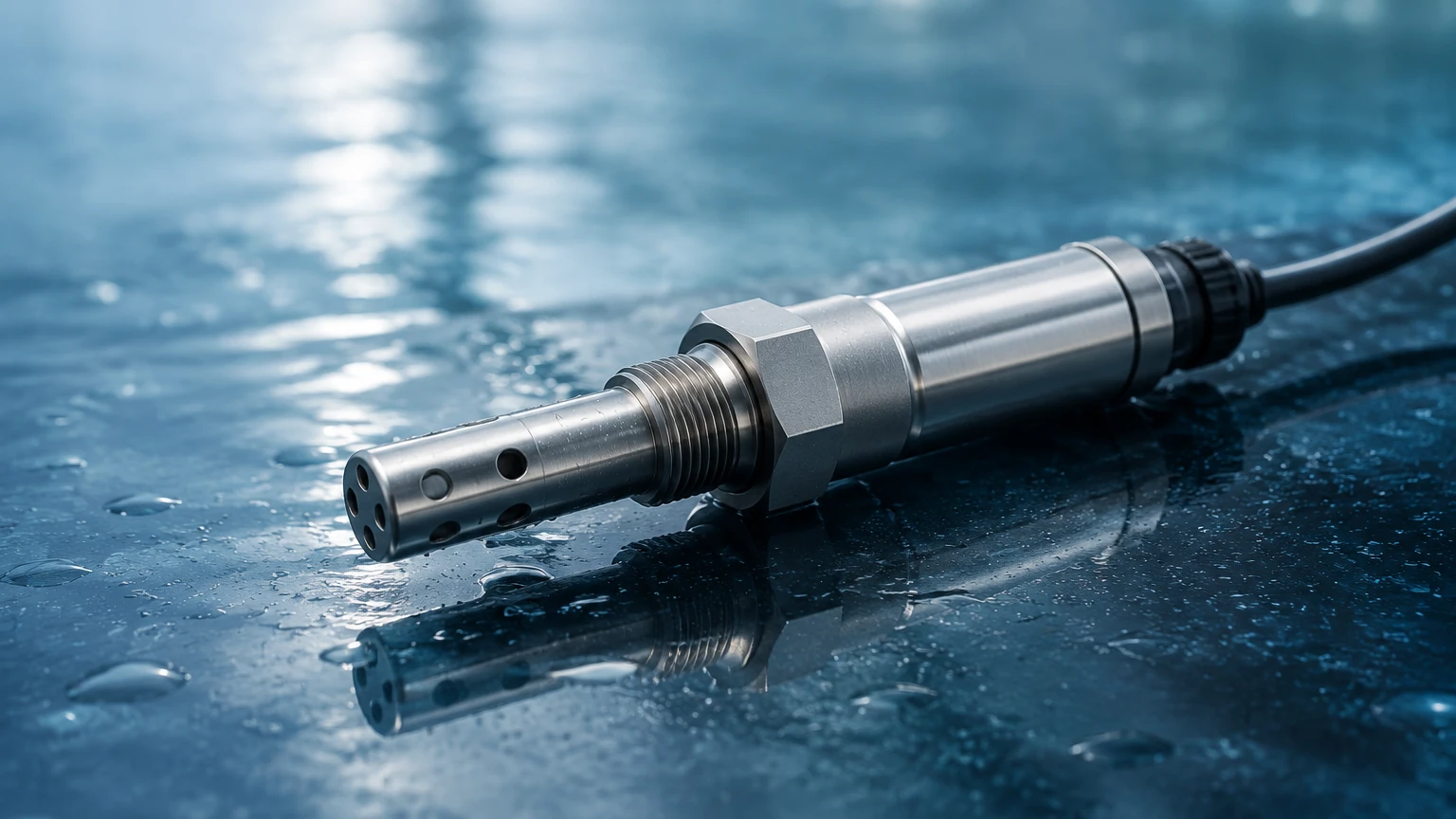
Integrating Oxygen Probes with Level Measurement Systems
In many industrial automation scenarios, gas analysis and liquid level measurement are used in tandem. For example, in chemical storage tanks, oxygen probes monitor the inerting blanket (nitrogen padding) to prevent explosions, while hydrostatic or radar level transmitters monitor the volume of the product.
Integrating these sensors into a single PLC (Programmable Logic Controller) or SCADA system allows for comprehensive safety interlocking. If the oxygen probe detects a rise in O2 levels within a flammable liquid tank, the system can automatically trigger nitrogen injection and halt pumping operations. For professionals seeking to optimize these integrated systems, reviewing a wide range of instrumentation options is essential. You can Review product options and application support to see how various level measurement technologies complement gas detection and process control probes.
Limitations of Oxygen Sensing Technology
While highly accurate, oxygen probes have specific boundaries:
* Pressure Sensitivity: Most oxygen sensors measure partial pressure, not percentage. If the process pressure changes significantly without compensation, the indicated oxygen percentage will be incorrect.
* Contamination: In flue gases containing high sulfur (SOx) or heavy metals, the platinum electrodes on zirconia probes can become "poisoned," leading to sluggish response times and eventual sensor failure.
* Membrane Fouling: In wastewater, the growth of algae or bacterial slime on the membrane of an electrochemical probe can block oxygen diffusion, necessitating frequent manual cleaning or the use of automated spray cleaning systems.
Frequently Asked Questions (FAQ)
Q: How often should I calibrate my zirconia oxygen probe?
A: For most combustion applications, a monthly calibration check is recommended. However, many high-end systems feature automated calibration cycles that can be performed weekly without removing the probe from the stack.
Q: Can I use an optical oxygen probe in high-temperature steam?
A: No. Optical and galvanic probes are generally limited to temperatures below 50°C. For high-temperature steam or gas, zirconia technology is the appropriate choice.
Q: What is the lifespan of an electrochemical oxygen sensor?
A: Typically, these sensors last 12 to 24 months in clean air. In continuous industrial process use, the lifespan may be shorter depending on the concentration of oxygen and the presence of corrosive gases.
Q: Does the flow rate affect optical oxygen probes?
A: Unlike galvanic probes, optical probes do not consume oxygen during measurement, so they are not dependent on a minimum flow rate. They can accurately measure oxygen in completely stagnant water.
By carefully matching the probe technology to the specific chemical and thermal demands of the application, and by following rigorous installation and maintenance protocols, industrial operators can ensure long-term reliability and precision in their oxygen monitoring programs.