Picomag Dma25
Picomag Dma25
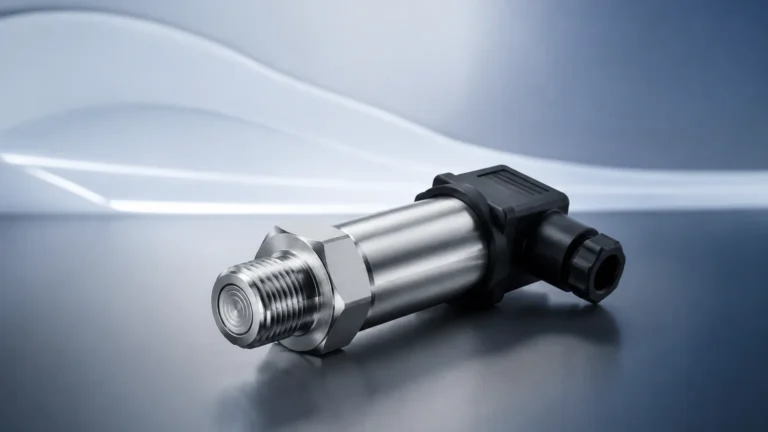
In the landscape of industrial automation and process control, the integration of flow and level measurement is essential for maintaining operational efficiency and safety. The Picomag DMA25 represents a specific class of compact electromagnetic flowmeters designed for conductive liquids. While level measurement instruments—such as those found on our Main Page—monitor the volume of media within tanks and vessels, flowmeters like the Picomag DMA25 track the rate at which those media move through the distribution network.
This article provides a technical overview of the Picomag DMA25, its measurement principles, installation requirements, and how it complements level measurement technologies in a comprehensive process control system.
Measurement Principle: Faraday’s Law of Induction
The Picomag DMA25 operates based on the electromagnetic measurement principle, specifically Faraday’s Law of Induction. This physical law states that a voltage is induced when a conductive medium flows through a magnetic field.
In a practical industrial application, the flowmeter’s sensor contains a set of electromagnetic coils that generate a constant magnetic field perpendicular to the direction of flow. Two electrodes are placed on the inner walls of the measuring tube. As a conductive liquid (such as water, chemicals, or cooling fluids) passes through the tube, it acts as a moving conductor. This movement induces an electrical voltage between the electrodes.
The induced voltage ($U$) is directly proportional to the flow velocity ($v$), the magnetic field strength ($B$), and the distance between the electrodes ($d$), expressed as:
$$U = B \cdot v \cdot d$$
Since the magnetic field and the electrode distance are constant, the voltage is a direct indicator of the fluid's velocity. The electronics within the DMA25 then convert this velocity into a volumetric flow rate. Because this method does not involve moving parts, it offers high reliability and minimal pressure loss compared to mechanical flowmeters.
Technical Specifications and Features of the Picomag DMA25
The "DMA25" designation typically refers to the nominal diameter (DN) of the sensor, which in this case is 25 mm (1 inch). This size is commonly used in secondary loops, cooling circuits, and water treatment skids.
Key Features
* Compact Design: The sensor and transmitter are housed in a single, space-saving unit, making it ideal for tight installation spaces.
* IO-Link Integration: It supports digital communication via IO-Link, allowing for easy integration into modern PLC architectures and Industry 4.0 environments.
* Bluetooth Connectivity: Operators can configure the device and view diagnostics wirelessly using a smartphone or tablet, which is particularly useful for instruments installed in hard-to-reach locations.
* Multi-Parameter Measurement: In addition to flow rate, the device typically monitors the temperature and conductivity of the medium, providing a more holistic view of the process.
Technical Data Table
| Parameter | Value (Metric) | Value (Imperial) |
| :— | :— | :— |
| Nominal Diameter | DN 25 | 1" |
| Maximum Flow Rate | ~300 l/min | ~79.2 gpm |
| Process Temperature | -10 to +70 °C | 14 to 158 °F |
| Process Pressure | Max 16 bar | Max 232 psi |
| Minimum Conductivity | 20 μS/cm | 20 μS/cm |
| Accuracy | ±0.8% of reading | ±0.8% of reading |
The Synergy Between Flow and Level Measurement
In most industrial processes, flow measurement and level measurement are two sides of the same coin. For example, in a chemical dosing system, a Welk ultrasonic level sensor might monitor the inventory in a bulk storage tank, while a Picomag DMA25 monitors the precise amount of chemical being pumped into the process line.
Mass Balance and Leak Detection
By comparing the change in level (volume) within a tank over time against the integrated flow data from a DMA25, engineers can perform a mass balance calculation. If the volume decrease in the tank is significantly higher than the measured flow through the pipe, it indicates a potential leak or a calibration error in one of the instruments.
Redundancy and Safety
In high-risk applications, using two different measurement technologies (e.g., a hydrostatic level transmitter and an electromagnetic flowmeter) provides a layer of redundancy. If the level sensor indicates a "tank empty" state but the flowmeter still detects fluid movement, the control system can trigger an alarm to prevent pump cavitation or dry running.
Selection Criteria for Compact Electromagnetic Flowmeters
When evaluating the Picomag DMA25 for a project, engineers should consider several factors to ensure the device is fit for purpose.
1. Fluid Conductivity: The most critical requirement is that the medium must be electrically conductive. It is unsuitable for hydrocarbons (oils), demineralized water, or gases.
2. Pipe Size and Flow Range: The DMA25 is optimized for 25 mm (1 inch) piping. If the flow velocity is too low (below 0.1 m/s), the signal-to-noise ratio may decrease, affecting accuracy. Conversely, extremely high velocities can cause excessive pressure drop.
3. Environmental Conditions: The compact housing is generally rated for IP65/67. However, if the environment involves high-pressure steam cleaning or aggressive chemical vapors, higher-grade industrial housings may be required.
4. Connectivity Requirements: If the facility is transitioning to digital automation, the IO-Link capability of the DMA25 is a significant advantage. For legacy systems, standard 4-20mA or pulse outputs must be confirmed.

Installation Best Practices
Proper installation is paramount to achieving the specified accuracy of ±0.8%. Electromagnetic flowmeters are sensitive to flow profile disturbances caused by valves, pumps, and elbows.
Inlet and Outlet Runs
To ensure a stable, fully developed flow profile, the following straight pipe runs are recommended:
* Inlet (Upstream): At least 5 x DN (125 mm for a DMA25) of straight pipe after the nearest disturbance.
* Outlet (Downstream): At least 2 x DN (50 mm for a DMA25) of straight pipe before the next fitting.
Orientation and Filling
The measuring tube must always be completely full of liquid. If air bubbles are present or if the pipe is only partially full, the measurement will be inaccurate.
* Vertical Installation: The preferred orientation is a vertical pipe with the flow moving upwards. This ensures the tube remains full and prevents the accumulation of solids.
* Horizontal Installation: If installed horizontally, the electrode axis should be horizontal to prevent air bubbles (at the top) or sediment (at the bottom) from interfering with the electrode signal.
Grounding
Since the flowmeter measures minute voltages, electrical interference can be a major issue. The fluid, the sensor, and the pipe must be at the same electrical potential. In plastic piping systems, grounding rings are required to establish a conductive path to the fluid.
Limitations and Common Risks
While the Picomag DMA25 is a versatile tool, it has specific limitations that must be acknowledged during the engineering phase:
* Conductivity Threshold: If the conductivity drops below 20 μS/cm, the device will likely fail to provide a reading. This often happens in systems where high-purity deionized water is introduced without the operator's knowledge.
* Temperature Limits: With a maximum process temperature of 70°C (158°F), it is not suitable for high-temperature CIP (Clean-In-Place) cycles or steam sterilization without being bypassed or removed.
* Magnetic Interference: Strong external magnetic fields (e.g., from large motors or transformers) in close proximity can distort the internal magnetic field of the sensor.
* Scaling and Coating: If the fluid tends to leave non-conductive deposits (like calcium scale or grease) on the electrodes, the signal will eventually be insulated, leading to measurement drift or failure.
Integrating Welk Level Solutions
For engineers looking to build a complete fluid management system, the data provided by a Picomag DMA25 is only one part of the equation. Reliable inventory management requires high-precision level measurement. Welk offers a wide range of instruments that work in tandem with flow data:
* Radar Level Meters: Ideal for non-contact measurement in chemical tanks where flow rates are monitored by the DMA25.
* Ultrasonic Level Sensors: A cost-effective solution for water and wastewater applications.
* Hydrostatic Level Transmitters: Perfect for deep tanks or reservoirs where top-down access is limited.
To explore the full range of level measurement technologies that can be integrated with your flow control systems, please visit our Main Page for detailed product specifications and application guides.
Frequently Asked Questions (FAQ)
Q: Can the Picomag DMA25 measure the flow of oil?
A: No. Oils and hydrocarbons are non-conductive. Electromagnetic flowmeters require a minimum conductivity (usually 20 μS/cm) to function.
Q: Does the device require periodic recalibration?
A: Because there are no moving parts to wear out, the DMA25 is very stable. However, in regulated industries or applications with aggressive media, an annual calibration check is recommended to ensure accuracy.
Q: Can I use the Bluetooth interface for permanent control?
A: No. The Bluetooth interface and the SmartBlue app are designed for commissioning, configuration, and maintenance. For continuous process control, the device should be hardwired via IO-Link or analog outputs to a PLC.
Q: What happens if the pipe is only half full?
A: The flowmeter will provide an incorrect, typically higher-than-actual reading, or it may trigger an "Empty Pipe Detection" alarm if the electrodes are no longer submerged.
Q: Is the DMA25 suitable for food and beverage applications?
A: It is suitable for many utility applications (like cooling water or cleaning agents) within the food industry, provided the temperature and chemical compatibility of the wetted parts (usually PEEK and stainless steel) meet the specific process requirements. For direct contact with food products, specialized hygienic sensors are often preferred.