Pool Chlorine Sensor
Pool Chlorine Sensor
In industrial and commercial water treatment, maintaining the precise concentration of disinfectants is critical for both safety and operational efficiency. A pool chlorine sensor serves as the primary analytical component in automated dosing systems, providing real-time data to ensure that water remains pathogen-free without exceeding regulatory limits or causing equipment corrosion. Unlike manual testing methods, which offer only periodic snapshots, continuous chlorine sensing allows for dynamic response to bather load, temperature fluctuations, and environmental contaminants.
For engineers and facility managers, selecting the right pool chlorine sensor involves understanding the electrochemical principles at play, the integration requirements with chemical feed systems, and the maintenance protocols necessary to ensure long-term accuracy. This guide examines the technical foundations of chlorine measurement and provides a framework for selecting and installing these sensors in professional environments.
Measurement Principles: Amperometric vs. ORP
Before selecting a sensor, it is essential to distinguish between the two primary technologies used to monitor chlorine levels: Amperometric sensors and Oxidation-Reduction Potential (ORP) sensors.
Amperometric Sensors
Amperometric measurement is a direct electrochemical method that determines the concentration of free residual chlorine (FRC) by measuring the current generated during the reduction of hypochlorous acid (HOCl) at a sensing electrode.
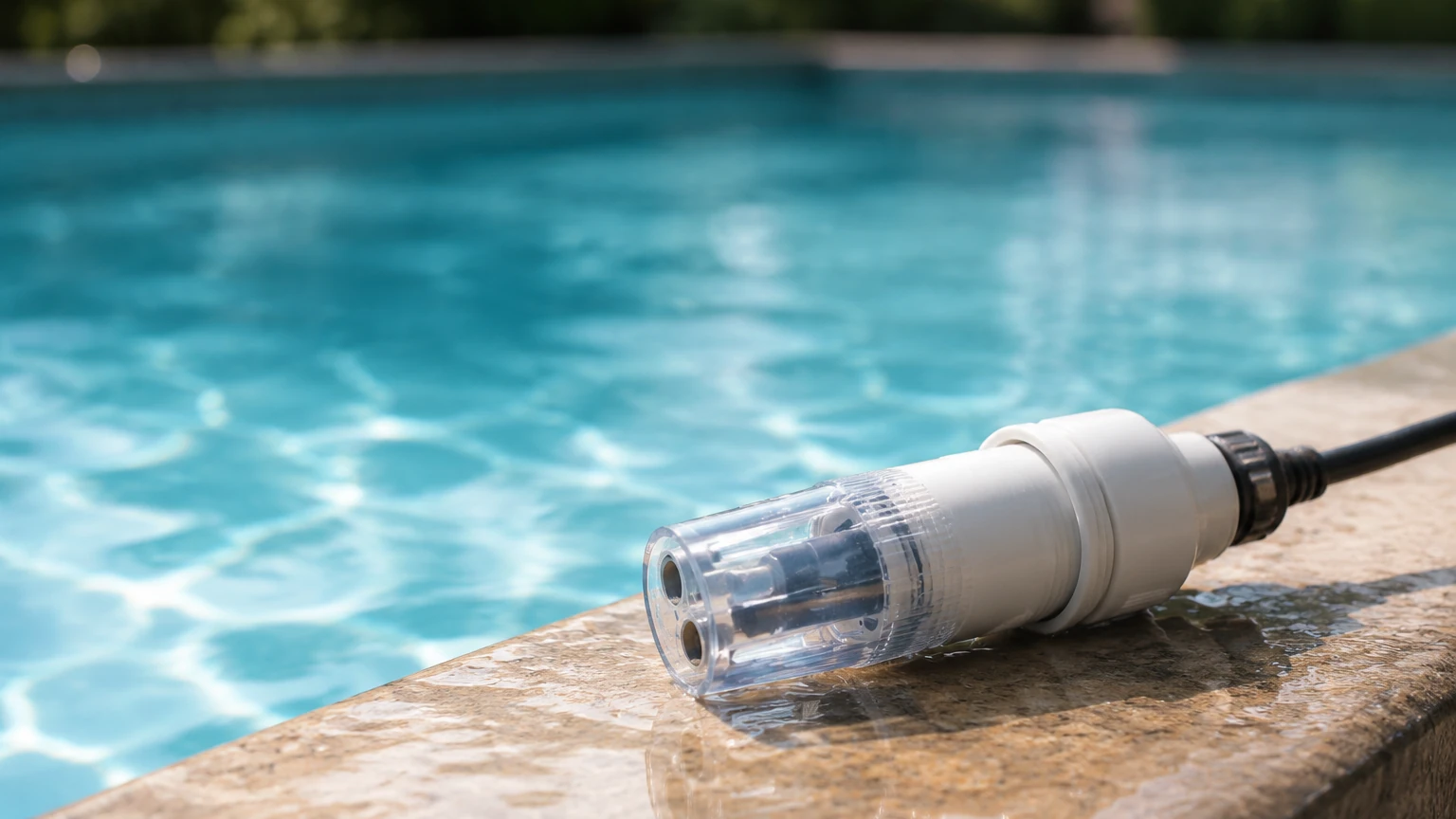
These sensors typically consist of two or three electrodes (a cathode and an anode) submerged in an electrolyte solution and separated from the process water by a gas-permeable membrane. As chlorine molecules diffuse through the membrane, they are reduced at the cathode, creating a current proportional to the chlorine concentration. Amperometric sensors are highly specific to chlorine and are the preferred choice for applications requiring precise mg/L (ppm) readings.
ORP (Redox) Sensors
ORP sensors measure the total oxidative capacity of the water rather than the specific concentration of a single chemical. An ORP sensor consists of a noble metal electrode (usually platinum) and a reference electrode. It measures the voltage (in millivolts) generated by the exchange of electrons between oxidizers (like chlorine) and reducers in the water.
While ORP is an excellent indicator of the "killing power" of the water, it is an indirect measurement. It can be influenced by pH, temperature, and the presence of other oxidants. In many industrial pool applications, ORP is used for basic control, while amperometric sensors are used for precise concentration monitoring and reporting.
Integration with Chemical Inventory Management
A pool chlorine sensor is only one part of a larger chemical control loop. While the sensor dictates *when* to dose, the reliability of the system also depends on the availability of the chemicals being dosed, such as sodium hypochlorite or calcium hypochlorite.
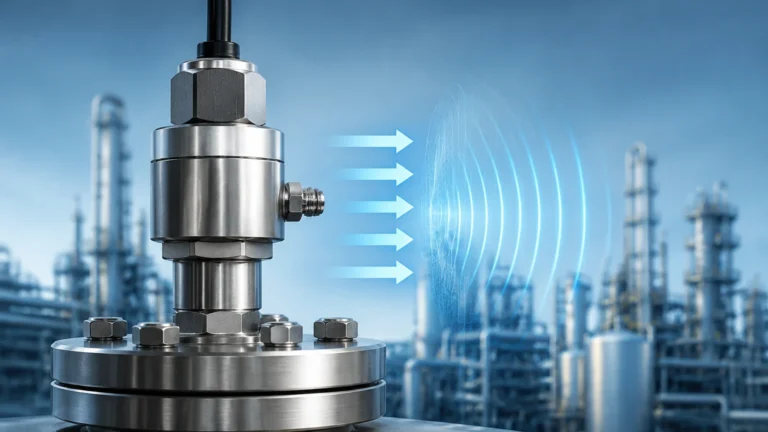
In professional installations, it is standard practice to pair analytical sensors with robust level measurement technologies to monitor chemical day tanks and bulk storage. For instance, using a Main Page resource to select hydrostatic level transmitters or ultrasonic sensors ensures that the dosing pumps do not run dry, which could lead to air locks or pump failure. By monitoring the level of liquid chlorine in storage tanks, operators can automate reordering and prevent system downtime, creating a fully closed-loop automation environment.
Key Evaluation Criteria for Selection
When evaluating a pool chlorine sensor for an industrial or high-traffic commercial facility, several technical factors must be considered to ensure the device is fit for purpose.
| Feature | Requirement / Specification | Importance |
| :— | :— | :— |
| Measurement Range | Typically 0–5 mg/L or 0–10 mg/L | Must cover the maximum expected dosing levels. |
| pH Compensation | Integral or via Controller | Chlorine's form (HOCl vs. OCl-) changes with pH; compensation is vital for accuracy. |
| Response Time (T90) | < 60 seconds | Faster response prevents "over-shooting" during chemical dosing. |
| Pressure Rating | Up to 1 bar (14.5 psi) or higher | Must withstand the pressure within the flow cell or bypass line. |
| Temperature Range | 0°C to 50°C | Sensors must be compensated for temperature-driven diffusion changes. |
| Output Signal | 4-20mA, Modbus, or Digital | Compatibility with existing PLCs or pool controllers. |
Installation Considerations and Best Practices
The physical installation of a pool chlorine sensor significantly impacts its lifespan and accuracy. Most industrial sensors are not designed for direct immersion in the main pool or high-velocity pipes. Instead, they are installed in a bypass assembly known as a flow cell.
Flow Velocity and Stability
Amperometric sensors are flow-dependent. The movement of water across the membrane must be constant to ensure a steady supply of chlorine molecules for reduction. Most sensors require a flow rate between 30 and 60 liters per hour (L/h). A flow regulator and a flow switch should be installed in the bypass line to disable dosing if the flow stops, preventing chemical spikes.
Point of Injection
The sensor must be installed upstream of the chemical injection point or far enough downstream to ensure complete mixing. If the sensor is too close to the injection point, it will provide erratic readings and cause the controller to "hunt," leading to unstable chlorine levels.
Grounding and Interference
Electrochemical sensors are sensitive to electrical noise. Ensure that the flow cell is properly grounded and that the sensor cables are shielded and kept away from high-voltage power lines for pumps and motors.
Limitations and Common Risks
Despite their accuracy, pool chlorine sensors have specific limitations that operators must manage:
1. pH Sensitivity: Amperometric sensors primarily measure hypochlorous acid (HOCl). As pH rises above 7.5, HOCl converts into the hypochlorite ion (OCl-), which the sensor is less sensitive to. Without pH compensation, the sensor will report lower-than-actual chlorine levels.
2. Membrane Fouling: In pools with high calcium hardness or organic loads, the sensor membrane can become coated with scale or biofilm. This restricts the diffusion of chlorine and slows the response time.
3. No-Flow Conditions: If water stops flowing across the sensor, chlorine is depleted in the immediate vicinity of the electrode, leading to a false low reading. This can trigger the controller to dose excessively once flow is restored.
4. Electrolyte Depletion: The internal electrolyte solution in amperometric sensors is consumed over time. Depending on the design, this solution typically needs to be replenished every 3 to 6 months.
Maintenance and Calibration Protocols
To maintain B2B operational standards, a scheduled maintenance program is required. This typically includes:
* Weekly Verification: Compare the sensor's digital readout against a manual DPD (N,N-diethyl-p-phenylenediamine) colorimetric test. If the deviation is greater than 0.1 mg/L, a slope calibration may be necessary.
* Monthly Cleaning: Gently clean the membrane with a soft cloth or specialized cleaning solution to remove debris or oils.
* Quarterly Service: Replace the electrolyte solution and inspect the membrane for tears or stretching.
* Annual Replacement: The sensor cap or the membrane itself should generally be replaced annually to ensure the integrity of the electrochemical cell.
Frequently Asked Questions (FAQ)
Q: Can I use a pool chlorine sensor in salt-water pools?
A: Yes, but you must ensure the sensor is compatible with the higher conductivity and potential for hydrogen gas interference produced by salt-water chlorine generators. Amperometric sensors are generally compatible, but the electrodes must be designed to resist the specific corrosive profile of brine.
Q: What is the difference between Free Chlorine and Total Chlorine sensors?
A: Free chlorine sensors measure the available disinfectant (HOCl and OCl-). Total chlorine sensors measure both free chlorine and combined chloramines (chlorine that has already reacted with contaminants). For most pool applications, free chlorine is the primary metric for safety.
Q: Why does my sensor reading drop when the pH goes up?
A: This is due to the chemical equilibrium of chlorine in water. At higher pH, more chlorine exists as OCl-, which does not pass through the sensor membrane as easily as HOCl. This is why integrated pH and chlorine control is the industry standard.
Q: How long does a typical industrial chlorine sensor last?
A: With proper maintenance and regular electrolyte changes, a high-quality sensor body can last 3 to 5 years, while the consumable membranes and electrolyte usually last 6 to 12 months.
Conclusion
Implementing a professional pool chlorine sensor is a vital step toward achieving automated, precise water chemistry control. By understanding the electrochemical principles and ensuring the sensor is integrated into a system that also monitors chemical levels—utilizing tools like those found on the Main Page for inventory management—operators can ensure a safe and efficient aquatic environment. Proper selection, coupled with a rigorous maintenance schedule, minimizes risks and maximizes the service life of the instrumentation.