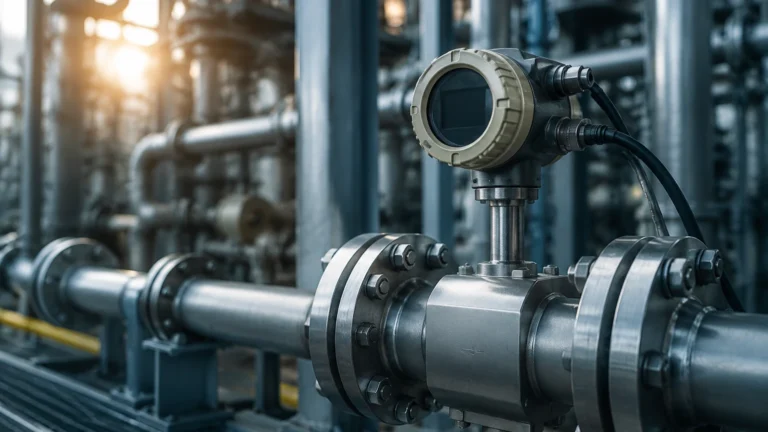
Pressure Cold
Pressure Cold
In industrial level measurement, the term "pressure cold" often refers to the specific challenges encountered when measuring hydrostatic pressure or differential pressure in low-temperature environments. Whether the process involves cryogenic liquids, outdoor storage in arctic climates, or refrigerated food and beverage processing, cold temperatures significantly alter the physical properties of both the media being measured and the instruments themselves. Understanding these variables is essential for maintaining accuracy and preventing equipment failure in demanding industrial automation sectors.
Accurate level measurement under cold conditions requires a deep understanding of fluid dynamics and material science. This guide explores the principles of pressure-based level measurement in cold applications, provides selection criteria for instrumentation, and outlines best practices for installation and maintenance.
Principles of Pressure-Based Level Measurement
Hydrostatic level measurement relies on the principle that the pressure at a specific point in a liquid is proportional to the height of the liquid column above it. The fundamental formula used is:
P = ρ × g × h
Where:
* P is the hydrostatic pressure (measured in Pascals or bar).
* ρ (rho) is the density of the liquid (kg/m³).
* g is the gravitational constant (approx. 9.81 m/s²).
* h is the height of the liquid (meters).
The Impact of Temperature on Density
In "pressure cold" scenarios, the density (ρ) of the liquid is the most critical variable. As a liquid cools, its molecules typically pack more tightly together, increasing its density. If a level transmitter is calibrated for a liquid at 20°C but the process drops to -10°C, the increased density will result in a higher pressure reading for the same physical height. Without temperature compensation, the instrument will report a level that is higher than the actual volume in the tank.
Viscosity and Response Time
Cold temperatures also increase the kinematic viscosity of many industrial fluids, such as oils and chemicals. In pressure-based systems using impulse lines or capillary tubes, high viscosity can lead to sluggish response times. In extreme cases, the fluid may become so thick that it effectively "plugs" the sensing line, preventing the transmitter from detecting rapid changes in level.
Challenges of Level Measurement in Cold Environments
When dealing with pressure cold applications, engineers must account for several physical and mechanical risks that do not exist in temperate process conditions.
1. Freezing of Impulse Lines
For differential pressure (DP) transmitters, impulse lines carry the process pressure to the sensor. If these lines contain water or moisture-heavy fluids, they can freeze solid in cold weather. This not only stops the measurement but can also rupture the piping or damage the sensor diaphragm due to the expansion of ice.
2. Electronic Component Drift
Standard industrial electronics are typically rated for operation down to -20°C or -40°C. In extreme cold, the semiconductor components within a transmitter may experience thermal drift, leading to inaccurate signal processing. Furthermore, LCD displays on field instruments often become sluggish or completely unreadable at temperatures below -30°C.
3. Material Embrittlement
Many elastomers used for seals and O-rings in level meters lose their elasticity in cold conditions. Standard Nitrile (Buna-N) or Viton may become brittle and crack, leading to leaks. Specialized low-temperature materials, such as certain grades of PTFE or silicone, are required to maintain a pressure-tight seal.
Technology Comparison for Cold Applications
While hydrostatic pressure is a common method, other technologies may be more suitable depending on the severity of the cold environment. For a broader look at available technologies, engineers often consult a Main Page of a dedicated manufacturer to compare specifications.
| Technology | Temperature Range (Typical) | Suitability for Cold | Key Limitations |
| :— | :— | :— | :— |
| Hydrostatic (Submersible) | -20°C to +80°C | Moderate | Risk of cable hardening; density changes. |
| Differential Pressure | -40°C to +120°C | High (with heat tracing) | Impulse lines can freeze; requires insulation. |
| Radar (Non-contact) | -60°C to +250°C | Excellent | High initial cost; unaffected by density. |
| Ultrasonic | -40°C to +70°C | Moderate | Speed of sound changes with air temperature. |
| Magnetic Level Gauge | -196°C to +400°C | Excellent | Requires frost-bound extensions for visibility. |
Selection Criteria for Pressure Cold Instrumentation
Selecting the right instrument for a cold-weather pressure application involves more than checking the temperature rating on a datasheet. Consider the following criteria:
Sensor Diaphragm Material
For hydrostatic transmitters, the diaphragm must remain flexible. 316L Stainless Steel is standard, but for cryogenic applications, specialized alloys may be necessary to prevent cracking. If using a remote seal with a capillary, the fill fluid must be carefully chosen. Silicone oils are available that maintain low viscosity even at -50°C.
Housing and Ingress Protection
In cold climates, condensation is a major threat. When warm, moist air enters an instrument housing and then cools, it turns into water. If this water freezes, it can destroy the internal circuitry. Look for housings with high IP ratings (IP67 or IP68) and consider using breather desiccant plugs or internal heaters.
Signal Output and Communication
In remote, cold locations, digital communication (such as HART, Modbus, or Profibus) is often preferred over simple 4-20mA analog signals. Digital protocols can transmit diagnostic data, such as internal sensor temperature, allowing operators to predict when a unit might be approaching its operational limit.

Installation Considerations for Cold Climates
Proper installation is the most effective way to mitigate the risks of pressure cold environments. Even the highest-quality transmitter will fail if the installation environment is not managed.
1. Heat Tracing and Insulation: For DP transmitters and impulse lines, electric or steam heat tracing is often mandatory. This keeps the process fluid above its freezing or pour point. Insulation blankets should be used to wrap both the lines and the transmitter body.
2. Mounting Orientation: Mount transmitters in a way that allows condensation to drain away from the sensor. For gas applications, the transmitter should be mounted above the tapping point; for liquids, it should be below.
3. Remote Seals: Using a remote diaphragm seal with a capillary allows the transmitter electronics to be mounted in a heated enclosure or a more temperate location, while only the robust seal face is exposed to the cold process.
4. Slope of Impulse Lines: Ensure impulse lines have a minimum slope of 1:12 to allow any trapped gas or liquid to migrate back to the process tank, preventing "plugs" from forming.
Limitations and Risks
Despite advanced technology, there are inherent limitations to measuring pressure in the cold. One primary limitation is the "zero shift" caused by temperature. Most high-end transmitters include internal temperature sensors to compensate for this shift, but this compensation is only accurate within the manufacturer's specified range.
Another risk is the "cold start" phenomenon. If an instrument is powered down in extreme cold and then suddenly turned on, the internal components may experience thermal shock. It is generally recommended to keep instruments powered continuously in cold environments to allow the electronics to generate a small amount of internal heat.
Frequently Asked Questions (FAQ)
Q: At what temperature do I need to worry about pressure cold issues?
A: Generally, once ambient or process temperatures drop below 0°C, you must consider the risk of freezing. Below -20°C, you must evaluate the performance of electronics, elastomers, and fluid density changes.
Q: Can I use a standard hydrostatic level sensor in a cryogenic tank?
A: No. Standard sensors are not designed for the extreme temperatures of liquid nitrogen or LNG (-160°C to -196°C). Cryogenic level measurement typically requires specialized differential pressure transmitters with extended capillaries or torque tube displacers.
Q: How does cold affect the accuracy of an ultrasonic level sensor?
A: Ultrasonic sensors measure the time it takes for a sound wave to bounce off the surface. The speed of sound is highly dependent on air temperature. While most sensors have a built-in temperature probe to compensate, rapid temperature gradients (e.g., cold air over a warm liquid) can create significant errors.
Q: Is radar a better alternative for cold outdoor storage tanks?
A: Yes, non-contact radar is often the preferred choice for outdoor tanks in cold climates. Since it does not rely on density and does not have impulse lines that can freeze, it provides a much more reliable signal in fluctuating temperatures.
Q: What fill fluid should be used in capillaries for cold applications?
A: Low-temperature silicone oils are the industry standard. These fluids are engineered to maintain a stable viscosity and volume at temperatures as low as -50°C or -80°C, ensuring the pressure signal is transmitted accurately to the sensor.
For engineers and procurement professionals looking to source reliable instrumentation for these conditions, reviewing technical specifications on a manufacturer's Main Page is a vital step in the project planning phase. Ensuring that every component—from the sensor diaphragm to the cable jacket—is rated for the intended environment will prevent costly downtime and maintain process safety.