Pressure Module
Pressure Module
In the landscape of industrial automation and process control, the pressure module serves as the critical sensory component responsible for converting physical force into a quantifiable electrical signal. For engineers and system integrators, selecting the right pressure module is not merely a matter of finding a compatible fitting; it involves understanding the underlying physics of pressure transduction, the environmental constraints of the application, and the integration requirements of the wider control system.
As a professional manufacturer of industrial level measurement instruments, Welk provides a range of solutions where the pressure module acts as the heart of hydrostatic level transmitters and specialized pressure monitoring equipment. This guide provides a technical overview of pressure module technologies, their application in level measurement, and the criteria necessary for selecting a reliable unit for industrial environments.
Core Measurement Principles of Pressure Modules
Before selecting a pressure module, it is essential to understand how these devices interpret physical pressure. Most modern industrial modules utilize one of two primary sensing technologies: piezoresistive or ceramic capacitive.
Piezoresistive Sensing
This is the most common technology used in industrial pressure modules. It relies on the piezoresistive effect, where the electrical resistance of a semiconductor (usually silicon) changes when it is subjected to mechanical strain. In a typical construction, a silicon chip is diffused with resistive elements and bonded to a diaphragm. When process pressure deforms the diaphragm, the resulting strain changes the resistance of the bridge circuit. This change is proportional to the applied pressure. Piezoresistive modules are known for their high sensitivity and compact size, though they often require oil filling to protect the silicon element from corrosive media.
Ceramic Capacitive Sensing
In a capacitive pressure module, the sensing element consists of a ceramic substrate and a thin ceramic diaphragm. These two components form a capacitor. As pressure moves the diaphragm closer to the substrate, the capacitance changes. This technology is inherently robust because ceramic is highly resistant to corrosion and mechanical wear. Unlike piezoresistive sensors, ceramic modules are often "dry" (non-oil-filled), making them ideal for applications where oil contamination must be avoided, such as in food processing or specific chemical reactions.
The Role of Pressure Modules in Hydrostatic Level Measurement
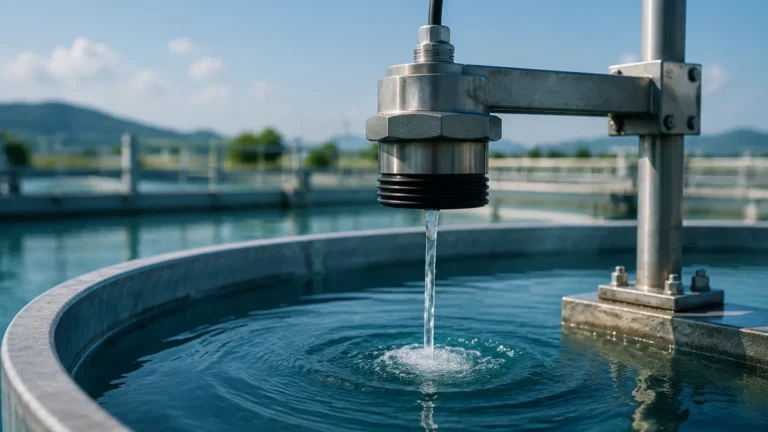
While pressure modules are used to measure line pressure in pipes, they are equally vital in level measurement applications. In the context of industrial tanks, a pressure module measures the hydrostatic pressure exerted by a liquid column.
According to the hydrostatic law, the pressure (P) at the bottom of a tank is directly proportional to the height of the liquid (h), the density of the liquid (ρ), and the gravitational constant (g):
P = ρ · g · h
By utilizing a high-precision pressure module at the base of a vessel, operators can calculate the exact liquid level regardless of the tank's shape. This method is a staple in water treatment and chemical storage, where Welk offers integrated solutions. For more information on the full range of instrumentation available, you can visit the Main Page of our product catalog.
Technical Selection Criteria
Choosing a pressure module requires an evaluation of the process media, the physical environment, and the required accuracy. The following table provides a comparison of key factors to consider during the selection process.
| Criteria | Piezoresistive Module | Ceramic Capacitive Module |
| :— | :— | :— |
| Typical Accuracy | 0.1% to 0.25% FS | 0.1% to 0.5% FS |
| Corrosion Resistance | Depends on diaphragm material (316L, Tantalum) | Excellent (Al2O3 Ceramic) |
| Overload Capacity | Moderate | High |
| Long-term Stability | Excellent | Good |
| Media Compatibility | Clean liquids, gases | Slurries, corrosive chemicals |
| Temperature Range | -40°C to +120°C | -40°C to +150°C |
Key Evaluation Factors:
1. Pressure Type: Determine if you need to measure Gauge Pressure (relative to atmospheric pressure), Absolute Pressure (relative to a vacuum), or Differential Pressure (the difference between two points).
2. Pressure Range: The module should be selected so that the operating pressure falls within 50% to 75% of its maximum range to ensure longevity and accuracy.
3. Material Compatibility: The wetted parts (the parts of the module in contact with the fluid) must be chemically compatible. While 316L stainless steel is standard, aggressive media may require Hastelloy C, Monel, or Tantalum coatings.
4. Output Signal: Most industrial modules provide a raw millivolt signal or are integrated into a transmitter that outputs 4-20mA, 0-10V, or digital protocols like HART or Modbus RTU.
Installation Guidelines and Best Practices
The performance of a pressure module is heavily dependent on how it is installed. Improper mounting can lead to zero-point shifts or physical damage to the sensing diaphragm.
* Orientation: For liquid applications, the module should ideally be mounted on the side or bottom of a pipe/tank to prevent air bubbles from being trapped against the sensor. For gas applications, mounting at the top prevents condensate buildup.
* Impulse Piping: If the module is separated from the process by impulse lines, these lines should be as short as possible and sloped (at least 1:12) to allow for self-venting or draining.
* Environmental Protection: Ensure that the electrical housing meets the required Ingress Protection (IP) rating, such as IP67 or IP68, especially in wash-down environments or outdoor installations.
* Thermal Isolation: If the process temperature exceeds the module's operating limit, use siphons, cooling towers, or capillary tubes to dissipate heat before the media reaches the sensor.

Limitations and Risk Mitigation
While highly reliable, pressure modules have specific limitations that must be managed to avoid system failure.
1. Overpressure Events: Sudden pressure spikes (water hammer) can permanently deform the sensing diaphragm. Installing snubbers or choosing a module with a high overpressure rating (e.g., 3x or 4x the nominal range) is recommended.
2. Temperature Drift: All semiconductor-based sensors experience some degree of thermal drift. High-quality modules include internal temperature compensation circuits to minimize this error.
3. Clogging: In applications involving viscous fluids or suspended solids, the small pressure ports of a standard module may clog. In these cases, a flush-diaphragm pressure module should be used to provide a flat sensing surface that does not trap debris.
4. Hydrogen Permeation: In high-pressure hydrogen applications, hydrogen atoms can diffuse through stainless steel diaphragms, leading to sensor drift or failure. Gold-plated diaphragms are often required for these specific scenarios.
Maintenance and Calibration
To maintain the integrity of a process, pressure modules require periodic verification. Industrial standards typically suggest an annual calibration check.
* Zero-Point Adjustment: Over time, mechanical fatigue or environmental changes can cause a slight shift in the zero-pressure output. Most transmitters allow for a "zero trim" to be performed via local buttons or a HART communicator.
* Field Calibration: Using a portable pressure pump and a high-accuracy reference gauge, technicians can verify the module's performance across its full scale (0%, 25%, 50%, 75%, and 100%).
* Inspection: Regularly check for signs of corrosion on the diaphragm and ensure that electrical connections remain tight and free of moisture.
Frequently Asked Questions (FAQ)
Q: What is the difference between a pressure sensor and a pressure module?
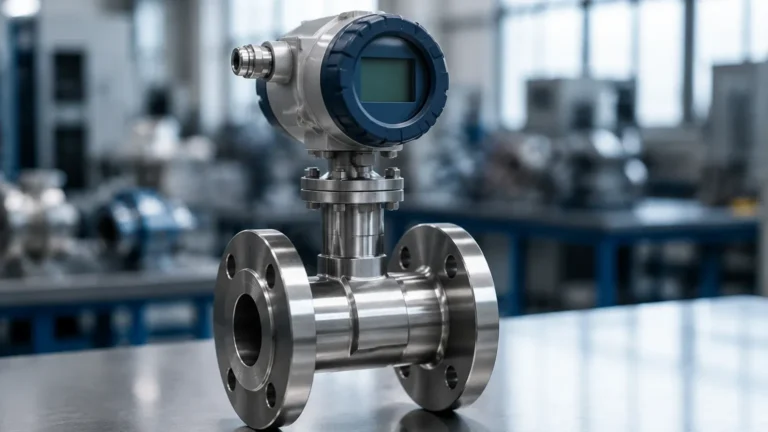
A: A pressure sensor is the raw element that converts pressure to an electrical signal. A pressure module usually refers to the sensor element packaged with compensation electronics and a mechanical housing, ready to be integrated into a larger instrument or system.
Q: Can a pressure module be used for vacuum measurement?
A: Yes, but you must specify an absolute pressure module or a compound gauge module capable of measuring negative pressures relative to the atmosphere.
Q: How does ambient pressure affect a gauge pressure module?
A: A gauge pressure module has a vent (often through the cable or a small breathable plug) that allows the back of the diaphragm to be exposed to atmospheric pressure. This ensures the measurement is always relative to the current local barometric pressure.
Q: What are the signs of a failing pressure module?
A: Common signs include erratic output signals, a constant "offset" that cannot be trimmed out, or a slow response time to pressure changes, which often indicates clogging or internal fluid leakage.
By understanding these technical nuances, engineers can ensure that their level and pressure measurement systems operate with the precision and reliability required for modern industrial applications. For specialized support in selecting the right instrumentation for your project, reviewing the detailed specifications on our Main Page is a recommended next step.