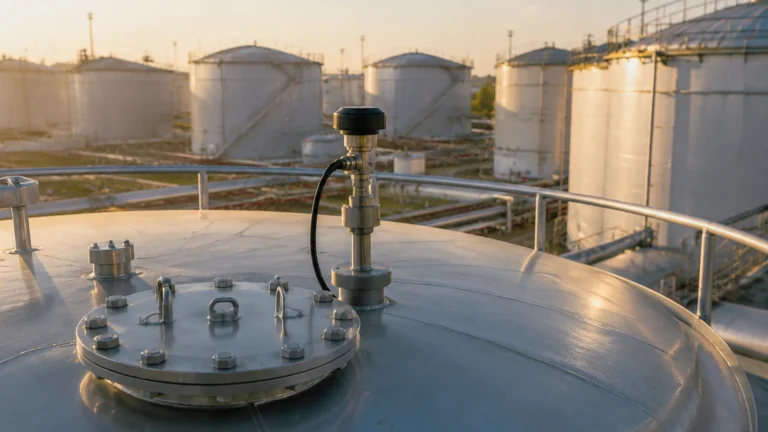
Pressure Transducer Gauge
Pressure Transducer Gauge
In the field of industrial process control, the pressure transducer gauge is a fundamental instrument used to monitor and manage fluid levels, line pressures, and vessel integrity. Unlike absolute pressure sensors that measure against a vacuum, a gauge pressure transducer measures pressure relative to the local atmospheric pressure. For engineers and system integrators, understanding the nuances of these devices is essential for ensuring accuracy in applications ranging from water treatment to chemical processing.
At its core, a pressure transducer gauge converts mechanical force into an analog or digital electrical signal. When used for level measurement, this technology relies on the principle of hydrostatic pressure, where the weight of a liquid column exerts a force proportional to its height. This guide examines the technical principles, selection criteria, and installation requirements for these critical industrial components.
Understanding the Pressure Transducer Gauge Principle
The operation of a pressure transducer gauge is rooted in the relationship between fluid depth and pressure. In a static liquid, the pressure at a specific depth is determined by the density of the fluid and the gravitational force acting upon it. This is expressed by the formula:
P = ρ · g · h
Where:
* P is the hydrostatic pressure (Pa or bar).
* ρ (rho) is the density of the liquid (kg/m³).
* g is the acceleration due to gravity (approximately 9.81 m/s²).
* h is the height of the liquid column (m).
To ensure the measurement only reflects the height of the liquid and not changes in the weather or altitude, the "gauge" aspect is vital. A pressure transducer gauge features a reference port or a vent tube that exposes the back of the sensing diaphragm to the ambient atmosphere. This naturally cancels out the atmospheric pressure acting on the surface of the liquid, leaving only the hydrostatic pressure generated by the liquid itself.
Sensing Technologies
Most modern transducers utilize one of two primary sensing methods:
1. Piezoresistive Sensors: These employ a silicon or metal diaphragm with strain gauges diffused into the structure. As pressure deforms the diaphragm, the electrical resistance changes, which is then converted into a standardized signal (such as 4-20mA).
2. Capacitive Sensors: These use a ceramic or metallic diaphragm that acts as one plate of a capacitor. Pressure changes the distance between the plates, altering the capacitance. These are highly valued for their robustness and resistance to overpressure.
Types of Gauge Pressure Transducers in Level Measurement
Depending on the tank geometry and the nature of the fluid, different physical configurations of the pressure transducer gauge are required.
Submersible Level Transmitters
These are designed to be lowered directly into a well, tank, or reservoir. The sensor is housed in a waterproof casing (typically 316L stainless steel) and connected to a specialized cable. This cable contains the electrical conductors as well as a small capillary tube that provides the atmospheric reference for the gauge measurement. These are ideal for deep wells or open-top reservoirs.
External (Side-Mounted) Transmitters
For closed pressurized vessels or tanks where internal access is restricted, the transducer is mounted externally via a threaded or flanged process connection at the bottom of the tank. If the tank is vented to the atmosphere, a standard pressure transducer gauge is used. If the tank is sealed and pressurized (blanketed), a differential pressure transmitter is typically required to subtract the top-gas pressure from the total bottom pressure.
Key Selection Criteria for Industrial Applications
Selecting the correct pressure transducer gauge requires a thorough analysis of the process environment. A mismatch between the sensor and the application can lead to premature failure or significant measurement drift.
1. Pressure Range and Overpressure Rating
It is standard practice to select a transducer with a range approximately 10% to 25% higher than the maximum expected pressure. However, the overpressure rating (the maximum pressure the sensor can withstand without damage) is equally important, especially in systems prone to water hammer or pump surges.
2. Media Compatibility
The wetted materials must be chemically resistant to the process fluid. While 316L stainless steel is the industry standard, highly corrosive media like hydrochloric acid or seawater may require Tantalum, Hastelloy, or PTFE-coated diaphragms.
3. Accuracy and Stability
Accuracy is typically expressed as a percentage of the Full Scale (FS). For most industrial level applications, an accuracy of ±0.5% FS is sufficient, though high-precision custody transfer applications may require ±0.1% FS or better. Long-term stability is also a factor, as sensors can drift over time due to material fatigue or temperature cycling.
4. Output Signals
* 4-20mA (Current Loop): The most common in industrial automation due to its resistance to electrical noise and ability to travel long distances.
* RS485/Modbus: Preferred for digital integration and multi-drop networks where multiple sensors are connected to a single PLC port.
* HART Protocol: Allows for digital communication over the standard 4-20mA signal, enabling remote diagnostics and calibration.
Comparison of Sensing Technologies
The following table provides a general comparison of the technologies used in a pressure transducer gauge to assist in the engineering selection process.
| Feature | Piezoresistive (Silicon) | Ceramic Capacitive | Strain Gauge (Metal) |
| :— | :— | :— | :— |
| Sensitivity | Very High | High | Moderate |
| Durability | Moderate | Excellent | High |
| Overpressure Resistance | Low to Moderate | Very High | Moderate |
| Chemical Resistance | Depends on housing | Excellent (Ceramic) | Good |
| Cost | Cost-effective | Moderate | High |
| Best Use Case | General-purpose water/oil | Corrosive/Abrasive fluids | High-pressure hydraulics |
Installation Guidelines and Best Practices
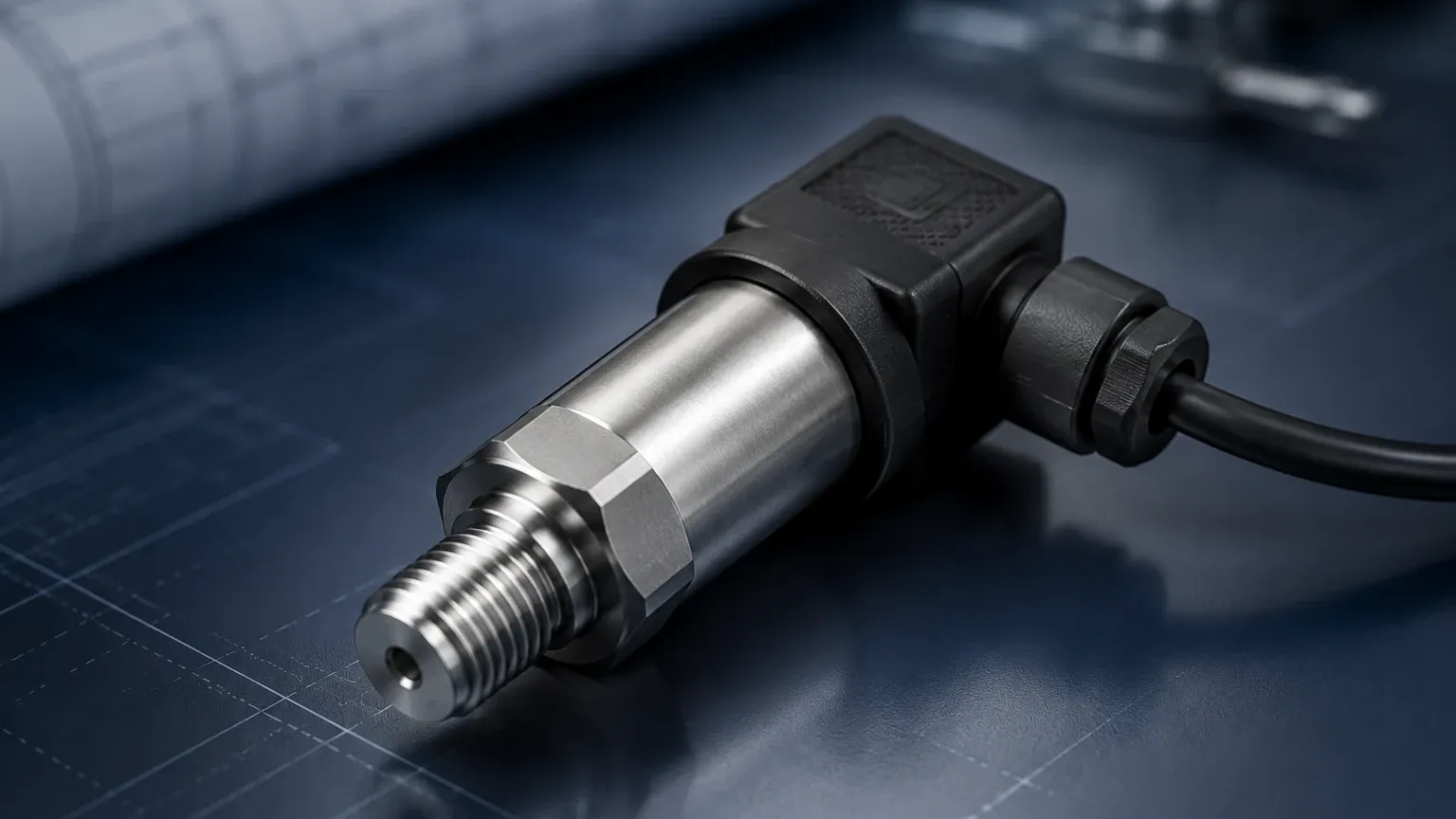
Proper installation is the most significant factor in the longevity of a pressure transducer gauge. Even the highest quality sensor will fail if environmental factors are not addressed.
Atmospheric Venting
For gauge pressure measurements, the vent tube in the cable (for submersible types) or the vent port (for external types) must remain unobstructed. If moisture enters the vent tube, it can block the atmospheric reference or cause internal corrosion. Using a specialized vent filter or a bellows assembly is recommended in high-humidity environments.
Mounting Position
Submersible sensors should be mounted at least 100mm to 200mm above the bottom of the tank to prevent silt or sediment from clogging the diaphragm. In flowing water or tanks with agitators, the sensor should be installed inside a stilling well (a perforated pipe) to prevent mechanical damage and signal noise caused by turbulence.
Cable Protection
The cable for submersible transducers should not be used to support the full weight of the sensor if the depth exceeds 50 meters. In such cases, a separate stainless steel support wire should be used. Furthermore, avoid sharp bends in the cable, which can kink the internal vent tube.
Limitations and Environmental Considerations
While the pressure transducer gauge is a versatile tool, it has specific limitations that engineers must account for:
* Density Sensitivity: Since hydrostatic pressure depends on density (ρ), any change in the liquid's temperature or concentration that alters its density will affect the level reading. If the liquid density varies significantly, a temperature-compensated system or a different technology, such as radar, may be required.
* Clogging and Coating: Viscous liquids or those containing solids can coat the diaphragm, leading to sluggish response or "frozen" readings. Flush-diaphragm designs are preferred for these applications.
* Temperature Effects: Extreme temperatures can cause the fill fluid behind the diaphragm to expand or contract, leading to zero-shift errors. Always check the compensated temperature range of the device.
Frequently Asked Questions
Q: What is the difference between a pressure transducer and a pressure transmitter?
A: In technical terms, a transducer usually refers to a device that outputs a low-level voltage signal (like mV), while a transmitter includes signal conditioning electronics to output a high-level current or digital signal (like 4-20mA). However, in modern industrial parlance, the terms are often used interchangeably.
Q: Can a pressure transducer gauge be used in a vacuum?
A: Most gauge sensors are designed to measure positive pressure. While some can measure a partial vacuum (compound gauge), they are not suitable for high-vacuum applications, as the atmospheric reference would be significantly higher than the process pressure.
Q: How often should a pressure transducer gauge be calibrated?
A: For most industrial processes, an annual calibration check is standard. However, in critical safety applications or harsh environments with high vibration, semi-annual checks may be necessary to ensure accuracy remains within the specified tolerance.
Q: How do I protect the sensor from lightning or power surges?
A: Many high-quality industrial transducers include internal surge protection. For outdoor installations or long cable runs, installing an external surge arrestor at the junction box or PLC cabinet is a best practice to prevent damage to the instrumentation loop.
Conclusion
The pressure transducer gauge remains a cornerstone of industrial level and pressure monitoring due to its reliability and relatively low cost. By understanding the physics of hydrostatic measurement and carefully matching sensor materials and ranges to the specific demands of the process, engineers can achieve highly accurate results. For those looking to explore specific hardware options or request technical support for a customized measurement system, you can Review product options and application support on our Main Page. Selecting the right instrument is the first step toward optimizing process efficiency and ensuring the safety of industrial operations.