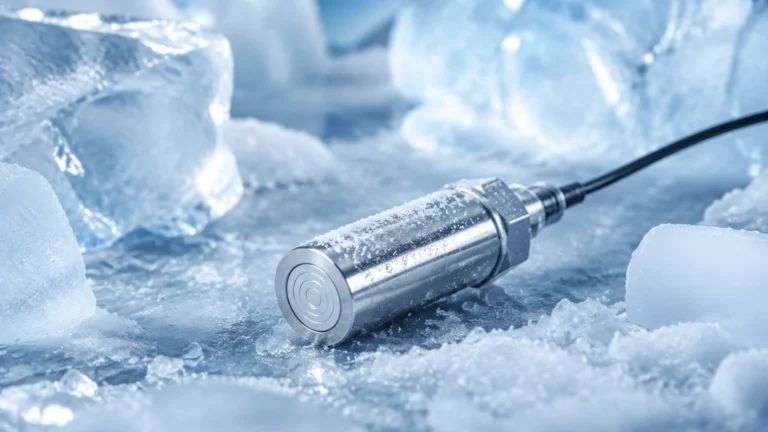
Pressure Transducer Manufacturer
Pressure Transducer Manufacturer
In the landscape of industrial automation and process control, the role of a pressure transducer manufacturer extends far beyond the simple assembly of components. These manufacturers provide the critical sensing technology required to convert physical force into measurable electrical data, enabling precise monitoring of fluids and gases. For engineers and procurement professionals, understanding the underlying principles of these devices and the technical capabilities of a supplier is essential for ensuring system reliability and safety.
Pressure transducers are fundamental to various industries, including water treatment, chemical processing, and oil and gas. While their primary function is to measure pressure, they are also the core technology behind hydrostatic level measurement, a widely used method for determining the volume or height of liquid in tanks, wells, and reservoirs. Selecting a manufacturer like Welk involves evaluating not just the hardware, but the engineering expertise and customization options available for specific industrial challenges.
Understanding Pressure Transducer Principles
Before selecting a device or a partner manufacturer, it is vital to understand how pressure transducers function. At its core, a pressure transducer consists of a pressure-sensitive element (the diaphragm) and a transduction mechanism that converts the diaphragm's displacement into an electrical signal.
Piezoresistive Sensing Technology
Most modern industrial pressure transducers utilize piezoresistive technology. In this design, strain gauges are diffused onto a silicon or ceramic diaphragm. When pressure is applied, the diaphragm deforms, causing a change in the electrical resistance of the strain gauges. This change is proportional to the applied pressure. Piezoresistive sensors are favored for their high sensitivity, excellent linearity, and long-term stability.
Capacitive Sensing Technology
Capacitive transducers measure the change in electrical capacitance between a flexible diaphragm and a fixed metal plate. As pressure moves the diaphragm, the gap narrows, increasing the capacitance. These sensors are known for their robustness and ability to withstand high overpressure conditions, making them suitable for harsh industrial environments where pressure spikes are common.
Signal Conditioning and Output
The raw signal generated by the sensing element is typically very small (millivolts). A professional manufacturer integrates sophisticated signal conditioning electronics within the transducer housing to amplify this signal and compensate for temperature fluctuations. Common industrial outputs include 4-20 mA current loops, 0-10 VDC, or digital protocols such as RS485 Modbus and HART. For those seeking comprehensive technical data on these output configurations, visiting the Main Page of a specialized manufacturer provides detailed documentation on signal integration.
Hydrostatic Level Measurement: From Pressure to Depth
One of the most common applications for a pressure transducer is hydrostatic level measurement. This principle relies on the fact that the pressure at a specific point in a static liquid is proportional to the weight of the liquid column above it.
The mathematical relationship is expressed as:
P = ρ × g × h
* P: Hydrostatic pressure (Pa or bar)
* ρ (rho): Density of the liquid (kg/m³)
* g: Acceleration due to gravity (approximately 9.81 m/s²)
* h: Height of the liquid column (meters)
By measuring the pressure at the bottom of a tank and knowing the density of the fluid, the transducer can accurately calculate the liquid level. This method is highly effective for vented tanks and open water bodies. For pressurized tanks, a differential pressure transducer is required to subtract the headspace pressure from the total pressure at the bottom.
Key Criteria for Evaluating a Pressure Transducer Manufacturer
When sourcing instruments for industrial applications, the choice of a pressure transducer manufacturer should be based on several technical and operational benchmarks.
Material Compatibility and Construction
The "wetted parts" of the transducer—those in direct contact with the media—must be chemically compatible with the process fluid. Standard materials include 316L stainless steel, but for corrosive applications involving acids or seawater, manufacturers may offer specialized materials such as Hastelloy C, Tantalum, or PTFE coatings. The housing should also meet specific Ingress Protection (IP) ratings, such as IP68 for submersible models used in deep wells or wastewater.
Customization and OEM/ODM Services
Industrial projects often have unique requirements that off-the-shelf products cannot meet. A capable manufacturer provides OEM (Original Equipment Manufacturer) and ODM (Original Design Manufacturer) services. This includes customizing cable lengths, pressure ranges (from a few millibar to hundreds of bar), and mechanical connections (NPT, G-thread, or flange mounts).
Quality Control and Certification
Reliable manufacturers adhere to strict quality management systems, such as ISO 9001. Furthermore, instruments used in hazardous areas must carry relevant explosion-proof or intrinsically safe certifications (e.g., ATEX, IECEx). Verification of these certifications ensures the equipment can be safely integrated into volatile environments like oil refineries or chemical plants.
Practical Selection Table
To assist in the initial engineering phase, the following table outlines common specifications for different types of pressure and level transducers.
| Feature | Submersible Level Transducer | Industrial Pressure Transmitter | Differential Pressure Transducer |
| :— | :— | :— | :— |
| Primary Application | Deep wells, tanks, reservoirs | Pipe pressure, pump monitoring | Pressurized tanks, flow measurement |
| Measurement Range | 0–1m to 0–500m H2O | 0–0.1 bar to 0–1000 bar | 0–1 kPa to 0–2 MPa |
| Typical Accuracy | 0.25% or 0.5% FS | 0.1%, 0.25%, or 0.5% FS | 0.075% to 0.2% FS |
| Housing Material | 316L SS / Titanium | 304 / 316L Stainless Steel | 316L SS / Alloy Steel |
| Output Signal | 4-20mA, RS485 | 4-20mA, 0-10V, I2C | 4-20mA + HART, Modbus |
| Installation | Suspended by cable | Threaded or Flanged | Manifold or Flanged |

Installation Considerations for Maximum Accuracy
Correct installation is as critical as the quality of the sensor itself. Even the highest-precision instrument from a top-tier pressure transducer manufacturer will fail if installed incorrectly.
1. Atmospheric Compensation: For gauge pressure and submersible level sensors, the transducer must be vented to the atmosphere. This is usually achieved via a small vent tube running through the center of the signal cable. It is vital to ensure this tube is not kinked or blocked, and that it is protected from moisture ingress using a desiccant filter.
2. Mounting Position: In applications with turbulent flow or agitators, submersible sensors should be installed inside a stilling well (a perforated pipe) to prevent mechanical damage and signal noise caused by lateral movement.
3. Cable Management: When installing deep-well sensors, the cable must be properly supported to prevent stretching, which can damage the internal conductors or the vent tube. Use specialized cable clamps designed for the weight of the intended depth.
4. Avoid Air Traps: For side-mounted pressure transmitters on pipes, ensure the impulse lines or the sensor diaphragm are positioned to avoid trapping air (in liquid applications) or condensate (in gas applications), as this will cause significant measurement errors.
Limitations and Environmental Challenges
While pressure transducers are versatile, they have limitations that must be addressed during the design phase:
* Temperature Sensitivity: All pressure sensors exhibit some degree of thermal drift. While manufacturers include internal compensation, extreme temperature fluctuations can still affect accuracy. In high-temperature steam applications, siphons or cooling towers should be used to protect the sensor diaphragm.
* Media Density Changes: Since hydrostatic level measurement assumes a constant density (ρ), changes in fluid temperature or concentration that alter density will result in level errors. If the density varies significantly, a secondary temperature sensor or a more complex measurement logic may be required.
* Overpressure Events: Exceeding the burst pressure of a sensor will cause permanent damage. Engineers should select a transducer with a proof pressure (overpressure limit) that exceeds the maximum possible surge in the system.
Frequently Asked Questions (FAQ)
Q: What is the difference between gauge pressure and absolute pressure?
A: Gauge pressure is measured relative to the current atmospheric pressure. It reads zero when exposed to the ambient air. Absolute pressure is measured relative to a perfect vacuum. Absolute sensors are typically used in applications where atmospheric pressure changes would interfere with the process, such as in vacuum distillation.
Q: How often should a pressure transducer be calibrated?
A: For most industrial applications, an annual calibration is recommended. However, in critical processes or harsh environments where the sensor is subject to frequent pressure shocks, semi-annual or quarterly checks may be necessary to ensure long-term stability.
Q: Can a pressure transducer be used for corrosive chemicals?
A: Yes, provided the wetted materials are selected correctly. For highly aggressive media, a diaphragm seal (chemical seal) can be used. This uses a flexible membrane and a fill fluid to isolate the sensor from the corrosive process media while still transmitting the pressure.
Q: What is the maximum depth for a submersible level sensor?
A: High-quality submersible sensors can operate at depths of 500 meters (approx. 1,640 feet) or more. The limiting factors are the integrity of the waterproof seal and the tensile strength of the cable. For deep applications, a pressure transducer manufacturer will often use specialized reinforced cables.
Conclusion: Selecting the Right Partner
In the B2B sector, the relationship between a facility and its pressure transducer manufacturer is built on technical reliability and support. By understanding the physics of pressure measurement and the specific needs of an application—whether it involves water treatment, chemical storage, or industrial automation—engineers can make informed decisions that minimize downtime and maximize accuracy. For those ready to review specific product configurations and explore application-specific support, navigating to the Main Page of an established manufacturer like Welk is the recommended next step in the procurement process. Proper selection, combined with rigorous installation standards, ensures that pressure measurement remains a stable and dependable component of modern industrial infrastructure.