Proline Promag W 400 Electromagnetic Flowmeter
Proline Promag W 400 Electromagnetic Flowmeter
In the realm of industrial process control, the accurate measurement of conductive fluids is essential for operational efficiency, billing accuracy, and environmental compliance. The Proline Promag W 400 electromagnetic flowmeter is a specialized instrument engineered primarily for the water and wastewater industries. This technical guide examines the underlying physics of electromagnetic flow measurement, the specific capabilities of the Promag W 400, and how it integrates into broader industrial automation systems alongside essential level measurement technologies.
Understanding Electromagnetic Flow Measurement Principles
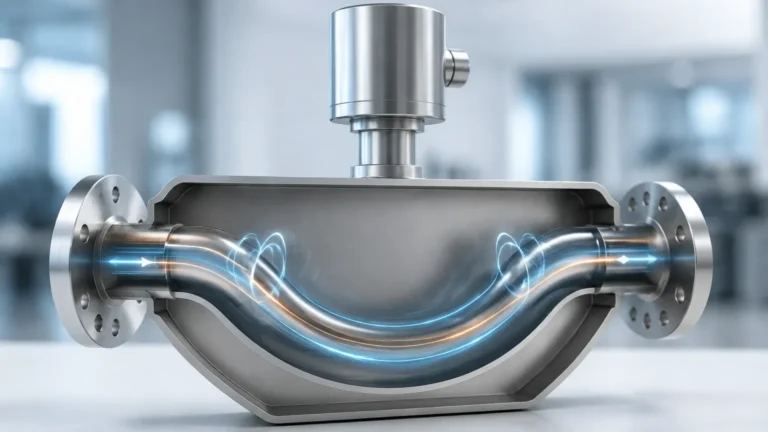
Electromagnetic flowmeters, often referred to as "magmeters," operate based on Faraday’s Law of Induction. This principle states that a voltage is induced when a conductive medium moves through a magnetic field. In the context of the Proline Promag W 400, the measurement process follows a specific sequence:
1. Magnetic Field Generation: The flowmeter sensor contains two electromagnetic coils. When energized by the transmitter, these coils generate a constant magnetic field across the cross-section of the measuring pipe.
2. Conductive Fluid Motion: As a conductive liquid (such as water, sludge, or chemicals) flows through the pipe, it acts as a moving conductor.
3. Induced Voltage: According to Faraday’s Law, the movement of the liquid through the magnetic field induces an electrical voltage ($U$). This voltage is picked up by two electrodes located on the pipe wall.
4. Proportionality: The induced voltage is directly proportional to the flow velocity ($v$), the strength of the magnetic field ($B$), and the distance between the electrodes ($d$). The formula is expressed as $U = B \cdot v \cdot d$.
Since the magnetic field strength and the distance between electrodes are constant, the induced voltage is a direct representation of the flow velocity. The transmitter then converts this velocity into a volumetric flow rate based on the known cross-sectional area of the pipe.
Technical Overview of the Proline Promag W 400
The Proline Promag W 400 is a modular system consisting of a sensor (Promag W) and a transmitter (Proline 400). It is designed to handle a wide range of pipe diameters and environmental conditions common in municipal and industrial water cycles.
Sensor Specifications (Promag W)
* Nominal Diameters: Available from DN 25 to 3000 (1" to 120").
* Linings: Options include Hard Rubber, Polyurethane, and PTFE, selected based on the chemical compatibility and abrasion resistance required by the medium.
* Electrodes: Typically constructed from Stainless Steel 1.4435 (316L), Alloy C22, or Tantalum.
* Process Pressure: Standard ratings up to PN 40, with higher pressure ratings available for specialized applications.
* Accuracy: Standard measured error is ±0.5% of the reading, with high-accuracy options reaching ±0.2%.
Transmitter Features (Proline 400)
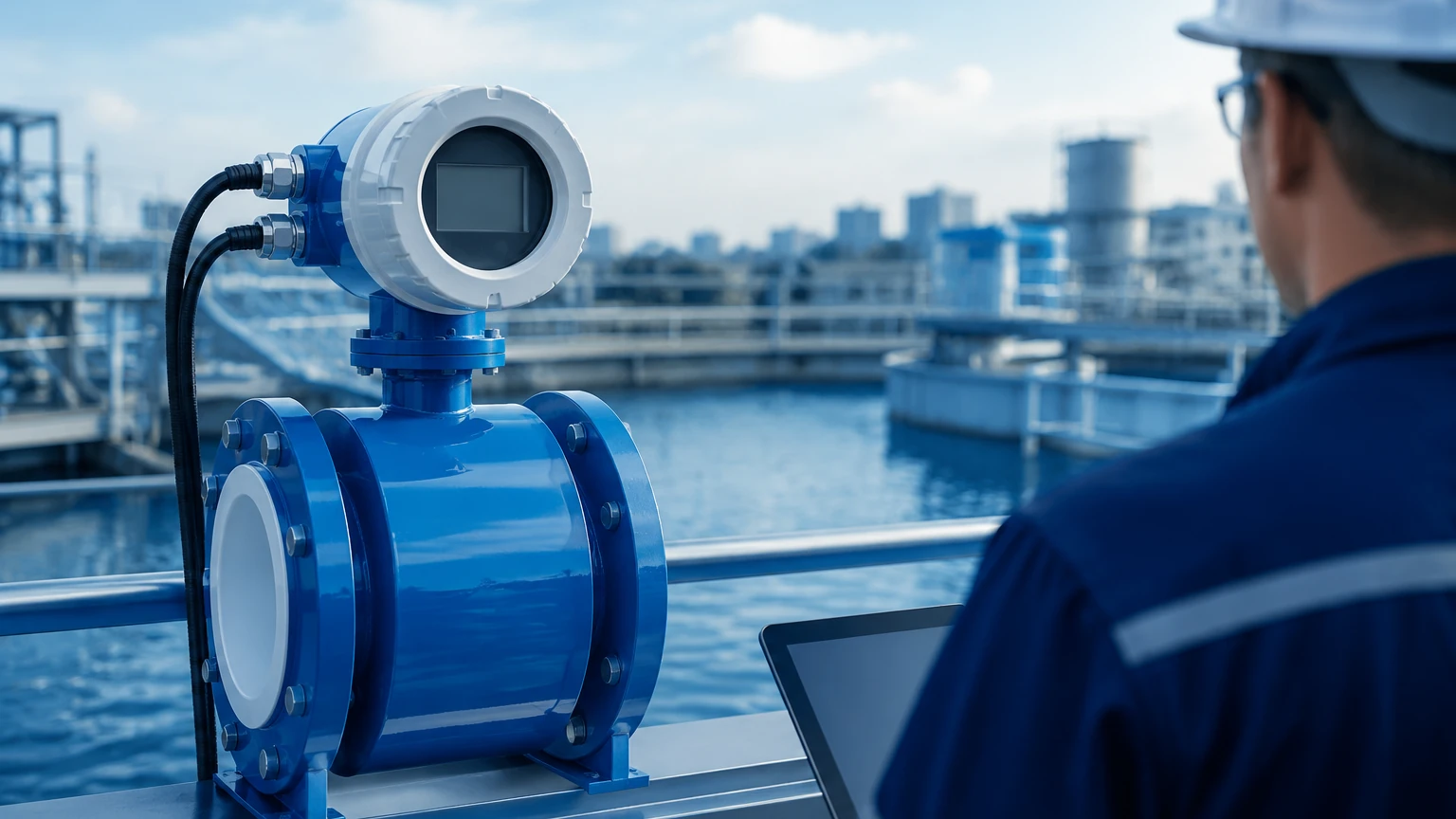
The Proline 400 transmitter is designed for digital integration and simplified maintenance. It supports multiple communication protocols, including Modbus RS485, EtherNet/IP, and PROFINET. A key feature is the integrated web server, which allows technicians to access device data and configuration settings via a standard laptop and web browser without requiring specialized software.
Key Features for Water and Wastewater Applications
The Proline Promag W 400 is distinguished by several engineering innovations that address common challenges in the water sector.
0 x DN Full Bore Option
One of the most significant advancements in the Promag W series is the "0 x DN" installation capability. Traditionally, electromagnetic flowmeters require straight pipe runs (typically 5 diameters upstream and 2 diameters downstream) to ensure a stable flow profile. However, the Promag W 400 is available with a full-bore sensor design that maintains accuracy even when installed directly after pipe bends or T-junctions. This is achieved through a multi-electrode design that compensates for flow profile disturbances, making it ideal for tight installation spaces in pumping stations or treatment plants.
Heartbeat Technology
To comply with regulatory requirements for periodic verification without interrupting the process, the device incorporates Heartbeat Technology. This internal diagnostic suite provides continuous self-monitoring and allows for documented verification of the instrument’s health. This reduces the need for manual wet calibrations and extends maintenance intervals.
Corrosion Protection
The sensor is available with certified corrosion protection (EN ISO 12944) for underground installation or permanent immersion in water. This makes the Promag W 400 suitable for distribution networks and intake structures where the meter may be subjected to harsh environmental conditions.
Selection Criteria and Technical Specifications
When selecting a Proline Promag W 400 electromagnetic flowmeter, engineers must evaluate several parameters to ensure long-term reliability. The following table provides a summary of key selection criteria:
| Parameter | Requirement/Range |
| :— | :— |
| Minimum Conductivity | ≥ 5 μS/cm (or ≥ 20 μS/cm for demineralized water) |
| Fluid Temperature | -20 to +90 °C (-4 to +194 °F) depending on lining |
| Ambient Temperature | -40 to +60 °C (-40 to +140 °F) |
| Inlet/Outlet Runs | 0 x DN (with specific calibrated versions) or 5 x DN / 2 x DN |
| Power Supply | AC 100–240 V / AC/DC 24 V |
| Degree of Protection | IP66/67 (Type 4X) or IP68 (Type 6P) for buried sensors |
Installation Guidelines and Best Practices
Proper installation is critical to the performance of any electromagnetic flowmeter. While the Promag W 400 is robust, following these guidelines will prevent measurement errors:
1. Pipe Fullness: The measuring tube must always be completely full of liquid. For this reason, installations in down-pipes (gravity-fed) should be avoided unless a siphon or orifice plate is used to maintain backpressure.
2. Orientation: The preferred orientation is in a vertical pipe with upward flow. This prevents the accumulation of solids at the bottom and ensures that air bubbles do not collect at the electrodes. If horizontal installation is necessary, the electrode axis must be horizontal to avoid insulation by air bubbles.
3. Grounding: Electromagnetic flowmeters require a stable reference potential. The fluid, the sensor, and the transmitter must be properly grounded. In lined or plastic pipes, grounding rings are required to establish electrical contact with the medium.
4. Vibration: Ensure the pipe is supported on both sides of the meter to minimize mechanical vibration, which can introduce electrical noise into the measurement signal.
Limitations and Operational Constraints
Despite its versatility, the Proline Promag W 400 has specific limitations:
* Conductivity Requirement: It cannot measure non-conductive fluids such as hydrocarbons (oil, diesel), distilled water, or gases. The medium must have a minimum conductivity of 5 μS/cm.
* Solid Content: While it can handle sludge, extremely high concentrations of abrasive solids may cause premature wear on the lining. In such cases, Hard Rubber or specialized ceramic linings should be considered.
* Magnetic Interference: Strong external magnetic fields (e.g., from large motors or transformers) can interfere with the measurement and should be shielded or avoided during site selection.
Integrating Flow and Level Measurement in Industrial Automation
In most industrial automation and water treatment applications, flow measurement is only one part of the equation. Accurate process control often requires the integration of both flow and level data. For instance, in an influent pump station, flowmeters measure the incoming volume while level sensors manage the pump cycles and prevent overflow.
While the Promag W 400 handles pipe-based flow, manufacturers like Welk provide the complementary level measurement instruments required for a complete system. Industrial operators often utilize radar level meters for non-contact tank monitoring or ultrasonic level sensors for open-channel flow calculations in conjunction with electromagnetic meters. For those designing comprehensive measurement loops, you can Review product options and application support to find compatible level transmitters, such as hydrostatic or magnetic gauges, that work alongside flow instrumentation to provide a holistic view of the process.
Frequently Asked Questions (FAQs)
Q: Can the Promag W 400 be used for billing purposes?
A: Yes, the Promag W 400 is available with various international approvals for custody transfer, including MI-001 for cold water and OIML R49, making it suitable for legal metrology and billing.
Q: How does the web server function in the field?
A: The transmitter features an integrated RJ45 or WLAN interface. By connecting a laptop, users can access the device's internal pages to view diagnostics, download reports, or change parameters without needing a handheld communicator or proprietary software.
Q: What happens if the lining is damaged?
A: Damage to the lining (such as PTFE delamination or rubber abrasion) can lead to measurement drift or short-circuiting of the electrodes. Regular inspection via Heartbeat Technology diagnostics can often detect lining integrity issues before a total failure occurs.
Q: Is it possible to upgrade an older Promag installation to a 400 series?
A: In many cases, the sensor dimensions (face-to-face lengths) are standardized according to ISO or ASME, allowing for the replacement of older sensors. However, the transmitter wiring and communication protocols should be verified for compatibility with existing PLC/SCADA systems.
By adhering to these technical standards and installation practices, the Proline Promag W 400 provides a reliable, long-term solution for managing water resources and industrial fluid processes.
Download Proline Promag W 400 Electromagnetic Flowmeter as a PDF