Promass F300
Promass F300
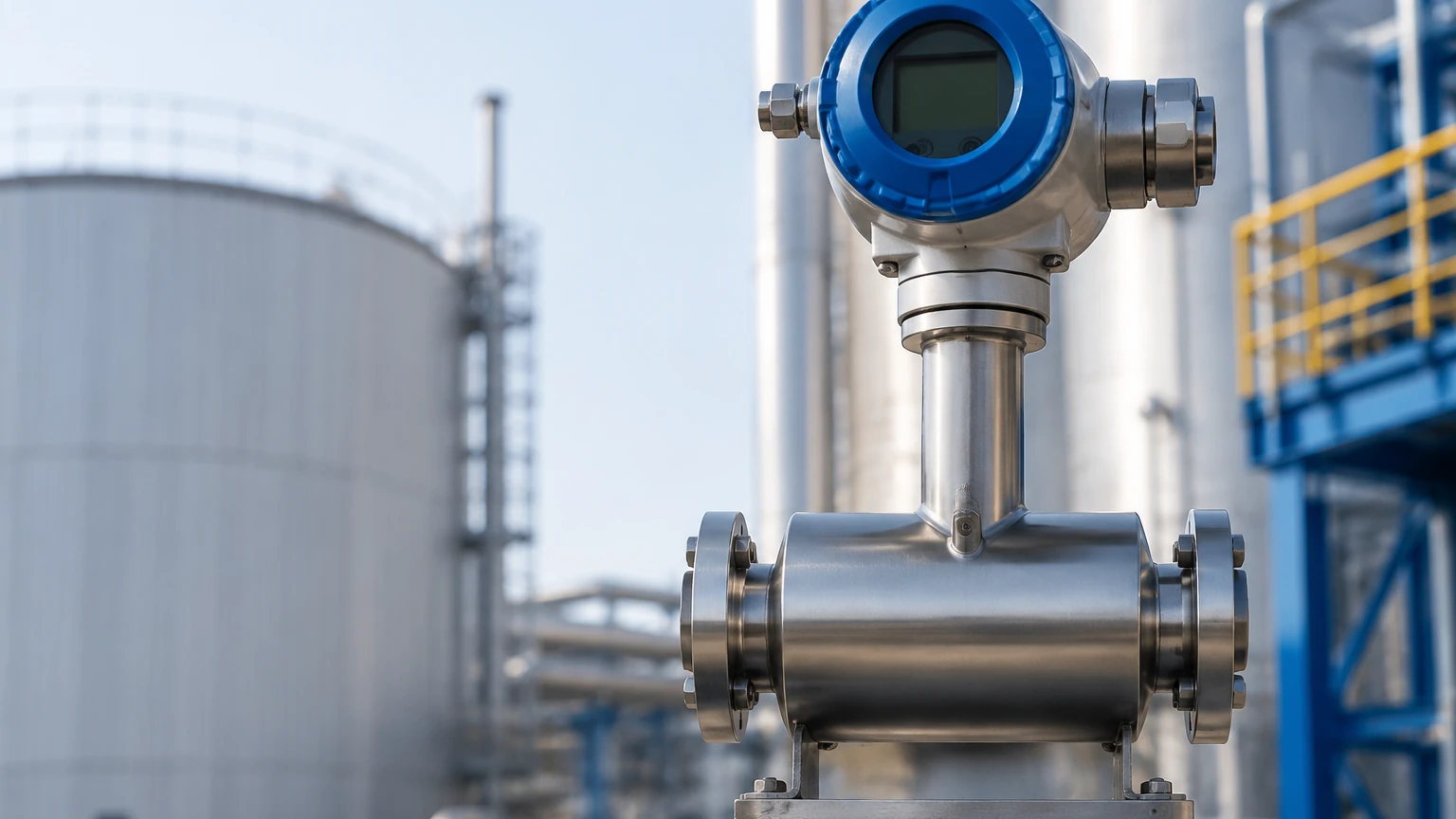
In the landscape of industrial process control, the Promass F300 stands as a benchmark for Coriolis mass flow measurement. Designed to provide high-precision data for mass flow, volume flow, density, and temperature, this instrument is a staple in industries where accuracy is non-negotiable. Whether managing complex chemical reactions, monitoring custody transfer in the oil and gas sector, or ensuring consistency in food and beverage production, understanding the technical nuances of the Promass F300 is essential for engineers and plant managers.
While the primary focus of this guide is the Promass F300 flowmeter, it is important to recognize that flow and level measurement often work in tandem within a process loop. For comprehensive instrumentation needs, including radar and ultrasonic solutions, engineers often consult a Main Page for a broader view of compatible measurement technologies.
Measurement Principle: The Coriolis Effect
The Promass F300 operates on the Coriolis principle of measurement. To understand its performance, one must first understand the physics governing the sensor.
Inside the sensor housing, there are typically two measuring tubes that are vibrated at their resonant frequency by an electrodynamic driver. When a fluid (liquid or gas) flows through these vibrating tubes, the Coriolis force is exerted. This force causes a "twisting" or phase shift in the tube's vibration.
1. Mass Flow: The phase shift between the inlet and outlet sides of the tubes is directly proportional to the mass flow rate. Because mass is a fundamental property that does not change with temperature or pressure, Coriolis meters provide a more stable measurement than volumetric flowmeters.
2. Density: The resonant frequency at which the tubes vibrate depends on the mass of the tubes and the mass of the fluid inside them. By measuring this frequency, the instrument can calculate the fluid's density in real-time.
3. Temperature: A built-in temperature sensor monitors the tube temperature to compensate for thermal expansion and changes in the material's elasticity, ensuring the accuracy of the flow and density calculations.
Key Technical Specifications and Evaluation Criteria
When evaluating the Promass F300 for a specific application, several technical parameters must be scrutinized. This instrument is known for its robustness, but its suitability depends on the process conditions.
Accuracy and Repeatability
The Promass F300 offers exceptional accuracy, often rated at ±0.05% or ±0.1% for liquids and ±0.35% for gases. Repeatability is typically within ±0.025%. These figures make it ideal for high-value fluids where even a minor error results in significant financial loss.
Material Compatibility
The measuring tubes are available in various materials to handle corrosive or abrasive media. Common options include:
* Stainless Steel (e.g., 1.4404/316L): Suitable for standard industrial applications and food-grade processes.
* Alloy C22: Used for highly aggressive chemicals where standard stainless steel would fail due to pitting or stress corrosion.
Pressure and Temperature Ratings
The device is engineered to withstand extreme conditions. Standard models can handle process temperatures ranging from -50°C to +205°C (-58°F to +401°F) and pressures up to 100 bar (1450 psi), depending on the flange rating and tube material.
Practical Selection Table
Choosing the correct configuration requires balancing process requirements with instrument capabilities. The following table provides a general reference for selection criteria.
| Criterion | Specification/Option | Application Note |
| :— | :— | :— |
| Nominal Diameter | DN 8 to DN 250 (3/8" to 10") | Match to pipe size or velocity requirements. |
| Measuring Range | 0 to 2,200,000 kg/h | Varies by tube size; ensure flow is within the 20-80% range for best accuracy. |
| Process Connections | Flanges (ASME, EN, JIS), Hygienic, VCO | Choose based on local piping standards and sanitary needs. |
| Housing Material | Aluminum or Stainless Steel | Stainless steel is preferred for offshore or corrosive atmospheres. |
| Communication | HART, Modbus RS485, Profibus, EtherNet/IP | Ensure compatibility with the existing PLC/DCS. |
Installation Considerations and Best Practices
Proper installation is critical to maintaining the specified accuracy of the Promass F300. While Coriolis meters are generally less sensitive to flow profiles than ultrasonic or electromagnetic meters, they are highly sensitive to mechanical stress and vibration.
Orientation
* Liquids: The meter should ideally be installed in a vertical pipe with upward flow. This ensures the tubes remain full and prevents air pockets from forming. If horizontal installation is necessary, the tubes should point downward to avoid sediment buildup.
* Gases: For gas applications, horizontal installation with the tubes pointing upward is recommended. This allows any condensate to drain out of the measuring tubes.
Supports and Vibration
Because the meter relies on internal vibrations, external vibrations from pumps or heavy machinery can interfere with the signal. The meter should be mounted on a stable, vibration-free section of the pipe. It is recommended to install pipe supports on both the inlet and outlet sides of the meter, as close to the flanges as possible.
Zero Point Adjustment
After installation and under full-pipe, zero-flow conditions, a zero-point adjustment must be performed. This calibrates the meter to the specific mechanical stresses of the installation site. Failure to perform this step can lead to a constant offset in measurement data.
Limitations and Common Risks
Despite its versatility, the Promass F300 is not a universal solution for every application. Engineers must be aware of its limitations to avoid premature failure or inaccurate readings.
1. Entrained Air/Gas: While the Promass F300 features advanced signal processing to handle some degree of two-phase flow (liquids with bubbles), excessive entrained air can cause the tubes to stall or produce erratic readings. In such cases, an air eliminator should be installed upstream.
2. Pressure Drop: Coriolis meters typically have a higher pressure drop than full-bore electromagnetic meters or ultrasonic meters. This must be accounted for in the system's hydraulic calculations to ensure the pump head is sufficient.
3. Initial Cost: The sophisticated technology and materials used in the Promass F300 result in a higher initial capital expenditure compared to simpler flow technologies. However, this is often offset by lower maintenance costs and higher process yield.
4. Size Constraints: For very large pipelines (above DN 300), Coriolis meters become prohibitively heavy and expensive. In these instances, alternative technologies like ultrasonic flowmeters or differential pressure systems might be more practical.
Maintenance and Troubleshooting
The Promass F300 is designed for low maintenance, as it has no moving parts in the fluid stream. However, periodic checks are necessary to ensure long-term reliability.
* Coating and Scaling: If the process fluid tends to leave deposits, the internal diameter of the tubes can change, affecting the density measurement. Regular inspection or steam cleaning (if the model allows) is necessary.
* Diagnostic Features: Modern units include self-diagnostic tools (such as Heartbeat Technology) that monitor the health of the sensor and electronics without interrupting the process. These diagnostics can detect corrosion, erosion, or electronics drift.
* Recalibration: Depending on industry regulations (especially in custody transfer), the meter may require periodic recalibration at a certified facility to verify its accuracy against a known standard.
Frequently Asked Questions (FAQ)
Q: Can the Promass F300 measure bidirectional flow?
A: Yes, the Coriolis principle allows for the measurement of flow in both directions. The transmitter can be configured to provide separate totals for forward and reverse flow.
Q: Does the meter require straight pipe runs upstream and downstream?
A: Generally, Coriolis meters do not require the long straight runs (e.g., 10D upstream/5D downstream) required by other technologies. However, it is still good practice to avoid installing the meter immediately after a high-turbulence source like a partially open valve.
Q: How does the Promass F300 handle high-viscosity fluids?
A: The meter is excellent for high-viscosity fluids because the Coriolis force is independent of viscosity. However, the pressure drop will increase significantly with viscosity, so the meter must be sized accordingly.
Q: Is the electronics housing rotatable?
A: Yes, the transmitter housing can usually be rotated in 90-degree increments to allow for optimal viewing of the display and access to the wiring compartment, regardless of the pipe orientation.
Conclusion
The Promass F300 represents a sophisticated intersection of physics and industrial engineering. By providing direct mass flow and density measurements, it eliminates the variables that plague volumetric systems, offering a level of process transparency that is vital for modern manufacturing. When selected and installed according to the guidelines outlined above, it serves as a reliable cornerstone for any process control strategy. For those looking to integrate these flow solutions with advanced level monitoring, visiting a specialized Main Page can provide the necessary technical context to build a cohesive instrumentation network.