Promass Flowmeter
Promass Flowmeter
In the landscape of industrial process control, the promass flowmeter represents the pinnacle of precision measurement. Utilizing the Coriolis principle, these instruments provide direct mass flow measurement of liquids and gases without the need for complex calculations involving pressure and temperature compensation. For engineers and facility managers, understanding the technical nuances of these devices is essential for ensuring process efficiency, custody transfer accuracy, and long-term operational stability.
While volumetric flow measurement has traditionally dominated many sectors, the shift toward mass-based measurement is driven by the need for higher accuracy in chemical dosing, oil and gas distribution, and food production. This guide explores the fundamental principles, selection criteria, and practical application of Coriolis mass flow technology within modern industrial frameworks.
Understanding the Coriolis Measurement Principle
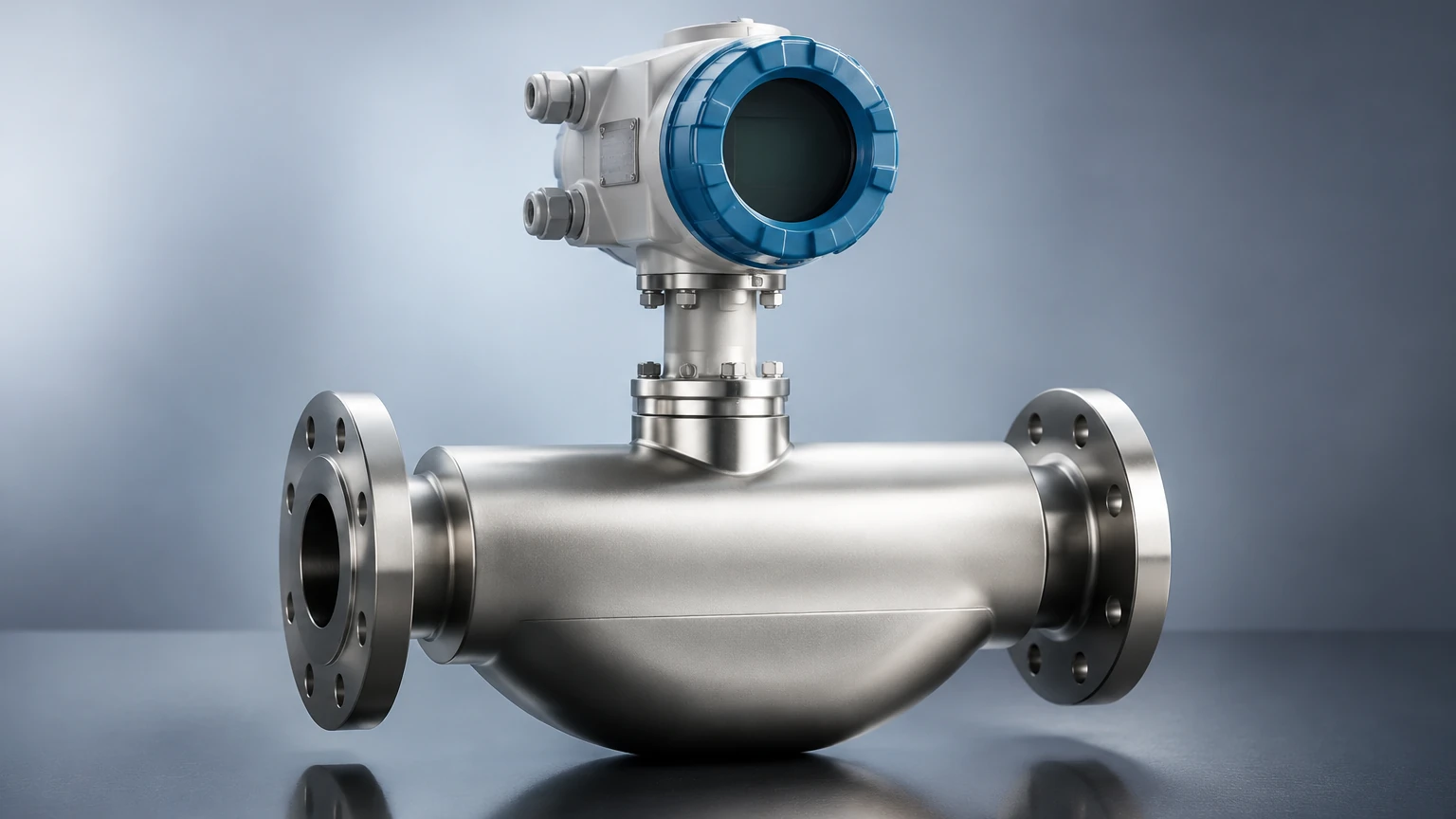
The fundamental operation of a promass flowmeter is based on the Coriolis effect. To understand how this works in a practical instrument, one must look at the internal sensor architecture. The device typically consists of one or more measuring tubes that are forced to oscillate at their resonant frequency by an electro-dynamic driver coil.
The Physics of Mass Flow
When a fluid flows through these vibrating tubes, it is subjected to a Coriolis force. This force is a result of the fluid's mass moving through a rotating (or in this case, oscillating) system. The Coriolis force acts on the tubes, causing a minute distortion or "twist" in the tube's geometry.
Sensors located at the inlet and outlet of the tube detect this oscillation. When there is no flow, the inlet and outlet sections of the tube vibrate in phase. However, as mass begins to move through the tube, the Coriolis force causes the inlet and outlet sections to oscillate out of phase. This phase shift (measured in microseconds) is directly proportional to the mass flow rate. Because mass is an absolute quantity that does not change with temperature or pressure, the measurement is inherently more stable than volumetric methods.
Simultaneous Density and Temperature Measurement
In addition to mass flow, a promass flowmeter acts as a multi-variable transmitter.
1. Density: The resonant frequency at which the tubes vibrate depends on the total mass of the system (tube + fluid). By measuring this frequency, the instrument can calculate the fluid's density in real-time.
2. Temperature: Integrated PT100 or similar sensors monitor the tube temperature to compensate for changes in the elasticity of the tube material, ensuring accuracy across a wide thermal range.
Key Evaluation Criteria for Selection
Selecting the correct promass flowmeter requires a detailed analysis of the process fluid and the environmental conditions. Unlike simple level switches or hydrostatic transmitters, which you can explore on our Main Page, mass flowmeters are highly sensitive to the physical properties of the media.
Accuracy and Repeatability
Most high-end Coriolis meters offer mass flow accuracy of ±0.1% or better for liquids and ±0.5% for gases. When evaluating a unit, it is crucial to distinguish between "percentage of rate" and "percentage of full scale." For critical applications like custody transfer, the percentage of rate is the industry standard.
Turn-down Ratio
The turn-down ratio refers to the range over which the meter maintains its specified accuracy. A promass flowmeter often features a turn-down ratio of 100:1 or even 1000:1. However, at the very low end of the flow range, the "zero stability" error becomes more significant, which can degrade accuracy.
Pressure Drop
Because the fluid must pass through the measuring tubes (which may be curved or narrowed), a pressure drop occurs. High-viscosity fluids or high-velocity gases can result in significant pressure loss across the meter. Engineers must calculate the available head pressure to ensure the meter does not cause cavitation or process bottlenecks.
Technical Selection Table: Tube Geometries
The design of the measuring tube significantly impacts performance and maintenance requirements. The following table outlines the common configurations found in industrial applications.
| Tube Design | Best For | Advantages | Limitations |
| :— | :— | :— | :— |
| Bent/U-Tube | General purpose liquids | Highest sensitivity and turn-down ratio | Difficult to drain; higher pressure drop |
| Straight Tube | Slurries and shear-sensitive fluids | Low pressure drop; easy to clean (CIP/SIP) | Less sensitive to low flow rates |
| Dual Tube | High-pressure applications | Balanced vibration; ignores external noise | Larger footprint; potential for clogging |
| Single Tube | Food and beverage | Hygienic design; no splitting of flow | More susceptible to external vibration |
Installation Considerations and Best Practices
Proper installation is the single most important factor in the performance of a promass flowmeter. While Coriolis meters are generally more robust than magnetic or ultrasonic flowmeters regarding upstream piping, they are sensitive to mechanical stress.
Orientation and Mounting
* Liquids: The preferred orientation is often vertical with flow moving upward. This ensures the tubes remain full and prevents air bubbles from becoming trapped, which would cause measurement errors.
* Gases: Horizontal mounting is typically preferred, with the tubes pointing upward (for bent-tube designs) to allow any condensed moisture to drain out of the sensor.
* Slurries: Vertical mounting with downward flow can help prevent solids from settling in the tubes, though upward flow is still preferred if the concentration is low.
Mechanical Stress and Vibration
The sensor must be decoupled from pipe vibrations. This is achieved by supporting the piping immediately before and after the meter. It is critical that the meter is not used to support the weight of the pipework, as mechanical stress on the sensor housing can shift the zero point.
Zero Point Adjustment
After installation and under full process pressure and temperature, a "zero-point adjustment" must be performed. This involves stopping the flow completely (using valves) while ensuring the tubes remain full of the process fluid. This calibration step accounts for the specific mechanical stresses of the installation environment.
Common Risks and Limitations
Despite their versatility, promass flowmeters are not universal solutions. Engineers should be aware of the following constraints:
1. Entrained Air (Two-Phase Flow): Coriolis meters struggle when air bubbles are present in a liquid. The bubbles dampen the tube oscillation, leading to "slug flow" errors. Modern transmitters use advanced digital signal processing to mitigate this, but it remains a primary cause of measurement instability.
2. Initial Cost: The capital expenditure for a Coriolis meter is significantly higher than for a vortex or electromagnetic meter. The ROI must be justified by the need for mass accuracy or density data.
3. Weight and Size: For large line sizes (above 250mm or 10 inches), the meters become extremely heavy and bulky, often requiring dedicated structural supports.
4. Material Compatibility: While stainless steel (316L) is standard, aggressive chemicals may require Hastelloy, Tantalum, or Titanium tubes, which significantly increases the lead time and cost.
Integration with Industrial Automation
A promass flowmeter typically outputs data via 4-20mA HART, Modbus RS485, or Profibus. In modern smart factories, these devices provide diagnostic data such as "Tube Integrity Monitoring," which can predict if corrosion or coating is occurring inside the tubes before it leads to a failure. This predictive maintenance capability is essential for reducing downtime in continuous process industries like chemical refining and water treatment.
When designing a complete system, mass flow data is often paired with level measurement data to provide a full mass balance of a storage tank or reactor. For information on the level measurement side of these systems, including radar and ultrasonic sensors, you can review product options and application support on our Main Page.
Frequently Asked Questions (FAQ)
Q: Does a promass flowmeter require straight pipe runs?
A: Generally, no. Unlike turbine or ultrasonic meters, Coriolis meters are mostly independent of the flow profile. However, it is still good practice to avoid placing them immediately after a double elbow or a partially open valve to minimize turbulence-induced vibration.
Q: Can I use a Coriolis meter for steam?
A: While theoretically possible, it is rarely practical. The high velocity and low density of steam often result in a pressure drop that is too high for the meter to handle. Vortex flowmeters are usually a better choice for steam applications.
Q: How often should the meter be recalibrated?
A: This depends on the industry. For custody transfer, annual calibration is often mandated. For general process control, many users rely on internal diagnostics and only perform external calibration every 3 to 5 years.
Q: What is the maximum temperature a promass flowmeter can handle?
A: Standard models usually handle up to 200°C (392°F). High-temperature versions with specialized neck extensions and sensors can operate at up to 350°C (662°F).
By carefully considering the tube geometry, material compatibility, and installation environment, the promass flowmeter provides an unparalleled level of process transparency. Whether used for precise chemical blending or monitoring the output of a high-value production line, these instruments remain the gold standard for mass-based fluid measurement.