Water Reuse
Water Reuse
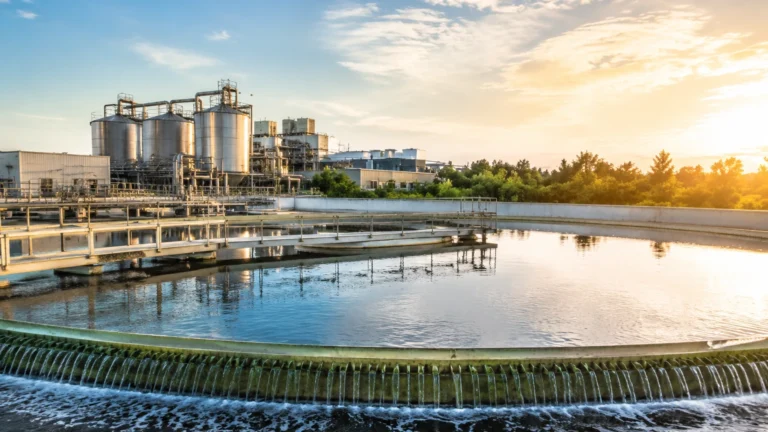
In the modern industrial landscape, water reuse has transitioned from a sustainability initiative to a core operational necessity. As freshwater scarcity increases and discharge regulations tighten, industrial facilities are increasingly looking toward closed-loop systems and reclamation processes to maintain production efficiency. Effective water reuse—the process of treating wastewater and recirculating it for beneficial purposes such as cooling, boiler feed, or irrigation—requires precise monitoring and control. Central to this control is the accurate measurement of liquid levels throughout the treatment and storage stages.
For engineers and plant managers, implementing a water reuse system involves managing a diverse array of fluids, ranging from raw effluent and chemical-laden process water to high-purity permeate. Each stage presents unique challenges for level instrumentation, necessitating a deep understanding of measurement principles to ensure system reliability and safety.
Principles of Level Measurement in Water Reuse Systems
Before selecting instrumentation for water reuse applications, it is essential to understand the physical principles that govern how these devices interact with the medium. In water reclamation, three primary technologies are most prevalent: ultrasonic, radar, and hydrostatic pressure measurement.
Ultrasonic Level Measurement
Ultrasonic sensors operate on the "time-of-flight" principle. The sensor emits a high-frequency sound pulse that travels through the air, reflects off the liquid surface, and returns to the transducer. By measuring the time elapsed between emission and reception, the device calculates the distance to the liquid level.
In water reuse, ultrasonic sensors are frequently used in open-channel flow measurement and large equalization basins. Because they are non-contact, they are resistant to fouling from solids or corrosive elements in the wastewater. However, their accuracy can be affected by air temperature fluctuations, heavy foam, and surface turbulence, which can scatter or absorb the sound waves.
Radar Level Measurement
Radar level meters also use the time-of-flight principle but utilize electromagnetic waves (microwaves) rather than sound. High-frequency radar, particularly 80GHz technology, offers significant advantages in complex water reuse environments. Unlike sound, microwaves are unaffected by air temperature, pressure, or vacuum conditions.
Radar is highly effective for monitoring chemical storage tanks used in the treatment process (such as flocculants or pH adjusters) and for tanks where steam or condensation is present. The narrow beam angle of high-frequency radar allows it to avoid internal obstructions like agitators or heating coils, providing a stable signal even in narrow vessels.
Hydrostatic Pressure Measurement
Hydrostatic level transmitters measure the pressure exerted by the liquid column above the sensor. According to Pascal’s Law, the pressure at the bottom of a tank is directly proportional to the liquid's height and density.
This technology is often preferred for deep wells, lift stations, and filtered water storage tanks. Submersible hydrostatic sensors are robust and easy to install in deep underground reservoirs common in municipal water reuse projects. However, because the measurement depends on density, any significant change in the water's chemical composition or temperature (which affects density) must be compensated for to maintain accuracy.
Key Evaluation Criteria for Instrument Selection
Selecting the right level meter for a water reuse project requires a systematic evaluation of the process environment. The following criteria should guide the decision-making process:
1. Media Composition: Is the water raw effluent, treated graywater, or purified permeate? High solids content may favor non-contact radar, while clean water is well-suited for hydrostatic sensors.
2. Tank Geometry: Narrow tanks or those with internal structures require the focused beam of an 80GHz radar. Large, open sumps may be more cost-effectively served by ultrasonic units.
3. Environmental Conditions: Consider the presence of foam, steam, or vapors. Foam is a notorious challenge for ultrasonic sensors but can often be penetrated or managed by specific radar frequencies.
4. Accuracy Requirements: For chemical dosing or billing-grade flow measurement in open channels, high-precision radar or ultrasonic sensors (±2mm or better) are necessary.
5. Maintenance Access: In water reuse facilities, sensors are often placed in hard-to-reach locations. Choosing low-maintenance, non-contact instruments can significantly reduce long-term operational costs.
Practical Selection Table for Water Reuse Applications
The following table provides a comparison of common level measurement technologies used in various stages of the water reuse cycle.
| Application Stage | Recommended Technology | Primary Benefit | Potential Limitation |
| :— | :— | :— | :— |
| Raw Water Equalization | Ultrasonic / Radar | Non-contact; handles solids | Foam can interfere with signal |
| Chemical Dosing Tanks | Radar / Magnetic Gauge | High chemical resistance | Radar requires dielectric constant > 1.4 |
| Clarifiers / Settling Tanks | Ultrasonic | Cost-effective for large areas | Sensitive to heavy surface turbulence |
| Filtration (RO/UF) Tanks | Hydrostatic | Reliable in clean water | Sensitive to density changes |
| Cooling Tower Basins | Radar | Unaffected by steam/vapor | Higher initial capital cost |
| Deep Well / Lift Stations | Submersible Hydrostatic | Easy installation in depth | Requires venting for atmospheric pressure |
For a comprehensive overview of available technologies and technical specifications, engineers should Review product options and application support to match specific project parameters with the appropriate hardware.
Installation Considerations and Best Practices
Even the most advanced level meter will fail to perform if installed incorrectly. In water reuse applications, several factors must be addressed during the engineering phase:
Avoiding Dead Zones (Blocking Distance)
Every non-contact sensor has a "dead zone" or blocking distance directly beneath the transducer where it cannot measure. For ultrasonic sensors, this is typically 0.25m to 0.5m (10 to 20 inches). Ensure the sensor is mounted high enough so that the maximum liquid level never enters this zone, as this will cause the sensor to report an error or a fixed value.
Mounting Position
Sensors should be mounted away from the tank wall to avoid false reflections (echoes). A general rule for radar is to mount the sensor at a distance from the wall equal to at least 1/6th of the tank height. Additionally, sensors must be positioned away from the fill inlet to prevent the incoming liquid stream from interfering with the measurement signal.
Stilling Wells and Bypass Chambers
In tanks with heavy agitation or surface turbulence—common in aeration basins—using a stilling well or a bypass chamber can provide a calm surface for the sensor to measure. This is particularly useful for hydrostatic and radar sensors, ensuring a stable output for the control system.
Common Risks and Limitations in Water Reuse Monitoring
Water reuse systems are dynamic, and several risks can compromise measurement integrity:
* Foam Accumulation: In biological treatment stages, foam can act as an insulator for ultrasonic waves, leading to "lost echo" errors. If foam is persistent, radar is generally the more reliable choice, though even radar may require specific frequency adjustments to penetrate thick foam.
* Build-up and Scaling: In water with high mineral content (hard water), scaling can occur on the sensor face. While non-contact sensors are less affected, significant build-up on an ultrasonic transducer can dampen the vibration, reducing signal strength. Periodic cleaning or the use of PTFE-faced sensors is recommended.
* Vapor and Condensation: In hot water reuse (such as condensate recovery), steam can attenuate ultrasonic signals. Radar is immune to these effects, making it the standard for high-temperature water applications.
Information to Confirm Before Implementation
Before finalizing the design of a water reuse monitoring system, the project team should confirm the following technical details:
1. Dielectric Constant (εr): If using radar, confirm the dielectric constant of the liquid. While water has a high εr (~80), some chemical additives used in treatment may have lower values, affecting signal reflection.
2. Pressure and Temperature Ranges: Ensure the sensor housing and process connection materials are compatible with the maximum possible temperature and pressure of the system.
3. Output Requirements: Determine if the system requires a simple 4-20mA analog signal, or if digital protocols like HART, Modbus, or Profibus are needed for integration into a SCADA system.
4. Regulatory Compliance: Ensure that the instruments meet local standards for hazardous area classifications (ATEX/IECEx) if the water reuse process involves flammable chemicals or gases.
Frequently Asked Questions (FAQs)
Q: Can I use an ultrasonic sensor for recycled water containing oil traces?
A: Yes, as long as the oil does not create a thick layer of foam. However, if the oil film is significant, it may change the reflection characteristics. Radar is generally more robust in the presence of surface films.
Q: How does temperature affect hydrostatic level sensors?
A: Temperature changes the density of water. For every 10°C change, the density of water changes slightly, which can lead to a small measurement error in hydrostatic systems. High-end hydrostatic transmitters include integrated temperature compensation to mitigate this.
Q: Is 80GHz radar always better than 26GHz for water reuse?
A: 80GHz radar offers a narrower beam and better resolution, which is ideal for small tanks and avoiding internal obstructions. However, 26GHz radar may be more cost-effective for large, unobstructed outdoor basins where the narrow beam is not a critical requirement.
Q: How do I handle level measurement in a tank with a heavy agitator?
A: Use a radar level meter with a narrow beam angle and mount it as far from the agitator blades as possible. Most modern radar units also feature "false echo suppression" software, which allows the user to map out fixed obstructions so the sensor ignores them.
By carefully matching the measurement principle to the specific demands of the water reuse process, industrial operators can ensure long-term accuracy, reduce maintenance overhead, and maximize the efficiency of their water reclamation efforts.