Prowirl F 200 7f2c50 Dn50 2
Prowirl F 200 7f2c50 Dn50 2
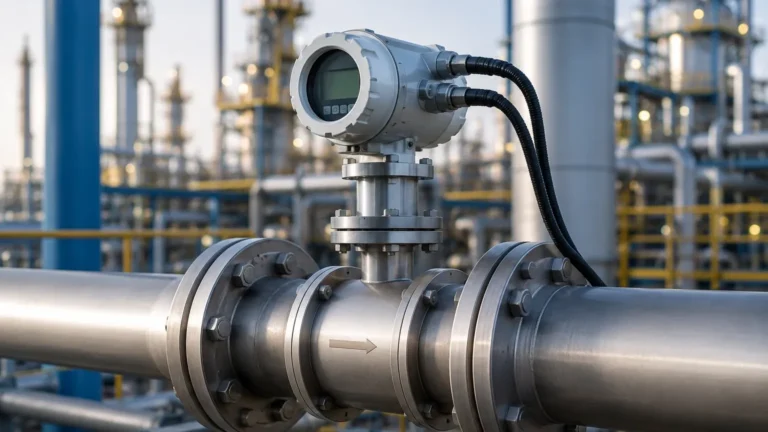
In the landscape of industrial process control, the measurement of fluid flow is as critical as the monitoring of tank levels. The Prowirl F 200 7f2c50 dn50 2 represents a specific configuration of vortex flowmeter technology designed for high-performance measurement of steam, gases, and liquids. This DN50 (50mm or 2-inch) instrument is widely utilized in chemical processing, power generation, and district heating systems where accuracy and long-term stability are paramount. Understanding the technical nuances of this specific model is essential for engineers tasked with optimizing plant efficiency and safety.
While flow measurement tracks the movement of media through piping, it often works in tandem with level measurement systems. For instance, in a boiler system, monitoring the steam output with a vortex meter is complemented by tracking the water level in the drum using technologies like those found on the Main Page of industrial instrumentation providers. Together, these data points ensure a comprehensive mass balance and safe operational environment.
Measurement Principle: The Karman Vortex Street
The Prowirl F 200 7f2c50 dn50 2 operates on the Karman vortex street principle. This physical phenomenon occurs when a fluid flows past a non-streamlined object, known as a bluff body, integrated into the flow meter's pipe section.
As the fluid hits the bluff body, it cannot follow the sharp contours, causing the flow to separate and create alternating vortices (eddies) on either side of the body. These vortices are shed at a specific frequency that is directly proportional to the flow velocity of the medium. By detecting the frequency of these pressure fluctuations, the instrument calculates the volume flow rate.
One of the primary advantages of this principle is its independence from fluid properties such as density, viscosity, or conductivity, provided the Reynolds number is sufficiently high (typically above 10,000 to 20,000). The Prowirl series utilizes a capacitive DSC (Differential Switched Capacitor) sensor to detect these vortices, which is highly resistant to pipe vibrations and thermal shocks.
Technical Specifications and Configuration
The model code "7f2c50" and the designation "DN50 2" provide specific information regarding the mechanical and electronic configuration of the device. Below is a summary of the typical technical boundaries for a DN50 vortex flowmeter in this class:
Selection Table: DN50 (2") Vortex Flowmeter Capabilities
| Feature | Specification (Metric) | Specification (Imperial) |
| :— | :— | :— |
| Nominal Diameter | DN50 | 2 Inch |
| Measuring Range (Water) | ~1.8 to 75 m³/h | ~7.9 to 330 GPM |
| Measuring Range (Steam) | ~45 to 1,100 kg/h (at 7 bar) | ~100 to 2,400 lb/h (at 100 psi) |
| Process Temperature | -200 to +400 °C | -328 to +752 °F |
| Pressure Rating | Up to PN40 | Up to Class 300 |
| Accuracy (Liquid) | ±0.75% of reading | ±0.75% of reading |
| Accuracy (Steam/Gas) | ±1.0% of reading | ±1.0% of reading |
| Output Signal | 4-20 mA HART, PROFIBUS, FF | 4-20 mA HART, PROFIBUS, FF |
This specific DN50 configuration is often selected for medium-sized branch lines in steam distribution systems or for secondary cooling water loops in chemical plants. Its robust construction ensures that it can handle the high velocities associated with saturated and superheated steam.
Application Suitability: Steam, Gases, and Liquids
The Prowirl F 200 7f2c50 dn50 2 is a versatile instrument, but its performance is most notable in three specific areas:
1. Steam Measurement
Steam is one of the most challenging media to measure due to its high temperature and the potential for "wet steam" conditions. This vortex meter is frequently used for steam mass flow measurement. When equipped with an integrated temperature sensor and a flow computer, it can calculate the energy content of the steam, which is vital for billing and efficiency calculations in industrial parks.
2. Compressed Air and Industrial Gases
In compressed air systems, leaks can lead to significant energy waste. The DN50 size is ideal for monitoring main air lines. Because the vortex principle does not require moving parts, the maintenance requirements are significantly lower than those of turbine meters or PD (positive displacement) meters, which can be damaged by particulates in the gas stream.
3. Low-Viscosity Liquids
For water treatment and chemical dosing, the Prowirl F 200 provides a reliable alternative to electromagnetic flowmeters, especially when the liquid is non-conductive (such as demineralized water or hydrocarbons) where magnetic meters would fail.
Installation Guidelines for DN50 Piping
To ensure the accuracy of the Prowirl F 200 7f2c50 dn50 2, strict adherence to installation geometry is required. Vortex meters are sensitive to flow profile distortions caused by upstream pipe fittings like elbows, valves, or reducers.
Upstream and Downstream Requirements
* Single Elbow Upstream: Requires a minimum of 15 x DN (750 mm) of straight pipe before the meter.
* Two Elbows (3D) Upstream: Requires a minimum of 25 x DN (1,250 mm) of straight pipe.
* Control Valve Upstream: Requires a minimum of 50 x DN (2,500 mm) to allow the flow profile to stabilize.
* Downstream Run: A minimum of 5 x DN (250 mm) is generally sufficient after the meter.
Orientation and Support
The meter can be installed in horizontal, vertical, or inclined piping. However, for liquid applications, the pipe must always be full. In vertical installations, an upward flow direction is preferred to prevent air trapping. For steam applications in horizontal pipes, the sensor should be mounted at the side or bottom if the steam is very wet, though standard practice often involves mounting the transmitter above the pipe to protect the electronics from heat, provided the temperature limits are respected.

Integrating Flow and Level Data for Process Efficiency
In many industrial automation scenarios, flow and level measurement are intrinsically linked. A common example is found in storage tank management. While a radar level meter or a magnetic level gauge (such as those offered by Welk) provides the inventory status of a tank, the Prowirl F 200 7f2c50 dn50 2 monitors the rate at which the tank is being filled or emptied.
By integrating both data streams into a PLC or DCS, operators can perform real-time leak detection. If the flowmeter indicates a discharge of 50 m³/h but the level transmitter shows a volume decrease equivalent to 60 m³/h, an immediate alarm can be triggered to investigate a potential breach. This synergy between level and flow instrumentation is a cornerstone of modern industrial safety and environmental compliance. For those evaluating a complete suite of measurement tools, reviewing the Main Page of a specialized manufacturer can provide insights into how these different technologies integrate into a single control architecture.
Limitations and Operational Constraints
While the Prowirl F 200 7f2c50 dn50 2 is a robust instrument, it has specific limitations that engineers must consider during the design phase:
1. Minimum Reynolds Number: As mentioned, the vortex principle fails if the flow is too slow (laminar flow). If the flow rate drops below the "low flow cut-off," the meter will read zero even if there is slight movement.
2. Pressure Loss: The bluff body inside the pipe causes a permanent pressure drop. This must be accounted for in the pump or boiler head calculations.
3. Cavitation: In liquid applications, if the pressure drops too low at the bluff body, cavitation bubbles can form. This not only damages the sensor but also leads to massive measurement errors.
4. Vibration: Although the DSC sensor is designed to filter out noise, extreme pipe vibration (common near large reciprocating compressors) can interfere with the vortex signal.
Frequently Asked Questions
Q: Can the Prowirl F 200 7f2c50 dn50 2 measure bidirectional flow?
A: No, vortex flowmeters are inherently unidirectional. The bluff body is designed to shed vortices in one direction of flow. If bidirectional measurement is required, two meters or an alternative technology like ultrasonic transit-time must be used.
Q: What maintenance is required for this model?
A: Because there are no moving parts, maintenance is minimal. Periodic visual inspection for sensor coating (in dirty fluids) and a verification of the electronics via Heartbeat Technology or similar diagnostic tools is usually sufficient. Calibration intervals typically range from 2 to 5 years depending on the criticality of the process.
Q: How does the DN50 size handle thermal expansion?
A: The meter body is designed to withstand thermal stresses. However, the piping system itself must have adequate expansion loops or joints to ensure that the meter body is not subjected to excessive mechanical pipe tension, which could misalign the sensor.
Q: Is it possible to use this meter for high-viscosity oils?
A: Generally, no. High viscosity dampens the formation of vortices. Vortex meters are typically limited to fluids with a viscosity of less than 10 cP. For heavy oils, a Coriolis or positive displacement meter is a better selection.
By carefully considering the measurement principles, installation requirements, and the specific technical profile of the Prowirl F 200 7f2c50 dn50 2, industrial operators can ensure accurate and reliable flow data. When combined with high-quality level measurement solutions, these instruments form the backbone of efficient industrial process management.