Raman Analyzer
Raman Analyzer
In the landscape of industrial process control, the ability to identify chemical compositions in real-time is as critical as monitoring physical parameters like pressure or volume. A Raman analyzer serves as a sophisticated molecular sensor, providing non-destructive, in-situ analysis of liquids, solids, and gases. While traditional level measurement instruments—such as radar or ultrasonic sensors—quantify the amount of material in a vessel, Raman spectroscopy identifies exactly what that material is and its current state of reaction. This guide explores the technical principles, selection criteria, and industrial applications of Raman analyzers, particularly how they integrate into broader process automation frameworks.
Principles of Raman Spectroscopy
Before selecting a Raman analyzer, it is essential to understand the underlying physics that allows this technology to "see" molecular structures. Raman spectroscopy is based on the inelastic scattering of monochromatic light, typically from a laser source.
The Raman Effect
When laser light interacts with molecular vibrations, phonons, or other excitations in a system, the energy of the laser photons is shifted up or down. This shift provides information about the vibrational modes in the system.
1. Rayleigh Scattering: Most of the light scattered by a molecule is at the same wavelength as the laser source. This is elastic scattering and does not provide chemical information.
2. Stokes Scattering: A small fraction of the light (approximately 1 in 10^7 photons) loses energy to the molecule, resulting in a longer wavelength. This is the primary signal used in most industrial Raman analyzers.
3. Anti-Stokes Scattering: The light gains energy from the molecule, resulting in a shorter wavelength. This typically occurs in samples at higher temperatures.
Because every molecule has a unique set of vibrational energy levels, the resulting Raman spectrum acts as a "molecular fingerprint." This allows for the simultaneous identification and quantification of multiple components within a complex mixture without the need for physical sampling or reagents.
Industrial Applications for Raman Analyzers
Raman analyzers are utilized across various sectors where chemical precision is paramount. Their ability to measure through transparent materials (like glass or plastic) and their relative immunity to water interference make them superior to Infrared (IR) spectroscopy in many aqueous environments.
Chemical and Petrochemical Processing
In polymer synthesis and petrochemical refining, Raman analyzers monitor monomer conversion and catalyst efficiency. Because the probes can withstand high pressures and temperatures, they are often installed directly into reactor bypass loops. When paired with high-accuracy level measurement from the Main Page, engineers can correlate chemical concentration changes with volume fluctuations to calculate precise mass balances.
Pharmaceutical Manufacturing
Raman technology is a cornerstone of Process Analytical Technology (PAT) in pharmaceuticals. It is used for raw material identification, monitoring blending uniformity, and ensuring the correct crystalline form (polymorphism) of active pharmaceutical ingredients (APIs) during crystallization processes.
Water and Wastewater Treatment
While Welk specializes in level sensors for water treatment, Raman analyzers complement these systems by detecting trace contaminants, such as nitrates, phosphates, or specific organic pollutants, in real-time. This allows for automated dosing of treatment chemicals based on actual pollutant loads rather than estimated flow rates.
Key Evaluation Criteria for Selecting a Raman Analyzer
Choosing the right Raman analyzer requires balancing sensitivity, stability, and environmental compatibility. The following factors are critical during the procurement phase:
Laser Wavelength Selection
The choice of laser wavelength (measured in nanometers, nm) is the most significant factor in analyzer performance:
* 532 nm: Offers high signal strength but frequently triggers fluorescence in organic samples, which can mask the Raman signal.
* 785 nm: The industry standard for many applications. It offers a balance between signal strength and reduced fluorescence.
* 1064 nm: Significantly reduces fluorescence interference, making it ideal for dark or highly colored industrial samples, though it requires more sensitive (and expensive) detectors.
Spectrometer Resolution and Range
Resolution determines how well the analyzer can distinguish between two closely spaced spectral peaks. For complex hydrocarbons, a resolution of 4 cm⁻¹ to 8 cm⁻¹ is typically required. The spectral range (e.g., 200 cm⁻¹ to 3500 cm⁻¹) must cover the specific molecular bonds of interest, such as C-H, O-H, or N-H stretching.
Probe Design and Interface
Industrial Raman probes must be robust. Selection should prioritize:
* Material Compatibility: 316L stainless steel or Hastelloy C-276 bodies.
* Window Material: Sapphire is commonly used for its hardness and chemical resistance.
* Distance: Fiber optic cables allow the analyzer electronics to be located in a safe room while the probe is in a hazardous zone, often up to 200 meters away.
Comparison of Raman Analyzer Configurations
| Feature | Portable/Handheld | Online/Process Analyzer | Lab-Grade Benchtop |
| :— | :— | :— | :— |
| Primary Use | Raw material ID, Warehouse | Continuous process control | R&D, Method development |
| Environment | Rugged, IP67 | NEMA 4X, ATEX/IECEx | Controlled laboratory |
| Multiplexing | Single point | Up to 16 channels | Usually single point |
| Stability | Moderate | High (Internal calibration) | Very High |
| Integration | Bluetooth/WiFi | 4-20mA, Modbus, OPC UA | USB/Ethernet |

Installation and Integration Considerations
Successful deployment of a Raman analyzer involves more than just hardware; it requires careful physical and digital integration.
Optical Path Safety
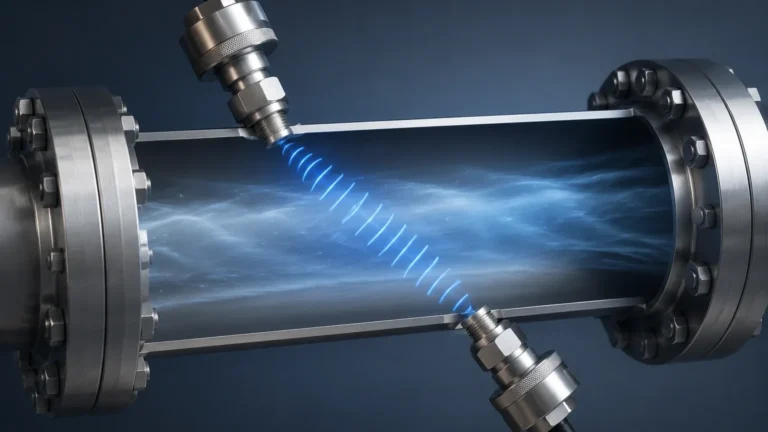
Since Raman analyzers use high-power Class 3B or Class 4 lasers, optical safety is critical. If the probe is removed from the process while the laser is active, it poses a risk to personnel. Modern systems include interlocks that disable the laser if the fiber optic cable is disconnected or if the probe is not seated in its flange.
Sample Conditioning
Unlike many analytical techniques, Raman often requires no sample conditioning. However, the presence of bubbles or heavy particulates can scatter the laser light and degrade the signal. Probes should be installed in sections of piping where the flow is fully developed and laminar. For tank installations, ensuring the probe is submerged below the minimum liquid level—verified by a reliable hydrostatic or radar level transmitter—prevents "dry firing" of the laser.
Calibration and Chemometrics
A Raman analyzer does not provide a direct concentration reading out of the box. It requires a chemometric model. This involves collecting spectra of samples with known concentrations (validated by lab analysis) and using multivariate regression (like PLS – Partial Least Squares) to build a predictive model. Regular validation of these models is necessary to account for laser aging or subtle changes in the process matrix.
Technical Limitations and Challenges
While powerful, Raman analyzers are not universal solutions. Engineers must be aware of the following limitations:
1. Fluorescence: This is the primary "enemy" of Raman. Some materials emit a broad fluorescence signal that is orders of magnitude stronger than the Raman signal, effectively drowning it out.
2. Sample Color and Absorbance: Very dark or black samples (like crude oil or coal slurry) can absorb the laser energy, leading to localized heating or even combustion of the sample at the probe tip.
3. Detection Limits: Raman is generally not suitable for trace analysis at the parts-per-billion (ppb) level. Most industrial applications operate in the 0.1% to 100% concentration range.
4. Cost: Compared to simple pH or conductivity sensors, a Raman analyzer represents a significant capital investment, often ranging from $40,000 to over $150,000 depending on the complexity and number of channels.
Frequently Asked Questions (FAQ)
Q: Can a Raman analyzer measure through a metal tank wall?
A: No. Raman requires an optical path. You must install a probe through a flange with a sapphire window or use a sight glass. For non-invasive level measurement, you would typically use external ultrasonic or nuclear gauges found on our Main Page.
Q: How often does the laser need to be replaced?
A: Most modern solid-state lasers used in process Raman analyzers have a lifespan of 10,000 to 20,000 hours. Many systems now include automated health monitoring to alert maintenance teams before a laser failure occurs.
Q: Is Raman spectroscopy affected by ambient light?
A: While the analyzer is designed to filter out ambient light, intense sunlight or high-frequency overhead lighting can sometimes introduce noise. Probes are usually shrouded or installed in light-tight process connections to prevent this.
Q: Can it measure gases?
A: Yes, but because gases are much less dense than liquids, the Raman signal is much weaker. High-pressure gas applications or specialized long-path gas cells are usually required for accurate gas-phase Raman analysis.
Conclusion
The Raman analyzer is a transformative tool for B2B industrial operations, moving the needle from reactive sampling to proactive, real-time molecular management. By understanding the measurement principles and carefully selecting the laser wavelength and probe interface, facilities can achieve unprecedented levels of process transparency. When integrated with robust physical measurement technologies—such as the radar and ultrasonic solutions provided by Welk—the Raman analyzer completes the data picture, ensuring both the quantity and quality of industrial fluids are maintained at optimal levels.