Regulatory Frameworks Reclaimed Water Reuse Policies
Regulatory Frameworks Reclaimed Water Reuse Policies
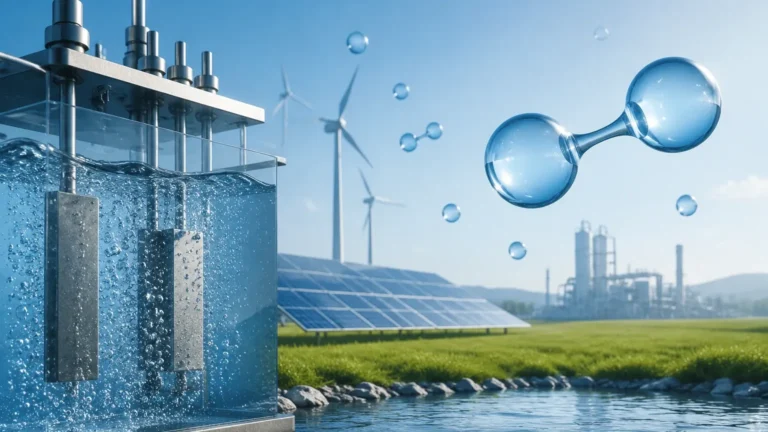
As global water scarcity intensifies, the transition from a linear "take-make-dispose" water model to a circular economy has become an industrial necessity. Reclaimed water—wastewater that has been treated to meet specific quality standards for beneficial reuse—is at the center of this transition. However, the implementation of reuse projects is governed by complex regulatory frameworks reclaimed water reuse policies that vary significantly by region and application. For engineers and facility managers, compliance with these policies requires not only a deep understanding of water chemistry but also precise monitoring and control of water levels throughout the treatment and distribution process.
Reliable level measurement is the backbone of any reclaimed water system. Whether managing buffer tanks, chemical dosing stations, or filtration units, accurate data ensures that systems operate within the safety margins defined by local and international standards. To explore a full range of industrial instrumentation designed for these environments, you can visit the Main Page to review product options and application support.
Understanding Level Measurement Principles
Before selecting instrumentation to meet the requirements of regulatory frameworks reclaimed water reuse policies, it is essential to understand the physics behind the primary measurement technologies used in water treatment.
Radar Level Measurement (Non-Contact)
Radar level meters operate on the Time-of-Flight (ToF) principle. The device emits high-frequency microwave pulses (typically in the 26 GHz or 80 GHz range) toward the surface of the reclaimed water. These pulses are reflected back to the sensor. Since the speed of light is constant, the time it takes for the signal to return is directly proportional to the distance between the sensor and the liquid surface. Radar is highly preferred in reclaimed water applications because it is unaffected by temperature fluctuations, pressure changes, or the presence of vapors and dust.
Ultrasonic Level Measurement
Ultrasonic sensors also use the ToF principle but utilize sound waves instead of electromagnetic waves. A transducer emits an ultrasonic pulse that bounces off the water surface. The sensor calculates the distance based on the speed of sound. While cost-effective for open-channel flow and atmospheric tanks, ultrasonic measurement is sensitive to air temperature gradients and surface foam, which can attenuate the sound signal.
Hydrostatic Level Measurement
This contact-based method relies on the principle that the pressure at the bottom of a liquid column is directly proportional to the height of that column. A pressure transmitter (submersible or externally mounted) measures the head pressure. For reclaimed water, which may have varying density depending on the treatment stage, hydrostatic sensors provide a robust solution for deep wells and reservoirs, provided the specific gravity of the fluid is known and consistent.
Global Regulatory Frameworks for Reclaimed Water Reuse
Regulatory frameworks reclaimed water reuse policies are designed to protect public health and the environment. These policies categorize reclaimed water based on its end-use, such as industrial cooling, agricultural irrigation, or indirect potable reuse. Each category carries different monitoring requirements.
1. ISO 20470 and International Standards: The International Organization for Standardization provides guidelines for the treated wastewater use for irrigation. These standards emphasize the need for continuous monitoring of storage levels to prevent overflows that could lead to untreated discharge.
2. US EPA and State-Level Regulations: In the United States, while there is no federal mandate, the EPA provides a "Guidelines for Water Reuse." States like California (Title 22) and Florida have established stringent criteria. These often require redundant level monitoring in disinfection tanks to ensure sufficient contact time (CT) with chlorine or UV light.
3. EU Regulation 2020/741: This European framework sets minimum requirements for water quality and monitoring for agricultural irrigation. It mandates strict risk management plans where level control in storage reservoirs is critical to maintaining a steady supply during peak demand without compromising treatment quality.
Selecting the Right Level Sensor for Compliance
When aligning a facility with regulatory frameworks reclaimed water reuse policies, the selection of level instrumentation must account for the specific characteristics of the reclaimed water at different stages of treatment.
Selection Criteria Table
| Application Stage | Typical Challenge | Recommended Technology | Accuracy Requirement |
| :— | :— | :— | :— |
| Primary Clarifiers | Surface scum, turbulence | Non-contact Radar (80 GHz) | ±2 mm |
| Chemical Dosing | Corrosive chemicals (Alum, Chlorine) | PTFE-lined Radar or Ultrasonic | ±1 mm to 3 mm |
| Filtration Units | Rapid level changes, backwashing | Hydrostatic or Radar | ±0.1% of Span |
| Storage Reservoirs | Large distances, outdoor environment | Radar or Submersible Hydrostatic | ±5 mm |
| Open Channels | Varying flow rates, foam | Ultrasonic with temperature comp. | ±0.25% of Range |
Material Compatibility
Reclaimed water often contains residual chemicals from the treatment process. Sensors must be constructed from corrosion-resistant materials. For example, Welk radar meters often utilize PVDF or PTFE housings and antennas to withstand the harsh environments found in chlorination chambers and acid/base dosing skids.
Installation Considerations and Best Practices
To ensure that level measurement data remains valid for regulatory reporting, proper installation is paramount. Even the most advanced sensor will fail to provide accurate data if installed incorrectly.
* Blocking Distance (Dead Zone): All ToF sensors (Radar and Ultrasonic) have a minimum distance near the sensor face where measurements cannot be taken. Ensure the sensor is mounted high enough so that the maximum water level never enters this zone.
* Internal Obstructions: In tanks with agitators, ladders, or inflow pipes, radar signals can create "false echoes." Advanced level meters allow for "false echo suppression," where the software learns the tank's internal structure and ignores static reflections.
* Stilling Wells: In applications with heavy surface turbulence or foam, installing the sensor inside a stilling well (a vertical pipe) can provide a calm surface for more accurate measurement. This is particularly useful for hydrostatic and radar sensors in aeration tanks.
* Environmental Protection: For outdoor installations, sunshades should be used to prevent excessive heat buildup on the sensor electronics, which can lead to premature component failure.

Limitations and Risks in Reclaimed Water Monitoring
While modern instrumentation is highly reliable, engineers must be aware of specific limitations that could impact compliance with regulatory frameworks reclaimed water reuse policies.
* Foam Interference: Heavy protein foam in biological treatment stages can absorb ultrasonic signals and scatter radar pulses. In these instances, a high-frequency radar (80 GHz) with a narrow beam angle is often the only effective non-contact solution.
* Build-up and Scaling: Reclaimed water may have high mineral content, leading to scaling on contact sensors. Hydrostatic transmitters require periodic cleaning to ensure the sensing diaphragm is not obstructed.
* Signal Attenuation in Vapors: While radar is mostly immune to vapors, extremely dense steam or chemical vapors can slightly affect the signal. Choosing a sensor with a high dynamic range (sensitivity) helps overcome these losses.
Frequently Asked Questions (FAQ)
Q: How often should level meters be calibrated in a reclaimed water facility?
A: Most regulatory frameworks suggest an annual calibration check. However, for critical safety loops (e.g., preventing chemical tank overfill), semi-annual verification is recommended. Many Welk instruments offer self-diagnostic features that can alert operators if the sensor signal deviates from expected parameters.
Q: Can one sensor type be used for all stages of water reclamation?
A: While radar is the most versatile, it may be overkill for simple atmospheric water storage where ultrasonic or hydrostatic sensors are more cost-effective. The choice should be based on the specific challenges of each process stage (e.g., presence of chemicals, turbulence, or foam).
Q: How do level meters help in energy efficiency for water reuse?
A: By providing precise level data, these instruments allow for the optimization of pump cycles. Variable Frequency Drives (VFDs) can adjust pump speeds based on real-time tank levels, significantly reducing energy consumption compared to simple on/off control.
Q: What is the impact of the 80 GHz radar frequency over the older 26 GHz?
A: 80 GHz radar provides a much narrower beam angle (as small as 3 degrees). This allows the sensor to be installed in narrow tanks or near walls without interference, and it provides better reflection from low-dielectric liquids, which is common in some industrial reclaimed water streams.
Conclusion
Navigating the complexities of regulatory frameworks reclaimed water reuse policies requires a commitment to both environmental stewardship and technical precision. As standards evolve to demand higher water quality and more transparent reporting, the role of industrial level measurement becomes even more critical. By selecting the appropriate measurement principle—whether it be the robust non-contact radar or the reliable hydrostatic transmitter—facilities can ensure they meet legal requirements while optimizing their operational efficiency. For further technical specifications and to find the right solution for your specific application, please refer to the Main Page for a complete catalog of level measurement technology.
Download Regulatory Frameworks Reclaimed Water Reuse Policies as a PDF