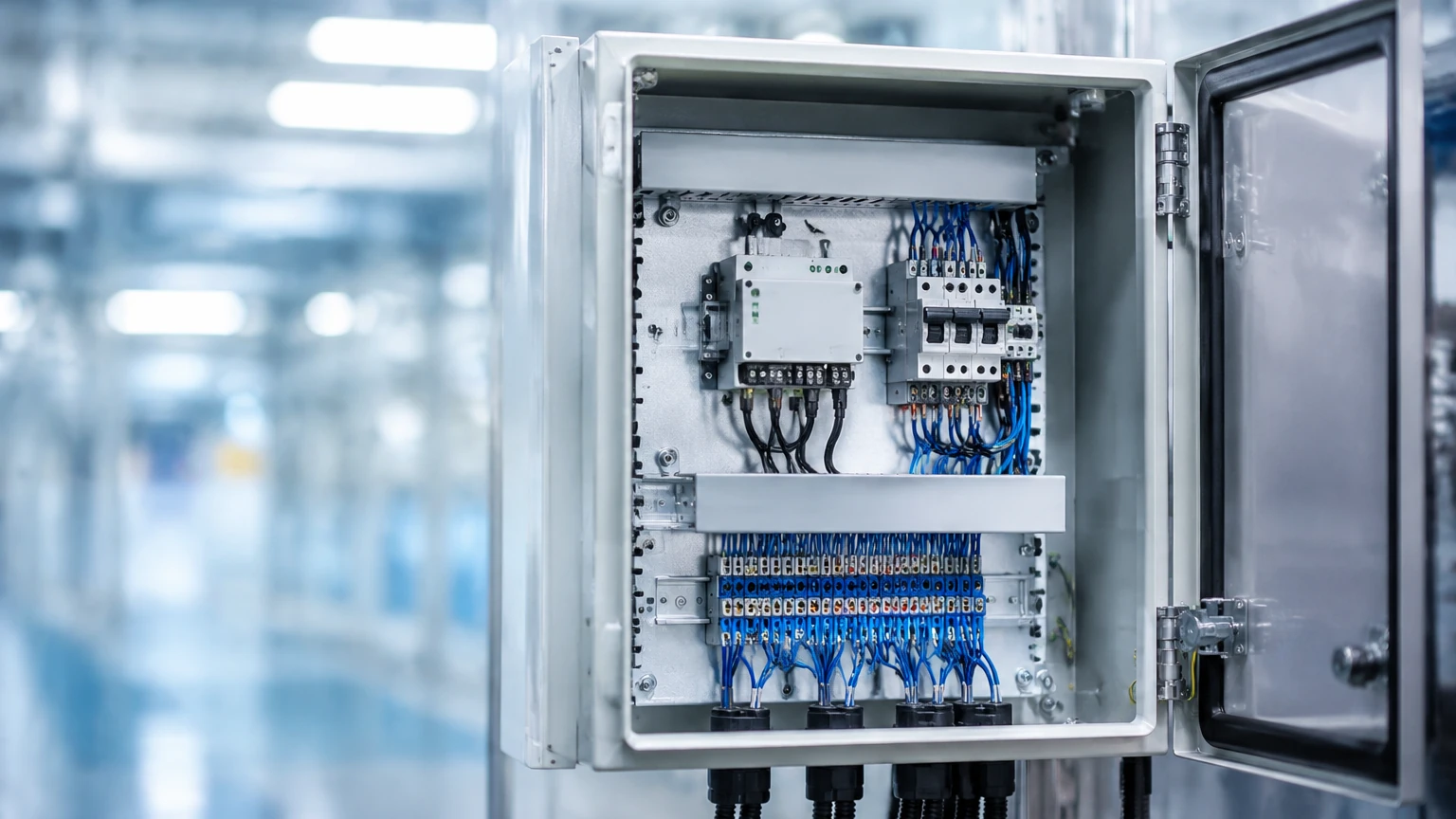
Rodem Smart Wfi Point-of-use Panel
Rodem Smart Wfi Point-of-use Panel
In high-purity water systems, particularly those producing Water for Injection (WFI), the delivery of water to the specific point of consumption is as critical as the purification process itself. The rodem smart wfi point-of-use panel represents a specialized engineering solution designed to bridge the gap between a recirculating high-temperature WFI loop and the end-user requirements for cooled, metered, and sterile water. For process engineers and facility managers in the pharmaceutical and biotech sectors, understanding the integration of these panels with precise instrumentation is essential for maintaining compliance and operational efficiency.
Understanding the WFI Point-of-Use Dynamics
Water for Injection is typically maintained in a continuous loop at temperatures above 80°C (176°F) to prevent microbial growth. However, most pharmaceutical processes—such as formulation, tank cleaning, or equipment rinsing—require water at much lower temperatures, often between 20°C and 40°C.
A point-of-use (POU) panel serves as a localized station where the hot WFI is diverted from the main loop, cooled via a heat exchanger, and delivered to the process. The "smart" designation of the rodem smart wfi point-of-use panel refers to its integrated automation, which monitors temperature, flow, and conductivity in real-time, ensuring that only water meeting specific quality parameters reaches the output.
Measurement Principles in High-Purity Systems
Before selecting or configuring a POU panel, it is vital to understand the measurement principles that govern the sensors integrated into these systems. In WFI applications, non-invasive or sanitary-grade measurements are mandatory to prevent contamination.
1. Level Measurement Principles
While the POU panel manages delivery, the upstream WFI storage tank relies on accurate level measurement to ensure the loop remains pressurized and supplied.
* Radar Level Measurement: High-frequency microwave pulses are emitted toward the liquid surface. The time-of-flight between emission and reception determines the distance. For WFI, non-contact radar is preferred because it does not physically touch the high-purity media, eliminating the risk of leaching or bacterial niches.
* Ultrasonic Level Measurement: This uses sound waves. While cost-effective, it is sensitive to the steam and temperature fluctuations common in hot WFI headspaces, making radar a more robust choice for these specific environments.
* Hydrostatic Pressure: This measures the weight of the liquid column. In sanitary tanks, flush-mount diaphragms are used to avoid "dead legs" where bacteria could proliferate.
2. Thermal and Flow Dynamics
The POU panel utilizes a heat exchanger (typically a double-tube sheet design) to cool the water. The measurement of cooling efficiency depends on precise temperature sensors (RTDs) and electromagnetic or ultrasonic flow meters that can withstand Clean-in-Place (CIP) and Steam-in-Place (SIP) cycles.
Key Components of the Rodem Smart Wfi Point-of-use Panel
The architecture of a smart POU panel is designed for rapid response and sterility. Key components typically include:
* Sanitary Heat Exchanger: Usually a 316L stainless steel double-tube sheet (DTS) model to prevent cross-contamination between the cooling water and the WFI.
* Automated Control Valves: Diaphragm valves that regulate the flow of WFI and the cooling media (chilled water or glycol).
* Integrated Instrumentation: Sensors for temperature, conductivity, and flow that feed data back to a central PLC or the facility's SCADA system.
* User Interface: A local HMI (Human Machine Interface) that allows operators to set desired temperatures and view real-time status.
Selection Criteria for WFI Instrumentation
When evaluating instrumentation for a WFI system or a POU panel, engineers must prioritize material compatibility and hygienic design. Below is a selection table comparing common level measurement technologies used in the broader WFI distribution system, which supports the POU panels.
| Technology | Accuracy | Sanitary Suitability | Temperature Resistance | Recommended Application |
| :— | :— | :— | :— | :— |
| Non-contact Radar | ±2 mm | Excellent (No contact) | Up to 250°C | WFI Storage & Buffer Tanks |
| Ultrasonic | ±5 mm | Good | Up to 80°C | Ambient Purified Water |
| Hydrostatic | ±0.1% Span | High (Flush Diaphragm) | Up to 120°C | Small Vats / Pressurized Tanks |
| Magnetic Gauge | ±5 mm | Moderate | High | Visual backup for large vessels |
For comprehensive technical data on these sensor types, engineers can visit the Main Page of professional manufacturers like Welk to review specific model capabilities.
Installation Considerations
The performance of a rodem smart wfi point-of-use panel is heavily dependent on correct installation. Failure to follow sanitary piping standards can lead to "dead legs"—areas of stagnant water that become breeding grounds for biofilm.
1. The 3D/6D Rule: Historically, the industry followed the 6D rule (the length of a pipe branch should not exceed six times its diameter). Modern ASME BPE standards often push for a 3D or even 2D limit to ensure maximum turbulence and sterilization during CIP.
2. Drainability: All piping within the POU panel and the connections to the main loop must be sloped (typically 1-2%) to ensure the system can be fully drained during maintenance or sterilization.
3. Surface Finish: All wetted parts must be 316L stainless steel with a surface roughness (Ra) of less than 0.5 μm, often achieved through electropolishing.
4. Air Venting: Proper placement of sanitary air vents is required to prevent vacuum collapse during cooling cycles and to ensure complete steam penetration during SIP.
Operational Limitations and Risks
While the rodem smart wfi point-of-use panel is a highly advanced system, it is not without limitations.
* Cooling Water Quality: If the cooling water used in the heat exchanger is of poor quality, it can cause scaling on the utility side of the tubes, reducing heat transfer efficiency over time.
* Thermal Shock: Rapidly introducing cold water into a hot system can cause mechanical stress on gaskets and seals. Smart panels mitigate this through ramped valve control.
* Conductivity Spikes: If the heat exchanger develops a pinhole leak (though rare in DTS designs), the conductivity of the WFI will rise. The "smart" logic must be programmed to immediately divert this water to drain rather than allowing it to reach the process.
Maintenance and Calibration
To maintain validated status in a cGMP (current Good Manufacturing Practice) environment, the instrumentation within the POU panel requires regular calibration.
* Temperature Sensors: Should be calibrated at least annually using a dry-block calibrator.
* Level Sensors: Upstream radar or hydrostatic sensors should be verified against manual measurements or via a multi-point electronic calibration to ensure the WFI loop never runs dry.
* Seal Replacement: Diaphragms in the control valves are wear items and should be inspected periodically for signs of pitting or degradation.
Frequently Asked Questions (FAQs)
Q: Can a POU panel be used for both hot and cold WFI?
A: Yes. The rodem smart wfi point-of-use panel is specifically designed to take hot WFI from the loop and deliver it at a controlled, lower temperature. If hot water is needed, the heat exchanger can be bypassed via automated valving.
Q: What happens if the power fails?
A: Most smart panels are designed with "fail-safe" positions. Typically, the WFI delivery valve will close, and the cooling water valve will close to prevent unmonitored water from entering the process.
Q: Is the panel compatible with ozone sterilization?
A: If the WFI system uses ozone for sanitization instead of heat, the materials in the POU panel (especially EPDM or PTFE gaskets) must be verified for ozone compatibility to prevent oxidation and material shedding.
Conclusion
The integration of a rodem smart wfi point-of-use panel into a pharmaceutical water system provides a critical layer of control and safety. By automating the cooling and monitoring process, facilities can ensure that their Water for Injection meets stringent USP or EP standards at the moment of use. For the system to function correctly, it must be supported by high-accuracy instrumentation—from the radar level meters on the main storage tank to the flow sensors within the panel itself. Engineers seeking reliable measurement solutions for these applications should consult technical resources and product specifications on the Main Page to ensure their instrumentation choices align with the rigorous demands of industrial automation and sanitary processing.