Rostd
Rostd
In the complex landscape of industrial process control, achieving precise and reliable level measurement is a fundamental requirement for operational safety and efficiency. Engineers and facility managers often look for a "rostd" (Robust Operational Standard for Technical Deployment) approach when selecting instrumentation. This standardized methodology ensures that level meters—whether radar, ultrasonic, or hydrostatic—are not only accurate but also capable of withstanding the rigorous demands of chemical processing, water treatment, and oil and gas applications.
Adopting a rostd framework involves evaluating the physical principles of measurement against the specific constraints of the environment. This guide explores the core technologies used in modern level measurement, the evaluation criteria for robust standardization, and practical installation strategies for industrial automation.
Measurement Principles: The Foundation of Reliability
Before recommending a specific instrument, it is essential to understand the underlying physics that govern level detection. Industrial level measurement is generally categorized into non-contact and contact methods.
1. Radar Level Measurement (ToF)
Radar level meters operate on the Time-of-Flight (ToF) principle. The device emits high-frequency electromagnetic waves (typically in the 26GHz or 80GHz range) toward the product surface. These waves are reflected back to the sensor’s antenna. The instrument calculates the distance based on the time interval between emission and reception.
* FMCW vs. Pulse Radar: Frequency Modulated Continuous Wave (FMCW) radar is often preferred in a rostd-compliant setup because it offers higher precision by measuring frequency shifts rather than simple pulse timing. This is particularly effective in tanks with internal obstructions or turbulent surfaces.
2. Ultrasonic Level Measurement
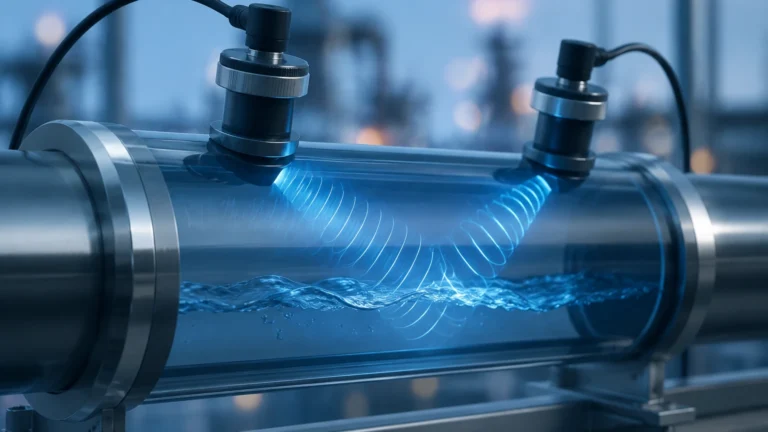
Ultrasonic sensors utilize sound waves rather than electromagnetic waves. A piezoelectric crystal within the transducer converts electrical energy into mechanical sound pulses. These pulses travel through the air, bounce off the target media, and return to the transducer.
* Environmental Factors: Because sound velocity is affected by air temperature, pressure, and vapor density, ultrasonic meters must include integrated temperature compensation to maintain accuracy. They are ideal for open-channel flow and atmospheric water tanks.
3. Hydrostatic Level Measurement
This principle relies on the relationship between the height of a liquid column and the pressure it exerts at the base of a vessel. The formula $P = \rho \cdot g \cdot h$ (where $P$ is pressure, $\rho$ is density, $g$ is gravity, and $h$ is height) allows the transmitter to calculate the level based on the measured head pressure.
* Application: Hydrostatic transmitters are frequently used in deep wells and vented tanks. In sealed tanks, a differential pressure (DP) approach is required to subtract the top-side gas pressure from the total pressure at the bottom.
4. Magnetic Level Gauges
Magnetic gauges utilize buoyancy and magnetic coupling. A float containing a permanent magnet moves up and down a bypass chamber connected to the vessel. Externally mounted indicators or transmitters respond to the magnet's position, providing a visual and electronic representation of the level without the liquid ever contacting the indicator glass.
The Role of Rostd in System Design
A rostd approach to instrumentation focuses on the "Robustness" and "Standardization" of the equipment. In B2B environments, this means selecting devices that offer long-term stability and ease of integration into existing PLC/SCADA systems. A rostd-certified installation typically prioritizes:
1. Signal Integrity: Using advanced algorithms to filter out false echoes from agitators, ladders, or inlet pipes.
2. Material Compatibility: Ensuring that wetted parts (e.g., PTFE, 316L Stainless Steel, or Hastelloy) are resistant to the process media.
3. Standardized Outputs: Utilizing 4-20mA HART, RS485 Modbus, or Foundation Fieldbus to ensure seamless communication across the plant floor.
When evaluating hardware, engineers should consult the Main Page of the manufacturer’s technical catalog to verify that the chosen model meets the specific rostd requirements of their industry.
Practical Selection Table
Choosing the right technology requires a comparison of process variables. The following table provides a general guide for selecting level instruments based on typical industrial conditions.
| Technology | Media Type | Max Range | Temp. Range | Pressure Range | Rostd Suitability |
| :— | :— | :— | :— | :— | :— |
| 80GHz Radar | Liquids/Solids | Up to 120m | -40 to +250°C | Up to 40 Bar | Excellent for narrow tanks |
| Ultrasonic | Liquids/Slurries | Up to 30m | -40 to +70°C | Atmospheric | Best for water/wastewater |
| Hydrostatic | Clean Liquids | Up to 200m | -10 to +80°C | N/A (Submersible) | Ideal for deep wells/reservoirs |
| Magnetic Gauge | Hazardous Liq. | Up to 6m | -50 to +400°C | Up to 160 Bar | High-pressure/High-temp |
| Level Switch | Point Level | N/A | -50 to +150°C | Up to 64 Bar | Overfill protection |
Installation Considerations
Even the most advanced rostd-compliant meter will fail if improperly installed. Engineers must adhere to strict mounting guidelines to ensure the longevity and accuracy of the device.
Mounting Position
For non-contact sensors (Radar and Ultrasonic), the device should be mounted at least 500mm away from the tank wall to prevent signal interference. It should also be positioned away from the filling inlet to avoid measuring the falling stream of material rather than the actual level.
The "Dead Zone" or Blocking Distance
Every ultrasonic and radar sensor has a minimum distance (dead zone) near the antenna where measurements are impossible. For instance, if an ultrasonic sensor has a 0.3m dead zone, the tank should never be filled above that point, or the sensor will lose its signal. In a rostd design, the mounting nozzle height is often adjusted to account for this distance.
Beam Angle and Obstructions
Radar beams spread as they travel. If a tank has internal heating coils or structural braces, a narrow beam angle (such as that provided by 80GHz technology) is necessary to "miss" these obstacles. If obstructions are unavoidable, the software must be configured with a "false echo suppression" map.
Environmental Protection
In outdoor or wash-down environments, ensure the housing is rated at least IP67. For explosive atmospheres, the instrument must carry the appropriate ATEX or IECEx certifications (Ex ia or Ex d) to satisfy safety rostd protocols.

Common Risks and Limitations
While modern instruments are highly capable, they are not universal solutions. Understanding the limitations of each technology is a core component of the rostd evaluation process.
* Dielectric Constant (Dk): Radar relies on the reflectivity of the material. Non-conductive liquids with a very low Dk (like certain oils or liquefied gases) may reflect very weak signals, requiring specialized high-sensitivity antennas or guided wave radar (GWR).
* Vapor and Foam: Heavy foam can absorb ultrasonic and radar signals, leading to signal loss. In such cases, hydrostatic transmitters or magnetic level gauges are more reliable because they are unaffected by surface conditions.
* Density Fluctuations: Hydrostatic sensors assume a constant liquid density. If the temperature of the liquid changes significantly, or if different chemicals are mixed, the density changes, and the level reading will drift unless a density-compensated system is used.
Information to Confirm Before Procurement
Before moving forward with a project, the following data points must be confirmed to ensure the instrumentation aligns with rostd standards:
1. Media Characteristics: Is the liquid corrosive, viscous, or prone to crystallization?
2. Process Dynamics: How fast does the level change? (This determines the required update rate of the sensor).
3. Tank Geometry: Is the bottom flat, conical, or spherical? Are there agitators or spray balls?
4. Connectivity Requirements: Does the facility require local display, or is all data fed back to a central control room via 4-20mA or digital protocols?
5. Budget vs. Lifecycle Cost: While ultrasonic sensors have a lower initial cost, radar often provides a lower total cost of ownership due to reduced maintenance and higher reliability in variable conditions.
Frequently Asked Questions (FAQs)
Q: How does rostd differ from standard industrial grades?
A: A rostd approach implies a higher level of scrutiny regarding the integration of the device into the total system lifecycle, focusing on standardized spare parts, universal communication protocols, and enhanced environmental resilience beyond basic factory specs.
Q: Can radar level meters measure through plastic tanks?
A: Yes, because plastic has a low dielectric constant, radar waves can pass through the top of a plastic tank, allowing for completely non-invasive measurement. This is a common rostd solution for high-purity chemicals.
Q: What maintenance is required for hydrostatic transmitters?
A: For submersible versions, the vent tube in the cable must remain clear of moisture and debris. Periodic calibration checks are recommended to account for any sensor drift over time, especially in high-sediment environments.
Q: Is 80GHz always better than 26GHz radar?
A: While 80GHz offers a narrower beam and better resolution, 26GHz radar is often more robust in applications with heavy dust or steam, as the longer wavelength can penetrate these particles more effectively.
By following these engineering principles and selection criteria, B2B stakeholders can ensure that their level measurement systems are optimized for both performance and longevity. For detailed technical specifications and model-specific data, engineers are encouraged to review the available resources on the manufacturer's Main Page.
***
Note on Units: All technical specifications in this guide use metric units (meters, Celsius, Bar). For conversions to imperial units (feet, Fahrenheit, PSI), please refer to standard engineering conversion charts.