Saddle Mount Mag Meters
Saddle Mount Mag Meters
In industrial fluid management, the ability to measure flow rates accurately in large-diameter piping without incurring the prohibitive costs of full-bore flanged meters is a significant engineering challenge. Saddle mount mag meters, also known as saddle-type electromagnetic flowmeters, offer a pragmatic solution. These instruments combine the precision of electromagnetic induction with a mounting configuration that simplifies installation and reduces hardware costs, particularly in retrofitting applications. This guide explores the technical principles, selection criteria, and installation requirements for saddle mount mag meters within industrial automation and water treatment contexts.
Measurement Principles of Electromagnetic Flowmeters
To understand the function of saddle mount mag meters, one must first grasp the underlying physics of electromagnetic flow measurement. These devices operate based on Faraday’s Law of Electromagnetic Induction. This law states that a conductor moving through a magnetic field produces an electrical voltage proportional to its velocity.
In the context of a mag meter, the "conductor" is the process fluid itself. For the measurement to be successful, the fluid must possess a minimum level of electrical conductivity, typically at least 5 μS/cm (microsiemens per centimeter). As the conductive liquid flows through the magnetic field generated by the meter’s coils, a voltage is induced. This voltage is captured by two electrodes positioned opposite each other on the meter body or probe.
The relationship is expressed by the formula:
E = k × B × v × D
* E: The induced voltage.
* k: A constant specific to the meter design.
* B: The strength of the magnetic field.
* v: The average velocity of the fluid.
* D: The distance between the electrodes (usually the pipe diameter).
Because the magnetic field (B) and the distance between electrodes (D) are fixed, the induced voltage (E) is directly proportional to the fluid velocity (v). The transmitter then converts this voltage signal into a volumetric flow rate (e.g., m³/h or liters per second). Saddle mount designs specifically apply this principle by either inserting a probe through a saddle fitting or using a compact flow tube integrated into a saddle clamp.
Design and Structural Characteristics
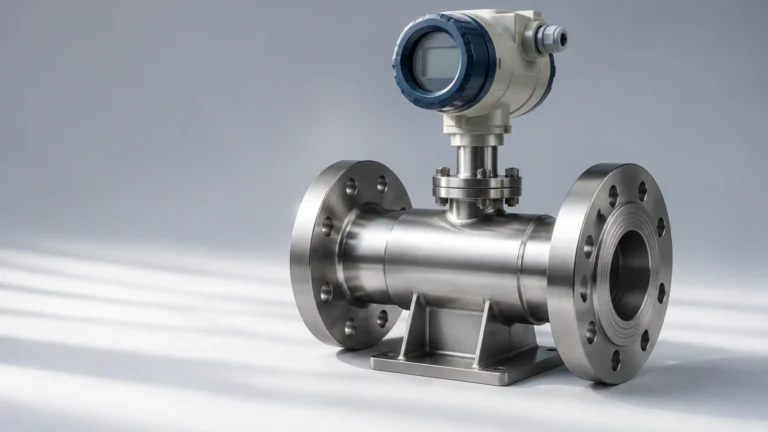
Saddle mount mag meters are distinguished by their mechanical interface with the piping system. Unlike traditional flanged meters that require cutting a section of the pipe and installing mating flanges, a saddle mount meter is clamped onto the exterior of the pipe.
The Saddle Mechanism
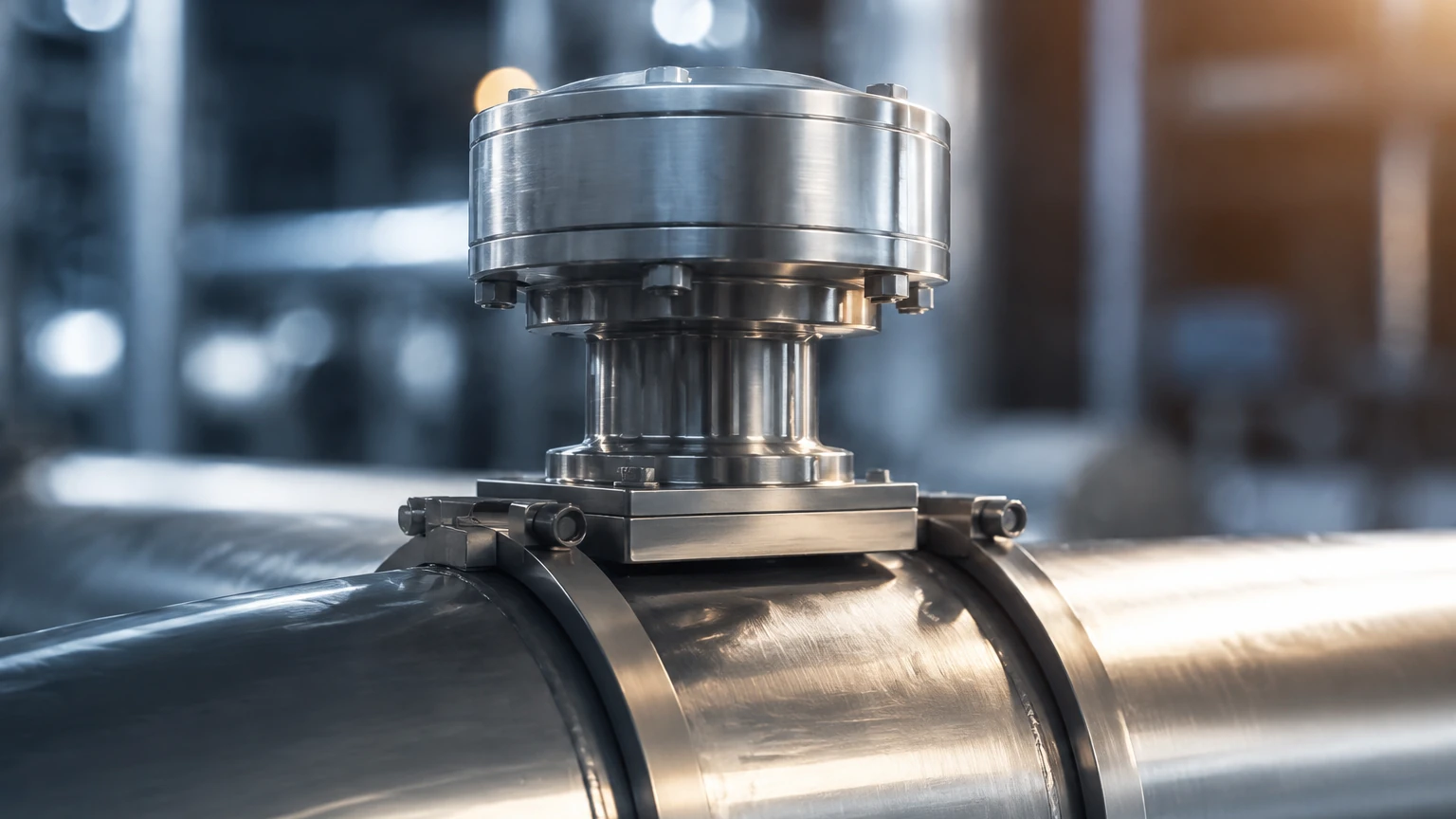
The "saddle" consists of a contoured base that matches the outer diameter (OD) of the pipe. It is secured using U-bolts, straps, or a bolt-on split-collar design. This configuration is particularly advantageous for plastic pipes (PVC, HDPE) and ductile iron pipes commonly found in irrigation and municipal water systems.
Sensor Configuration
There are two primary variations of saddle-mounted electromagnetic instruments:
1. Insertion Type: A probe containing the electrodes and magnetic coils is inserted through a hole drilled in the pipe wall. The saddle provides the seal and structural support for the probe.
2. Integrated Saddle Flow Tube: The saddle itself contains a small-bore flow passage. A portion of the fluid is diverted through this passage, or the saddle acts as a housing for a specialized flow tube that replaces a small section of the pipe wall.
For industrial applications requiring high reliability, manufacturers like Welk provide robust sensor housings and high-quality liners to ensure long-term stability in harsh environments. For more information on various industrial measurement technologies, you can visit the Main Page of our technical resource.
Key Evaluation and Selection Criteria
Selecting the correct saddle mount mag meter requires a detailed analysis of the process conditions and the piping material. Because the meter relies on a magnetic field, the presence of metal in the pipe or the fluid can influence performance.
Pipe Material and Diameter
Saddle mount meters are most effective on pipe sizes ranging from 50 mm (2 inches) to over 1000 mm (40 inches). For non-conductive pipes like PVC or HDPE, the installation is straightforward. However, for metallic pipes (Steel, Ductile Iron), the pipe must be lined with a non-conductive material, or the sensor probe must be electrically isolated from the pipe wall to prevent the induced voltage from shorting out.
Electrode and Liner Materials
The electrodes must be compatible with the chemical properties of the fluid. Common materials include:
* 316L Stainless Steel: Standard for water and non-corrosive liquids.
* Hastelloy C: Used for aggressive chemicals and acids.
* Titanium/Tantalum: Reserved for highly corrosive industrial processes.
Selection Table: Saddle Mount vs. Full Bore Mag Meters
| Feature | Saddle Mount Mag Meter | Full Bore Flanged Mag Meter |
| :— | :— | :— |
| Installation Complexity | Low (No pipe cutting required) | High (Requires pipe cutting and flanges) |
| Cost (Large Pipes >300mm) | Economical | Expensive |
| Accuracy | ±1.0% to ±2.0% of rate | ±0.2% to ±0.5% of rate |
| Pressure Drop | Negligible | None |
| Maintenance | Easy to remove/service | Requires process shutdown |
| Ideal Application | Retrofits, Irrigation, Large Water Mains | Chemical processing, Custody transfer |
Installation Considerations and Best Practices
To achieve the specified accuracy, saddle mount mag meters must be installed according to strict engineering guidelines. The most common cause of measurement error is improper placement relative to pipe disturbances.
Straight Pipe Requirements
Flow profiles must be fully developed and stable before reaching the sensor. Typical requirements include:
* Upstream: A minimum of 5 to 10 pipe diameters (D) of straight, unobstructed pipe.
* Downstream: A minimum of 2 to 5 pipe diameters (D) of straight pipe.
If the meter is installed too close to pumps, valves, or elbows, the resulting turbulence will cause the flow reading to fluctuate or show a consistent bias.
Orientation and Fluid State
The pipe must be completely full of liquid at all times. If the pipe is partially empty, the meter will provide an inaccurate, usually higher, reading.
* Vertical Installation: Ideal when the flow is upward, as this ensures a full pipe.
* Horizontal Installation: The sensor should be mounted at the 3 o'clock or 9 o'clock position (on the side of the pipe). Avoid mounting at the top (where air bubbles collect) or the bottom (where sediment accumulates).
Grounding
Since the induced voltage is often in the millivolt range, electrical noise can easily interfere with the signal. Proper grounding is essential. In plastic piping, grounding rings must be installed on either side of the saddle to provide an electrical reference to the fluid. In metallic piping, the meter should be bonded directly to the pipe.
Practical Limitations and Risks
While saddle mount mag meters are versatile, they are not universal solutions. Engineers must be aware of the following limitations:
1. Conductivity Requirements: They cannot measure hydrocarbons (oil, diesel), distilled water, or gases, as these fluids lack the necessary electrical conductivity.
2. Profile Sensitivity: Insertion-style saddle meters measure the velocity at a specific point in the pipe. If the flow profile is distorted, the point-velocity measurement may not accurately represent the average volumetric flow.
3. Scaling and Coating: If the process fluid tends to coat the electrodes (e.g., wastewater with high grease content), the signal will eventually degrade. Regular cleaning or the use of "bullet-head" electrodes may be necessary.
4. Pressure Limits: The integrity of the saddle seal is a potential failure point under high-pressure surges. Always verify that the saddle’s pressure rating exceeds the system’s maximum possible pressure (including water hammer).
Maintenance and Troubleshooting
One of the primary advantages of the saddle mount design is the ease of maintenance. Many models allow for the sensor probe to be removed for inspection without depressurizing the entire system (using a hot-tap or ball valve assembly).
* Zero-Point Calibration: Periodically, the meter should be checked under "zero flow" conditions. The pipe must be full, and the flow must be completely stopped. If the meter shows a reading, a zero-adjust should be performed.
* Signal Instability: If the output is erratic, check for air bubbles in the line or external VFD (Variable Frequency Drive) interference. Ensure that the signal cable is shielded and separated from power lines.
* Electrode Cleaning: If the reading drifts over time, the electrodes may be fouled. Use a soft cloth and appropriate solvent to clean the tips, ensuring the liner is not scratched.
Frequently Asked Questions (FAQs)
Q: Can a saddle mount mag meter be used on a pipe with a liner?
A: Yes, but the installation is more complex. You must ensure that the hole drilled through the pipe and the liner is clean and that the saddle seal prevents fluid from leaking between the liner and the pipe wall.
Q: What is the minimum velocity required for an accurate reading?
A: Most mag meters require a minimum velocity of 0.1 to 0.3 m/s (0.3 to 1.0 fps). Accuracy typically improves as velocity increases, up to a maximum of about 10 m/s (33 fps).
Q: How do I know if my fluid is conductive enough?
A: Most tap water, well water, and industrial wastewater have conductivities between 50 and 1,500 μS/cm, which is well above the 5 μS/cm threshold. If you are measuring deionized water or pure chemicals, a conductivity test is required.
Q: Is it possible to install a saddle mount meter on a vertical pipe with downward flow?
A: It is generally discouraged unless there is sufficient backpressure to ensure the pipe remains 100% full. Downward flow often leads to cavitation or air pockets, which will cause the meter to fail.
Conclusion
Saddle mount mag meters represent a strategic choice for industrial facilities looking to implement accurate flow monitoring with minimal infrastructure changes. By leveraging Faraday's Law in a clamp-on or insertion format, these devices provide a cost-effective alternative to full-bore meters, especially in large-scale water distribution and industrial cooling systems. When selecting a unit, engineers should prioritize electrode material compatibility, adhere to straight-run requirements, and ensure robust grounding to maintain the integrity of the measurement data. For professionals seeking reliable level and flow measurement hardware, reviewing comprehensive product options and application support on the Main Page is a recommended next step in the project planning process.