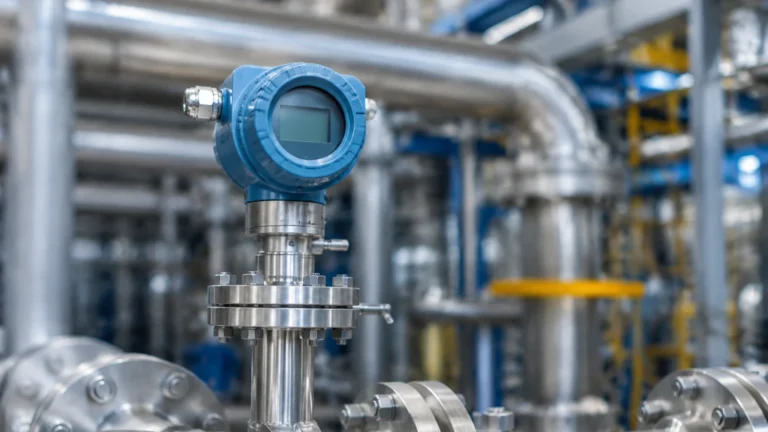
Sensor Tc
Sensor Tc
In the field of industrial process control, accuracy is not merely a goal but a requirement for safety, efficiency, and cost-management. One of the most significant variables affecting the precision of level measurement is temperature. To address this, engineers rely on "sensor tc," or temperature compensation, a critical feature integrated into modern level transmitters. Whether dealing with the expansion of liquids in a tank or the changing speed of sound in a gas headspace, temperature fluctuations can introduce substantial errors if not properly accounted for by the instrument's internal logic.
For technical professionals selecting instrumentation, understanding the mechanics of sensor tc is essential. This guide explores how temperature compensation functions across different measurement technologies, the physical principles involved, and how to evaluate these features when reviewing product options on the Main Page.
The Physical Necessity of Temperature Compensation
Most level measurement technologies do not measure "level" directly; instead, they measure a physical property—such as time-of-flight, pressure, or buoyancy—and convert that data into a distance or volume reading. Temperature influences these physical properties in several ways:
1. Medium Density: As temperature increases, most liquids expand, leading to a decrease in density. In hydrostatic systems, this changes the pressure exerted by a column of liquid even if the actual height remains the same.
2. Signal Velocity: In ultrasonic measurement, the speed at which a sound wave travels is directly proportional to the square root of the absolute temperature of the medium through which it passes.
3. Mechanical Expansion: The physical components of the sensor itself, including diaphragms and housings, can expand or contract, affecting the calibration of strain gauges or capacitive elements.
4. Electronic Drift: The oscillators and semiconductors within the sensor's circuitry are subject to thermal drift, which can shift the zero point or span of the output signal.
Sensor Tc in Ultrasonic Level Measurement
Ultrasonic sensors are perhaps the most sensitive to temperature changes. These devices emit a high-frequency sound pulse that reflects off the surface of the medium. The distance is calculated using the formula: $Distance = (Velocity \times Time) / 2$.
The Speed of Sound Variable
In air at sea level, the speed of sound is approximately 331.3 m/s at 0°C. However, this velocity increases by roughly 0.606 m/s for every degree Celsius increase in temperature. Without a robust sensor tc mechanism, a 10°C shift in ambient temperature could result in a measurement error of approximately 1.7%. In a 10-meter silo, this represents a 17 cm discrepancy, which is unacceptable for most industrial applications.
Implementation of Sensor Tc
To counteract this, manufacturers like Welk integrate a temperature probe (typically an NTC thermistor or a PT100/PT1000 RTD) directly into the transducer face. This sensor tc element measures the temperature of the air space and provides a feedback loop to the microprocessor. The device then adjusts the velocity constant used in the distance calculation in real-time.
Limitation Note: Internal sensor tc assumes that the temperature at the transducer face is representative of the entire path of the sound wave. In tall silos with significant temperature stratification, an average temperature calculation or an external temperature probe may be required for higher accuracy.
Sensor Tc in Hydrostatic Level Transmitters
Hydrostatic level sensors measure the pressure exerted by a liquid column ($P = \rho gh$). Here, the "sensor tc" focus is twofold: compensating for the density change of the liquid and protecting the pressure-sensing element from thermal stress.
Density Compensation
If a process involves a liquid that undergoes significant temperature swings, the density ($\rho$) will change. Advanced hydrostatic transmitters allow users to input a temperature-density curve. When paired with an integrated temperature sensor, the transmitter can calculate the true level based on the current density of the fluid rather than a static value calibrated at room temperature.
Sensor Element Compensation
The sensing diaphragm, often made of stainless steel or ceramic, is sensitive to thermal expansion. Sensor tc in these devices usually involves a factory-calibrated compensation bridge. During manufacturing, the sensor is cycled through its operating temperature range (e.g., -40°C to +85°C), and the resulting zero-shift and span-shift are recorded and stored in the sensor's non-volatile memory. The onboard electronics then apply these correction factors to the raw millivolt signal before it is converted to a 4-20mA or digital output.
Radar Level Meters and Thermal Stability
Radar technology (both Guided Wave Radar and Non-contact Radar) is often marketed as being "immune" to temperature changes because microwaves travel at the speed of light, which is not affected by air temperature or pressure. While this is true for the signal's travel through the headspace, sensor tc is still relevant for the instrument's electronics.
High-frequency oscillators used in radar pulse generation can drift with temperature. Modern radar units employ an internal reference clock that is temperature-stabilized. Furthermore, in high-temperature applications (such as molten metals or high-pressure steam), the sensor tc refers to the cooling mechanisms and thermal isolators used to protect the sensitive microwave electronics from the process heat.
Practical Selection Table for Level Sensors
When evaluating different technologies, use the following table to understand how sensor tc impacts performance and where it is most critical.
| Technology | Sensitivity to Temp | Primary Sensor Tc Method | Best Use Case |
| :— | :— | :— | :— |
| Ultrasonic | Very High | Integrated NTC/RTD at transducer face | Water/Wastewater, open channels |
| Hydrostatic | Moderate | Digital compensation of density & diaphragm | Deep wells, vented tanks |
| Radar (80GHz) | Low | Internal electronic clock stabilization | Chemical reactors, high-temp solids |
| Guided Wave Radar| Low | Reference pulse calibration | Low-dielectric liquids, foaming tanks |
| Magnetic Gauge | Low | Mechanical float buoyancy adjustment | High-pressure boilers, oil/water interface |

Installation Considerations for Effective Compensation
Even the most advanced sensor tc logic cannot overcome poor installation. To ensure the temperature compensation works as intended, consider the following:
* Avoid Direct Sunlight: Solar radiation can heat the sensor housing to temperatures far exceeding the ambient air. This causes the internal sensor tc to "over-compensate," leading to inaccurate level readings. Use a dedicated sunshade or weather shield.
* Thermal Stratification: In large outdoor tanks, the top of the tank may be significantly warmer than the bottom. If using ultrasonic sensors, the sensor tc at the top will not reflect the air temperature near the liquid surface. In these cases, radar is a more reliable choice.
* Submersible Sensors: For hydrostatic sensors used in deep wells, ensure the sensor tc is calibrated for the specific temperature of the groundwater, which is usually constant but different from surface temperatures.
* Warm-up Time: Electronic sensors require a brief period to reach thermal equilibrium. Ensure that calibration is performed only after the device has been powered on and exposed to the process environment for at least 30 minutes.
Limitations and Risks
While sensor tc significantly improves accuracy, it is not a universal fix.
1. Response Lag: There is often a time lag between a change in the process temperature and the sensor tc element's ability to detect that change. In processes with rapid thermal cycling, this can lead to temporary "spikes" or "dips" in level data.
2. Gas Composition Changes: In ultrasonic systems, sensor tc only accounts for temperature. If the gas composition changes (e.g., a nitrogen blanket is introduced), the speed of sound will change regardless of temperature, rendering the standard compensation ineffective.
3. Extreme Gradients: If there is a 50°C difference between the liquid and the sensor mounting point, a single-point sensor tc cannot accurately model the non-linear velocity of the signal.
Frequently Asked Questions (FAQs)
Q: Can I use an external temperature sensor for compensation?
A: Yes. Many high-end transmitters allow for an external PT100 input. This is preferred in applications where the temperature at the sensor mounting point is different from the temperature of the medium or the vapor space.
Q: Does humidity affect the sensor tc in ultrasonic meters?
A: Humidity does affect the speed of sound, but its impact is much smaller than temperature (typically less than 0.1% at moderate temperatures). Most industrial sensor tc algorithms focus primarily on temperature as it is the dominant variable.
Q: How often should the temperature compensation be calibrated?
A: The sensor tc coefficients are usually set at the factory and do not require field calibration. However, the overall accuracy of the level reading should be verified annually against a manual measurement.
Q: What happens if the internal temperature sensor fails?
A: Most modern instruments will trigger a diagnostic error (e.g., NAMUR NE43) or revert to a "safe" default temperature (usually 20°C) and flag the data as potentially inaccurate.
Conclusion
Effective level measurement requires a holistic view of the process environment, with temperature being one of the most influential factors. By selecting instruments with robust sensor tc capabilities, engineers can mitigate the risks of thermal drift and ensure long-term reliability. Whether you require the high-precision compensation of an ultrasonic transducer or the thermal stability of a radar system, understanding these principles is the first step toward optimized process control.
For further technical documentation, application-specific advice, and to explore our full range of measurement solutions, please refer to the Main Page to review product options and application support.