Sodium Hypochlorite Storage Tanks
Sodium Hypochlorite Storage Tanks
Sodium hypochlorite (NaOCl), commonly known as liquid bleach, is a fundamental chemical used across water treatment, chemical processing, and industrial cleaning sectors. While highly effective as an oxidizing agent and disinfectant, its storage presents significant engineering challenges. Sodium hypochlorite is inherently unstable, corrosive, and prone to off-gassing, which necessitates specific material selection and precise monitoring strategies to ensure operational safety and chemical longevity.
For engineers and facility managers, the design of sodium hypochlorite storage tanks must account for the chemical’s tendency to decompose into salt and oxygen, its aggressive nature toward metals, and the potential for scale buildup. Integrating reliable level measurement is critical to managing inventory and preventing overfills in these hazardous environments.
Characteristics of Sodium Hypochlorite and Storage Implications
Before selecting storage hardware or instrumentation, it is essential to understand the chemical behavior of sodium hypochlorite. NaOCl is typically supplied in concentrations ranging from 5% to 15%. Several factors influence its stability and the requirements of the storage vessel:
1. Chemical Decomposition: Sodium hypochlorite naturally decomposes over time. This process is accelerated by exposure to UV light, high temperatures, and the presence of transition metals (such as iron or copper). As it decomposes, it produces oxygen gas and salt (sodium chloride).
2. Off-Gassing: The continuous release of oxygen gas creates a "vapor blanket" within the tank. If the tank is not properly vented, pressure can build up. This gas also interferes with certain level measurement technologies.
3. Corrosivity: NaOCl is a strong base and a powerful oxidant. It aggressively attacks most metals, including stainless steel, and can degrade many plastics and elastomers if they are not specifically rated for high-pH oxidizing environments.
4. Crystallization: As the chemical decomposes or evaporates, sodium chloride crystals can form. These crystals can clog small-diameter pipes, valves, and the sensing diaphragms of level transmitters.
Material Selection for Sodium Hypochlorite Storage Tanks
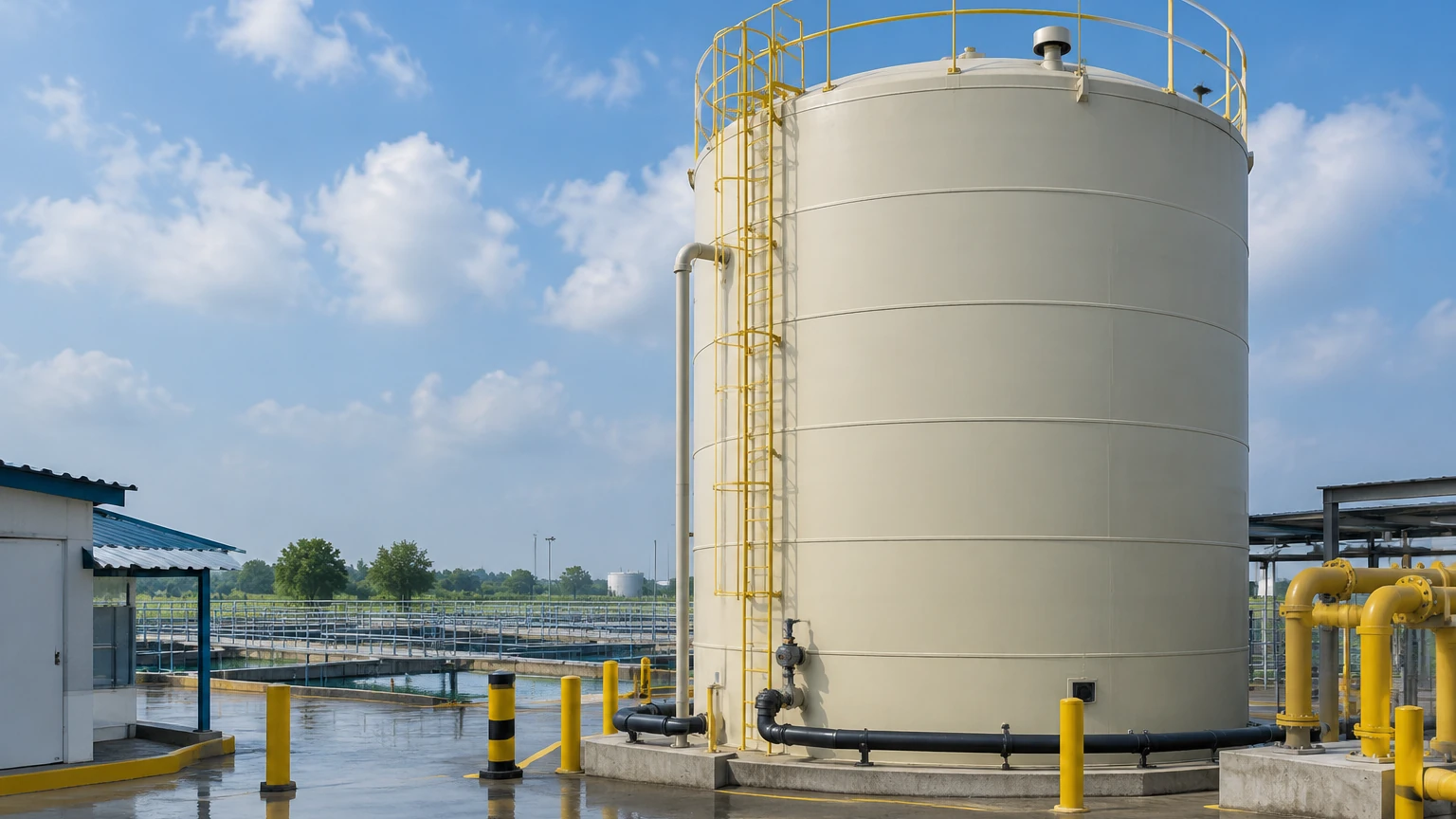
Selecting the correct tank material is the first line of defense against leaks and structural failure. Standard carbon steel and most stainless steels are unsuitable for direct contact with NaOCl. The following materials are industry standards for sodium hypochlorite storage tanks:
High-Density Polyethylene (HDPE) and XLPE
Linear High-Density Polyethylene (HDPE) and Cross-Linked Polyethylene (XLPE) are common choices for smaller to mid-sized tanks. They offer excellent chemical resistance and are relatively cost-effective. However, XLPE is often preferred for sodium hypochlorite because its molecular structure provides superior resistance to environmental stress cracking. It is common to use a "heavy-duty" wall thickness (e.g., 1.9 specific gravity rating) to account for the chemical's density and potential degradation over time.
Fiberglass Reinforced Plastic (FRP)
For larger industrial volumes, FRP tanks are a standard solution. The key to FRP success lies in the resin selection. Vinyl ester resins, specifically formulated for oxidizing environments, are required. A high-quality interior chemical surfacing veil (often synthetic like Nexus) is applied to protect the structural glass fibers from chemical attack. FRP tanks offer high structural strength and can be customized with various fittings and manways.
Titanium and Lined Steel
In very specific high-pressure or high-temperature applications, titanium may be used due to its near-total immunity to sodium hypochlorite corrosion. Alternatively, carbon steel tanks lined with specialized materials like Chlorobutyl rubber or certain fluoropolymers (PTFE/PVDF) can be used, though these require rigorous inspection schedules to ensure liner integrity.
Level Measurement Principles for Sodium Hypochlorite
Accurate level monitoring is vital for inventory management and safety. However, the unique properties of NaOCl—specifically off-gassing and corrosivity—require careful selection of the measurement principle. As a professional manufacturer, Welk provides various technologies suited for these demanding conditions.
Ultrasonic Level Measurement
Ultrasonic sensors operate on the time-of-flight principle. The sensor emits an ultrasonic pulse that reflects off the liquid surface and returns to the transducer. The distance is calculated based on the time taken and the speed of sound.
* Advantages: Non-contact, relatively low cost, and easy to install.
* Limitations in NaOCl: The speed of sound is affected by the density and temperature of the air/gas through which it travels. In sodium hypochlorite tanks, the presence of a heavy oxygen gas blanket and varying vapor concentrations can cause measurement errors. Furthermore, heavy fumes can attenuate the signal.
Radar Level Measurement (FMCW)
Radar level meters use high-frequency electromagnetic waves (typically 26GHz or 80GHz). Like ultrasonic sensors, they measure time-of-flight, but since they use radio waves rather than sound, they are unaffected by gas blankets, vacuum, or temperature fluctuations.
* Advantages: Extremely accurate, non-contact, and immune to the vapors and off-gassing common in sodium hypochlorite storage tanks. 80GHz radar, in particular, offers a narrow beam angle that avoids internal tank obstructions.
* Recommendations: For NaOCl, a radar with a PVDF-encapsulated antenna is ideal to prevent corrosion of the sensor internals.
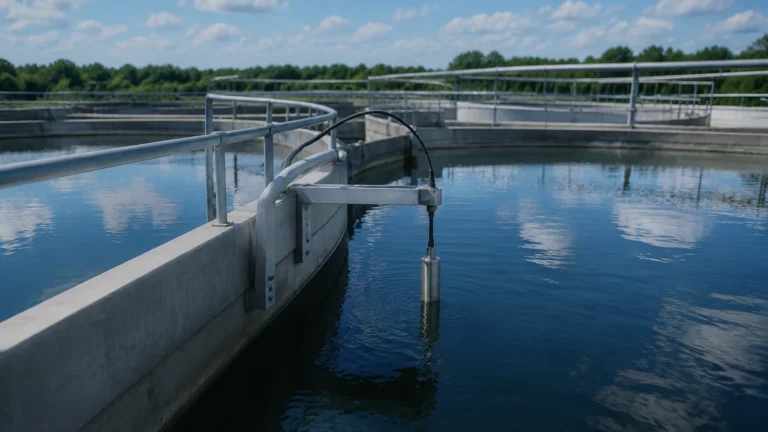
Hydrostatic Pressure Measurement
This method measures the liquid level by sensing the pressure exerted by the liquid column at the bottom of the tank. The pressure is proportional to the height of the liquid and its specific gravity.
* Advantages: Simple to understand and provides a continuous reading regardless of surface foam or gas blankets.
* Limitations in NaOCl: The sensor is in direct contact with the chemical. Standard stainless steel diaphragms will fail quickly. Tantalum or ceramic diaphragms are required to withstand the corrosive nature of sodium hypochlorite.
Selection Table for Level Instrumentation
The following table compares the most common technologies used for monitoring sodium hypochlorite storage tanks.
| Technology | Contact Type | Accuracy | Resistance to Vapors | Maintenance Requirement | Recommended Use Case |
| :— | :— | :— | :— | :— | :— |
| 80GHz Radar | Non-contact | High (±2mm) | Excellent | Low | Critical process tanks, high fumes |
| Ultrasonic | Non-contact | Moderate | Poor to Fair | Low | Outdoor tanks with good venting |
| Hydrostatic | Contact | High | Excellent | Moderate (Scaling) | Tanks where top-mounting is restricted |
| Magnetic Gauge | Contact (Bypass) | High | Excellent | Moderate | Visual verification + remote signal |
Installation and Maintenance Considerations
Proper installation is as important as material selection. When configuring sodium hypochlorite storage tanks, consider the following engineering practices:
* Venting: Tanks must be equipped with adequately sized vents to allow for the release of oxygen gas. In some regions, these vents may need to be routed to a scrubber system to neutralize fumes.
* Secondary Containment: Given the environmental hazard of a bleach spill, secondary containment (bunding) is mandatory. The containment area should be constructed of materials equally resistant to NaOCl or coated with a chemical-resistant epoxy.
* Sensor Placement: For non-contact sensors (Radar/Ultrasonic), ensure the device is not mounted directly over the fill pipe to avoid signal interference from turbulence. For hydrostatic sensors, ensure they are mounted slightly above the tank bottom to avoid the "sludge" zone where salt crystals accumulate.
* Specific Gravity Calibration: Sodium hypochlorite is denser than water (typically 1.1 to 1.2 SG). Hydrostatic sensors must be calibrated for the specific density of the solution to ensure accurate depth readings.
* Protection from Sunlight: If using HDPE or XLPE tanks outdoors, ensure they are UV-stabilized or painted. Even with UV stabilization, the heat from direct sunlight will accelerate the decomposition of the chemical. Insulation or sunshields can significantly extend the shelf life of the product.
Limitations and Operational Risks
Even with the best equipment, sodium hypochlorite storage involves inherent risks that must be managed:
1. Hydrogen Evolution: While NaOCl primarily releases oxygen, if it is accidentally mixed with acids, it will release toxic chlorine gas. If mixed with ammonia, it forms chloramines. Level sensors and tank alarms are critical components of an interlock system to prevent accidental overfilling or mixing during chemical delivery.
2. Crystallization and Scaling: Sodium hypochlorite can form calcium carbonate scale if diluted with "hard" water. This scale can coat sensors. Regular inspection of submerged or contact-type instruments is necessary.
3. Pipe Locking: If liquid sodium hypochlorite is trapped between two closed valves, the natural off-gassing can create immense pressure, leading to pipe rupture. Always use pressure relief valves or vented ball valves in the piping system connected to the storage tanks.
Frequently Asked Questions (FAQs)
Q: How long can sodium hypochlorite be stored?
A: This depends on the concentration and temperature. A 12.5% solution stored at 25°C may lose half its strength in approximately 6 months. Storing it in a cool, dark environment is essential for maintaining concentration.
Q: Why is radar preferred over ultrasonic for sodium hypochlorite?
A: Sodium hypochlorite off-gasses oxygen, creating a varying atmosphere above the liquid. Ultrasonic waves change speed based on gas composition, leading to errors. Radar waves are electromagnetic and are not affected by the gas composition, providing a much more reliable reading.
Q: Can I use a stainless steel level switch in a bleach tank?
A: No. Standard 304 or 316 stainless steel will experience pitting and stress corrosion cracking very quickly in sodium hypochlorite. Use PVDF, PP, or PTFE-coated switches instead.
Q: Does the specific gravity of NaOCl change over time?
A: Yes. As the chemical decomposes into salt and oxygen, the specific gravity changes slightly. For hydrostatic level transmitters, this can introduce a small margin of error over time if the sensor is not re-calibrated or if the concentration varies significantly between deliveries.
For more technical specifications on instrumentation for chemical storage, you can visit the Main Page to review product options and application support. Selecting the right combination of tank material and measurement technology ensures that sodium hypochlorite remains a safe and effective tool for your industrial application.