Unit of Conductivity in Water
Unit of Conductivity in Water
In industrial process control and water treatment, conductivity is a fundamental parameter used to assess the ionic concentration and purity of a liquid. Understanding the specific unit of conductivity in water is essential for engineers and technicians who must select appropriate instrumentation, ensure regulatory compliance, and maintain the efficiency of automated systems. This guide provides a technical overview of conductivity units, measurement principles, and their practical application in industrial environments.
Understanding the Principles of Conductivity
Conductivity, or electrolytic conductivity, is the measure of a solution's ability to conduct an electrical current. This ability depends on the presence of ions—charged particles such as salts, acids, or bases—dissolved in the water. In a pure state, water is a poor conductor; however, as the concentration of dissolved solids increases, so does the conductivity.
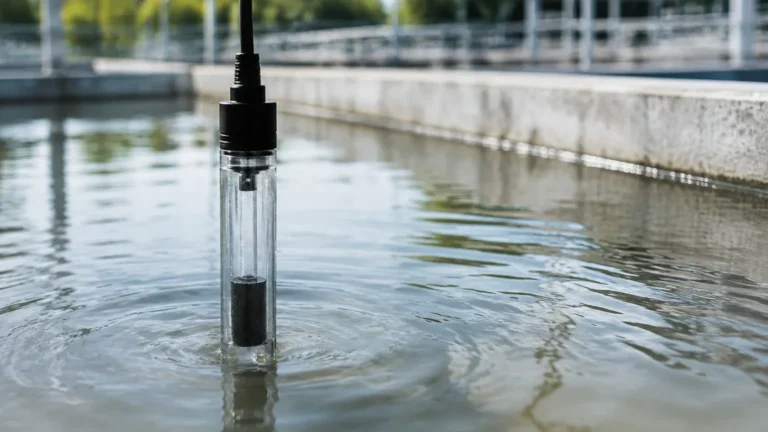
The measurement is based on Ohm’s Law, where resistance (R) is inversely proportional to conductance (G). While resistance is measured in Ohms (Ω), conductance is measured in Siemens (S), formerly known as mhos. In a practical measurement scenario, a conductivity sensor (cell) applies an alternating current between two electrodes. The resulting current flow is used to calculate the conductance of the liquid between those electrodes.
To standardize this measurement regardless of the sensor's physical dimensions, a "cell constant" (K) is applied. The cell constant is the ratio of the distance between the electrodes to the area of the electrodes. By multiplying the measured conductance by the cell constant, we arrive at the conductivity value, expressed as a measurement of conductance over a specific distance.
The Standard Unit of Conductivity in Water
The International System of Units (SI) defines the standard unit of conductivity as Siemens per meter (S/m). However, because the conductivity of most water sources is relatively low, this unit is often too large for convenient daily use. Consequently, industrial and laboratory applications typically employ sub-multiples of this unit.
Common Units and Their Applications
1. Microsiemens per centimeter (µS/cm): This is the most prevalent unit of conductivity in water for environmental monitoring, drinking water analysis, and light industrial processes. It is ideal for measuring low-to-medium ionic concentrations.
2. Millisiemens per centimeter (mS/cm): This unit is used for high-conductivity liquids, such as seawater, concentrated chemical solutions, and wastewater treatment processes where ion density is significant.
3. Microsiemens per meter (µS/m): Occasionally used in European contexts or specific scientific research to align more closely with SI standards.
Conversion Factors
For engineering calculations, it is often necessary to convert between different units. The following table provides the standard conversion factors:
| From | To | Multiply By |
| :— | :— | :— |
| mS/cm | µS/cm | 1,000 |
| S/m | mS/cm | 10 |
| S/m | µS/cm | 10,000 |
| µS/cm | mS/cm | 0.001 |
| mS/cm | S/m | 0.1 |
Conductivity Ranges Across Industrial Water Types
Selecting the right measurement range is critical for accuracy. Different stages of industrial water treatment require sensors calibrated to specific conductivity levels. For instance, a sensor designed for seawater would lack the resolution required for ultrapure water monitoring.
| Water Type | Typical Conductivity Range (µS/cm) |
| :— | :— |
| Ultrapure Water | 0.055 to 0.1 |
| Distilled/Deionized Water | 0.5 to 5.0 |
| Boiler Feed Water | 1.0 to 50 |
| Potable (Drinking) Water | 50 to 800 |
| Surface Water (Rivers/Lakes) | 100 to 2,000 |
| Industrial Process Water | 1,000 to 10,000 |
| Seawater | 45,000 to 55,000 |
| Concentrated Acids/Bases | 100,000+ |
In many facilities, conductivity measurement is paired with level monitoring to ensure that tanks do not overflow or run dry while maintaining water quality. For a comprehensive look at how these technologies integrate into a broader automation strategy, you can visit the Main Page of Welk's technical resource center, which details various industrial measurement solutions.
The Relationship Between Conductivity and Level Measurement
In the realm of industrial automation, conductivity is not just a quality metric; it is also a functional principle for level detection. Conductive level switches utilize the liquid's conductivity to complete an electrical circuit between a probe and the tank wall (or a second probe).
Conductive Level Switches
When the liquid reaches the probe, the circuit is closed, triggering a signal. This technology is highly reliable for point-level detection in conductive liquids. However, the unit of conductivity in water becomes a critical selection factor here. If the liquid has a conductivity below a certain threshold (typically 5-10 µS/cm), a standard conductive level switch may fail to detect the medium. In such cases, engineers must opt for alternative technologies, such as ultrasonic or radar level meters, which are independent of the liquid's electrical properties.
Impact on Radar and Ultrasonic Sensors
While non-contact radar and ultrasonic sensors do not rely on conductivity to measure level, the chemical composition that dictates conductivity can sometimes influence the dielectric constant of the liquid. A higher concentration of dissolved solids (higher conductivity) often correlates with a higher dielectric constant, which can actually improve the signal reflection for radar-based level instruments.
Selection Criteria for Conductivity Instrumentation
When specifying a conductivity measurement system, engineers should consider the following factors to ensure long-term accuracy and reliability:
1. Sensor Type: Contacting vs. Toroidal
* Contacting Sensors: These feature electrodes that come into direct contact with the water. They are highly accurate for low-conductivity applications like ultrapure water but are prone to fouling and polarization in high-conductivity or dirty liquids.
* Toroidal (Inductive) Sensors: These use two induction coils encased in a plastic body. They do not have electrodes in contact with the liquid, making them ideal for high-conductivity applications, corrosive chemicals, or liquids with high suspended solids that would foul a contacting sensor.
2. Temperature Compensation
Conductivity is highly temperature-dependent. As temperature increases, the mobility of ions increases, leading to a higher conductivity reading even if the ion concentration remains the same. Most industrial sensors include an integrated temperature element (such as a PT100 or PT1000) to provide "Temperature Compensated Conductivity," usually referenced to 25°C.
3. Material Compatibility
For contacting sensors, the electrode material must be compatible with the process fluid. Common materials include 316L Stainless Steel, Titanium, and Graphite. For toroidal sensors, the outer casing is typically made from PEEK, PFA, or Polypropylene to resist chemical attack.
Installation and Maintenance Considerations
Proper installation is paramount to obtaining a representative conductivity reading and ensuring the longevity of the instrument.
* Flow Velocity: In-line sensors should be installed where there is a consistent flow to prevent the buildup of stagnant liquid or air bubbles, both of which can cause erratic readings.
* Orientation: Sensors should ideally be installed horizontally or at an upward angle to ensure the measurement cell remains completely submerged and free of trapped air.
* Cable Length and Shielding: Because conductivity measurements involve low-level electrical signals, electromagnetic interference (EMI) can be a problem. Using shielded cables and minimizing the distance between the sensor and the transmitter is recommended.
* Fouling and Cleaning: In applications like wastewater or cooling towers, biological growth or mineral scaling can coat the electrodes. Regular cleaning with a mild acid or detergent may be necessary to maintain accuracy. If maintenance frequency is too high, switching to a toroidal sensor is often the best solution.
Limitations and Common Risks
While conductivity is a robust measurement, it has specific limitations that must be understood:
* Non-Specific Measurement: Conductivity measures the total ionic content but cannot distinguish between different types of ions. It will tell you that the water is "salty," but not whether the salt is Sodium Chloride or Calcium Carbonate.
* Polarization: In contacting sensors, if the frequency of the alternating current is not high enough, ions can build up near the electrodes, creating a "false resistance" that lowers the conductivity reading. High-quality transmitters automatically adjust the frequency based on the measurement range to mitigate this.
* Dissolved Gases: Certain gases, such as Carbon Dioxide (CO2), can dissolve in water and form ions, slightly increasing conductivity. This is a common concern in ultrapure water systems exposed to the atmosphere.
Frequently Asked Questions (FAQs)
Q: What is the difference between TDS and Conductivity?
A: Total Dissolved Solids (TDS) is a measure of the mass of dissolved material in the water (usually in mg/L or ppm). Conductivity is an electrical measurement. While they are related, the conversion factor between them varies depending on the specific ions present in the water.
Q: Why is 25°C used as the reference temperature?
A: 25°C is the international standard reference temperature for conductivity measurements. By compensating to this temperature, engineers can compare water quality across different processes and locations regardless of the actual process temperature.
Q: Can I use a conductivity sensor to measure the level of oil?
A: No. Oils are non-polar and have extremely low conductivity. Conductive level switches and conductivity sensors will not function in oil. For oil level measurement, capacitive, ultrasonic, or radar sensors are required.
Q: How often should conductivity sensors be calibrated?
A: Calibration frequency depends on the application. In clean water, once every six months may suffice. In harsh chemical processes, monthly or even weekly verification against a standard solution may be necessary.
Conclusion
Selecting the correct unit of conductivity in water and the corresponding measurement technology is a vital step in industrial process design. Whether you are monitoring the purity of boiler feed water or managing the discharge of industrial effluent, understanding the nuances of microsiemens and millisiemens ensures that your automation systems remain accurate and reliable. For those integrating these measurements into larger tank management systems, exploring advanced level measurement options—such as those found on the Main Page of Welk’s product catalog—can provide a holistic approach to industrial fluid control.