Toroidal Conductivity Probe
Toroidal Conductivity Probe
In the landscape of industrial liquid analysis, the measurement of electrolytic conductivity serves as a critical indicator of water purity, chemical concentration, and process efficiency. While traditional contacting sensors have long been the standard, the toroidal conductivity probe—also known as an inductive or electrodeless conductivity sensor—has emerged as the preferred solution for challenging environments. By utilizing electromagnetic induction rather than direct electrical contact, these probes overcome the inherent limitations of electrode-based systems, such as fouling, polarization, and corrosion.
For engineers and plant operators managing complex fluid systems, understanding the mechanical and electrical nuances of the toroidal conductivity probe is essential for ensuring long-term accuracy and minimizing maintenance overhead. This guide explores the principles, selection criteria, and installation best practices for these robust instruments within the context of modern industrial automation.
Measurement Principle: The Inductive Approach
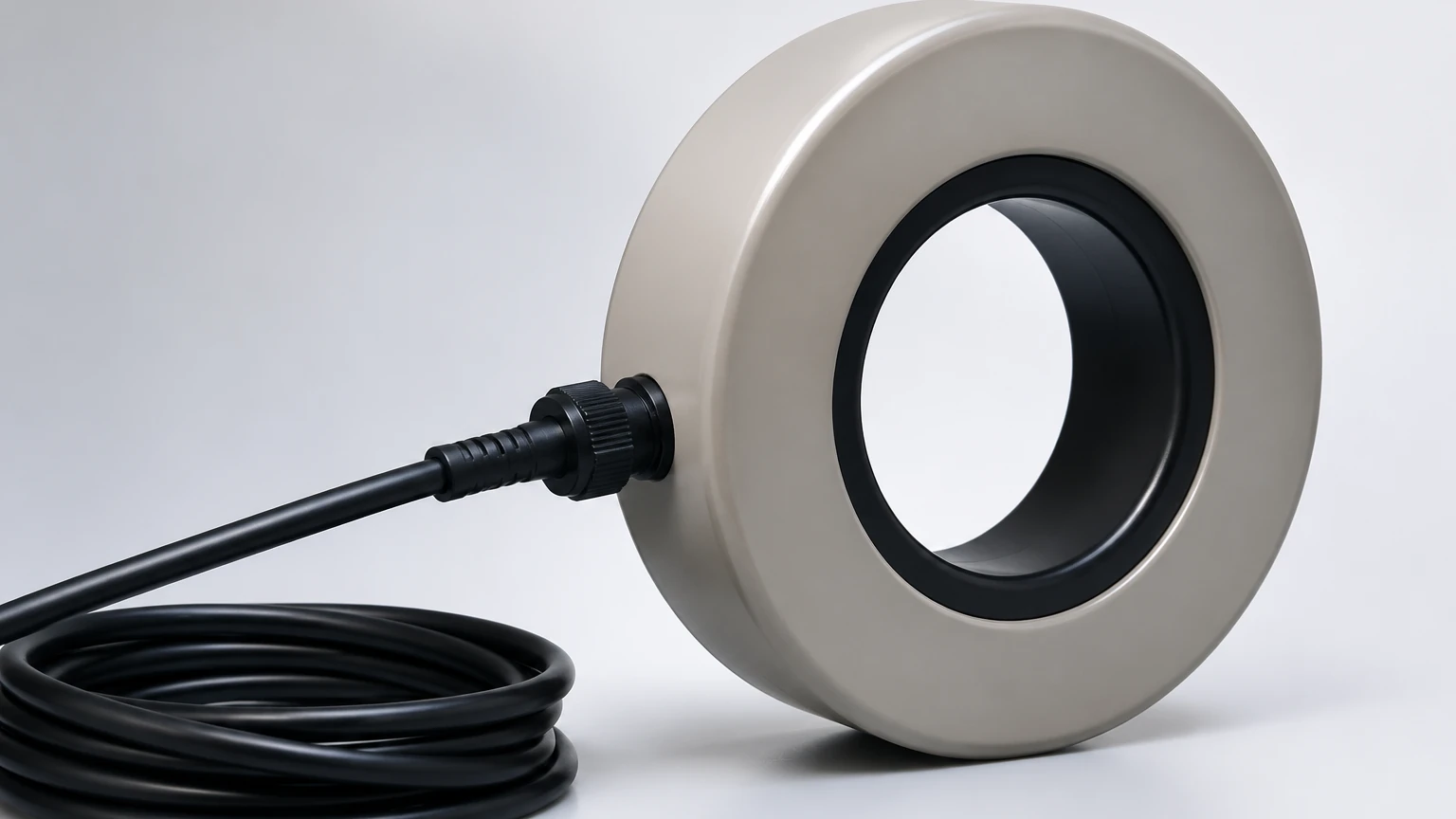
Unlike conventional conductivity sensors that rely on two or four metallic electrodes in direct contact with the process fluid, a toroidal conductivity probe operates on the principle of mutual induction. The sensor head typically consists of two wire-wound toroids (coils) encapsulated within a chemically resistant plastic or fluoropolymer body.
The Two-Coil System
1. Drive Coil (Primary): An alternating current (AC) is applied to the first toroid, generating an oscillating magnetic field in the surrounding area.
2. Liquid Loop: The process liquid itself acts as a single-turn secondary winding. As the liquid flows through the center (bore) of the probe and around the outside, the magnetic field from the drive coil induces a current within the conductive liquid.
3. Sense Coil (Secondary): This induced current in the liquid, in turn, generates a secondary magnetic field that induces a voltage in the second toroid.
The magnitude of the current flowing through the liquid loop is directly proportional to the liquid's conductivity. By measuring the voltage induced in the sense coil, the instrument's transmitter can calculate the conductivity of the medium. Because the coils are completely isolated from the fluid by a non-conductive material (such as PEEK or Polypropylene), there is no physical electrical path between the sensor and the process. This "electrodeless" design eliminates the risk of electrode polarization and surface coating, which are the primary causes of drift in contacting sensors.
Key Advantages in Industrial Applications
The shift toward toroidal technology in B2B sectors—ranging from water treatment to heavy chemical processing—is driven by several distinct operational advantages:
* Resistance to Fouling: In applications like wastewater treatment or paper pulp processing, suspended solids and oils can quickly coat electrodes. A toroidal conductivity probe is largely unaffected by non-conductive coatings, as the magnetic field penetrates the buildup.
* Chemical Compatibility: Because the internal components are encapsulated, the only part of the sensor in contact with the fluid is the outer plastic shell. This allows for the measurement of highly aggressive acids and bases (e.g., 98% sulfuric acid or concentrated sodium hydroxide) that would dissolve standard metal electrodes.
* High Conductivity Range: Toroidal sensors excel in high-conductivity ranges, typically from 500 µS/cm up to 2,000 mS/cm. This makes them ideal for brine concentration and chemical strength monitoring.
* Low Maintenance: Without electrodes to clean or sand, the maintenance interval for a toroidal probe is significantly longer than that of a contacting sensor.
Selection Criteria for Toroidal Conductivity Probes
Selecting the correct toroidal conductivity probe requires a detailed analysis of the process conditions. As a professional manufacturer like Welk provides a variety of industrial instruments, users must match the sensor material and form factor to their specific application.
Material Selection
| Material | Temperature Limit | Chemical Resistance | Common Applications |
| :— | :— | :— | :— |
| Polypropylene (PP) | 80°C (176°F) | Good for general acids/bases | Water treatment, cooling towers |
| PEEK (Polyetheretherketone) | 125°C – 150°C | Excellent mechanical strength | CIP (Clean-in-Place), steam cleaning |
| PFA / Teflon | 180°C – 200°C | Universal chemical resistance | Concentrated acids, high-temp chemicals |
| PVDF | 120°C (248°F) | High resistance to halogens | Bleach manufacturing, chlorine plants |
Temperature Compensation
Conductivity is highly temperature-dependent, typically changing by 1% to 3% per degree Celsius. Reliable toroidal probes must include an internal temperature element (such as a Pt100 or Pt1000 RTD) located close to the sensor surface to provide real-time compensation. For high-precision chemical concentration monitoring, the transmitter should support adjustable temperature coefficients.
Installation Considerations and Best Practices
Proper installation is the most critical factor in achieving accurate measurements with a toroidal conductivity probe. Because the measurement relies on a magnetic field extending into the fluid, the physical environment surrounding the probe can influence the reading.
1. The "Wall Effect"
When a toroidal probe is placed in a pipe, the proximity of the pipe wall can interfere with the induced current loop.
* Non-conductive pipes (Plastic): If the probe is too close to a plastic wall, the measured conductivity may appear lower than actual because the wall restricts the volume of the liquid loop.
* Conductive pipes (Metal): If the probe is too close to a metal wall, the metal can act as part of the conductive loop, causing the measured conductivity to appear artificially high.
Guideline: Maintain a minimum clearance of 25 mm to 50 mm (1 to 2 inches) between the sensor body and the pipe wall. If the pipe is narrow, a specialized flow cell or a "calibrated" installation factor in the transmitter must be used.
2. Orientation and Flow
The probe should be installed in a location where the bore (the hole in the center) is always completely submerged and free of air bubbles.
* Vertical Installation: Ideally, the probe should be installed in a vertical pipe with upward flow. This ensures the pipe remains full and bubbles are swept away.
* Horizontal Installation: If horizontal installation is necessary, the probe should be mounted from the side of the pipe, not the top (where air pockets collect) or the bottom (where sediment settles).
3. Avoiding Air Entrainment
Air is non-conductive. If air bubbles pass through the center of the toroidal conductivity probe, the instrument will interpret this as a drop in conductivity. In aerated tanks or near pump inlets, use baffles or stilling wells to ensure a bubble-free sample.
Limitations and Range Constraints
While highly versatile, toroidal probes are not a universal solution for every conductivity requirement.
* Low Conductivity Limits: Toroidal sensors generally lack the sensitivity required for ultra-pure water applications (e.g., boiler feed water or pharmaceutical purified water). For conductivities below 50 µS/cm, a contacting 2-electrode sensor is usually required.
* Physical Size: The encapsulation of two toroids makes these probes physically larger than electrode-based sensors. They typically require a 2-inch (50 mm) NPT or flange mounting, which may be difficult to accommodate in small-bore tubing.
* Energy Consumption: The electronics required to drive the inductive coils consume more power than simple electrode circuits, though this is rarely an issue in modern 4-20mA loop-powered or 4-wire industrial systems.
Maintenance and Calibration
Although toroidal conductivity probes are "low maintenance," they are not "no maintenance." Over time, biological growth or heavy scaling can fill the bore of the sensor. While the sensor will still function through a thin layer of scale, a significant blockage will change the "cell constant" of the probe by restricting the liquid path.
Cleaning Procedure
1. Remove the probe from the process.
2. Use a soft brush or cloth to clean the bore. Avoid abrasive materials that could scratch the PEEK or PFA coating.
3. For mineral scaling, a mild acid solution (e.g., 5% HCl) can be used to dissolve deposits.
4. Rinse thoroughly with deionized water before re-installation.
Calibration
Calibration should be performed using a standard solution that falls within the expected process range. It is important to perform a "dry" zero-point calibration first to ensure the transmitter accounts for any internal electronic offsets. When performing a slope calibration in a beaker, ensure the beaker is large enough to avoid the "wall effect" mentioned previously—typically a 1-liter beaker is sufficient for most industrial toroidal probes.
Frequently Asked Questions (FAQs)
Q: Can a toroidal conductivity probe measure the concentration of acids?
A: Yes. Toroidal probes are frequently used to measure the concentration of acids like HCl, H2SO4, and HNO3. By using a transmitter with built-in concentration tables, the conductivity reading is converted directly into a percentage (e.g., 0-15% HCl).
Q: How long do these sensors typically last?
A: In non-abrasive environments, a toroidal probe can last 5 to 10 years. The primary failure mode is usually mechanical damage to the cable or extreme thermal cycling that eventually breaches the encapsulation.
Q: Is it necessary to use a specific transmitter?
A: Yes. Toroidal sensors require an inductive-capable transmitter. You cannot connect a toroidal probe to a standard contacting conductivity meter as the drive frequencies and signal processing are entirely different.
Conclusion
The toroidal conductivity probe represents a pinnacle of durability in liquid analytical instrumentation. By removing the electrical interface between the sensor and the process, it provides a reliable means of monitoring aggressive and high-solids fluids that would otherwise destroy or foul traditional sensors. When integrated with other process instruments, such as the Main Page of industrial measurement suites offered by Welk, these probes ensure that process automation remains accurate and cost-effective.
For engineers selecting a probe, the focus should remain on material compatibility and the physical geometry of the installation site. By adhering to the recommended clearances and choosing the appropriate encapsulation material, industrial facilities can achieve precise conductivity control with minimal manual intervention.