Total Solids Meter
Total Solids Meter
In industrial process control, the measurement of total solids (TS) is a critical parameter for ensuring product quality, optimizing chemical dosing, and maintaining environmental compliance. A total solids meter is an instrument designed to quantify the sum of dissolved and suspended organic and inorganic substances in a liquid medium. For engineers and plant managers, selecting the right measurement technology is essential for balancing accuracy with operational costs. This guide explores the principles, applications, and selection criteria for industrial total solids meters within the context of modern process automation.
Understanding Total Solids Measurement
Total solids represent the total amount of material remaining in a sample after all water has been evaporated. In a B2B or industrial setting, this is often categorized into two main components:
1. Total Suspended Solids (TSS): Particles that are trapped by a filter.
2. Total Dissolved Solids (TDS): Material that passes through a filter and remains after evaporation.
While laboratory methods involve drying samples at specific temperatures (usually 103–105°C), industrial processes require real-time, in-line measurement. In-line total solids meters utilize various physical properties of the media to infer solids concentration without the need for manual sampling.
Measurement Principles
To select the appropriate instrument, it is vital to understand the underlying physics used by different total solids meters. Each technology has a specific range where it excels.
1. Optical Measurement (Turbidity and Light Scattering)
Optical sensors are the most common for measuring lower concentrations of solids. They operate on the principle of light attenuation or scattering. When a light beam (often infrared) is directed into the medium, particles in the liquid scatter the light.
* Absorption (Transmission): The sensor measures the amount of light that passes through the medium. Higher solids content results in lower light transmission.
* Scattered Light (Nephelometry): The sensor measures light scattered at specific angles (usually 90 or 135 degrees). This is highly sensitive to low concentrations of suspended solids.
2. Microwave Phase Shift
Microwave total solids meters are widely used for high-concentration applications, such as sludge dewatering or pulp and paper processing. This technology relies on the high dielectric constant of water compared to solid matter. As microwaves pass through the medium, the solids cause a phase shift and attenuation in the signal. By measuring these changes, the meter can calculate the total solids percentage with high precision, regardless of the color or transparency of the liquid.
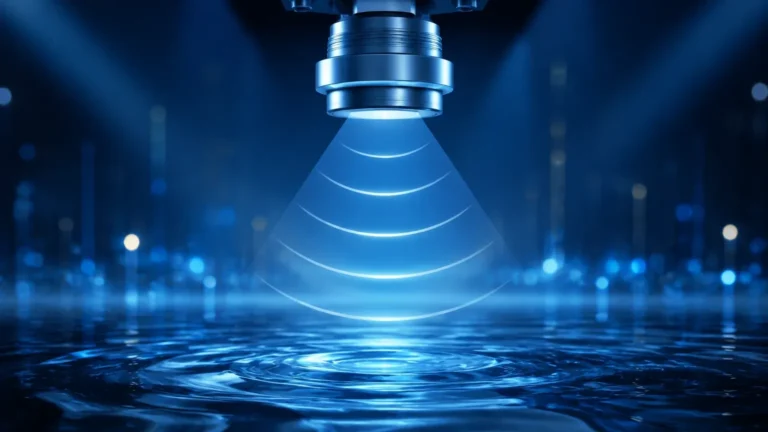
3. Ultrasonic Attenuation
Ultrasonic sensors emit high-frequency sound waves into the process liquid. As these waves encounter particles, they are absorbed and scattered, leading to signal attenuation. The degree of attenuation is proportional to the concentration and size of the solids. This method is robust and can penetrate opaque liquids where optical methods fail, though it is sensitive to entrained air bubbles.
4. Nucleonic (Gamma) Density Gauging
For extremely dense or abrasive slurries, nucleonic meters measure the density of the fluid by monitoring the absorption of gamma radiation. Since the density of the total solids is typically higher than the carrier liquid (water), the overall density correlates directly to the solids concentration. This is a non-contact method, making it ideal for highly corrosive or high-pressure environments.
Technical Comparison of Technologies
The following table provides a practical engineering reference for comparing common total solids measurement technologies.
| Technology | Typical Range | Best Applications | Pros | Cons |
| :— | :— | :— | :— | :— |
| Optical | 0–10,000 mg/L | Wastewater effluent, potable water | High sensitivity, lower cost | Prone to fouling, affected by color |
| Microwave | 0%–50% TS | Primary sludge, thickened sludge | Highly accurate, ignores color | Higher initial investment |
| Ultrasonic | 0.5%–15% TS | Industrial slurries, chemical processing | Robust, no moving parts | Sensitive to air/gas bubbles |
| Nucleonic | 0%–80% TS | Mining, dredging, heavy slurries | Non-contact, high durability | Regulatory requirements for radiation |
Key Evaluation Criteria for Selection
When evaluating a total solids meter for a specific project, engineers must confirm several parameters to ensure long-term reliability.
Media Characteristics
* Particle Size and Shape: Optical and ultrasonic meters are sensitive to changes in particle size distribution. If the process involves varying particle sizes, a microwave or density-based meter may be more stable.
* Color and Opacity: If the liquid color changes frequently (common in textile or chemical industries), optical transmission meters will require frequent recalibration. Microwave meters are generally immune to color changes.
* Conductivity and Salinity: Microwave sensors can be affected by high salinity, which alters the dielectric properties of the water. In such cases, specialized compensation or alternative technologies are required.
Process Conditions
* Flow Velocity: To prevent solids from settling on the sensor face, a minimum flow velocity (typically >0.5 m/s) is required. Conversely, extremely high velocities can cause erosion on probe-style sensors.
* Pressure and Temperature: Ensure the sensor body and seals are rated for the maximum process temperature (e.g., 80°C or 120°C for CIP processes) and pressure (e.g., 10 bar or 16 bar).
Maintenance Requirements
In many applications, biological growth or chemical scaling can foul the sensor. Selecting a meter with an integrated cleaning system—such as a mechanical wiper, water jet spray, or ultrasonic cleaner—is essential for reducing manual maintenance intervals.

Installation Considerations
Proper installation is as critical as selecting the right technology. Poor placement can lead to inaccurate readings and frequent alarms.
1. Avoid Air Pockets: Sensors should be installed in vertical pipe sections with upward flow or in the lower half of horizontal pipes to ensure the sensor is always fully submerged and free of air bubbles.
2. Straight Pipe Runs: To ensure a representative sample and stable flow profile, install the meter in a section of pipe with at least five pipe diameters of straight run upstream and two diameters downstream.
3. Accessibility: Ensure there is enough clearance for removing the sensor for calibration or manual cleaning. For tank installations, use adjustable mounting brackets to position the sensor away from agitators or dead zones.
4. Grounding: For electronic meters, especially microwave and ultrasonic types, proper electrical grounding is vital to prevent signal noise from interfering with the measurement.
Common Risks and Limitations
While modern total solids meters are highly advanced, they are not "plug-and-play" devices. Users should be aware of the following risks:
* Calibration Drift: Most in-line meters are secondary measurement devices. They must be calibrated against a primary laboratory gravimetric analysis (the "oven-dry" method). If the composition of the solids changes significantly, the correlation may drift.
* Entrained Air: In wastewater and food processing, air bubbles are often mistaken for solids by optical and ultrasonic sensors, leading to falsely high readings.
* Coating and Scaling: Even with cleaning systems, certain fats, oils, and greases (FOG) or mineral scales can build up over time, necessitating periodic manual inspection.
Frequently Asked Questions (FAQ)
Q: Can a total solids meter distinguish between organic and inorganic solids?
A: Generally, no. Most in-line meters measure the total physical presence of solids. To distinguish between volatile (organic) and fixed (inorganic) solids, laboratory combustion at 550°C is usually required.
Q: How often should an in-line total solids meter be calibrated?
A: Initially, weekly checks against lab samples are recommended. Once the correlation is proven stable, this can often be extended to monthly or quarterly intervals, depending on the criticality of the process.
Q: What is the difference between a turbidity meter and a total solids meter?
A: A turbidity meter measures the clarity of a liquid (usually in NTU or FNU), while a total solids meter is calibrated to provide a mass concentration (mg/L, g/L, or %). While they use similar optical principles, the signal processing and calibration focus differ.
Conclusion
Selecting a total solids meter requires a deep understanding of the process media and the physical limitations of the measurement technology. By matching the sensor principle to the concentration range and environmental conditions, facilities can achieve tighter process control and significant cost savings in chemical usage and waste disposal. For engineers seeking integrated solutions that combine concentration monitoring with reliable level detection, you may Review product options and application support to find the right fit for your specific industrial application. Whether dealing with wastewater treatment, chemical synthesis, or food production, the right instrumentation is the foundation of operational excellence.