Transmissor De Pressão
Transmissor De Pressão
In the landscape of industrial automation and process control, the accurate measurement of liquid levels is critical for operational safety, inventory management, and process efficiency. Among the various technologies available, the use of a transmissor de pressão (pressure transmitter) for hydrostatic level measurement remains one of the most reliable and cost-effective methods across industries such as water treatment, chemical processing, and oil and gas.
This guide explores the fundamental principles, selection criteria, and practical installation considerations for pressure transmitters used in level measurement applications. By understanding the physics behind these devices and the specific requirements of the process environment, engineers can ensure long-term accuracy and stability in their measurement systems.
The Physics of Hydrostatic Level Measurement
Before selecting a specific instrument, it is essential to understand the underlying physical principle: hydrostatic pressure. Hydrostatic level measurement is based on the fact that the pressure at a specific point in a static liquid is proportional to the height of the liquid column above that point.
The Fundamental Formula
The relationship is defined by the following equation:
P = ρ × g × h
Where:
* P is the hydrostatic pressure (measured in Pascals or bar).
* ρ (rho) is the density of the liquid (kg/m³).
* g is the acceleration due to gravity (approximately 9.81 m/s²).
* h is the height of the liquid column (meters).
In a practical industrial setting, if the density of the fluid is constant, the pressure transmitter effectively measures the weight of the liquid column. The electronic components within the transmissor de pressão then convert this mechanical pressure into an electrical signal—typically 4-20mA or a digital protocol like HART or Modbus—which corresponds to the level of the tank.
Impact of Atmospheric Pressure
In open tanks or vented reservoirs, the atmospheric pressure acts on the surface of the liquid and the back of the transmitter diaphragm equally. This is known as "gauge pressure" measurement. The transmitter compensates for atmospheric changes automatically, ensuring that the output signal represents only the pressure exerted by the liquid height.
Types of Transmissor de Pressão for Level Sensing
Not all pressure transmitters are designed the same way. The choice of device depends heavily on the mounting requirements and the nature of the storage vessel.
1. Submersible Pressure Transmitters
Often referred to as level probes, these are designed to be lowered directly into the liquid. They are commonly used in deep wells, reservoirs, and wastewater lift stations. The sensor is housed in a waterproof casing, and the cable includes a vent tube to reference atmospheric pressure.
2. Externally Mounted Transmitters
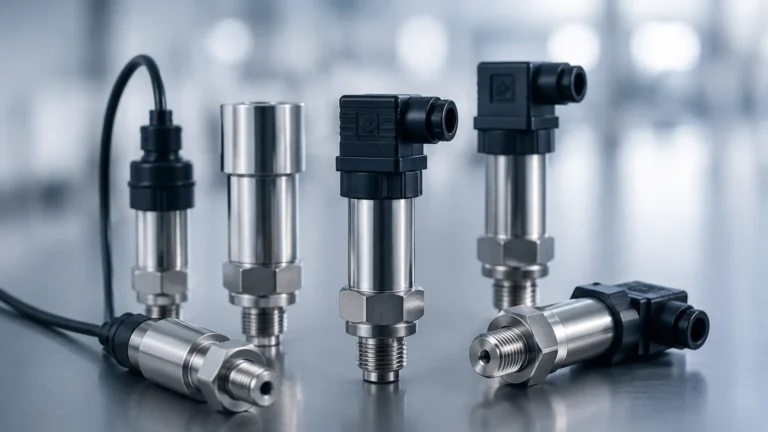
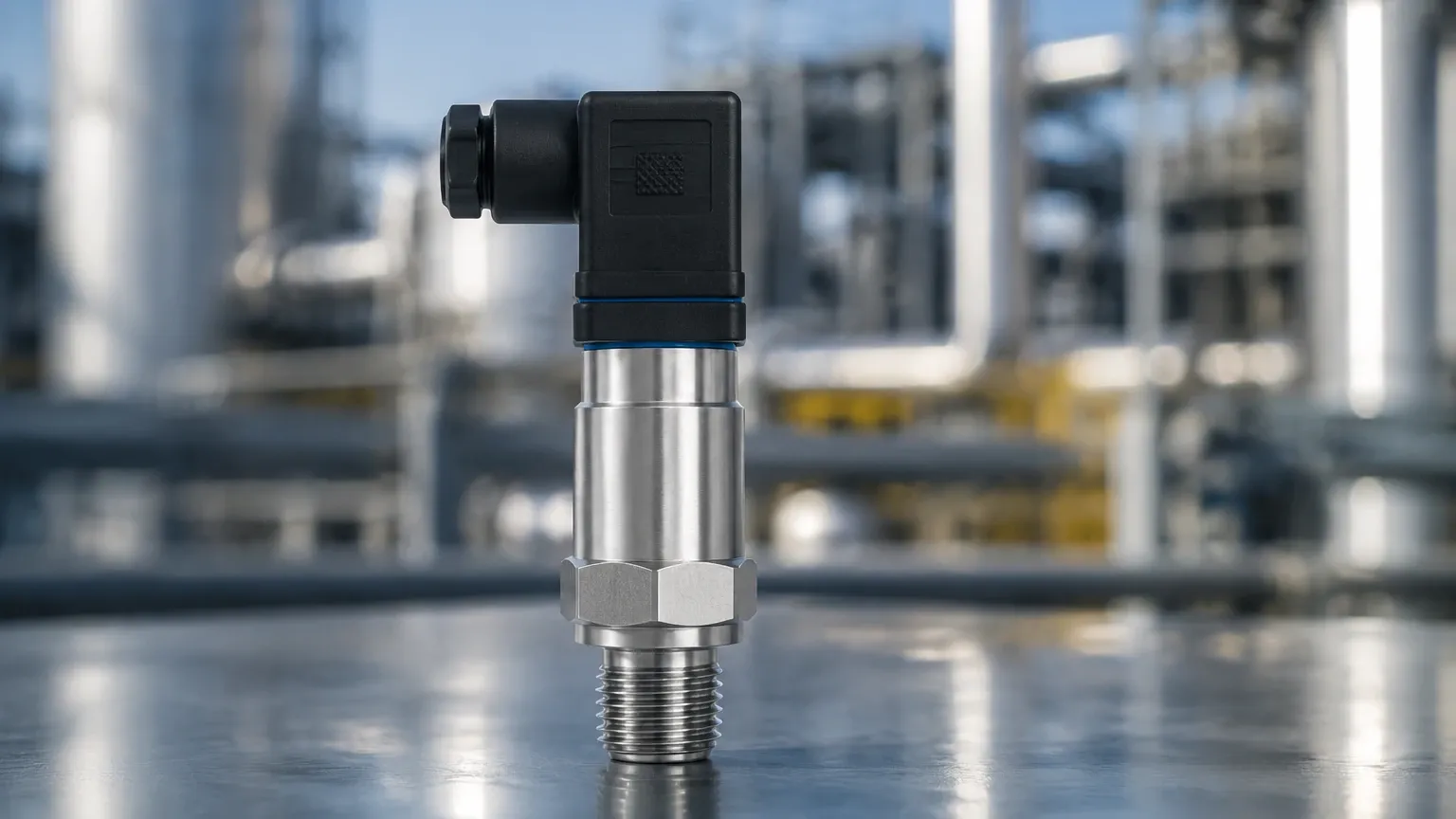
These are mounted to the side or bottom of a tank via a threaded connection or a flange. They are ideal for process tanks where the sensor must be accessible from the outside for maintenance. For corrosive or hygienic applications, a diaphragm seal (chemical seal) is often used to isolate the transmitter’s internal sensing element from the process fluid.
3. Differential Pressure (DP) Transmitters
In closed, pressurized vessels (such as boilers or liquefied gas tanks), the pressure in the vapor space above the liquid adds to the hydrostatic pressure. A standard gauge pressure transmitter cannot distinguish between the two. A differential pressure transmissor de pressão is required here. It measures the pressure at the bottom of the tank and subtracts the pressure at the top, leaving only the pressure generated by the liquid height.
Technical Selection Criteria
Selecting the right instrument requires a detailed analysis of the process conditions. The following table summarizes key evaluation criteria for engineering teams:
| Selection Factor | Consideration | Impact on Measurement |
| :— | :— | :— |
| Pressure Range | Must match the maximum liquid height and density. | Over-ranging can damage the sensor; under-ranging reduces resolution. |
| Wetted Materials | Compatibility with the fluid (e.g., 316L SS, Tantalum, Hastelloy). | Prevents corrosion and premature sensor failure. |
| Accuracy Class | Typically ranges from 0.1% to 0.5% FS. | High accuracy is critical for custody transfer or high-value chemicals. |
| Process Temperature | Standard sensors operate up to 80°C; higher temps require cooling elements. | Temperature shifts can cause signal drift or diaphragm damage. |
| Output Signal | 4-20mA, HART, RS485/Modbus, or Profibus. | Determines compatibility with the existing PLC or SCADA system. |
| Ingress Protection | IP65 to IP68 (for submersible). | Protects the electronics from moisture and dust. |
Installation Best Practices
Even the most accurate transmissor de pressão will provide poor data if installed incorrectly. Engineers should follow these guidelines to ensure optimal performance:
Mounting Position
The transmitter should be installed as low as possible on the tank to maximize the measurable range. If the sensor is mounted above the bottom of the tank, the volume of liquid below the sensor (the "dead zone") cannot be measured. This offset must be accounted for in the control system calibration.
Avoiding Turbulence
In tanks with agitators or high-velocity inlet flows, turbulence can cause pressure fluctuations that lead to "noisy" level readings. In these cases, the transmitter should be installed in a stilling well—a vertical pipe that dampens the movement of the fluid while allowing the pressure to equalize.
Impulse Lines and Venting
For differential pressure applications, the impulse lines (the small pipes connecting the tank to the transmitter) must be properly sloped to prevent gas bubbles or sediment from becoming trapped. For gauge pressure transmitters, ensure the vent port is clear and protected from water ingress, as a blocked vent will cause errors during weather-related barometric pressure changes.
Limitations and Environmental Considerations
While hydrostatic level measurement is versatile, it has specific limitations that must be addressed during the design phase:
1. Density Variations: Since the measurement is based on weight, any change in the liquid's density will change the pressure reading, even if the actual height remains the same. This is common in processes where the temperature fluctuates significantly or where different chemicals are mixed. If density changes are expected, a secondary temperature sensor or a multi-parameter system may be needed for compensation.
2. Sediment and Clogging: In applications like wastewater or slurries, solids can accumulate on the transmitter diaphragm. This adds weight or prevents the diaphragm from moving freely, leading to false readings. Flat-faced diaphragm seals are preferred in these environments to minimize buildup.
3. Vacuum Conditions: If a tank operates under vacuum, the transmitter must be specifically rated for vacuum service. Standard diaphragms can be pulled outward and permanently deformed if subjected to a vacuum they were not designed to handle.
Comparison: Pressure Transmitters vs. Other Technologies
When evaluating a transmissor de pressão, it is helpful to compare it against other common level measurement technologies like Radar or Ultrasonic sensors.
* Radar (Non-contact): Excellent for extreme temperatures and varying densities, but significantly more expensive than pressure transmitters. Radar is preferred for highly corrosive liquids where no contact is desired.
* Ultrasonic: Cost-effective for simple water applications but struggles with foam, dust, and vapor. Pressure transmitters are generally more reliable in foamy or steaming environments because they measure from the bottom up.
* Hydrostatic (Pressure): Offers the best balance of cost and accuracy for most liquid applications. It is unaffected by surface conditions like foam or turbulence but is sensitive to density changes.
For a comprehensive view of available technologies and to find the best fit for your specific application, you can Main Page to review product options and application support.
Maintenance and Troubleshooting
To maintain the integrity of the measurement, a routine maintenance schedule is recommended:
* Zero-Point Calibration: Periodically check the transmitter reading when the tank is empty. Over time, electronic drift or mechanical fatigue can shift the zero point.
* Cleaning: For submersible probes or flanged sensors in dirty fluids, gently clean the diaphragm with a soft cloth and appropriate solvent. Never use sharp objects to clean a diaphragm, as the metal is extremely thin and easily punctured.
* Cable Inspection: For submersible units, inspect the cable jacket for nicks or tears that could allow moisture to enter the vent tube or the internal electronics.
Frequently Asked Questions (FAQ)
Q: Can a pressure transmitter measure the level of solids?
No. Hydrostatic pressure measurement relies on the fluid properties of liquids. Solids do not exert pressure equally in all directions and cannot be measured accurately with this method.
Q: How do I handle a tank with a sloped bottom?
The transmitter should be calibrated based on the vertical height of the liquid above the sensor. The volume calculation (converting height to liters or cubic meters) must then be handled by the PLC or a specialized signal converter using a strapping table.
Q: Is it possible to use a pressure transmitter for interface measurement (e.g., oil on top of water)?
Yes, but it requires a differential pressure setup and a very clear understanding of the densities of both fluids. It is a more complex calculation that involves measuring the pressure at two different points within the liquid column.
Q: What is the typical lifespan of an industrial pressure transmitter?
In clean, non-corrosive environments, a high-quality transmissor de pressão can last 10 to 15 years. In harsh chemical or high-vibration environments, the lifespan may be shorter, requiring more frequent inspection and replacement.
By carefully considering the fluid properties, tank geometry, and environmental factors, a pressure-based level measurement system provides a robust and reliable solution for modern industrial processes. For further technical specifications and customized OEM/ODM services, consulting with a professional manufacturer ensures that the selected instrument meets the rigorous demands of the application.