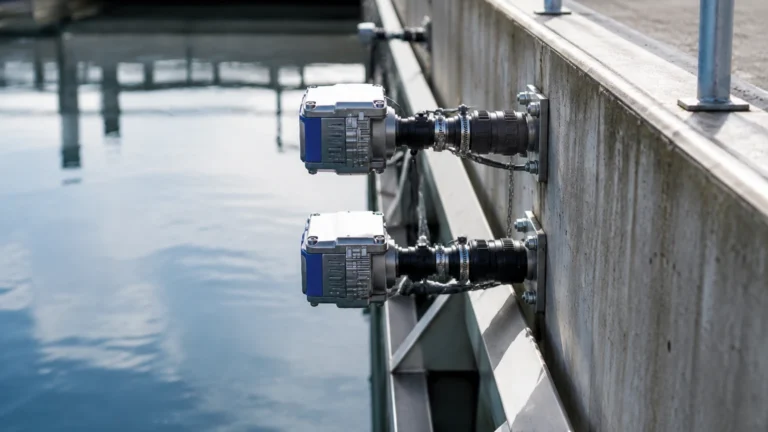
Trend Häuser
Trend Häuser
In the evolving landscape of modern architecture and facility management, the concept of "trend häuser"—modern, high-efficiency, and often smart-integrated buildings—has shifted focus from purely aesthetic design to the integration of sophisticated industrial-grade infrastructure. For engineers, developers, and facility managers involved in these high-end projects, the reliability of utility systems is paramount. Central to this reliability is the precise monitoring of fluids, ranging from rainwater harvesting systems and graywater recycling to HVAC cooling towers and fire protection reservoirs.
As buildings become more autonomous and sustainable, the demand for industrial-grade level measurement instruments has surged. This guide explores the technical requirements for level sensing within the context of modern architectural trends, providing a detailed breakdown of measurement principles, selection criteria, and installation best practices to ensure long-term operational efficiency.
The Role of Level Measurement in Modern Building Trends
Modern "trend häuser" are no longer just residential or commercial spaces; they are complex ecosystems that prioritize resource conservation and automation. Industrial level meters, such as those provided by Welk, play a critical role in several key areas:
1. Sustainable Water Management: Rainwater collection and graywater treatment systems require continuous monitoring to balance supply and demand.
2. Energy Efficiency: HVAC systems rely on accurate level data in expansion tanks and cooling towers to maintain optimal thermal exchange.
3. Safety Systems: Fire suppression tanks must be monitored with high-precision instruments to ensure compliance with safety regulations and immediate availability in emergencies.
4. Waste Management: Automated sewage and sump pump stations prevent flooding and maintain hygiene in complex multi-level structures.
To achieve the level of automation expected in modern developments, selecting the correct measurement principle is the first step in the engineering process.
Core Measurement Principles
Before selecting a sensor, it is essential to understand the physics behind the most common industrial level measurement technologies used in modern facility management.
1. Radar Level Measurement (Non-Contact)
Radar level meters operate on the Time of Flight (ToF) principle. The sensor emits a high-frequency microwave signal (often in the 26GHz or 80GHz range) that travels to the surface of the medium, reflects, and returns to the receiver. The distance is calculated based on the time interval and the constant speed of light.
* Advantages: Radar is unaffected by temperature fluctuations, pressure changes, or the presence of vapors and dust. It is ideal for the high-precision requirements of modern "trend häuser" where maintenance access might be limited.
* Applications: Potable water tanks, chemical storage for HVAC treatment, and bitumen tanks in construction.
2. Ultrasonic Level Measurement (Non-Contact)
Similar to radar, ultrasonic sensors use the ToF principle but utilize sound waves instead of electromagnetic waves. The sensor pulses sound toward the liquid surface and measures the time for the echo to return.
* Advantages: Cost-effective and easy to install. It is a standard choice for non-corrosive aqueous liquids.
* Limitations: Sound speed is affected by air temperature and turbulence. It is not suitable for vacuum applications or environments with heavy foam.
* Applications: Open-channel flow measurement, sump pits, and outdoor rainwater reservoirs.
3. Hydrostatic Level Measurement (Contact)
This method measures the pressure exerted by a liquid column. According to the hydrostatic paradox, the pressure at a specific depth is proportional to the height of the liquid above it, calculated by the formula $P = \rho \cdot g \cdot h$ (where $P$ is pressure, $\rho$ is density, $g$ is gravity, and $h$ is height).
* Advantages: Highly reliable for deep tanks or boreholes. Submersible pressure transmitters are robust and require minimal headspace.
* Applications: Deep-well pumping stations and underground fuel storage for backup generators.
Practical Selection Table for Building Infrastructure
Choosing the right technology depends on the specific environment and the physical properties of the medium. The following table provides a comparison for common applications in modern facility projects.
| Application | Recommended Technology | Typical Range (m) | Key Selection Factor |
| :— | :— | :— | :— |
| Rainwater Harvesting | Ultrasonic | 0.5 – 10m | Cost-efficiency and ease of setup. |
| HVAC Cooling Towers | Radar (80GHz) | 0.1 – 30m | Resistance to steam and turbulence. |
| Sewage Sump Pits | Hydrostatic | 1 – 5m | Ability to handle solids and sludge. |
| Potable Water Storage | Radar | 0.5 – 15m | Non-contact hygiene and high accuracy. |
| Fire Water Tanks | Hydrostatic / Radar | 2 – 20m | Redundancy and regulatory compliance. |
| Chemical Dosing | Ultrasonic | 0.2 – 5m | Material compatibility (PVDF/PTFE). |
For a comprehensive look at specific instrument specifications, engineers can refer to the Main Page for detailed product data sheets.
Installation Considerations for Modern Projects
In the context of "trend häuser," where space is often optimized and aesthetics are considered, the installation of level meters must be both functional and unobtrusive. Proper installation ensures the longevity of the device and the accuracy of the data.
Mounting Position and Orientation
* The Dead Zone (Blocking Distance): Every non-contact sensor has a "dead zone" directly beneath the transducer where it cannot measure. For ultrasonic sensors, this is typically 0.2m to 0.5m. Ensure the highest possible liquid level does not enter this zone.
* Obstructions: Avoid mounting sensors near inflow pipes, ladders, or internal struts. These can cause false reflections (ghost echoes). Modern radar sensors often include "false echo suppression" software to ignore these fixed obstructions.
* Beam Angle: Ensure the signal beam has a clear path to the liquid surface. The higher the frequency (e.g., 80GHz radar), the narrower the beam angle, allowing for installation in narrower tanks or closer to walls.
Environmental Protection
In modern architectural designs, sensors may be exposed to the elements or hidden in damp underground vaults.
* IP Ratings: Use sensors with at least an IP67 rating for indoor sumps and IP68 for submersible or outdoor applications.
* Temperature Compensation: For ultrasonic sensors, ensure the device has integrated temperature compensation to account for changes in the speed of sound throughout the day.
Integration with Building Management Systems (BMS)
Most modern projects require integration via 4-20mA analog signals, Modbus RTU, or HART protocols. This allows the level data to be visualized on central dashboards, enabling the "smart" functionality of the trend-focused building.

Limitations and Common Risks
While industrial level meters are highly advanced, certain conditions can compromise their performance if not addressed during the design phase:
1. Foam and Turbulence: Heavy foam on the surface of a liquid can absorb ultrasonic signals, leading to signal loss. In these cases, high-frequency radar or hydrostatic sensors are preferred.
2. Condensation: In humid environments, water droplets can form on the transducer face of non-contact sensors. Selecting a sensor with a drip-off antenna design or a PTFE wetted part can mitigate this issue.
3. Chemical Compatibility: When measuring chemicals for water treatment or HVAC maintenance, the sensor material (e.g., 316L Stainless Steel, PVDF, or PP) must be compatible with the medium to prevent corrosion.
Frequently Asked Questions (FAQ)
Q: Can I use an ultrasonic sensor for a pressurized tank?
A: Generally, no. Ultrasonic waves require a consistent medium (air or gas) to travel. Changes in pressure significantly alter the speed of sound, leading to large errors. Radar is the preferred non-contact method for pressurized vessels.
Q: How often do industrial level meters need calibration?
A: Most modern digital sensors are factory-calibrated and have very low drift. However, for critical systems like fire protection, an annual verification is recommended. Hydrostatic sensors may require more frequent checks if the liquid density changes significantly.
Q: Is radar technology safe for residential "trend häuser" applications?
A: Yes. The microwave emissions from industrial radar level meters are extremely low-power—significantly lower than a standard mobile phone or Wi-Fi router—and are safely contained within the tank or directed downward.
Q: What is the benefit of 80GHz radar over 26GHz?
A: 80GHz radar offers a much narrower beam and better signal focusing. This makes it easier to install in tanks with many internal obstructions or in small, narrow vessels often found in compact modern building designs.
Conclusion
The integration of industrial-grade level measurement into modern "trend häuser" is a hallmark of sophisticated engineering. By understanding the principles of radar, ultrasonic, and hydrostatic measurement, facility designers can ensure that the invisible infrastructure of their projects is as advanced as the architecture itself. For those seeking reliable, cost-effective, and accurate solutions, exploring the specialized range of instruments available on the Main Page is the recommended next step in the procurement process. Proper selection, combined with rigorous installation standards, guarantees that these modern buildings remain efficient, safe, and sustainable for decades to come.