Ultrasonic Liquid Level Switch
Ultrasonic Liquid Level Switch
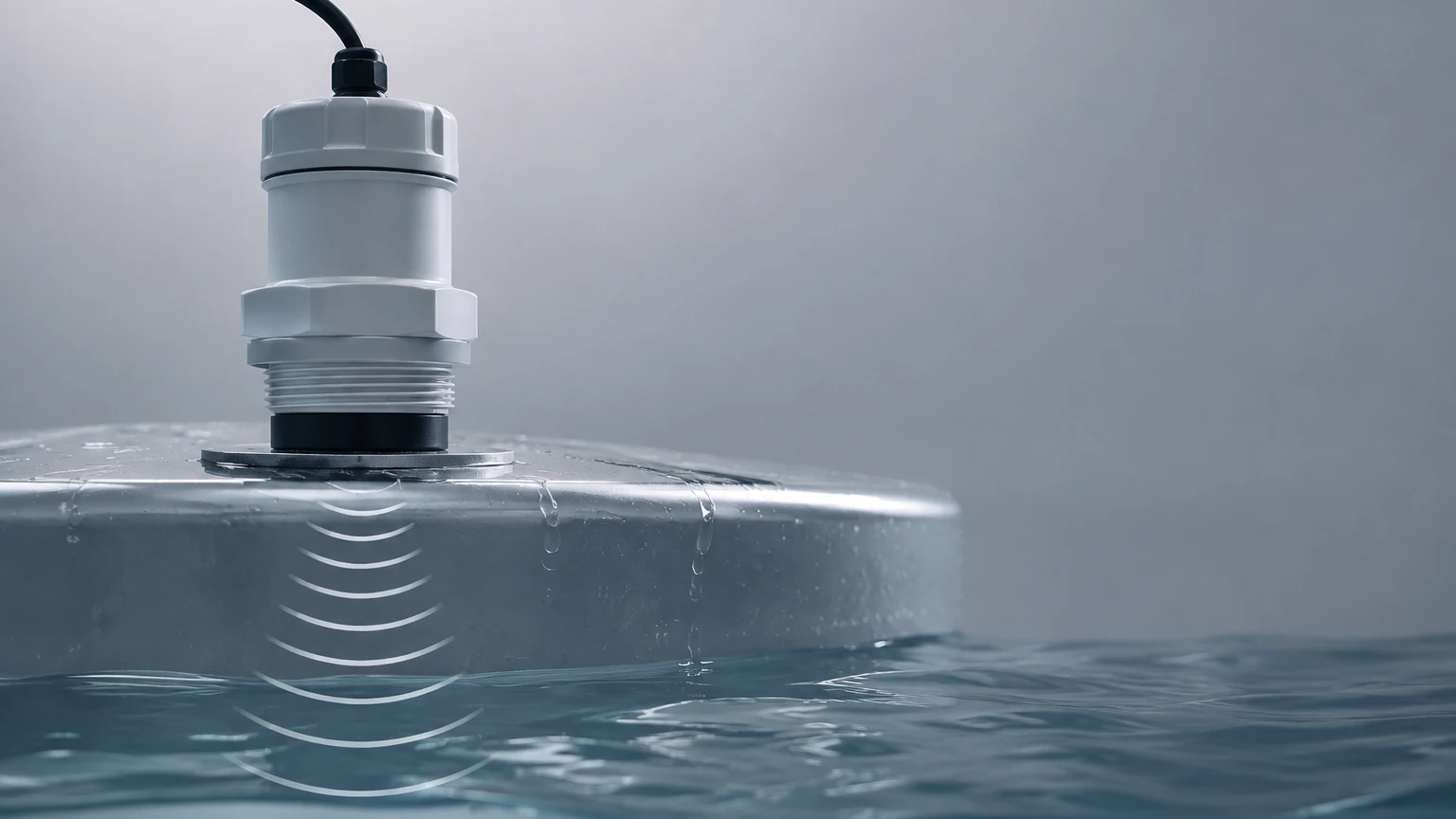
In the landscape of industrial automation and process control, the ultrasonic liquid level switch serves as a critical component for point-level detection. Unlike continuous level transmitters that provide a constant stream of data regarding the volume or height of a liquid, a level switch is designed to trigger a specific action—such as starting a pump, opening a valve, or sounding an alarm—when the liquid reaches a predetermined threshold.
For engineers and procurement professionals, selecting the right point-level technology is vital for preventing tank overfills, protecting pumps from dry running, and ensuring process safety. Manufacturers like Welk provide these instruments to industries ranging from water treatment to chemical processing, where reliability and accuracy are non-negotiable. This guide explores the engineering principles, selection criteria, and practical installation requirements for ultrasonic liquid level switches.
Measurement Principles of Ultrasonic Switches
Ultrasonic technology in level sensing relies on high-frequency sound waves, typically above the range of human hearing (20 kHz to several MHz). There are two primary methods by which an ultrasonic liquid level switch detects the presence of a medium: the gap-sensor method and the non-contact pulse-echo method.
1. The Gap-Sensor (Contact) Principle
The most common industrial ultrasonic level switch utilizes a "gap" design. This sensor consists of two piezoelectric crystals mounted opposite each other across a small physical gap in the sensor head. One crystal acts as a transmitter, and the other acts as a receiver.
* In Air: When the gap is filled with air or gas, the ultrasonic signal emitted by the transmitter is attenuated significantly because sound travels poorly through low-density gases at high frequencies. The receiver does not detect a signal, and the switch remains in its "dry" state.
* In Liquid: When the liquid rises to fill the gap, the acoustic impedance changes. Liquids are much denser than air and serve as an efficient medium for sound transmission. The ultrasonic pulse travels across the gap and is detected by the receiver crystal. This signal is then processed by the electronics to change the state of the output relay or transistor.
2. Non-Contact Pulse-Echo Principle
While less common for simple point-level switching than the gap sensor, non-contact ultrasonic switches use the time-of-flight principle. The sensor emits a pulse that reflects off the liquid surface. If the reflected echo returns within a specific time window (corresponding to a high or low-level distance setpoint), the switch triggers. This is often used in applications where the sensor must not touch the medium, such as highly corrosive or sterile liquids.
Key Advantages of Ultrasonic Technology
Choosing an ultrasonic liquid level switch over mechanical alternatives like float switches or other electronic options like tuning forks offers several distinct benefits:
* No Moving Parts: Because the sensor relies on solid-state piezoelectric crystals, there are no linkages, pivots, or floats to jam, corrode, or wear out. This drastically reduces maintenance requirements and increases the lifespan of the device.
* Independence from Fluid Properties: Ultrasonic gap switches are generally unaffected by changes in the liquid's dielectric constant, conductivity, or density, provided the liquid is capable of transmitting sound. This makes them more versatile than capacitive or conductivity switches.
* High Reliability in Viscous Fluids: While extremely thick coatings can be an issue, many ultrasonic switches are designed to ignore minor buildup on the sensor faces, making them suitable for paints, oils, and chemical slurries.
Technical Selection Criteria
When specifying an ultrasonic liquid level switch for a project, several parameters must be evaluated to ensure the device performs correctly within the intended environment. You can Review product options and application support on our main page to see how these specifications align with specific industrial models.
Fluid Viscosity and Aeration
While ultrasonic switches are robust, the presence of heavy aeration (bubbles) or high concentrations of suspended solids can interfere with sound transmission. If a liquid is highly carbonated or undergoing violent agitation, the sound waves may be scattered, leading to false "dry" readings. As a general rule, liquids with viscosities up to 5,000 cP (centipoise) can be handled by standard gap sensors, though specialized high-gain versions may be required for more challenging fluids.
Temperature and Pressure
Standard industrial ultrasonic switches are typically rated for temperatures ranging from -40°C to 150°C (-40°F to 302°F). High-pressure environments also require careful consideration, as the sensor housing and the piezoelectric bonding must withstand the mechanical stress. Common pressure ratings range from vacuum up to 40 bar (approx. 580 psi), depending on the material of construction (e.g., 316L Stainless Steel or Hastelloy).
Material Compatibility
The wetted parts of the switch must be chemically compatible with the process media. Stainless steel is the industry standard, but for aggressive acids or bases, plastic coatings (like PFA or ETFE) or exotic alloys are necessary to prevent corrosion.
Practical Selection Table
The following table compares ultrasonic switches with other common point-level technologies to assist in the selection process.
| Feature | Ultrasonic Gap Switch | Tuning Fork (Vibrating) | Float Switch | Optical Switch |
| :— | :— | :— | :— | :— |
| Moving Parts | None | None | Yes | None |
| Viscosity Limit | Moderate to High | Moderate | Low | Low |
| Foam Sensitivity | Low | Moderate | Low | High |
| Coating Resistance | Good | Excellent | Poor | Poor |
| Cost | Moderate | Moderate | Low | Low |
| Primary Use Case | Chemical/Oil/Water | General Industrial | Simple Water Tanks | Clean Liquids/OEM |
Installation Considerations
Proper installation is paramount to the accuracy of an ultrasonic liquid level switch. Engineering teams should follow these guidelines to avoid common pitfalls:
1. Orientation: For gap-style sensors, the gap should be oriented so that liquid can easily flow in and out. If installed horizontally, the gap should be vertical (slotted top-to-bottom) to prevent air bubbles from becoming trapped or sediment from settling in the gap.
2. Turbulence and Agitation: If the tank has an agitator, the switch should be installed in a location where the liquid surface is relatively stable. If this is not possible, a stilling well may be required to protect the sensor from mechanical force and to provide a stable measurement environment.
3. Nozzle Length: When mounting a switch in a nozzle, ensure the sensing gap extends fully into the tank. If the gap is recessed inside a narrow nozzle, liquid may be retained by surface tension (capillary action) even after the tank level has dropped, causing a "false wet" indication.
4. Electrical Interference: Ensure that the cabling is shielded and routed away from high-voltage power lines or variable frequency drives (VFDs) to prevent electromagnetic interference from affecting the sensitive piezoelectric signals.
Limitations and Common Risks
Despite their versatility, ultrasonic liquid level switches are not universal solutions. Engineers must be aware of the following limitations:
* Heavy Aeration: As mentioned, sound cannot travel through air. If a process involves heavy foaming or entrained air, the signal will be blocked, and the switch will fail to detect the liquid.
* Heavy Scaling: While minor film buildup is ignored, a hard mineral scale or a thick, solid coating that bridges the gap will cause the switch to stay in a permanent "wet" state.
* Vacuum Applications: In the case of non-contact pulse-echo switches, a vacuum prevents the transmission of sound (which requires a medium). However, contact gap sensors work fine in vacuum tanks because the sound travels through the liquid once it reaches the gap.
Application Engineering Examples
Water and Wastewater Treatment
In this sector, ultrasonic switches are frequently used for high-level alarms in wet wells and chemical feed tanks. Their resistance to the corrosive nature of chlorine and other treatment chemicals, combined with the lack of moving parts that could be fouled by debris, makes them superior to float switches.
Chemical Processing
For hazardous chemicals, a non-contact ultrasonic switch or a hermetically sealed gap sensor is preferred. These devices provide the high-level secondary containment protection required by safety regulations (such as SIL ratings) to prevent catastrophic spills.
Oil and Gas
Ultrasonic switches are used in separator tanks to detect the interface between oil and water or to signal high levels in storage vessels. Their ability to operate in high-pressure environments and their explosion-proof certifications (ATEX/IECEx) are critical in these settings.
Frequently Asked Questions (FAQs)
Q: Can an ultrasonic liquid level switch detect the interface between two liquids?
A: A standard gap switch detects the presence of any liquid. However, specialized ultrasonic interface switches can be calibrated to detect the difference in acoustic ultrasonic velocity between two liquids (e.g., oil and water), though this often requires more advanced electronics.
Q: How do I test the switch without filling the tank?
A: Most modern ultrasonic switches, including those from Welk, feature a "test" or "check" button. When pressed, the electronics simulate a signal return to verify that the relay and alarm circuits are functioning correctly. For gap sensors, you can also manually submerge the sensor tip in a small container of the process fluid.
Q: Does the color of the liquid affect the measurement?
A: No. Unlike optical sensors, which rely on light refraction or reflection, ultrasonic sensors are completely unaffected by the color, transparency, or opacity of the liquid.
Q: What is the typical response time?
A: Most ultrasonic point-level switches have a response time of less than 1 second. Many models include a programmable delay (e.g., 1 to 30 seconds) to prevent the switch from "chattering" if the liquid surface is turbulent or splashing.
Conclusion and Next Steps
The ultrasonic liquid level switch is a robust, low-maintenance solution for point-level detection in demanding industrial environments. By understanding the acoustic principles and the specific requirements of the process media, engineers can implement a reliable safety and control system.
Before finalizing a design, it is essential to confirm the chemical compatibility of wetted materials, the maximum process temperature, and the electrical output requirements (e.g., DPDT relay, PNP/NPN, or 4-20mA loop-powered). For detailed technical specifications and to explore the full range of level measurement technologies, professionals should refer to the Main Page for comprehensive product data and engineering support.