Ultrasonic Sensor for Water Level
Ultrasonic Sensor for Water Level
In the realm of industrial automation and process control, the ultrasonic sensor for water level has emerged as one of the most reliable and cost-effective solutions for non-contact measurement. Whether managing municipal wastewater, monitoring irrigation channels, or controlling industrial cooling towers, understanding the technical nuances of ultrasonic technology is essential for ensuring operational efficiency and long-term accuracy.
As a non-contact technology, ultrasonic sensors eliminate the maintenance issues associated with submerged components, such as corrosion, scaling, and mechanical wear. This guide provides a comprehensive technical overview of how these sensors function, how to select the appropriate model for specific environments, and the critical installation factors that influence performance.
Measurement Principles of Ultrasonic Technology
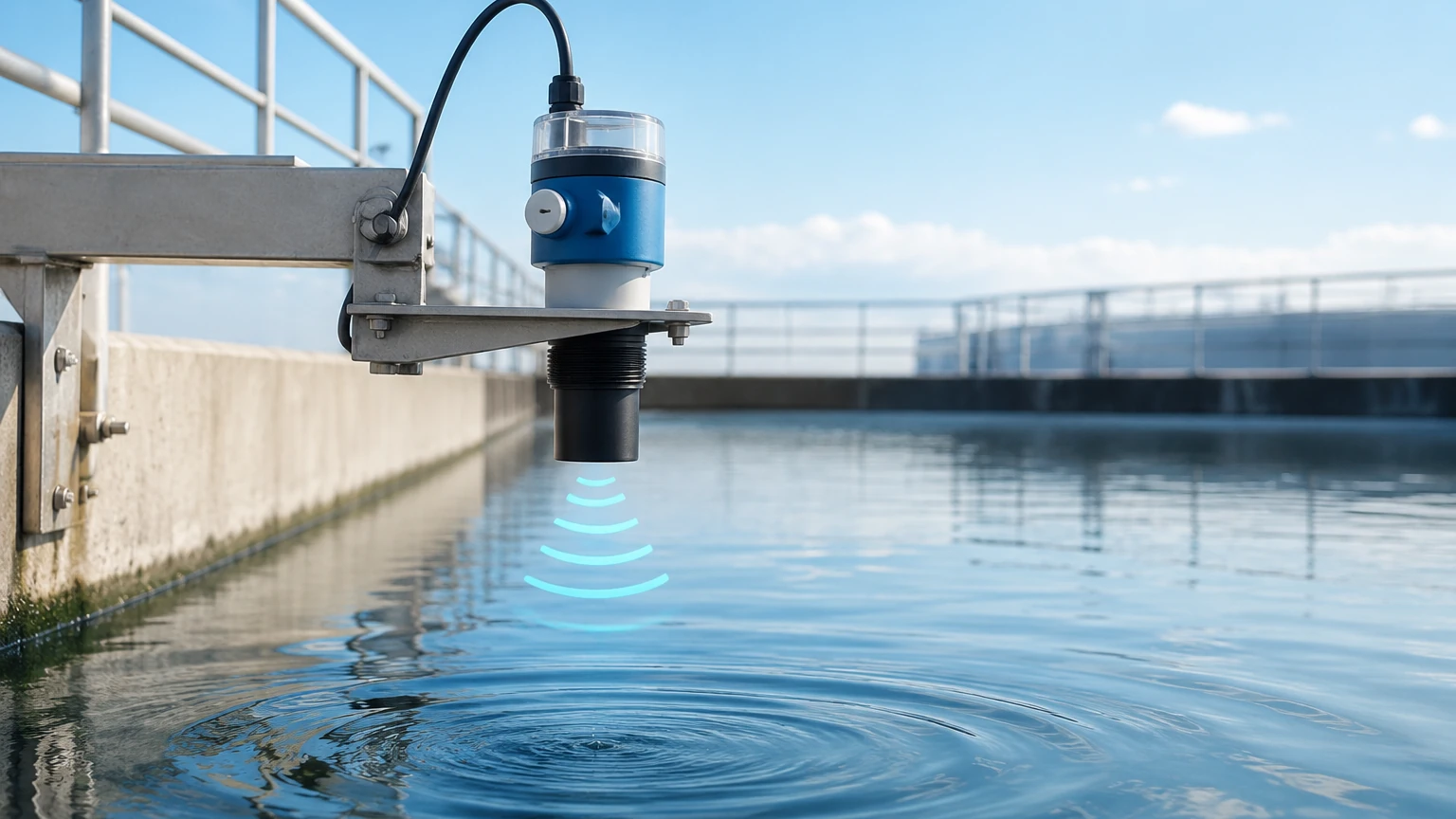
The operation of an ultrasonic sensor for water level is based on the "Time of Flight" (ToF) principle. The device contains a piezoelectric transducer that converts electrical energy into high-frequency sound waves. These sound pulses—typically ranging from 20 kHz to 200 kHz—are emitted toward the surface of the water.
The Time-of-Flight Calculation
When the sound pulse reaches the water surface, it is reflected back to the sensor. The sensor then acts as a receiver, detecting the returning echo. The internal microprocessor calculates the distance between the sensor face and the water surface using the following formula:
Distance = (Speed of Sound × Time Delay) / 2
Since the speed of sound in air is approximately 344 meters per second (1,129 feet per second) at 20°C (68°F), the sensor can determine the distance with high precision. By subtracting this distance from the total height of the tank or vessel (the "zero point"), the device provides an accurate reading of the water level.
The Impact of Temperature
The speed of sound is not constant; it varies significantly with air temperature. An increase in temperature increases the speed of sound, which could lead to measurement errors if not corrected. Professional-grade sensors, such as those found on the Welk Main Page, include integrated temperature sensors to provide automatic compensation, ensuring accuracy remains within ±0.25% of the detected range despite seasonal or process-driven temperature fluctuations.
Key Evaluation Criteria for Selection
Selecting the right ultrasonic sensor for water level requires a detailed analysis of the application environment. Not all sensors are suitable for every scenario. Engineers should evaluate the following technical specifications before procurement.
1. Measurement Range and Dead Zone
Every ultrasonic sensor has a maximum range and a minimum distance requirement, known as the "Dead Zone" or "Blocking Distance." The dead zone is the area immediately in front of the transducer where the sensor cannot accurately process the returning echo because it is still vibrating from the initial pulse emission.
* Small Tanks: Require sensors with a small dead zone (e.g., 0.2m to 0.3m).
* Deep Sumps or Reservoirs: Require high-power transducers capable of reaching 15m to 30m (49ft to 98ft).
2. Beam Angle
The ultrasonic pulse does not travel in a straight line; it spreads out in a cone shape. The beam angle (typically between 5° and 12°) determines the footprint of the signal at a given distance. If the beam is too wide, it may hit tank walls, ladders, or agitators, resulting in false echoes.
3. Output Signals and Connectivity
For integration into PLC (Programmable Logic Controller) or SCADA systems, the sensor must provide compatible outputs. Common options include:
* Analog: 4-20mA or 0-10V.
* Digital: RS485 Modbus RTU, HART protocol.
* Switching: Relay outputs for high/low-level alarms.
Technical Selection Table
| Feature | Standard Application (Indoor Tank) | Harsh Application (Outdoor/Wastewater) |
| :— | :— | :— |
| Housing Material | ABS / PVC | PVDF / Stainless Steel |
| IP Rating | IP65 / IP66 | IP67 / IP68 (Submersible) |
| Range | 2m – 5m | 10m – 30m |
| Temperature Compensation | Internal | Internal + External Probe (Optional) |
| Accuracy | 0.5% FS | 0.25% FS |
| Pressure Limit | Atmospheric | Up to 0.3 MPa |
Installation Considerations and Best Practices
Proper installation is the single most important factor in the success of an ultrasonic sensor for water level. Even the most advanced sensor will fail if positioned incorrectly.
Positioning and Orientation
* Perpendicular Alignment: The transducer face must be perfectly parallel to the water surface. A tilt of even a few degrees can cause the reflected signal to bounce away from the receiver, leading to signal loss.
* Avoid the Center: In cylindrical tanks with domed tops, mounting the sensor in the exact center can create a "parabolic effect," where multiple reflections interfere with the primary echo. Position the sensor at 1/2 or 1/3 of the radius from the wall.
* Wall Clearance: Ensure the ultrasonic cone does not touch the tank wall. If the wall is rough or has weld seams, it will create significant interference.
Overcoming Obstructions
Internal structures like pipes, ladders, or cooling coils can obstruct the signal. While many modern sensors feature "False Echo Suppression" software—allowing the user to map out and ignore fixed obstructions—it is always best to choose a mounting location with a clear line of sight to the water surface.
Environmental Protection
For outdoor water level monitoring, a sunshade or protective canopy is recommended. Direct sunlight can heat the sensor housing to temperatures significantly higher than the ambient air, skewing the internal temperature compensation and leading to inaccurate readings.
Limitations of Ultrasonic Sensors
While highly versatile, the ultrasonic sensor for water level has physical limitations that may necessitate alternative technologies, such as radar or hydrostatic pressure transmitters.
1. Heavy Foam: Thick, dense foam on the water surface acts as an acoustic insulator, absorbing the ultrasonic pulse rather than reflecting it. If foam is present, the sensor may report a "Loss of Echo" error.
2. Vacuum or High Pressure: Ultrasonic waves require a medium (air or gas) to travel. They cannot function in a vacuum. High-pressure environments also change the density of the air, significantly affecting the speed of sound beyond the capabilities of standard compensation.
3. Heavy Steam and Dust: While light vapor is manageable, extremely dense steam or heavy dust can attenuate the signal, reducing the effective range of the sensor.
4. Turbulence: Extreme surface turbulence can scatter the echo. In these cases, a stilling well (a vertical pipe) can be used to provide a calm surface for measurement.
Practical Applications in Industry
Water and Wastewater Treatment
Ultrasonic sensors are the standard for monitoring levels in wet wells, screen rooms, and chemical storage tanks (such as alum or sodium hypochlorite). Their non-contact nature is vital when dealing with corrosive chemicals or raw sewage that would quickly degrade contact-based sensors.
Open Channel Flow Measurement
By combining an ultrasonic sensor for water level with a flume or weir, the device can calculate flow rates in open channels. The sensor measures the "head" (level) of the water, and the internal electronics apply the specific flow formula (e.g., Khafagi-Venturi) to provide real-time flow data in liters per second or cubic meters per hour.
Industrial Automation
In food and beverage or pharmaceutical manufacturing, ultrasonic sensors provide a hygienic solution for monitoring deionized water or ingredient tanks, as they do not require any penetration into the liquid, maintaining the integrity of the sterile environment.
Frequently Asked Questions (FAQ)
Q: How often does an ultrasonic sensor need calibration?
A: Under stable conditions, these sensors are very stable. However, an annual verification is recommended. Most units are calibrated at the factory and only require the user to input the specific tank dimensions (Empty and Full distances).
Q: Can I use an ultrasonic sensor for water level in a tank with an agitator?
A: Yes, provided the sensor is mounted away from the agitator shaft and the software is configured with false echo suppression to ignore the blades as they rotate.
Q: What is the maximum distance an ultrasonic sensor can measure?
A: Standard industrial models typically reach up to 15 or 20 meters (49 to 65 feet). For distances exceeding 30 meters, radar level meters are generally preferred due to their narrower beam and higher energy.
Q: Does the color of the water affect the measurement?
A: No. Unlike optical or laser sensors, ultrasonic technology is based on sound. The color, transparency, or opacity of the water has no impact on the accuracy of the reading.
Conclusion and Next Steps
The ultrasonic sensor for water level remains a cornerstone of industrial instrumentation due to its balance of precision, ease of installation, and low maintenance requirements. By carefully considering the dead zone, beam angle, and environmental factors like temperature and foam, engineers can implement a robust measurement solution that lasts for years.
For those seeking specific hardware configurations or customized OEM solutions for unique industrial environments, it is advisable to consult with a professional manufacturer. You can explore a wide range of high-performance instruments and technical data sheets on the Welk Main Page to find the ideal match for your project requirements. Confirming your tank geometry and chemical compatibility with a technical specialist before purchase will ensure the highest level of operational reliability.