Unit of Measurement for Turbidity
Unit of Measurement for Turbidity
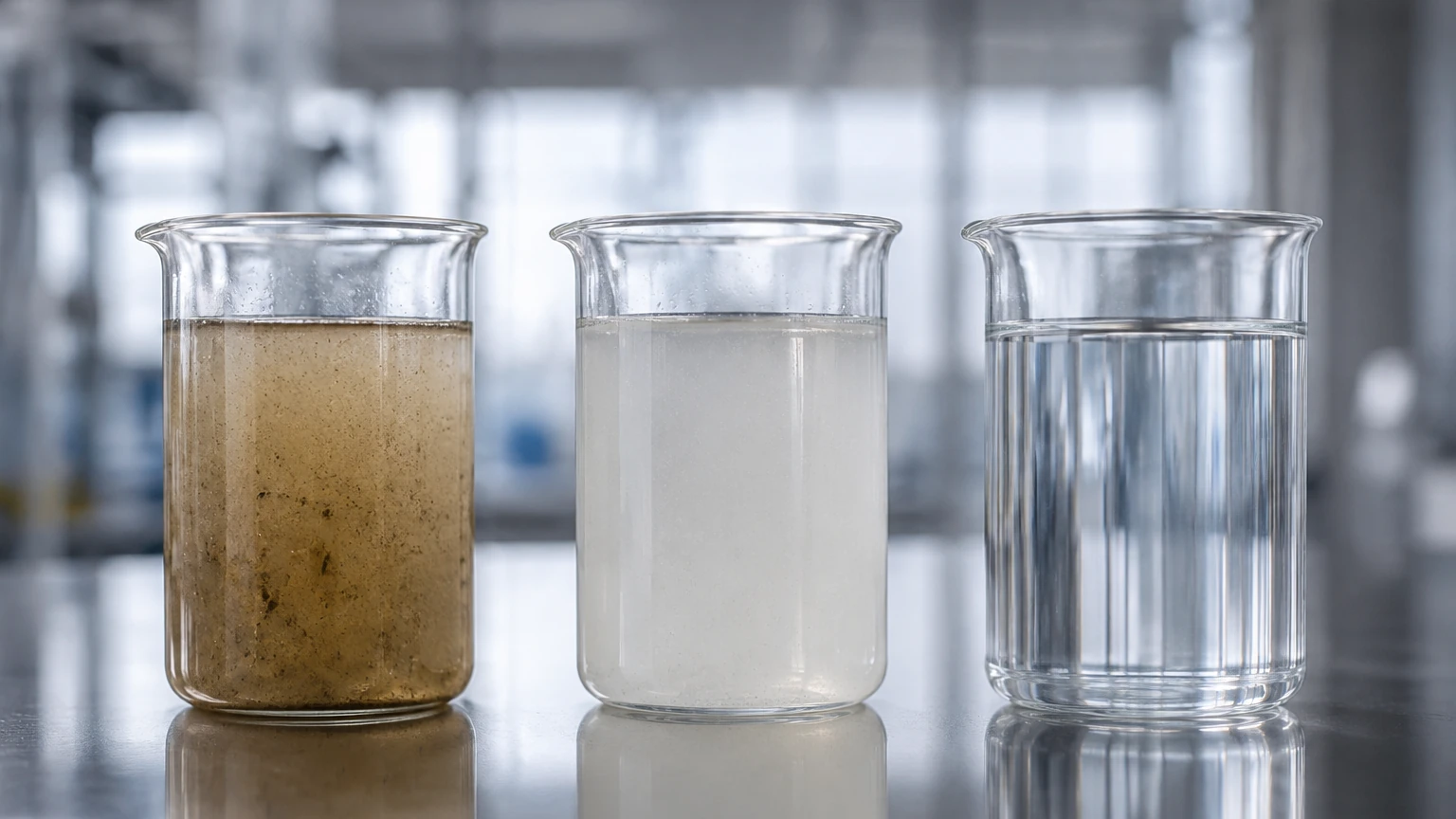
Turbidity is a fundamental physical property of liquids that describes their relative clarity. In industrial process control, water treatment, and environmental monitoring, measuring turbidity is essential for assessing water quality and the efficiency of filtration processes. However, selecting the correct unit of measurement for turbidity can be complex due to the variety of optical methods and international standards used to quantify suspended solids.
Understanding the different units—such as NTU, FNU, and FAU—is critical for engineers and plant operators to ensure regulatory compliance and process accuracy. This guide explores the principles of turbidity measurement, the specific units utilized in various industries, and practical considerations for instrument selection.
Principles of Turbidity Measurement
Turbidity is not a direct measure of the weight or concentration of suspended particles; rather, it is an expression of the optical property that causes light to be scattered and absorbed rather than transmitted in straight lines through a sample. The way light interacts with suspended matter depends on the size, shape, composition, and refractive index of the particles, as well as the wavelength and geometry of the light source.
Scattering vs. Attenuation
There are two primary optical methods used to determine turbidity:
1. Nephelometry (Scattering): This method measures the intensity of light scattered at a specific angle, typically 90 degrees, from the incident light path. It is highly sensitive to low levels of turbidity and is the standard for drinking water applications.
2. Turbidimetry (Attenuation): This method measures the decrease in the intensity of light as it passes through a sample. It is generally used for high-turbidity applications where the concentration of particles is high enough to significantly block the light path.
Light Source Standards
The choice of light source significantly impacts the measurement. The two most common standards are:
* EPA Method 180.1: Utilizes a tungsten filament lamp (white light). This is widely used in the United States but can be affected by the color of the sample.
* ISO 7027: Utilizes a Near-Infrared (NIR) LED (typically 860 nm). This method minimizes interference from sample color and is the standard in Europe and many international industrial applications.
Common Units of Measurement for Turbidity
The unit of measurement for turbidity often indicates both the concentration of the standard used for calibration and the optical geometry of the instrument.
1. NTU (Nephelometric Turbidity Units)
NTU is the most recognized unit globally. It is based on the use of Formazin as a calibration standard and a 90-degree scatter measurement. While often associated with the EPA tungsten lamp method, it is frequently used as a general term for turbidity in many commercial contexts.
2. FNU (Formazin Nephelometric Units)
FNU is functionally similar to NTU but specifically denotes that the measurement was taken using the ISO 7027 (infrared) scattering method. In B2B water treatment specifications, FNU is preferred when the liquid may have inherent color (such as humic acid in raw water) that would otherwise absorb white light.
3. FTU (Formazin Turbidity Units)
FTU is a general unit based on Formazin preparations. It does not specify the optical geometry (scattering vs. attenuation). Historically, FTU was used interchangeably with NTU, but modern engineering specifications require more precise designations like FNU or FAU.
4. FAU (Formazin Attenuation Units)
FAU is used when turbidity is measured by the attenuation of light (transmission) rather than scattering. This unit is typically applied in high-turbidity environments, such as wastewater influent or industrial slurries, where the turbidity exceeds 400 NTU.
5. JTU (Jackson Turbidity Units)
JTU is a legacy unit based on the Jackson Candle Turbidimeter. It is a visual method where a candle flame is viewed through a glass tube until it disappears. While no longer used in modern automated instrumentation, it may still appear in historical data or older environmental reports. (1 JTU is roughly equivalent to 19 NTU, but the correlation is not linear).
6. mg/L and TSS Correlation
In some industrial applications, operators attempt to correlate turbidity with Total Suspended Solids (TSS) measured in mg/L or ppm. While turbidity and TSS are related, the correlation is site-specific. If the particle size or color changes, the relationship between NTU and mg/L will shift, requiring recalibration of the instrument's conversion factor.
Comparison Table: Turbidity Units and Applications
| Unit | Method | Light Source | Typical Application | Range Sensitivity |
| :— | :— | :— | :— | :— |
| NTU | Nephelometry (90°) | White Light (Tungsten) | Drinking water, EPA compliance | High (Low range) |
| FNU | Nephelometry (90°) | Infrared (860 nm) | Process water, ISO compliance | High (Low range) |
| FAU | Attenuation (180°) | Infrared or White | Wastewater, Slurries | Low (High range) |
| FTU | General Formazin | Variable | General reference | Variable |
| mg/L | Gravimetric (Lab) | N/A | Sludge density, TSS monitoring | N/A |
Selection Criteria for Industrial Turbidity Sensors
When choosing an instrument for industrial automation, the unit of measurement for turbidity is just one factor. Engineers should also evaluate the following:
* Measurement Range: For clean water, a sensor capable of 0-10 NTU with high resolution is required. For industrial discharge, a range of 0-4000 FAU may be necessary.
* Process Temperature and Pressure: Industrial sensors must withstand the operating environment. While many level measurement instruments, such as those found on the Main Page, focus on hydrostatic or radar principles, turbidity sensors are often integrated into the same process loops and must meet similar ruggedization standards.
* Cleaning Requirements: Turbidity sensors are prone to "fouling" (biofilm or mineral buildup on the lens). Selecting a sensor with an integrated wiper system or an ultrasonic cleaning module is essential for reducing maintenance intervals.
* Installation Type:
* Immersion Sensors: Placed directly into tanks or open channels.
* Bypass/Flow-cell: A portion of the process liquid is diverted through a small chamber for measurement. This is often more accurate for very low turbidity levels as it eliminates interference from ambient light.
Installation Considerations and Limitations
To ensure the accuracy of the chosen unit of measurement for turbidity, proper installation is paramount.
1. Avoid Air Bubbles: Bubbles scatter light just like solid particles. In pressurized lines, air can come out of solution and cause "false high" readings. Installing the sensor in a bubble trap or a vertical pipe with upward flow can mitigate this.
2. Ambient Light Interference: For open-tank immersion, sensors must be shielded from direct sunlight, which can saturate the optical detector.
3. Wall Interference: In small pipes or tanks, the light beam may reflect off the walls and return to the sensor. Ensure the sensor has adequate clearance (typically at least 50 mm to 100 mm) from any reflective surfaces.
4. Flow Velocity: While turbidity is not highly dependent on flow, a minimum velocity is often recommended to prevent particles from settling on the sensor face.
Frequently Asked Questions (FAQ)
Q: Can I convert NTU directly to FNU?
A: Mathematically, 1 NTU of Formazin is defined as 1 FNU of Formazin. However, in a real-world sample with varying particle colors and sizes, a tungsten-based NTU meter and an infrared-based FNU meter will likely give different readings. Conversion should only be done if the instrument supports dual-standard calibration.
Q: Why does my turbidity reading change when the liquid color changes?
A: If you are using a white light (NTU) sensor, the color of the liquid (e.g., yellow or brown tints) will absorb some of the light, leading to inaccurate readings. Switching to an infrared (FNU/FAU) sensor will generally solve this problem.
Q: How often should turbidity sensors be calibrated?
A: In regulated drinking water applications, calibration checks are often required weekly or monthly. In industrial automation, quarterly calibration is common, provided the sensor has an automatic cleaning mechanism.
Q: Is turbidity the same as sludge level?
A: No. Turbidity measures the cloudiness of the liquid. Sludge level measurement determines the interface between clarified liquid and settled solids. However, high-range turbidity sensors (FAU) are often used to detect the "sludge blanket" in clarifiers.
Conclusion
Selecting the appropriate unit of measurement for turbidity is a technical decision that impacts the reliability of process data. Whether using NTU for regulatory reporting or FAU for high-solids industrial monitoring, understanding the underlying optical principles ensures that the chosen instrumentation meets the specific needs of the application. For comprehensive solutions in industrial automation and fluid monitoring, reviewing specialized equipment options can provide the necessary accuracy and cost-effectiveness required for modern process control.