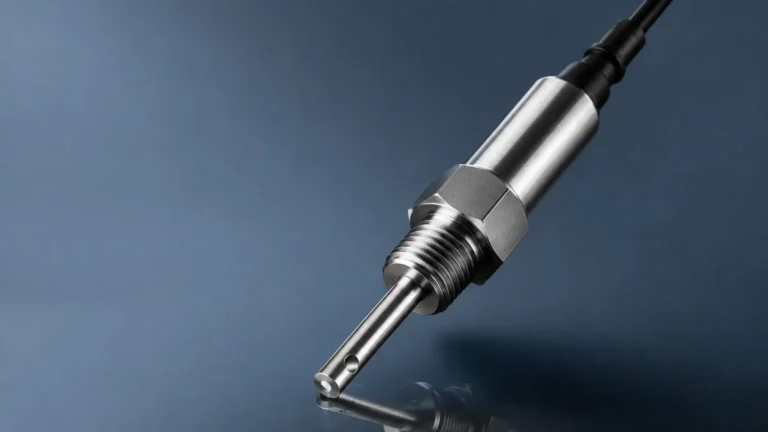
Us9000 Ultrasonic Sensor
Us9000 Ultrasonic Sensor
In the field of industrial process automation, precise level measurement is a cornerstone of operational efficiency and safety. The us9000 ultrasonic sensor has emerged as a standard solution for non-contact level detection in a wide variety of liquid and solid applications. As a versatile instrument, it bridges the gap between basic float switches and high-end radar systems, offering a cost-effective yet highly accurate method for monitoring tank levels, open channels, and sumps.
This guide provides a comprehensive technical overview of the us9000 ultrasonic sensor, detailing its operational principles, selection criteria, and installation best practices to assist engineers and procurement professionals in optimizing their level measurement strategies.
Fundamental Measurement Principle
The us9000 ultrasonic sensor operates on the "Time of Flight" (ToF) principle. This method relies on the transmission and reflection of high-frequency sound waves to determine the distance between the sensor face and the surface of the material being measured.
The Transducer Mechanism
At the heart of the sensor is a piezoelectric transducer. When energized with an electrical pulse, the transducer vibrates at a specific frequency (typically between 40 kHz and 60 kHz for the US9000 series), emitting an ultrasonic burst. This sound wave travels through the air at a known velocity until it strikes the target surface.
Signal Reflection and Reception
Upon hitting the surface, a portion of the sound energy is reflected back toward the sensor as an echo. The transducer then switches to a receiving mode to detect this returning signal. The internal microprocessor measures the exact duration of the round trip—the time from emission to reception.
Distance Calculation
The distance ($D$) is calculated using the formula:
$D = (v \times t) / 2$
Where:
* $v$ is the speed of sound in air (approximately 344 m/s at 20°C).
* $t$ is the total time elapsed for the round trip.
Because the speed of sound is significantly influenced by air temperature (changing by approximately 0.17% per degree Celsius), the us9000 ultrasonic sensor includes an integrated temperature probe. This allows the device to perform real-time compensation, ensuring accuracy remains consistent even as ambient conditions fluctuate.
Technical Specifications and Features
The us9000 ultrasonic sensor is engineered for durability and precision in industrial environments. While specific configurations can vary based on the manufacturer, the following specifications represent the standard performance profile for this class of instrument.
Performance Metrics
* Measurement Range: Typically available in variants covering 0–5 meters (0–16.4 ft), 0–10 meters (0–32.8 ft), or 0–15 meters (0–49.2 ft).
* Accuracy: Generally rated at ±0.25% to ±0.5% of the full scale in stable conditions.
* Resolution: 1 mm to 3 mm depending on the range setting.
* Beam Angle: Usually between 8° and 12°, which defines the spread of the ultrasonic pulse.
Electrical and Output Options
To integrate seamlessly with PLC (Programmable Logic Controller) and SCADA systems, the US9000 offers several interface options:
* Analog Output: 4–20 mA (standard loop-powered or four-wire).
* Digital Communication: RS485 Modbus RTU for remote monitoring and configuration.
* Switching: Optional relay outputs for high/low level alarms or pump control.
* Power Supply: 24V DC is standard, with 220V AC options available for specific industrial installations.
Physical Construction
* Housing Material: Typically ABS, PVC, or PVDF for chemical resistance.
* Ingress Protection: IP66 or IP67 ratings are standard, with IP68 available for submersible applications or areas prone to flooding.
* Display: Many models feature an integrated LCD/LED display for local level indication and menu-driven calibration.
Application Engineering and Use Cases
The non-contact nature of the us9000 ultrasonic sensor makes it ideal for applications where the media is corrosive, viscous, or prone to coating mechanical parts.
Water and Wastewater Treatment
In municipal water treatment, these sensors are used to monitor levels in wet wells, chemical storage tanks (such as alum or sodium hypochlorite), and sludge thickeners. Because the sensor does not touch the liquid, it is immune to the fouling and debris common in sewage applications.
Chemical Processing
For acids, bases, and solvents stored in plastic or metal tanks, the us9000 provides a reliable measurement without the risk of material degradation. When dealing with aggressive chemicals, a PVDF-faced transducer is often specified to ensure long-term compatibility.
Open Channel Flow Measurement
By pairing the us9000 with a flume or weir (such as a Parshall flume), the level measurement can be converted into a flow rate calculation. The sensor’s internal software often includes pre-programmed flow formulas for standard hydraulic structures, making it a staple for environmental discharge monitoring.
Industrial Automation
In manufacturing, these sensors monitor raw material silos, cooling towers, and lubricant reservoirs. Their ability to provide continuous feedback allows for automated inventory management and prevents dry-run conditions for pumps.
Selection Criteria and Comparison
Choosing the right configuration for a us9000 ultrasonic sensor requires an evaluation of the process environment. Engineers should consult the Main Page of the manufacturer's site to review product options and application support before finalizing a specification.
Selection Table
| Criteria | Requirement | Consideration for US9000 |
| :— | :— | :— |
| Media Type | Liquid vs. Solid | Best for liquids; solids require higher power and angle adjustment. |
| Measurement Range | Max height of tank | Select a sensor range at least 20% greater than the tank height. |
| Dead Zone | Minimum distance to sensor | Ensure the maximum liquid level does not enter the 0.25m–0.5m dead zone. |
| Process Pressure | Vacuum to High Pressure | Ultrasonic sensors are generally limited to atmospheric pressure. |
| Chemical Compatibility| Corrosive vs. Neutral | Choose PVDF housing for aggressive acids or bases. |
| Output Signal | PLC Integration | 4-20mA is standard; RS485 is better for long-distance digital data. |
Installation Guidelines and Geometrical Constraints
The reliability of an ultrasonic level measurement is heavily dependent on the physical installation. Incorrect positioning is the leading cause of signal loss or false readings.
Positioning and Orientation
1. Perpendicularity: The sensor face must be installed perfectly parallel to the liquid surface. A tilt of even a few degrees can cause the reflected pulse to miss the transducer, leading to a "Loss of Echo" error.
2. Wall Clearance: The ultrasonic beam spreads as it travels. The sensor should be installed at a distance from the tank wall to prevent the beam from hitting wall seams, ladders, or weld beads. A general rule is to keep the sensor at least 200mm from the wall for every meter of depth.
3. Avoid Obstructions: Do not mount the sensor directly above inflow pipes, internal bracing, or agitators. These objects will create "false echoes" that the sensor may mistake for the actual liquid level.
The Dead Zone (Blocking Distance)
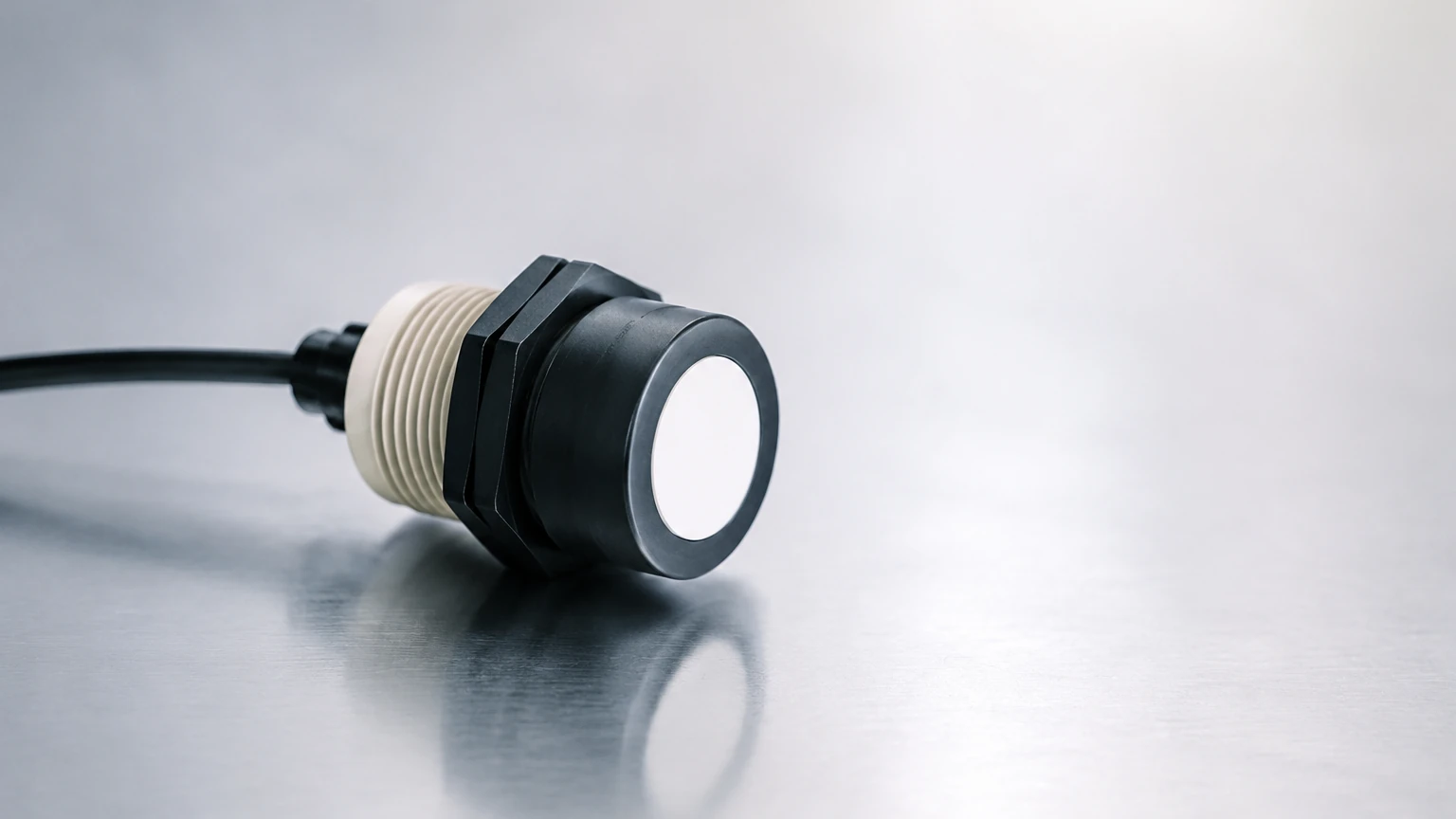
Every ultrasonic sensor has a "dead zone" immediately in front of the transducer face where it cannot measure. This is caused by the time required for the transducer to stop vibrating after the initial pulse. For the us9000 ultrasonic sensor, this zone is typically between 0.25m and 0.5m. If the liquid level enters this zone, the sensor will provide erratic or maximum-scale readings.
Mounting in Standpipes
If a tank has heavy foam or surface turbulence, mounting the sensor in a stilling well or standpipe can stabilize the reading. However, the pipe must be smooth and have a sufficient diameter (typically >100mm) to prevent the beam from reflecting off the pipe walls.
Performance Limitations and Environmental Factors
While the us9000 ultrasonic sensor is robust, it is not a universal solution. Certain environmental factors can interfere with the physics of sound propagation.
1. Heavy Foam
Foam acts as an acoustic absorber. If a thick layer of foam is present on the liquid surface, it can absorb the ultrasonic pulse rather than reflecting it. In such cases, a radar level meter or a hydrostatic pressure transmitter may be more appropriate.
2. Vapor and Dust
Heavy steam or high concentrations of dust can change the density of the air through which the sound travels, potentially attenuating the signal. While the US9000 handles moderate vapor well, extreme conditions may require a high-power transducer or a frequency-modulated continuous wave (FMCW) radar.
3. Vacuum and Pressure
Sound requires a medium (air or gas) to travel. Therefore, ultrasonic sensors cannot function in a vacuum. Similarly, high-pressure environments change the speed of sound significantly, often exceeding the compensation capabilities of standard ultrasonic algorithms.
4. Turbulence
Rapidly agitating liquids create an uneven reflective surface, scattering the sound waves. This can be mitigated through software settings such as "damping" or "averaging," which smooth out the level fluctuations in the output signal.
Troubleshooting and Maintenance
The us9000 ultrasonic sensor is designed for low maintenance, as it has no moving parts. However, periodic checks ensure long-term reliability.
* Transducer Cleaning: In environments with heavy condensation or splashing, the transducer face may accumulate buildup. Wipe the face gently with a soft cloth and mild detergent. Avoid abrasive materials that could scratch the piezoelectric surface.
* Check Echo Strength: Most modern US9000 units provide a diagnostic value for echo strength. If this value drops over time, it may indicate a failing transducer or an increase in surface foam/vapor.
* Wiring Integrity: Ensure that the cable glands are tight and that no moisture has entered the terminal compartment. For 4-20mA loops, verify that the loop resistance is within the allowable range for the power supply voltage.
Frequently Asked Questions (FAQ)
Q: Can the us9000 ultrasonic sensor measure the level of solids like grain or sand?
A: Yes, but with caveats. Solids do not reflect sound as efficiently as liquids and often have an "angle of repose" that deflects the signal. A higher-power version of the sensor and a swiveling mounting bracket are usually required to aim the sensor at the optimal reflection point.
Q: How does the sensor handle false echoes from internal tank structures?
A: The US9000 features "False Echo Suppression" or "Echo Mapping." During commissioning, the user can instruct the sensor to record all static reflections in an empty tank. The software then ignores these specific distances during normal operation, focusing only on the moving echo from the liquid surface.
Q: What is the maximum cable length for the sensor?
A: For 4-20mA analog signals, the distance can reach up to 1,000 meters depending on the wire gauge and power supply. For RS485 digital communication, 1,200 meters is the theoretical limit without a repeater.
Q: Is the us9000 suitable for outdoor use in freezing temperatures?
A: Yes. The sensor is rated for temperatures down to -20°C (or -40°C in specialized versions). The integrated temperature compensation handles the density changes in the air, though users should ensure that ice does not form directly on the transducer face.
Conclusion
The us9000 ultrasonic sensor represents a reliable and sophisticated choice for modern industrial level measurement. By understanding the physics of ultrasonic waves and adhering to strict installation geometries, facilities can achieve high-precision monitoring with minimal maintenance overhead. Whether used in water treatment, chemical storage, or general industrial tanks, the US9000 provides the data necessary for safe and efficient process control. For further technical assistance or to explore specific model variations, professionals are encouraged to consult engineering references and manufacturer documentation to ensure the selected instrument aligns with their specific process requirements.