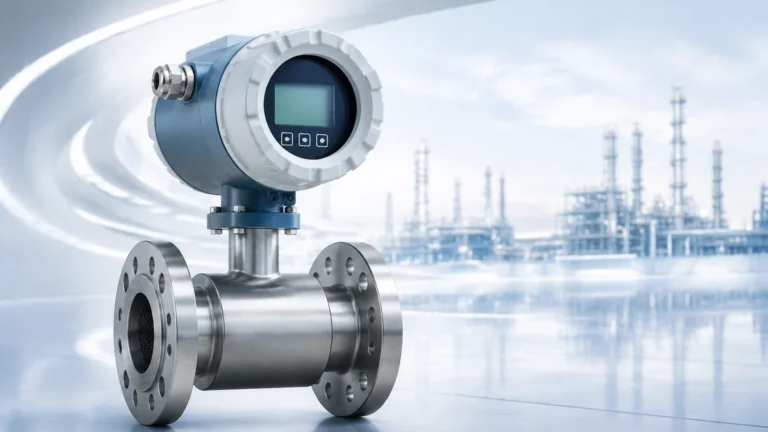
Van London Ph Probe
Van London Ph Probe
In industrial process control, the precision of liquid analysis is as critical as the accuracy of volume measurement. While level measurement instruments, such as those provided on the Main Page of Welk's technical catalog, ensure the quantity of a medium is known, electrochemical sensors like the Van London pH probe are essential for determining the chemical state of that medium. Monitoring pH levels is a fundamental requirement in water treatment, chemical processing, and biotechnology, where even slight deviations in acidity or alkalinity can compromise product quality or equipment integrity.
This guide examines the technical architecture of the Van London pH probe, its measurement principles, and the practical considerations engineers must address when integrating these sensors into complex industrial environments. By understanding the relationship between sensor design and process conditions, facilities can optimize both the longevity of their instrumentation and the reliability of their data.
Understanding the Principles of Electrochemical pH Measurement
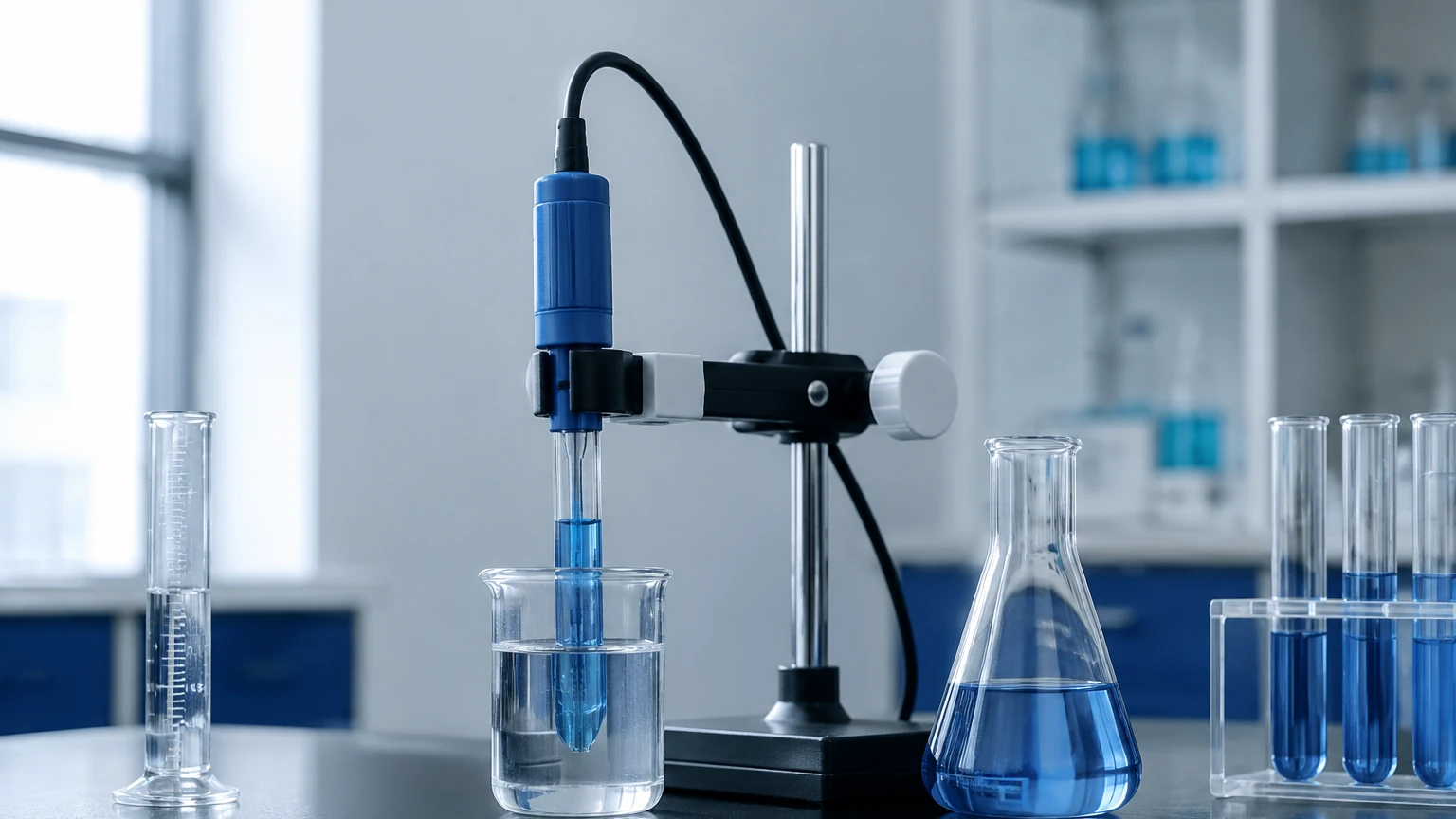
Before selecting a Van London pH probe, it is necessary to understand the underlying physics of potentiometric pH measurement. A pH sensor operates as a galvanic cell, producing a voltage proportional to the hydrogen ion activity in the solution.
The Nernst Equation
The relationship between the measured voltage and the pH value is defined by the Nernst equation. In ideal conditions at 25°C (298.15 K), a change of one pH unit corresponds to a change of 59.16 millivolts (mV). The probe measures the potential difference between a sensing electrode (glass electrode) and a reference electrode.
1. Sensing Electrode: This component features a specialized glass membrane that is sensitive to hydrogen ions. When immersed, a hydrated layer forms on the glass, allowing ion exchange that creates a millivolt potential.
2. Reference Electrode: To measure the potential of the sensing electrode, a stable reference point is required. The reference electrode provides a constant potential, typically using a silver/silver chloride (Ag/AgCl) system immersed in a potassium chloride (KCl) electrolyte.
3. The Junction: The reference electrolyte must make physical contact with the process liquid to complete the electrical circuit. This contact happens through a porous junction, which is a critical point of failure in many industrial applications.
Key Features of the Van London pH Probe Series
The Van London pH probe is engineered to address the specific challenges of industrial environments, such as high pressure, extreme temperatures, and chemical abrasion. Unlike standard laboratory sensors, these industrial-grade probes utilize robust materials and specialized geometries.
Tuff-Tip and Ruggedized Designs
One of the hallmark features of the Van London range is the "Tuff-Tip" design. This involves a recessed or protected glass bulb that minimizes the risk of mechanical breakage caused by solids in the process stream or accidental contact during installation. This is particularly valuable in wastewater treatment applications where debris is common.
Reference Junction Varieties
The longevity of a pH probe is often determined by its junction. Van London offers several configurations:
* Ceramic Junctions: Ideal for general-purpose applications with clean liquids.
* Teflon (PTFE) Junctions: Highly resistant to fouling and chemical attack, making them suitable for oily or dirty processes.
* Wood/Porous Plastic: Used in specific niche applications where high flow rates of electrolyte are needed to prevent clogging.
Body Materials
Depending on the chemical compatibility requirements, probes are available in various body materials. While glass bodies offer excellent chemical resistance and high-temperature tolerance, epoxy or Ryton (PPS) bodies provide superior mechanical durability for submersion or in-line mounting in rugged industrial settings.
Selection Criteria for Industrial pH Electrodes
Choosing the correct Van London pH probe requires a detailed analysis of the process environment. Failure to match the probe specifications to the medium will result in rapid sensor drift or catastrophic failure.
Temperature and Pressure Limits
Standard pH probes are typically rated for temperatures up to 80°C (176°F) and pressures up to 6.9 bar (100 PSI). However, specialized versions are required for high-temperature sterilization or high-pressure reactors. High temperatures accelerate the aging of the glass membrane and increase the rate of electrolyte depletion.
Chemical Compatibility
The presence of hydrofluoric acid (HF) will dissolve standard pH glass. In such cases, a Van London pH probe with HF-resistant glass must be specified. Similarly, in applications with high concentrations of sodium ions (high pH), "low sodium error" glass is necessary to maintain accuracy above pH 12.
Practical Selection Table
| Application Type | Recommended Junction | Body Material | Temperature Range | Pressure Limit |
| :— | :— | :— | :— | :— |
| General Water Treatment | Ceramic | Epoxy/Glass | 0°C to 80°C | 7 Bar |
| Chemical Processing | Teflon (PTFE) | Ryton (PPS) | -5°C to 110°C | 10 Bar |
| Wastewater/Slurries | Tuff-Tip / Teflon | Epoxy | 0°C to 80°C | 6 Bar |
| Pure Water (Low Ion) | Double Junction | Glass | 5°C to 60°C | 3 Bar |
| High Acid (HF) | HF-Resistant | Glass/Ryton | 0°C to 50°C | 5 Bar |
Installation Guidelines for Process Integration
Proper installation is paramount for the accuracy of a Van London pH probe. Unlike level sensors, which are often non-contact (such as radar or ultrasonic units), pH probes must be in direct contact with the medium, making them susceptible to the dynamics of the flow.
Mounting Orientation
An electrochemical pH probe should never be installed horizontally or upside down. The internal electrolyte must always be in contact with the internal side of the glass bulb. A minimum mounting angle of 15° above the horizontal is required to ensure that any air bubbles within the probe rise away from the sensing tip.
Flow and Turbulence
Probes should be installed in areas with representative flow but away from extreme turbulence that could cause mechanical vibration. In-line installations often use a flow cell or a bypass loop to allow for maintenance without shutting down the main process line. If the probe is installed in a tank, it should be positioned away from agitator blades and chemical injection points to ensure the reading reflects the bulk solution.
Cable Management
The signal generated by a pH probe is a high-impedance mV signal. It is extremely sensitive to electromagnetic interference (EMI). Cables should be kept as short as possible and never run parallel to high-voltage power lines. Using a pre-amplifier (either integrated into the probe head or located in a nearby junction box) is highly recommended for cable runs exceeding 10 meters.
Maintenance, Calibration, and Troubleshooting
A Van London pH probe is a consumable item; it has a finite lifespan that depends on the severity of the application. Regular maintenance is required to ensure the data remains within the required tolerance.
Calibration Procedures
Calibration should be performed using at least two buffer solutions (typically pH 4.01, 7.00, or 10.01).
1. Zero Point (Offset): Calibrating at pH 7.00 establishes the zero-point potential (which should ideally be 0 mV).
2. Slope: Calibrating at a second point (pH 4 or 10) determines the efficiency of the electrode. A new probe should have a slope between 95% and 102% of the theoretical Nernstian value.
Cleaning and Rejuvenation
If the probe response becomes sluggish, it is likely due to coating on the glass membrane or the junction.
* Protein Coatings: Clean with a pepsin/HCl solution.
* Inorganic Scale: Clean with a 5% HCl solution.
* Oils/Greases: Clean with a mild detergent or methanol.
After cleaning, the probe should be soaked in a storage solution (typically 3.0M or 4.0M KCl) for at least four hours to rehydrate the glass membrane.
Synergies Between Level Measurement and Liquid Analysis
In modern industrial automation, data from different sensor types are often combined to provide a holistic view of the process. Welk’s expertise in level measurement provides the framework for tank management, while the Van London pH probe provides the chemical context.
For example, in a chemical neutralization tank, a radar level meter monitors the volume to prevent overfills, while the pH probe controls the dosing pumps for acid or caustic reagents. If the level meter indicates the tank is nearly empty, the automation system may disable the pH control loop to prevent the probe from drying out, which would permanently damage the sensing membrane. Integrating these two data points—volume and chemistry—is essential for safe and efficient plant operation.
Furthermore, the installation of pH probes often mirrors the installation of hydrostatic level transmitters. Both require process penetrations (flanges or NPT threads) and must be accessible for periodic inspection. When designing a vessel, engineers should ensure that the mounting ports for the Van London pH probe are located at a height that remains submerged even at the minimum operating level determined by the level sensor.
Limitations and FAQs
Despite their robustness, Van London pH probes have limitations that must be recognized to avoid process errors.
Can a pH probe be used in non-aqueous solutions?
Standard pH probes are designed for aqueous (water-based) solutions. While they can function in some non-aqueous media, the readings are often unstable, and the dehydrated environment can damage the hydrated gel layer of the glass membrane.
How long does a Van London pH probe typically last?
In clean water applications at ambient temperatures, a probe may last 12 to 24 months. In harsh chemical environments or high temperatures, the lifespan may be reduced to 3 to 6 months.
What is the effect of temperature on pH readings?
Temperature affects pH in two ways: it changes the actual pH of the solution (chemical effect) and it changes the millivolt output of the electrode (electrical effect). Most modern transmitters use Automatic Temperature Compensation (ATC) via a PT100 or PT1000 sensor to correct for the electrical effect.
Why is the response time of my probe increasing?
Increasing response time is a classic sign of electrode aging or fouling. If cleaning and recalibration do not restore the response time, the probe has likely reached the end of its service life due to the depletion of the internal electrolyte or the degradation of the glass membrane.
By adhering to these engineering principles and selection criteria, process managers can ensure that their Van London pH probe provides the accurate, repeatable data necessary for sophisticated industrial control. For more information on integrating these sensors with comprehensive tank monitoring systems, engineers should consult technical resources and product specifications available on the Main Page of the instrumentation provider.