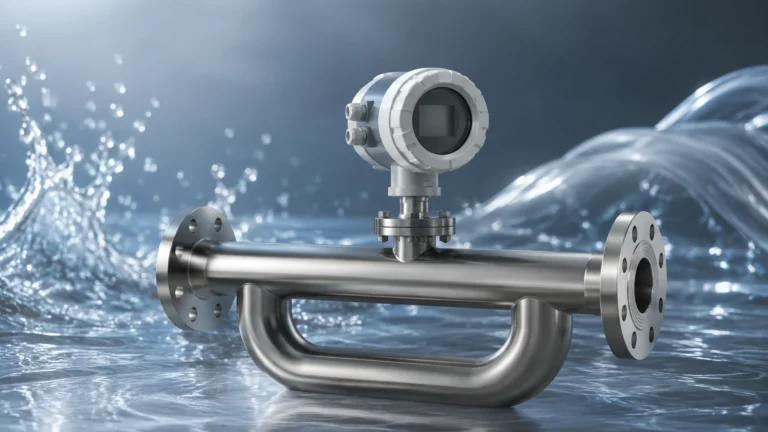
What Is Coriolis Meter
What Is Coriolis Meter
In the complex landscape of industrial process control, precision is the primary driver of efficiency and safety. Among the various technologies used to quantify fluid movement, the Coriolis meter stands out as one of the most accurate and versatile instruments available. Often referred to as a mass flow meter, it provides direct measurements that are independent of fluid properties such as viscosity, pressure, and temperature. This article explores the fundamental principles, design variations, and practical application considerations for engineers and plant managers seeking to understand what is Coriolis meter and how it integrates into modern automation systems.
Understanding the Coriolis Measurement Principle
The Coriolis meter operates on the principles of physics first described by Gaspard-Gustave de Coriolis in the 19th century. Unlike volumetric flow meters that measure the space a fluid occupies, a Coriolis meter measures the actual mass of the fluid passing through the system.
The Coriolis Effect in Action
At the heart of the device are one or more oscillating tubes. An internal drive coil causes these tubes to vibrate at their resonant frequency. When a fluid (liquid or gas) is at rest within the tubes, the vibration is uniform across the length of the tube. However, as soon as the fluid begins to flow, it experiences a Coriolis force.
Because the fluid is moving through a vibrating structure, it resists the vertical motion of the tube. This results in a "twisting" or phase shift in the vibration. Sensors located at the inlet and outlet of the tube detect this shift. The time delay (phase difference) between the inlet and outlet oscillations is directly proportional to the mass flow rate.
Multivariable Capabilities
Beyond mass flow, Coriolis meters are inherently multivariable instruments.
1. Density Measurement: The resonant frequency at which the tubes vibrate changes depending on the mass of the fluid inside them. By monitoring this frequency, the meter can calculate the fluid's density in real-time.
2. Temperature Measurement: Since the elasticity of the flow tubes changes with temperature, an internal RTD (Resistance Temperature Detector) is used to compensate the flow and density calculations, providing a third data point for the process operator.
Core Components and Design Variations
To understand what is Coriolis meter technology in a practical sense, one must look at the physical construction of the device. While the internal electronics handle the complex signal processing, the mechanical design determines the meter's suitability for specific environments.
Tube Geometry
* Bent-Tube Meters: These are the most common and sensitive designs. The U-shaped or curved tubes allow for a higher degree of vibration and phase shift, making them exceptionally accurate even at low flow rates. However, they may have a higher pressure drop and are more difficult to drain in sanitary applications.
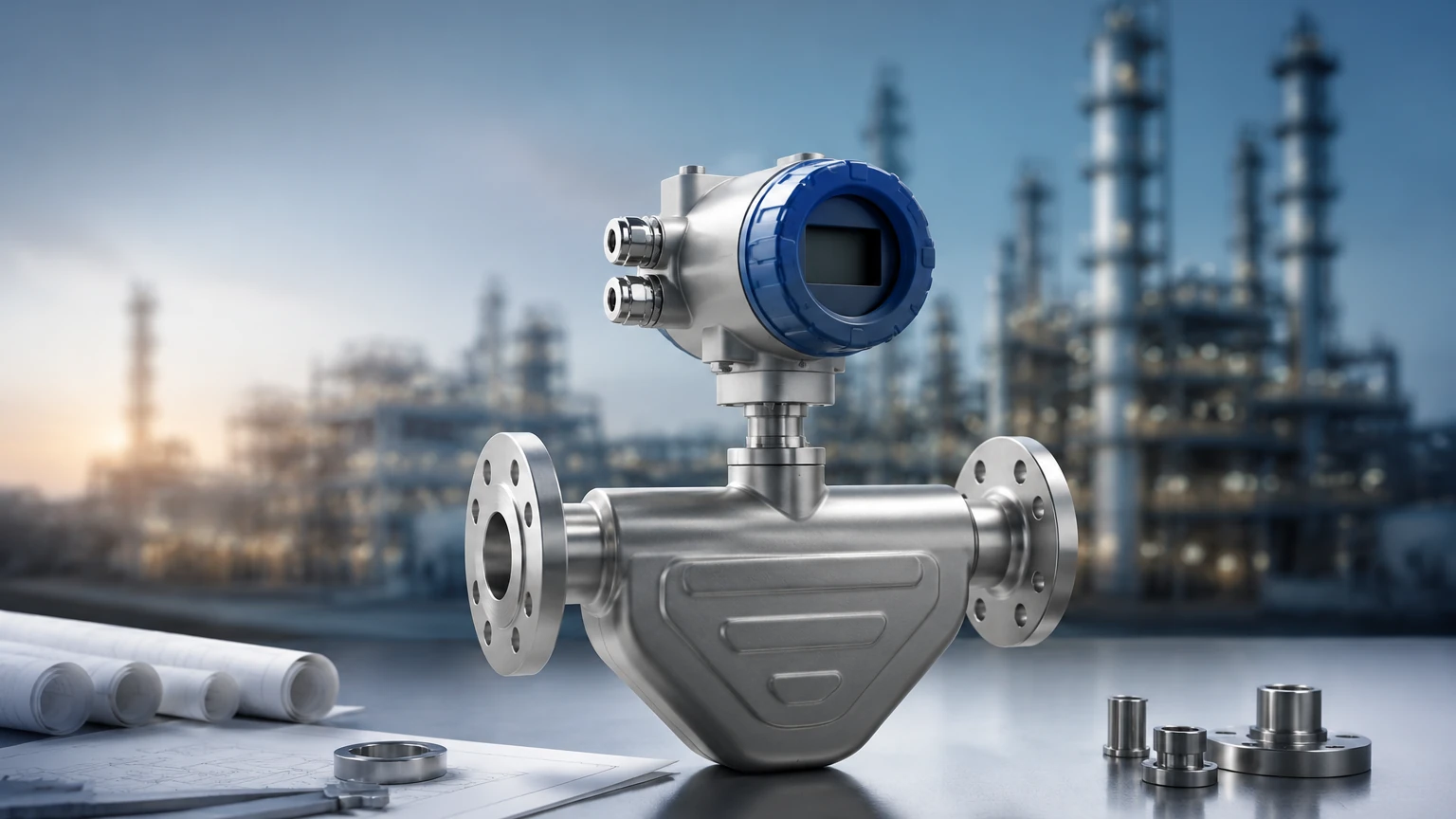
* Straight-Tube Meters: These designs are easier to clean and have a lower pressure drop. They are ideal for shear-sensitive fluids or applications where solids might accumulate in a curve. They require more sophisticated electronics to detect the smaller phase shifts associated with straight geometries.
Materials of Construction
Standard meters often use 316L stainless steel for the wetted parts. For highly corrosive applications involving acids or chlorides, manufacturers utilize exotic alloys such as Hastelloy C-22 or Tantalum. The choice of material is critical to ensure the longevity of the vibrating tubes, as even minor corrosion can alter the tube's mass and affect calibration.
Practical Selection Criteria for Industrial Applications
Selecting the correct meter requires a balance between accuracy requirements, fluid characteristics, and budget. When evaluating options, engineers should refer to the following selection parameters:
Selection Table: Coriolis Meter vs. Application Requirements
| Feature | Requirement / Specification | Engineering Consideration |
| :— | :— | :— |
| Accuracy | 0.1% to 0.05% of rate | Critical for custody transfer and high-value chemical dosing. |
| Turndown Ratio | 20:1 to 100:1 | Ability to measure wide ranges of flow without swapping hardware. |
| Fluid State | Liquid, Gas, or Slurry | Ensure the meter can handle entrained air or high solids content. |
| Pressure Rating | Up to 350 bar (approx. 5000 psi) | High-pressure designs are required for oil and gas injection. |
| Temperature Range | -240°C to +350°C | Cryogenic and high-heat models require specialized insulation. |
When considering comprehensive process monitoring, it is important to look at the entire system. While Coriolis meters handle flow, integrating them with reliable level measurement solutions ensures total inventory control. For those managing complex tank farms or chemical storage, reviewing advanced Main Page resources for level instrumentation is a necessary step in system design.
Installation Guidelines and Best Practices
Even the most accurate Coriolis meter will fail to perform if installed incorrectly. Because the measurement relies on detecting minute vibrations and phase shifts, external factors can introduce significant noise.
1. Mechanical Support and Vibration
The meter must be isolated from external pipeline vibrations. High-frequency vibrations from pumps or compressors can interfere with the drive frequency of the meter. It is recommended to use robust supports on both the upstream and downstream sides of the meter to anchor the piping.
2. Orientation
* Liquid Service: The meter should ideally be installed in a "flag" position (vertical flow up) or with the tubes pointing downward in a horizontal line. This prevents air bubbles from becoming trapped in the tubes, which can cause measurement errors.
* Gas Service: The tubes should point upward in a horizontal line to allow any condensed liquids to drain out of the meter naturally.
3. Flow Conditioning
One of the greatest advantages of the Coriolis meter is that it does not require straight pipe runs (upstream or downstream) like orifice plates or turbine meters. However, it is still good practice to avoid installing the meter directly after a high-turbulence source like a partially closed valve.
Limitations and Operational Challenges
While the Coriolis meter is often considered the "gold standard" of flow measurement, it is not a universal solution for every process. Understanding its limitations is key to successful implementation.
* Cost: Coriolis meters have a significantly higher initial purchase price compared to magnetic or ultrasonic flow meters. The ROI must be justified by the need for high accuracy or mass-based measurement.
* Size and Weight: Large-diameter Coriolis meters (above 200 mm or 8 inches) are extremely heavy and bulky. This can complicate installation and require specialized structural support.
* Entrained Gas: While modern digital signal processing (DSP) has improved performance in two-phase flow, significant amounts of entrained air in a liquid stream can cause the tubes to "stall" or lose their resonant frequency, leading to inaccurate readings.
* Pressure Drop: In some designs, particularly bent-tube models, the fluid must travel a longer path through narrower tubes, resulting in a higher pressure drop across the device compared to a straight-through pipe.
Integrating Coriolis Meters with Level Measurement Systems
In many industrial sectors, such as water treatment or chemical processing, flow measurement and level measurement are two sides of the same coin. A Coriolis meter provides the "rate of change" or the precise mass of material entering a vessel, while level sensors—such as radar or ultrasonic transmitters—provide the "current state" or volume within the vessel.
For example, in a chemical blending application, a Coriolis meter ensures that the exact mass of a reactant is added to a tank. Simultaneously, a hydrostatic level transmitter or a radar level meter monitors the total volume to prevent overfills and ensure safety. By combining these technologies, plant operators can perform mass balance calculations to detect leaks or inconsistencies in the production process. For detailed specifications on the level measurement side of this equation, professionals often consult specialized manufacturers like Welk to find the right radar or magnetic gauge for their specific tank environment.
Frequently Asked Questions (FAQ)
Q: Can a Coriolis meter measure steam?
A: While Coriolis meters can measure gases, they are generally not used for high-temperature saturated or superheated steam due to the extreme temperatures and the potential for water hammer, which can damage the delicate internal tubes. Vortex meters are usually preferred for steam applications.
Q: How often does a Coriolis meter need calibration?
A: Coriolis meters are highly stable because they have no moving parts that wear down (like bearings in a turbine meter). In many non-corrosive applications, they can go several years without a significant shift in calibration. However, in regulated industries like oil and gas custody transfer, annual verification is often required.
Q: Does the viscosity of the fluid affect the accuracy?
A: No. One of the primary reasons to use a Coriolis meter is its immunity to viscosity changes. Whether you are measuring water or thick molasses, the mass flow measurement remains accurate because the Coriolis force is dependent on mass and velocity, not the fluid's internal friction.
Q: What happens if the tubes get coated?
A: If a fluid leaves a coating on the inside of the tubes, it effectively changes the mass of the vibrating system. This will result in an error in the density measurement. However, the mass flow measurement is typically less affected unless the coating becomes significant enough to alter the flow profile or tube stiffness.
Conclusion
Understanding what is Coriolis meter technology allows engineers to solve some of the most difficult measurement challenges in the process industry. By providing direct mass flow, density, and temperature data in a single device, these meters offer unparalleled insight into process dynamics. While the initial investment is higher than other technologies, the reduction in waste, improved product quality, and lower maintenance requirements often provide a rapid return on investment. When paired with high-quality level measurement instruments, the Coriolis meter becomes a cornerstone of a robust, efficient, and safe industrial automation strategy.