Van London Ph Probes
Van London Ph Probes
In the landscape of industrial process control, the precision of analytical measurement is as critical as the monitoring of physical dimensions like volume or height. While level measurement technologies, such as those found on the Main Page of industrial instrumentation providers, ensure the quantity of a medium is managed, analytical sensors like Van London pH probes determine the chemical state and quality of that medium. For engineers in water treatment, chemical processing, and biotechnology, understanding the technical nuances of these probes is essential for maintaining process stability and equipment longevity.
Van London (often associated with the Phoenix Electrode brand) has established a reputation for manufacturing electrochemical sensors designed to withstand the rigors of industrial environments. This guide examines the measurement principles, selection criteria, and installation protocols necessary for the effective deployment of Van London pH probes in professional applications.
Measurement Principles of pH Sensors
To effectively select and maintain a pH probe, one must first understand the electrochemical principles that govern its operation. pH is a measure of the hydrogen-ion activity in a solution, defined as the negative logarithm of the hydrogen-ion concentration.
The Potentiometric Method
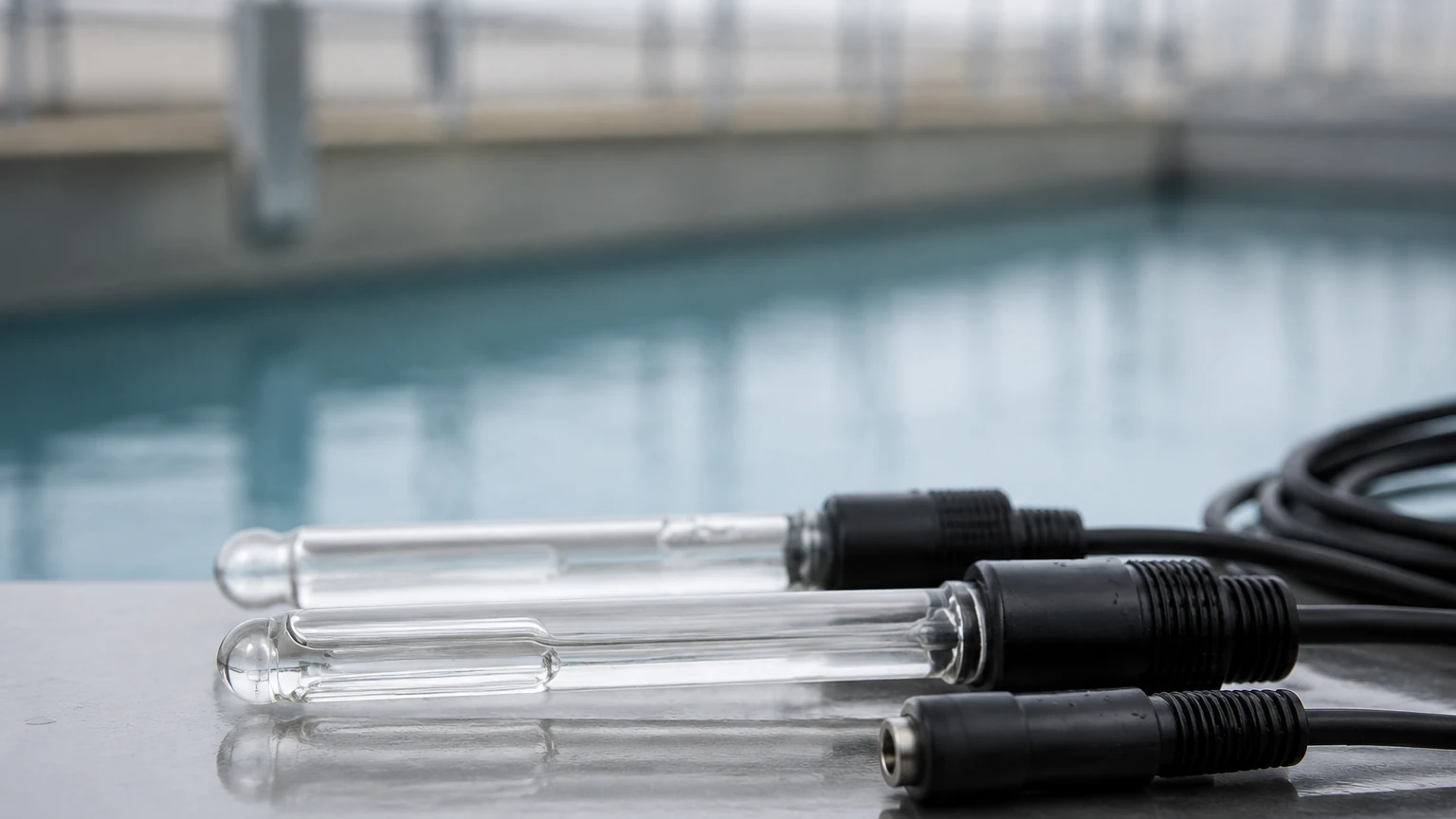
Van London pH probes utilize the potentiometric measurement method. This involves measuring the potential difference (voltage) between two electrodes immersed in a solution: a sensing electrode (glass electrode) and a reference electrode.
1. The Glass Sensing Electrode: This electrode features a specialized pH-sensitive glass membrane. When immersed, a thin hydrated layer forms on the outer surface of the glass. Hydrogen ions in the process liquid exchange with ions in this hydrated layer, creating a charge. The internal side of the glass is in contact with a known buffer solution (usually pH 7), creating a stable internal potential.
2. The Reference Electrode: The purpose of the reference electrode is to provide a stable, constant potential that is independent of the pH of the solution. It typically uses a silver/silver chloride (Ag/AgCl) internal element immersed in a concentrated potassium chloride (KCl) electrolyte.
3. The Junction: To complete the electrical circuit, the reference electrolyte must make contact with the process liquid. This occurs through a porous junction (made of ceramic, Teflon, or wood). The design of this junction is often the deciding factor in a probe's lifespan, as it is the primary point of potential contamination or "poisoning."
The Nernst Equation
The relationship between the measured voltage and the pH value is defined by the Nernst Equation. At 25°C (77°F), a change of one pH unit corresponds to a theoretical change of 59.16 millivolts (mV). As the temperature of the process fluctuates, this slope changes, which is why most industrial Van London pH probes include an integrated Automatic Temperature Compensation (ATC) element, such as a Pt100 or Pt1000 RTD.
Technical Features of Van London pH Probes
Van London probes are distinguished by their modularity and specialized glass formulations. Unlike standard laboratory sensors, industrial versions are built to handle high pressures, abrasive slurries, and aggressive chemical cleaners.
Specialized Glass Formulations
* High Temperature (HT) Glass: Designed for continuous operation in environments exceeding 80°C (176°F), preventing the rapid dehydration and degradation of the glass membrane.
* Low Resistance Glass: Optimized for low-temperature applications or high-purity water where standard glass would produce a sluggish response due to high impedance.
* Chemical Resistant Glass: Formulated to resist etching in highly alkaline solutions or environments containing fluorides, which can physically dissolve standard glass membranes.
Reference Junction Designs
Van London utilizes several junction styles to combat specific process challenges:
* Double Junction: This design adds an additional internal chamber to protect the Ag/AgCl reference element from heavy metals, sulfides, or cyanides that could react with the silver and "poison" the electrode.
* Tuff-Tip: A ruggedized design where the pH bulb is recessed or protected by a polymer guard, reducing the risk of mechanical breakage in turbulent tanks or pipelines.
* Porous Teflon Junctions: These offer a large surface area, making them highly resistant to fouling and clogging in oily or high-solids applications.
Selection Criteria for Industrial Applications
Choosing the correct probe requires an analysis of the process medium's physical and chemical properties. The following table provides a general framework for selecting Van London pH probes based on typical industrial conditions.
| Application Requirement | Recommended Probe Feature | Metric Specification | Imperial Specification |
| :— | :— | :— | :— |
| High Pressure Tanks | Sealed, pressurized reference | Up to 6.9 bar | Up to 100 psi |
| Abrasive Slurries | Flat surface glass / Tuff-Tip | Max flow 3 m/s | Max flow 10 fps |
| High Temperature | HT Glass / S8 Connector | Up to 130°C | Up to 266°F |
| Low Conductivity Water | Large surface junction | < 50 µS/cm | < 50 µS/cm |
| General Purpose | Epoxy body / Double Junction | 0 to 14 pH | 0 to 14 pH |
When integrating these sensors into a broader system, engineers must ensure compatibility with existing transmitters and controllers. Most Van London probes are available with various lead lengths and connector types (BNC, S8, or tinned leads) to match the input requirements of the control hardware.
Integration with Level Measurement Systems
In many industrial setups, pH measurement and level measurement are complementary. For instance, in a chemical neutralization tank, a Main Page radar level meter or ultrasonic sensor monitors the volume of the effluent to prevent overflows and manage pump cycles. Simultaneously, the pH probe monitors the acidity to control the dosing of neutralizing agents.
Effective integration involves:
1. Dosing Control: Using the pH value to trigger chemical feed pumps, while the level sensor ensures there is sufficient head pressure or volume for the reaction to occur safely.
2. Safety Interlocks: If the level sensor detects a low-level condition, the pH control loop should be disabled to prevent the probe from drying out or dosing chemicals into an empty tank.
3. Data Logging: Modern PLC and SCADA systems aggregate data from both level transmitters and pH probes to provide a comprehensive view of the process efficiency and environmental compliance.
Installation Considerations
Proper installation is the most significant factor in extending the life of a Van London pH probe. Unlike level sensors that can often be mounted at the top of a vessel, pH probes require direct contact with a representative sample of the fluid.
Orientation and Placement
* Angle of Mounting: Probes should never be installed horizontally or upside down. A minimum angle of 15° above the horizontal is required to ensure the internal electrolyte stays in contact with the glass membrane and to prevent air bubbles from being trapped in the sensing tip.
* Submersion Depth: In tanks, use a submersion assembly to position the probe in an area of active flow. Avoid "dead zones" where the liquid may be stagnant and not representative of the bulk process.
* Flow-Through Cells: In pipeline installations, the probe should be installed on the side or bottom of the pipe (if the pipe is always full) to ensure the sensor is always wetted. If the pipe can run partially empty, a "U-trap" or bypass loop should be used to maintain a liquid seal around the probe.
Cable Management
pH signals are high-impedance (often in the range of 10 to 1000 MΩ). This makes the signal extremely susceptible to electromagnetic interference (EMI) and moisture.
* Always use high-quality shielded coaxial cables.
* Keep cable runs as short as possible; for distances over 15 meters (approx. 50 feet), a pre-amplifier should be used.
* Ensure all connections remain dry and free of corrosion.
Maintenance, Calibration, and Troubleshooting
Industrial pH probes are consumable items. Their lifespan typically ranges from 6 to 24 months depending on the severity of the application.
Calibration Protocols
Calibration must be performed regularly using certified buffer solutions (typically pH 4.01, 7.00, and 10.01).
1. Two-Point Calibration: This is the standard for most applications. It establishes the "Zero" (offset) at pH 7 and the "Slope" at either pH 4 or 10.
2. Cleaning Before Calibrating: Never calibrate a dirty probe. Use a soft cloth or specialized cleaning solutions. For calcium scale, a 5% HCl solution is effective; for oils and greases, use a mild detergent or isopropyl alcohol.
Common Risks and Limitations
* Dehydration: If a probe is allowed to dry out, the hydrated layer on the glass membrane collapses. While some probes can be rejuvenated by soaking in a pH 4 buffer for 24 hours, permanent damage often occurs.
* Reference Poisoning: In the presence of sulfides or heavy metals, the reference junction can become blocked or the internal chemistry can change, leading to a massive drift in the offset.
* Coating: In wastewater applications, fats, oils, and greases (FOG) can coat the probe, slowing the response time significantly. Regular automated cleaning systems (water jets or ultrasonic cleaners) may be necessary.
Frequently Asked Questions (FAQs)
Q: How often should I calibrate my Van London pH probe?
A: The frequency depends on the required accuracy and the process environment. In stable water treatment applications, once a month may suffice. In aggressive chemical processes, weekly or even daily calibration may be necessary.
Q: Can I use a pH probe to measure the level of a tank?
A: No. A pH probe only measures the chemical acidity/alkalinity. For volume and height monitoring, you should refer to level measurement technologies such as those detailed on our Main Page.
Q: Why is my pH reading drifting constantly?
A: Drifting is usually caused by a clogged reference junction, a depleted electrolyte, or moisture in the cable connections. Check the junction for discoloration and ensure all electrical terminals are dry.
Q: What is the maximum temperature a Van London probe can handle?
A: Standard epoxy body probes are usually rated to 80°C (176°F), while specialized glass body probes with high-temperature glass can operate up to 130°C (266°F).
Conclusion
Van London pH probes offer a robust solution for analytical monitoring in demanding B2B environments. By selecting the appropriate glass formulation and junction design, and adhering to strict installation and maintenance schedules, engineers can ensure reliable data for their process control loops. When combined with accurate level measurement systems, these analytical sensors provide the necessary oversight to maintain safe, efficient, and compliant industrial operations. Before proceeding with a purchase, it is recommended to confirm the chemical compatibility of the probe body and junction materials with your specific process fluid to ensure maximum service life.