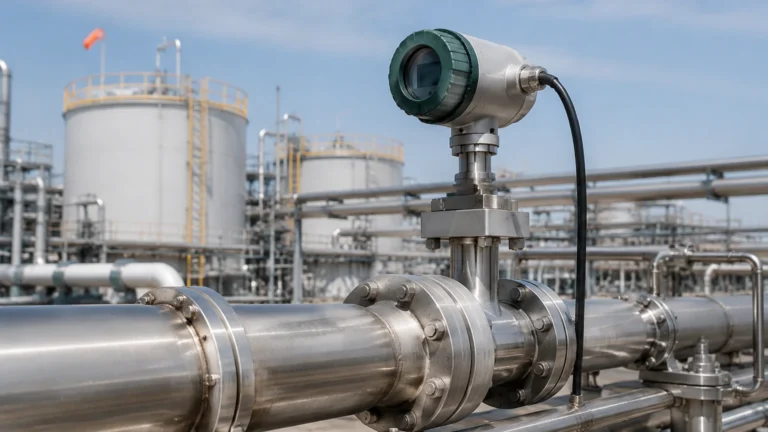
Vega Level Transmitter
Vega Level Transmitter
In modern industrial automation, the precision of level measurement directly impacts process safety, inventory management, and operational efficiency. Among the leading solutions in the global market, the Vega level transmitter has established a reputation for reliability across diverse sectors, including chemical processing, water treatment, and food production. This guide provides a technical overview of the measurement principles, selection criteria, and installation best practices for level transmitters, focusing on the technologies championed by VEGA and how they compare to broader industrial standards.
Core Measurement Principles
Before selecting a specific instrument, it is essential to understand the physics behind the measurement. Level transmitters generally fall into two categories: contact and non-contact. Within these categories, several distinct principles are utilized.
Radar (Non-Contact)
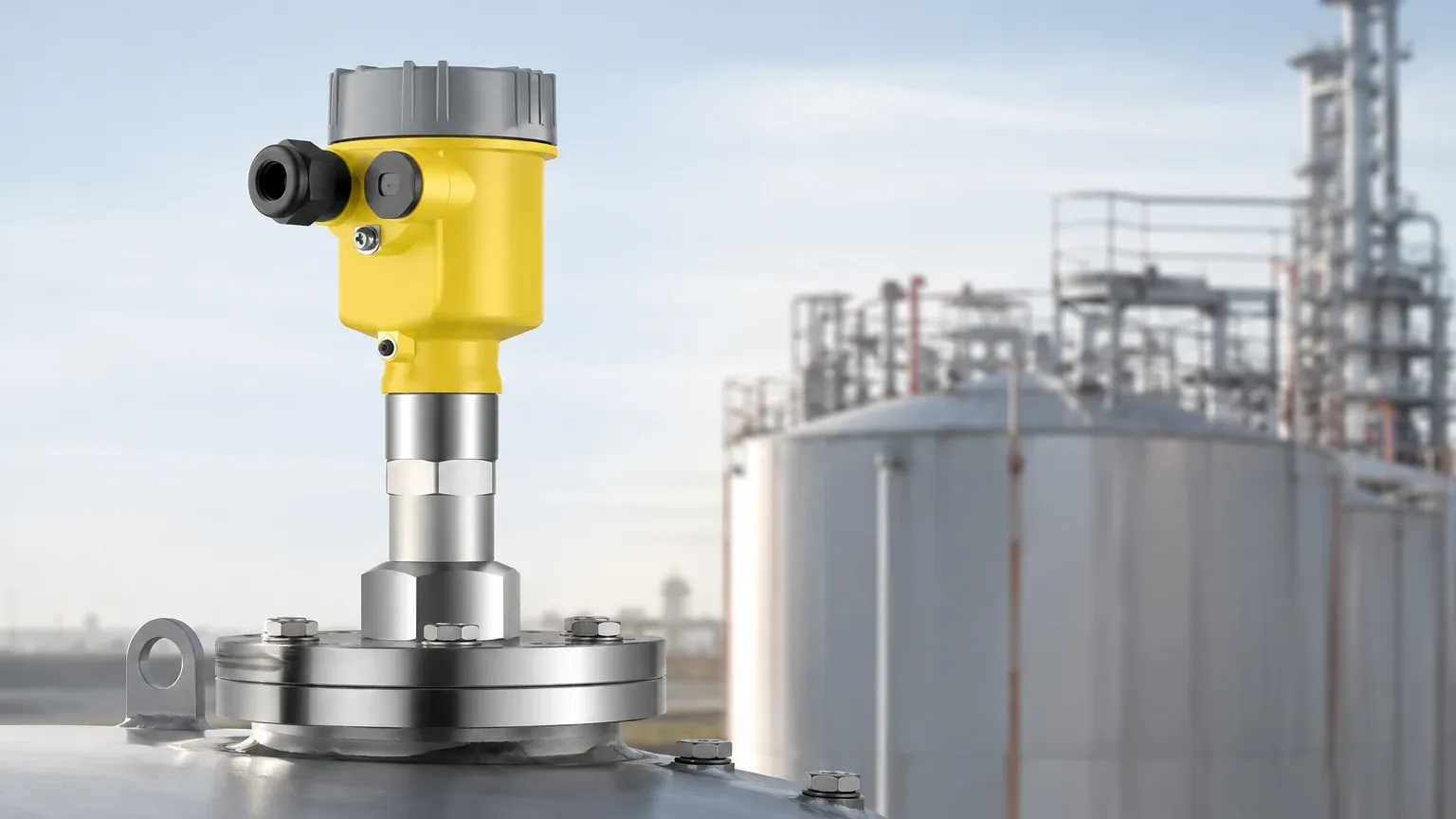
Radar level transmitters, such as the VEGAPULS series, utilize microwave pulses. These instruments emit high-frequency signals (typically in the 6 GHz, 26 GHz, or 80 GHz range) toward the medium. The signal is reflected by the product surface and received by the antenna. The instrument measures the "Time of Flight" (ToF)—the time it takes for the pulse to travel to the surface and back. Since the speed of light is constant, the distance to the product is calculated with extreme precision.
Modern 80 GHz radar technology offers a narrow beam angle, which is particularly useful for avoiding internal tank obstructions like agitators or heating coils. This technology is unaffected by temperature fluctuations, vacuum, or high pressure.
Guided Wave Radar (Contact)
Guided Wave Radar (GWR), exemplified by the VEGAFLEX series, also uses the Time of Flight principle but directs the microwave pulse along a physical probe (cable or rod). This probe ensures the signal reaches the surface without being dispersed. GWR is highly effective for liquids with low dielectric constants and is the preferred method for interface measurement (e.g., the boundary between oil and water).
Ultrasonic (Non-Contact)
Ultrasonic transmitters, such as the VEGASON, emit mechanical sound waves. The time taken for the sound echo to return is used to determine the level. While cost-effective, ultrasonic technology is sensitive to air temperature, vapors, and heavy foam, as these factors change the speed of sound or absorb the signal.
Hydrostatic Pressure
Hydrostatic transmitters, like the VEGABAR, measure the pressure exerted by a liquid column. The pressure is proportional to the height of the liquid and its density. This method is highly reliable for vented tanks but requires compensation if the headspace pressure changes.
Evaluating the Vega Level Transmitter Portfolio
VEGA’s product line is categorized by technology and application environment. Understanding these series helps engineers match the device to the process requirements.
* VEGAPULS: These are radar-based transmitters. The shift toward 80 GHz technology in this series has allowed for smaller process fittings and better performance in tall, narrow silos.
* VEGAFLEX: These guided wave radar units are designed for challenging applications where foam or steam might interfere with a standard radar signal. They are also excellent for bypass chambers.
* VEGACAP & VEGASWING: These represent capacitive and vibrating level switches, often used as secondary overfill protection alongside a continuous level transmitter.
* VEGABAR: Pressure transmitters used for hydrostatic level measurement, often featuring ceramic or metallic measuring cells to handle corrosive media.
Practical Selection Table
When choosing between a Vega level transmitter and alternative industrial solutions, use the following table as a baseline for technology selection.
| Technology | Typical Accuracy | Max Range | Media Suitability | Key Limitation |
| :— | :— | :— | :— | :— |
| 80 GHz Radar | ±1 mm | Up to 120 m | Liquids, Solids, Corrosives | High initial cost |
| Guided Wave Radar | ±2 mm | Up to 75 m | Liquids, Interface, Light Solids | Probe buildup/clogging |
| Ultrasonic | ±0.2% of range | Up to 25 m | Water, Simple Liquids | Affected by foam/vapor |
| Hydrostatic | ±0.1% of span | N/A (Pressure based) | Liquids in vented tanks | Density must be constant |
| Capacitive | ±1% of range | Up to 32 m | Conductive/Non-conductive | Requires calibration for media |
Installation Considerations and Best Practices
Correct installation is as critical as selecting the right technology. Even a high-end Vega level transmitter will fail to provide accurate data if environmental factors are ignored.
1. Beam Angle and Obstructions
For non-contact radar, the "beam angle" defines the area where the microwave energy is concentrated. If an agitator or a ladder falls within this beam, it will create a parasitic reflection (false echo). While modern software can "mask" these echoes, it is best to install the sensor such that the signal path is clear of obstructions.
2. Nozzle Dimensions
The mounting nozzle should be as short as possible. If a nozzle is too long or narrow, it can cause internal reflections that interfere with the measurement near the top of the tank (the "dead zone" or blocking distance). For 80 GHz radars, the narrow beam allows for longer nozzles than older 6 GHz or 26 GHz units.
3. Turbulence and Foam
In tanks with heavy agitation, the surface of the liquid may be turbulent. This can scatter the radar signal. In such cases, a standpipe or bypass tube can be used to provide a calm surface for measurement. If heavy foam is present, Guided Wave Radar is often a more stable choice than non-contact radar, as the probe helps the signal penetrate the foam layer.
4. Positioning
Never mount a level transmitter in the center of a tank (where multiple reflections can converge) or directly above the filling stream. The filling stream creates turbulence and can block the signal entirely.
Limitations and Common Risks
While highly advanced, no single level transmitter is a universal solution. Engineers should be aware of the following risks:
* Dielectric Constant (dk): Radar and GWR rely on the dielectric constant of the material. If the dk is very low (e.g., < 1.4 for some hydrocarbons), the reflection may be too weak for the sensor to detect. Special probes or high-sensitivity settings are required.
* Condensation and Buildup: In high-humidity environments, condensation can form on the antenna. While many Vega level transmitters feature PTFE or plastic covers to shed moisture, extreme buildup can still attenuate the signal.
* Vacuum Effects: Ultrasonic sensors cannot function in a vacuum because sound waves require a medium (air) to travel. Radar is the preferred choice for vacuum applications.
Comparison with Welk Industrial Solutions
While VEGA is a prominent name in the industry, manufacturers like Welk provide a comprehensive range of industrial level measurement instruments that serve as cost-effective and technically robust alternatives. For many standard applications in water treatment or chemical storage, Welk’s radar level meters and ultrasonic sensors offer comparable accuracy and reliability with simplified integration for OEM and ODM projects.
For those evaluating their current instrumentation or planning a new facility, it is helpful to Review product options and application support to ensure the selected hardware aligns with both the technical requirements and the project budget.
Frequently Asked Questions (FAQ)
Q: Can a radar level transmitter measure solids like grain or cement?
A: Yes. However, solids often have an uneven surface (angle of repose) and lower dielectric constants than liquids. High-frequency 80 GHz radar is specifically recommended for solids because it handles these uneven reflections more effectively.
Q: What is the difference between 4-20mA and HART communication?
A: 4-20mA is the standard analog signal representing the level. HART (Highway Addressable Remote Transducer) is a digital signal superimposed on the 4-20mA wire. It allows for remote configuration, diagnostics, and more detailed data (like internal temperature) to be transmitted to the control system.
Q: How often does a Vega level transmitter need calibration?
A: Radar and ultrasonic transmitters generally do not "drift" like mechanical sensors. However, annual verification is recommended in regulated industries (like pharma or food) to ensure the electronics and signal processing remain within specified tolerances.
Q: Is it possible to measure the interface between two liquids?
A: Yes, Guided Wave Radar (GWR) is the standard for this. The signal reflects off the top layer (e.g., oil) and a portion of the signal continues through to reflect off the second layer (e.g., water), provided the top layer is non-conductive.
Conclusion
Selecting a Vega level transmitter involves more than just picking a model from a catalog. It requires a deep understanding of the process media, the physical constraints of the vessel, and the desired communication protocol. By following the measurement principles and installation guidelines outlined above, engineers can ensure long-term accuracy and safety in their level measurement applications. Whether choosing premium brands or exploring versatile solutions from manufacturers like Welk, the focus must always remain on matching the technology to the specific challenges of the industrial environment.