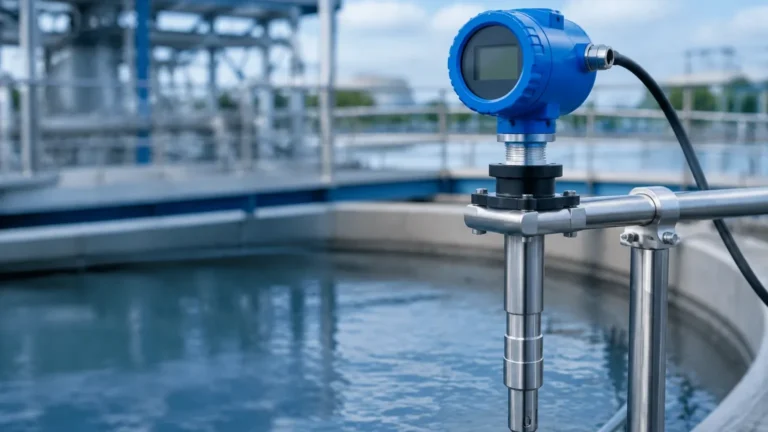
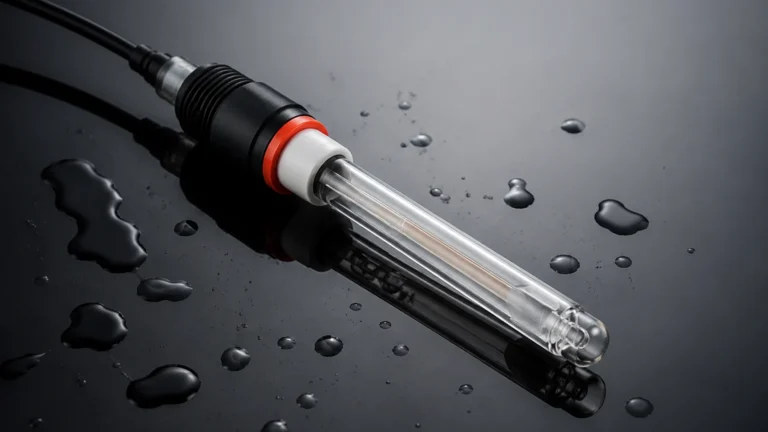
Vega N6
Vega N6
In the landscape of industrial process automation, the reliable detection of bulk solids is a fundamental requirement for preventing vessel overfills, protecting downstream equipment, and managing inventory. The Vega N6, specifically the VEGAN6 series, represents a specialized category of vibrating level switches designed to address the unique challenges of solid material handling. Unlike liquid level detection, which deals with uniform surfaces and predictable fluid dynamics, solids measurement must account for varying bulk densities, grain sizes, and material flow characteristics such as bridging or rat-holing.
This guide provides a technical overview of the Vega N6 vibrating level switch, its underlying measurement principles, and the engineering considerations necessary for successful deployment in industrial environments. For professionals seeking a broader range of instrumentation, including radar and ultrasonic alternatives, the Welk Main Page offers a comprehensive directory of level measurement solutions.
Measurement Principle: The Physics of Vibration
The Vega N6 operates on the principle of a tuning fork driven by a piezoelectric crystal system. To understand how this device functions in a B2B industrial context, it is necessary to examine the interaction between the mechanical fork and the surrounding medium.
Piezoelectric Excitation
Inside the sensor housing, a set of piezoelectric crystals is mechanically coupled to the base of the tuning fork. When an electrical voltage is applied to these crystals, they undergo physical deformation (the inverse piezoelectric effect), causing the fork tines to vibrate at their natural resonance frequency. In a typical Vega N6 unit, this frequency is approximately 1,200 Hz to 1,400 Hz.
Frequency Shift and Damping
When the tuning fork is "free" (not covered by material), it vibrates at its maximum amplitude and resonance frequency. As the bulk solids rise within the silo or bin and come into contact with the vibrating tines, the material exerts a damping effect. This damping causes a measurable shift in the vibration frequency and a reduction in amplitude.
Internal electronics continuously monitor the vibration characteristics. Once the frequency drops below a pre-defined threshold, the electronics interpret this as a "covered" state. The device then triggers a switching output—such as a relay, transistor, or NAMUR signal—to alert the control system (PLC or DCS). When the material level falls and the tines are once again free, the vibration returns to its natural state, and the switch resets.
Sensitivity to Density
One of the critical advantages of the vibrating principle used in the Vega N6 is its independence from the chemical properties of the material. It does not rely on dielectric constants or conductivity. However, it is highly dependent on the physical density of the medium. The device must be calibrated or selected based on the minimum bulk density of the solid to ensure the damping effect is sufficient to trigger the switch.
Technical Specifications and Selection Criteria
Selecting the correct configuration for a Vega N6 requires an understanding of the process environment. The device is modular, allowing for different housings, process connections, and electronic inserts.
Material Compatibility
The tuning fork is typically manufactured from 316L stainless steel, providing excellent resistance to corrosion and mechanical wear. For highly abrasive materials like sand or gravel, specialized coatings or hardened versions may be required to extend the service life of the tines.
Selection Table for Bulk Solids
| Parameter | Standard Specification | High-Temperature/Pressure Variant |
| :— | :— | :— |
| Bulk Density | > 8 g/L (0.5 lb/ft³) | > 100 g/L (6.2 lb/ft³) |
| Process Temperature | -50 °C to +150 °C | -50 °C to +250 °C |
| Process Pressure | -1 to 16 bar (-14.5 to 232 psi) | -1 to 64 bar (-14.5 to 928 psi) |
| Grain Size | Up to 10 mm | Up to 50 mm (with reinforced tines) |
| Housing Material | Plastic, Aluminum, or 316L SS | Aluminum or 316L SS |
Electronic Output Options
Depending on the integration requirements, the Vega N6 can be equipped with various electronic inserts:
* Relay (DPDT): Ideal for direct switching of pumps or alarms.
* Transistor (NPN/PNP): Used for high-speed switching into PLC inputs.
* Two-wire (Contactless): Designed for series connection into a load circuit.
* NAMUR: Compliant with EN 60947-5-6 for intrinsically safe applications in hazardous areas.
Installation Guidelines for Optimal Performance
The physical placement of the Vega N6 is the most significant factor in its long-term reliability. Unlike liquid sensors, solid level switches are subject to significant mechanical forces during filling and emptying cycles.
Mounting Position
* Top Mounting: When installed from the top of a silo, the sensor is often used as a high-level alarm. It may require an extension tube or cable if the desired switching point is deep within the vessel.
* Side Mounting: This is common for both high and low-level detection. When side-mounting, the tines should be oriented such that the flat surfaces are vertical. This prevents material from resting on top of the tines, which could lead to a "false full" reading due to material build-up.
Avoiding the Filling Stream
The sensor must never be placed directly in the path of the incoming material flow. The kinetic energy of falling solids can cause mechanical damage to the fork tines or lead to premature wear. If the sensor must be placed near a filling point, a protective baffle or "weather shield" should be installed above the device to deflect the material.
Angle of Repose Considerations
Bulk solids do not form a flat surface; they form a cone (angle of repose) during filling and a funnel (draw-down) during emptying. Engineers must account for these shapes when determining the mounting height to ensure the switch triggers at the correct volume. For example, a sensor mounted near the wall of a silo will trigger later than one mounted near the center during the filling process.
Cable and Conduit Entry
To maintain the IP66/IP67 rating, the cable glands must point downward to prevent moisture ingress through the conduit. A "drip loop" in the cabling is a standard B2B best practice for all industrial level instrumentation.
Comparative Analysis: Point Level vs. Continuous Measurement
While the Vega N6 is an excellent solution for point level detection (on/off), it is often used in conjunction with continuous measurement technologies to provide a complete inventory management system.
Redundancy and Safety
In many high-value or safety-critical applications, a continuous level sensor—such as a 80 GHz radar or an ultrasonic transmitter—is used to monitor the 0% to 100% range. However, software-based sensors can occasionally fail or lose signal due to extreme dust or foam. In these scenarios, the Vega N6 acts as an independent mechanical backup. Because the vibrating fork operates on a different physical principle than radar, it provides "diverse redundancy," which is a key requirement for SIL (Safety Integrity Level) rated systems.
Why Choose Vibrating Forks Over Other Technologies?
1. Vs. Rotary Paddle Switches: Rotary paddles use a motor and a rotating blade. They are prone to mechanical wear and seal failure. The Vega N6 has no moving parts, significantly reducing maintenance requirements.
2. Vs. Capacitance Probes: Capacitance sensors are sensitive to changes in the material's moisture content and dielectric constant. The Vega N6 is unaffected by these variables, making it more reliable for materials with fluctuating properties.
3. Vs. Ultrasonic Sensors: High dust concentrations in silos can attenuate ultrasonic signals. As a contact-based point switch, the Vega N6 is immune to dust and air turbulence.
For engineers evaluating these different technologies, the Welk Main Page provides detailed technical comparisons and product data sheets to assist in the selection process.

Operational Limitations and Environmental Factors
While the Vega N6 is robust, it is not a universal solution for every solid. Certain material characteristics can interfere with the vibrating principle.
Material Build-up and Bridging
In sticky or hygroscopic applications (materials that absorb moisture), solids can accumulate between the two tines of the fork. If the gap becomes completely bridged by material, the fork will remain damped even when the silo level drops, leading to a failure to reset. In these cases, a fork with a wider tine spacing or a different technology, such as a microwave barrier, may be necessary.
Extremely Low Density
Very light powders, such as fumed silica or certain aerated flours, may have a bulk density below 8 g/L. These materials may not provide enough mechanical resistance to damp the vibration of the fork. For these ultra-light solids, high-sensitivity versions of the Vega N6 must be specified, or the user must opt for a capacitive system designed for low-dielectric materials.
Mechanical Stress and Abrasion
In large silos containing heavy materials like iron ore or large rocks, the lateral forces during the "slumping" of the material can be immense. Standard tuning forks may bend or snap under these conditions. Reinforced versions or heavy-duty structural designs are required for such aggressive bulk solids.
Maintenance, Troubleshooting, and Operational Best Practices
The Vega N6 is designed for long-term maintenance-free operation, but periodic inspections are recommended, especially in abrasive or corrosive environments.
Routine Inspection Checklist
* Visual Check of Tines: Inspect for signs of erosion, pitting, or mechanical deformation.
* Build-up Removal: Ensure no hardened material is bridging the gap between the tines.
* Seal Integrity: Check the housing cover and cable glands for signs of moisture or dust ingress.
* Function Test: If possible, manually cover the tines with the process material to verify the switching logic and signal transmission to the control room.
Troubleshooting Common Issues
| Symptom | Potential Cause | Recommended Action |
| :— | :— | :— |
| Switch stays "Covered" | Material bridging or heavy build-up | Clean tines; check for moisture in material |
| Switch stays "Free" | Density too low for settings | Adjust sensitivity or replace with low-density version |
| Erratic Switching | Vibration from external machinery | Isolate mounting or adjust damping in electronics |
| No Signal Output | Blown fuse or power supply failure | Verify input voltage and check electronic insert |
Frequently Asked Questions (FAQs)
Q: Can the Vega N6 be used for liquids?
A: While the N6 is optimized for solids, vibrating level switches for liquids (like the VEGASWING series) exist. The N6 tines are typically larger and tuned to a different frequency to handle the lower damping of solids compared to liquids. Using a solids-specific switch in liquids is generally not recommended unless specified by the manufacturer.
Q: Does the device require calibration?
A: In most applications, the Vega N6 is "plug and play." It does not require calibration to the specific material unless the bulk density is extremely low. Most units have a sensitivity switch (High/Low) located on the electronic insert to accommodate different material weights.
Q: How does the Vega N6 handle high-temperature applications?
A: For temperatures exceeding 150 °C, a temperature adapter (finned heat sink) is placed between the process connection and the housing to protect the electronics from heat conduction. This allows the device to operate in processes up to 250 °C.
Q: Is the device affected by dust?
A: No. One of the primary reasons for choosing vibrating level switches in silos is their immunity to heavy dust clouds, which often cause non-contact sensors like ultrasonic or laser meters to fail.
For further technical support or to explore alternative level measurement technologies such as radar, ultrasonic, or hydrostatic transmitters, please visit the Welk Main Page for expert guidance and product specifications.