Vega Store
Vega Store
In the modern industrial landscape, the procurement and configuration of level measurement instrumentation have transitioned from manual catalog browsing to sophisticated digital platforms. The vega store represents a significant evolution in how process engineers, procurement specialists, and automation technicians interact with high-precision sensing technology. This digital interface allows users to configure complex instruments, such as radar level sensors and pressure transmitters, tailored to specific environmental and process requirements.
Understanding the technical foundations of these instruments is essential before utilizing digital configuration tools. Whether selecting a sensor through a specialized portal or reviewing options on a manufacturer’s Main Page, a deep dive into measurement principles and application constraints ensures long-term operational reliability.
Fundamental Principles of Level Measurement
Before navigating the configuration options within a vega store, it is critical to understand the physics governing the most common industrial level measurement technologies. Each principle offers distinct advantages depending on the medium, vessel geometry, and environmental conditions.
Radar Level Measurement (Time of Flight)
Radar level meters, particularly those utilizing Frequency Modulated Continuous Wave (FMCW) technology, are the gold standard for non-contact measurement. The sensor emits a high-frequency radar signal (typically in the 26 GHz or 80 GHz range) toward the medium. The signal reflects off the surface and returns to the sensor. By measuring the frequency shift or the time delay, the instrument calculates the distance to the product surface with millimeter precision.
* 80 GHz Technology: Offers a narrow beam angle, which is ideal for avoiding internal tank obstructions like agitators or heating coils.
* 26 GHz Technology: Often preferred for applications with heavy foam or turbulent surfaces where a more robust signal is required.
Ultrasonic Level Measurement
Ultrasonic sensors function by emitting acoustic pulses. The time taken for the echo to return from the surface is proportional to the distance. While cost-effective, ultrasonic measurement is sensitive to the speed of sound, which varies with temperature and gas composition. These sensors are primarily used in atmospheric tanks and water treatment applications where the environment is relatively stable.
Hydrostatic Level Measurement
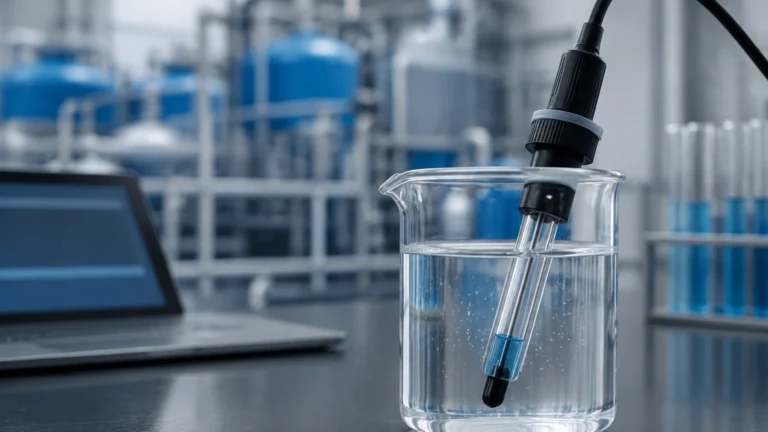
This contact-based method relies on the principle that the pressure at the bottom of a liquid column is directly proportional to its height. Using the formula $P = \rho \cdot g \cdot h$ (where $P$ is pressure, $\rho$ is density, $g$ is gravity, and $h$ is height), the sensor converts the measured pressure into a level reading. This is highly effective for vented tanks and deep wells.
Navigating Digital Configuration and the Vega Store Interface
The utility of a vega store lies in its ability to bridge the gap between theoretical engineering and physical hardware. When an engineer accesses such a platform, the process typically follows a structured workflow designed to minimize selection errors.
1. Instrument Selection: Users choose the base technology (e.g., Radar, Guided Wave Radar, or Pressure).
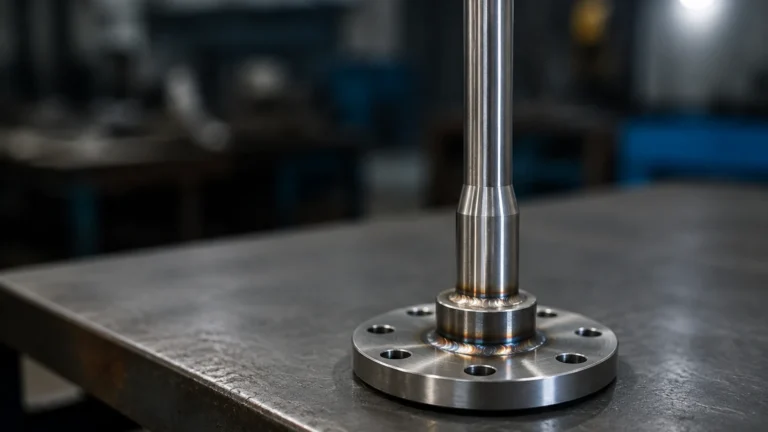
2. Process Connection: Selecting the appropriate flange or thread size (e.g., DN80, 1.5" NPT) to match the vessel's mounting point.
3. Housing and Electronics: Choosing between plastic, aluminum, or stainless steel housings based on the corrosivity of the environment and selecting the output signal (4…20 mA, HART, Profibus, or Modbus).
4. Seal and Antenna Material: For chemical applications, selecting PTFE, PEEK, or specialized elastomers is vital for chemical compatibility.
By utilizing these digital tools, engineers can generate a precise model code that ensures the device arriving on-site is exactly what the process requires. For those looking to compare these high-end solutions with other industrial-grade alternatives, reviewing the Main Page of specialized manufacturers can provide additional context on cost-effectiveness and lead times.
Key Selection Criteria for Industrial Level Instruments
When evaluating instruments in a vega store or a technical catalog, several critical factors must be confirmed to avoid premature device failure or inaccurate data.
Media Characteristics
* Dielectric Constant ($ε_r$): For radar measurement, the reflectivity of the medium is determined by its dielectric constant. Materials with low $ε_r$ (like hydrocarbons) reflect less energy than those with high $ε_r$ (like water), requiring more sensitive electronics.
* Viscosity and Coating: Highly viscous liquids can coat the sensor antenna, leading to "ghost" echoes. In these cases, sensors with encapsulated antennas or self-cleaning properties are necessary.
Process Conditions
* Temperature: Standard sensors typically operate up to 80°C (176°F), but high-temperature versions can withstand up to 450°C (842°F) using specialized cooling fins or ceramic seals.
* Pressure: Sensors must be rated for the maximum vessel pressure, which can range from vacuum conditions to over 160 bar (2320 psi).
Comparative Analysis of Level Measurement Technologies
The following table provides a practical engineering reference for comparing the technologies often found in a vega store or industrial catalogs.
| Technology | Typical Accuracy | Max Range | Media Suitability | Key Limitation |
| :— | :— | :— | :— | :— |
| 80 GHz Radar | ±1 mm | 120 m | Liquids, Solids, Powders | High initial cost |
| Ultrasonic | ±0.2% of range | 25 m | Water, Wastewater | Affected by foam/vapor |
| Hydrostatic | ±0.1% of span | 250 m | Clean Liquids, Slurries | Requires constant density |
| Guided Wave Radar | ±2 mm | 75 m | Liquids, Interface | Contact-based; prone to buildup |
| Magnetic Gauge | ±5 mm | 6 m | Hazardous Liquids | Mechanical moving parts |

Installation Guidelines and Best Practices
Even the most advanced sensor configured via a vega store will fail if installation guidelines are ignored. Proper mounting is the most significant factor in instrument performance.
Radar and Ultrasonic Mounting
* Nozzle Geometry: The nozzle should be as short as possible. If the nozzle is too long, the signal may reflect off the internal walls of the pipe before reaching the medium.
* Obstruction Avoidance: The beam must have a clear path to the surface. Avoid mounting the sensor directly above ladders, pipes, or inflow streams.
* Dead Zone (Blocking Distance): Every non-contact sensor has a minimum distance it cannot measure (the "dead zone"). Ensure the maximum fill level of the tank does not enter this zone.
Hydrostatic Mounting
* Positioning: Submersible transmitters should be placed in an area with minimal turbulence. In tanks with agitators, a stilling well (a perforated pipe) should be used to protect the sensor from mechanical stress.
Limitations and Operational Constraints
While the products found in a vega store are highly sophisticated, they are not universal solutions. Engineers must be aware of the following limitations:
1. Heavy Foam: Thick, dense foam can absorb radar and ultrasonic signals, leading to signal loss. In these instances, a guided wave radar or a hydrostatic transmitter is often a more reliable choice.
2. Vacuum Conditions: Ultrasonic waves cannot travel through a vacuum. For vacuum distillation columns, radar or pressure-based measurement is mandatory.
3. Rapid Density Changes: Hydrostatic sensors assume a constant density. If the liquid density changes due to temperature fluctuations or chemical mixing, the level reading will drift unless compensated by a PLC or a secondary sensor.
Frequently Asked Questions (FAQs)
Q: Can I use a radar sensor for both solids and liquids?
A: Yes, but the configuration differs. Sensors for solids often require higher power and specialized signal processing to account for the uneven surface and dust typical in silos. Digital stores usually allow you to specify the application type during configuration.
Q: What is the benefit of 80 GHz radar over 26 GHz?
A: The main benefit is the beam angle. An 80 GHz sensor has a much narrower beam, allowing it to be used in smaller tanks or tanks with many internal obstructions without interference.
Q: How do I handle signal loss in tall, narrow silos?
A: In tall silos, signal attenuation can be an issue. Using a high-gain antenna and ensuring the sensor is mounted perfectly vertical is essential. For extremely difficult solids, guided wave radar (GWR) is often preferred as the signal follows a cable or rod.
Q: Are the sensors in a vega store pre-calibrated?
A: Most industrial sensors are factory-calibrated to a standard range. However, on-site commissioning is always recommended to map out tank echoes and set the zero/span points relative to the specific vessel geometry.
Conclusion
Selecting the right level measurement solution requires a balance of theoretical knowledge and practical configuration. Tools like the vega store simplify the procurement process, but the responsibility for technical validation remains with the engineer. By understanding the measurement principles of radar, ultrasonic, and hydrostatic systems, and by following strict installation protocols, industrial facilities can achieve high levels of accuracy and safety. For further technical specifications and a broader range of industrial measurement options, professionals are encouraged to explore the Main Page for detailed product documentation and application support.