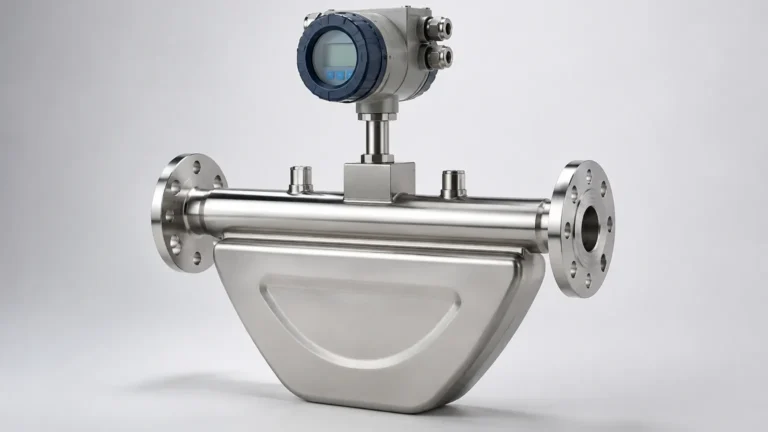
Vegaway
Vegaway
In the landscape of modern industrial automation, the ability to monitor fluid and solid levels remotely has transitioned from a luxury to a fundamental operational requirement. Technologies like Vegaway represent a critical link in the Industrial Internet of Things (IIoT) chain, serving as communication bridges that connect field-level sensors to cloud-based monitoring platforms. For process engineers and facility managers, understanding how these gateways interface with primary measurement instruments—such as radar level meters and ultrasonic sensors—is essential for building a resilient data architecture.
This guide explores the technical foundations of remote level monitoring, the integration of communication modules like Vegaway, and the practical considerations for selecting and installing these systems in demanding industrial environments.
Understanding Remote Communication in Level Measurement
At its core, a remote monitoring system consists of three primary layers: the sensing layer, the transmission layer, and the application layer. The sensing layer involves the physical instrument (e.g., a radar level transmitter) that detects the level of the medium. The transmission layer, where solutions like Vegaway operate, is responsible for capturing the signal from the sensor and transmitting it via wireless or wired protocols to a centralized server.
The Role of the Gateway
Gateways serve as translators. Most industrial level sensors output a standard 4-20mA analog signal or a digital HART protocol. While these are excellent for local control loops (PLCs), they are not natively designed for long-distance internet transmission. A gateway captures these signals and converts them into web-friendly formats, often utilizing cellular networks (LTE-M, NB-IoT) or local wireless networks (Bluetooth, LoRaWAN) to push data to a dashboard.
Data Visualization and Management
Once the data is transmitted, it is processed at the application layer. This allows users to view real-time tank levels, historical trends, and alarm statuses from any location. For many organizations, the primary goal is to optimize logistics—such as scheduling chemical refills or monitoring remote water reservoirs—without the need for manual on-site inspections.
Core Measurement Principles for Connected Systems
Before implementing a communication bridge, one must select the appropriate measurement technology. The reliability of the data provided by a system like Vegaway is entirely dependent on the accuracy of the underlying sensor. As a professional manufacturer, Welk emphasizes that the choice of sensor must align with the physical properties of the medium and the vessel environment.
Radar Level Measurement (FMCW)
Frequency Modulated Continuous Wave (FMCW) radar is the gold standard for high-precision applications. The sensor emits a continuous radar signal with a changing frequency. The difference between the emitted and received frequency is proportional to the distance. Radar is unaffected by temperature fluctuations, pressure, or dust, making it ideal for bitumen, aggressive chemicals, or large silos.
Ultrasonic Level Sensing
Ultrasonic sensors operate on the Time-of-Flight (ToF) principle. The transducer emits an ultrasonic pulse that reflects off the surface of the medium. By measuring the time it takes for the echo to return, the sensor calculates the distance. This is a cost-effective, non-contact solution for water treatment and open-channel flow, though it can be sensitive to heavy foam or significant vapor layers.
Hydrostatic Pressure
Hydrostatic transmitters measure the pressure exerted by a liquid column. Since pressure is directly proportional to the height of the liquid and its density, this method is highly effective for vented tanks and deep wells. It is a contact-based method, requiring the sensor to be submerged or mounted at the bottom of the vessel.
Selection Criteria for Remote Level Monitoring Solutions
Choosing the right combination of sensor and gateway requires a detailed analysis of the application. The following table provides a comparison of common configurations used in conjunction with remote monitoring platforms.
| Application | Recommended Sensor | Communication Protocol | Typical Range (Metric) | Key Advantage |
| :— | :— | :— | :— | :— |
| Chemical Storage | 80GHz Radar | HART to Cellular Gateway | Up to 30m | High chemical resistance |
| Water Reservoirs | Ultrasonic | LoRaWAN / NB-IoT | 0.25m – 15m | Low power consumption |
| Fuel Tanks | Hydrostatic | Bluetooth / LTE-M | 0m – 20m | Simple installation |
| Grain Silos | High-Frequency Radar | Modbus to Gateway | Up to 120m | Penetrates heavy dust |
| Waste Water | Ultrasonic | 4-20mA to Wireless Bridge | 0.5m – 10m | Non-contact, low maintenance |
When evaluating a Main Page for product specifications, engineers should prioritize compatibility between the sensor's output and the gateway's input requirements.

Installation Best Practices for Wireless Gateways
The physical installation of a communication module like Vegaway is as critical as the sensor calibration. Improper placement can lead to signal dropouts, data loss, and increased battery drain.
Signal Optimization and Antenna Placement
Wireless signals, particularly those in the gigahertz range used by cellular and Bluetooth systems, are easily obstructed by metal structures.
1. Line of Sight: Whenever possible, mount the gateway or its external antenna with a clear line of sight to the nearest cell tower or receiver.
2. Avoid Enclosures: Do not place a wireless gateway inside a thick-walled metal control cabinet unless an external antenna is used. The metal acts as a Faraday cage, blocking all signals.
3. Height Matters: Elevating the antenna by just 1 or 2 meters (3.3 to 6.6 ft) can significantly improve signal propagation in industrial yards.
Power Supply Considerations
Remote sites often lack access to the power grid. Many gateways are designed for battery or solar operation.
* Update Intervals: To extend battery life, configure the system to transmit data every 15 to 60 minutes rather than every few seconds.
* Solar Integration: In regions with adequate sunlight, a small 10W or 20W solar panel can provide indefinite power for both the sensor and the gateway.
Sensor Integration
Ensure the sensor is mounted according to its specific requirements. For radar and ultrasonic sensors, this means avoiding the "dead zone" (the area immediately below the sensor where measurement is impossible) and ensuring the beam does not hit internal tank obstructions like ladders or agitators.
Limitations and Operational Challenges
While technologies like Vegaway offer significant advantages, they are not without limitations. Engineering teams must account for these factors during the design phase.
1. Latency: Remote monitoring via cellular networks is not suitable for high-speed safety shutdowns. There is an inherent delay (latency) between the measurement and the data appearing on the dashboard. Local control loops should always handle emergency stops.
2. Environment Extremes: While many gateways are rated IP66 or IP67, extreme temperatures (below -40°C or above +80°C) can affect battery chemistry and electronic components. In such cases, specialized thermal housing may be required.
3. Data Security: Any device connected to the internet is a potential entry point for cyber threats. Ensure the gateway supports modern encryption standards (TLS/SSL) and that the cloud platform offers robust user authentication.
4. Medium Characteristics: Remote systems can sometimes misinterpret data if the medium changes density or if heavy foam develops unexpectedly. Regular validation of the sensor's performance is necessary.
Frequently Asked Questions (FAQ)
What is the maximum distance between a sensor and a gateway?
For wired connections (4-20mA), the distance can typically reach up to 1,000 meters (approx. 3,280 ft) using shielded twisted-pair cable. For wireless Bluetooth connections used for local configuration, the range is usually limited to 10-15 meters (33-49 ft).
Can I use Vegaway with third-party sensors?
Most communication gateways are designed to be versatile. If a sensor provides a standard 4-20mA or HART output, it can generally be integrated with a gateway, provided the power requirements and signal mapping are correctly configured.
How does weather affect wireless level transmission?
Heavy rain or snow can attenuate (weaken) wireless signals, particularly at higher frequencies. However, most modern industrial gateways use robust modulation techniques to ensure data reaches its destination even in poor weather conditions.
Is it possible to monitor solids with these systems?
Yes. Radar level meters are particularly effective for solids like grain, plastic pellets, or ores. When paired with a remote gateway, they provide excellent inventory management capabilities for large-scale storage facilities.
What maintenance is required for a remote monitoring setup?
Maintenance is generally minimal. It includes checking battery levels (if applicable), ensuring the sensor face is free from buildup, and verifying that the antenna connections remain tight and corrosion-free. Software updates for the gateway's firmware should also be performed periodically to ensure security and performance.
By carefully selecting the primary measurement technology and integrating it with a robust communication bridge, industrial operators can achieve a high level of transparency in their processes. Whether the goal is to prevent tank overfills or to streamline supply chain logistics, the combination of accurate sensing and reliable data transmission is the key to success.