Vibrating Fork
Vibrating Fork
In the landscape of industrial automation and process control, the vibrating fork level switch stands as one of the most reliable and versatile instruments for point level detection. Often referred to as a tuning fork sensor, this device is utilized across diverse industries—from water treatment and chemical processing to food production and oil and gas—to prevent tank overfills, manage pump protection, and indicate empty states in pipes or vessels.
Unlike continuous level measurement technologies like radar or ultrasonic sensors, the vibrating fork is designed specifically for high-level or low-level switching. Its robustness stems from a lack of moving parts that are prone to mechanical wear, making it a preferred choice for engineers seeking long-term stability in demanding environments.
Understanding the Vibrating Fork Measurement Principle
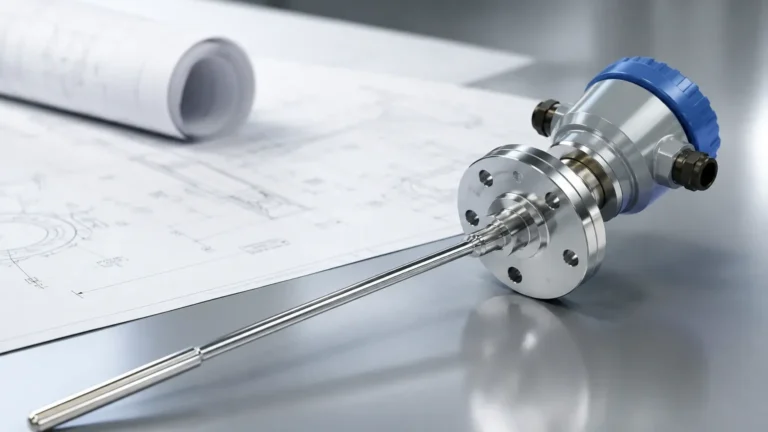
The operation of a vibrating fork is based on the principle of change in vibration frequency. The sensor consists of two tines (the "fork") that are energized by internal piezoelectric crystals. These crystals cause the tines to vibrate at their natural resonance frequency in the air.
The Frequency Shift
When the medium—whether a liquid or a granular solid—reaches the level of the sensor and covers the tines, the frequency of the vibration changes significantly. In liquids, the mass of the fluid surrounding the tines dampens the vibration, causing the frequency to drop. In solids, the mechanical resistance of the material against the tines performs a similar damping function.
The internal electronics of the sensor continuously monitor this frequency. Once the shift crosses a predefined threshold, the device triggers an output signal, typically a relay, transistor, or current change (8/16mA). This signal is then used to stop a pump, close a valve, or trigger an alarm in the control room.
Material Sensitivity
One of the primary advantages of the vibrating fork principle is its relative independence from the physical properties of the medium. Because it relies on mechanical vibration rather than electrical conductivity or dielectric constants, it remains effective in applications where the liquid's density, viscosity, or chemical composition might fluctuate. However, the medium must have a minimum density (typically measured in g/cm³ or kg/m³) to provide sufficient damping for the electronics to detect the change.
Key Technical Specifications and Selection Criteria
Selecting the correct vibrating fork requires an understanding of the process environment. While these sensors are highly adaptable, certain parameters must be verified to ensure compatibility and accuracy.
Density and Viscosity
Most industrial vibrating forks are designed for liquids with a density greater than 0.5 g/cm³ (500 kg/m³). For very light fluids or liquefied gases, high-sensitivity versions may be required. Viscosity also plays a role; while forks can handle relatively viscous liquids (up to 10,000 mm²/s), extremely sticky substances that create a permanent bridge between the tines can cause false readings.
Wetted Materials
The fork tines are in direct contact with the process medium. Stainless steel (SS304 or SS316L) is the standard material due to its corrosion resistance and mechanical strength. In highly corrosive chemical environments, specialized coatings like PFA or ECTFE, or high-performance alloys like Hastelloy, are utilized to prevent chemical attack.
Selection Table: Application Suitability
| Parameter | Liquid Applications | Solid/Powder Applications |
| :— | :— | :— |
| Minimum Density | > 0.5 g/cm³ | > 0.01 g/cm³ (High sensitivity) |
| Max Viscosity | Up to 10,000 cP | N/A |
| Pressure Range | Up to 64 bar (standard) | Up to 10 bar |
| Temperature | -50°C to +150°C (standard) | -40°C to +80°C |
| Typical Use | Overfill prevention, pump dry-run | Silo high-level, hopper blockage |
Installation Guidelines for Optimal Performance
Proper installation is critical to the longevity and reliability of a vibrating fork sensor. Incorrect orientation can lead to material buildup or mechanical stress on the tines.
Orientation and Positioning
* Side Mounting: This is the most common installation for high or low-level alarms. The fork should be oriented so that the tines are vertical (side-by-side) rather than horizontal (one above the other). This prevents the medium from resting on the flat surface of the tines, which could lead to false "covered" signals even after the level has dropped.
* Top Mounting: Used for high-level detection or overfill protection. The sensor is installed vertically through the top of the tank. For low-level detection from the top, extension pipes are used to reach the desired switching point.
* Pipe Mounting: In small-diameter pipes, the fork must be positioned so that it does not obstruct flow or cause a significant pressure drop. It is often installed in a T-junction.
Avoiding Mechanical Interference
The sensor should be placed away from the tank inlet to avoid the direct impact of falling material, which can damage the tines or cause intermittent false signals. If the sensor must be placed near an inlet, a protective baffle or shield should be installed above the fork. Furthermore, the tines must have sufficient clearance from the tank wall to prevent material from bridging between the wall and the sensor.
Industrial Applications and Use Cases
The vibrating fork is a staple in process automation due to its "fit and forget" nature. Below are common industrial scenarios where these sensors excel.
Water and Wastewater Treatment
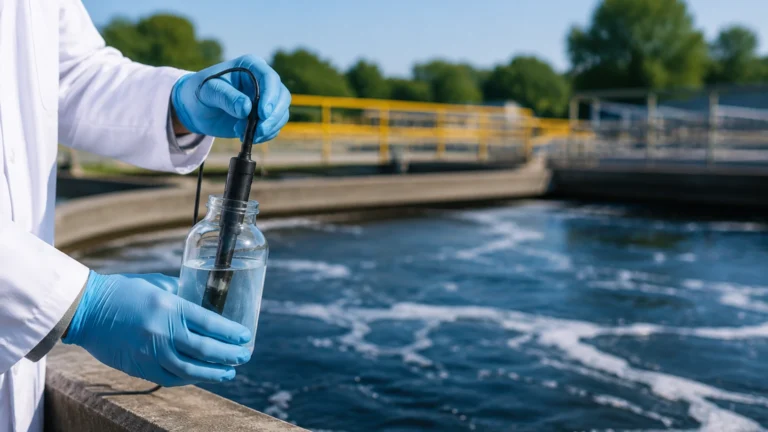
In water treatment plants, vibrating forks are used to protect pumps from dry-running. By installing a sensor on the suction side of the pump, the system can be automatically shut down if the water level drops below the fork, preventing expensive damage to the pump seals and motor. They are also used in chemical dosing tanks to ensure that reagents are always available.
Chemical and Petrochemical Industry
Because many chemicals are hazardous or flammable, overfill prevention is a legal and safety requirement. Vibrating forks with explosion-proof certifications (ATEX/IECEx) are used in storage tanks for solvents, acids, and fuels. Their ability to operate reliably in the presence of foam or turbulence makes them superior to ultrasonic switches in these environments.
Food and Beverage Production
In the food industry, hygiene is paramount. Vibrating forks with polished stainless steel surfaces and hygienic process connections (such as Tri-Clamp or Varivent) are used in mixing tanks for syrups, oils, and dairy products. They are capable of withstanding Clean-In-Place (CIP) and Steam-In-Place (SIP) cycles, which involve high temperatures and aggressive cleaning agents.

Comparison with Alternative Level Switching Technologies
When designing a level control system, engineers often compare the vibrating fork with other point-level technologies. Understanding the trade-offs is essential for selecting the right tool.
Vibrating Fork vs. Float Switches
Float switches are mechanical devices that rely on buoyancy. While inexpensive, they are prone to jamming if the liquid contains solids or if the medium crystallizes. The vibrating fork has no moving parts to jam, making it significantly more reliable in "dirty" applications.
Vibrating Fork vs. Capacitance Switches
Capacitance switches measure the change in electrical capacitance between the probe and the tank wall. They are sensitive to changes in the dielectric constant of the medium and can be affected by material buildup on the probe. The vibrating fork is generally more immune to buildup (unless it bridges the tines) and does not require recalibration if the liquid type changes.
Vibrating Fork vs. Ultrasonic Switches
Ultrasonic switches use sound waves to detect the presence of a medium. They can struggle in applications with heavy foam, which absorbs the sound signal, or in vacuum conditions where sound cannot travel. The vibrating fork is mechanical and remains unaffected by foam or vacuum.
Maintenance and Troubleshooting
While vibrating forks are low-maintenance, periodic checks ensure continued safety, especially in SIL (Safety Integrity Level) rated loops.
1. Visual Inspection: Check for signs of corrosion or physical damage to the tines. Even small nicks can alter the resonance frequency.
2. Cleaning: If the application involves sticky or coating media, the tines should be cleaned periodically. Use a soft brush or appropriate solvent; do not use abrasive tools that could scratch the surface.
3. Function Test: Most modern vibrating forks include a test magnet or a button on the electronic insert that allows for a manual simulation of the switch state without needing to fill the tank.
4. Wiring Check: Ensure that cable glands are tight to prevent moisture ingress into the housing, which is a common cause of electronic failure.
For engineers seeking detailed specifications on specific models or custom OEM solutions, visiting the Main Page provides a comprehensive overview of available instrumentation and technical support for complex applications.
Frequently Asked Questions (FAQ)
Q: Can a vibrating fork be used in aerated liquids or foam?
A: Yes. One of the strengths of the vibrating fork is its ability to distinguish between the liquid and the foam. It will typically only trigger when the liquid phase reaches the tines, although very dense foam may occasionally cause a trigger depending on the sensitivity settings.
Q: What happens if material builds up on the tines?
A: Most vibrating forks are designed to be self-cleaning to an extent, as the vibration tends to shed material. However, if a solid bridge forms between the two tines, the sensor will remain in the "covered" state. Selecting a fork with a wider tine gap can help in high-buildup applications.
Q: Is calibration required for different liquids?
A: Generally, no. Most vibrating forks are factory-calibrated to work with any liquid above a certain density. Some models feature a sensitivity switch (High/Low) to allow for adjustment if the medium is particularly light or if there is heavy turbulence.
Q: Can these sensors be used for solids?
A: Yes, there are specific vibrating forks designed for solids. These usually have larger, more robust tines to handle the mechanical impact of grains, powders, or granules. The electronics are also tuned to the specific frequency shifts associated with solid materials.
Q: How do I handle high-temperature applications?
A: For processes exceeding 150°C, sensors with extended necks or high-temperature electronic inserts are used. These move the sensitive electronics away from the heat source, allowing the fork to operate in temperatures up to 250°C or higher in specialized configurations.
By following these technical guidelines and understanding the mechanical nature of the vibrating fork, process engineers can implement a level switching solution that ensures safety, efficiency, and minimal downtime in industrial operations.