Volumetric Flow Meter
Volumetric Flow Meter
Volumetric flow measurement is a cornerstone of industrial process control, providing critical data for billing, dosing, and system monitoring. A volumetric flow meter is an instrument designed to measure the volume of a fluid—liquid or gas—that passes through a specific cross-sectional area per unit of time. Unlike mass flow meters, which measure the weight or mass of the substance, volumetric meters focus on the space the fluid occupies, typically measured in cubic meters per hour (m³/h), liters per minute (L/min), or gallons per minute (GPM).
Understanding the nuances of different volumetric flow technologies is essential for engineers and plant managers. Selecting the wrong instrument can lead to significant inaccuracies due to changes in fluid viscosity, temperature, or pressure. This guide explores the principles, applications, and selection criteria for volumetric flow meters within professional industrial environments.
Measurement Principles: How Volumetric Flow is Calculated
Before selecting a meter, it is vital to understand the two primary methods used to determine volumetric flow: direct measurement and indirect (velocity-based) measurement.
Direct Volumetric Measurement (Positive Displacement)
Positive displacement (PD) meters operate by trapping a fixed, known volume of fluid and moving it through the meter. The total volume is calculated by counting the number of times these discrete volumes are transferred. Because this method physically separates the fluid into "packets," it is highly accurate and relatively unaffected by turbulence or viscosity changes compared to velocity-based methods.
Indirect Volumetric Measurement (Velocity-Based)
The majority of modern industrial meters calculate volume indirectly. They measure the velocity ($v$) of the fluid moving through a pipe with a known cross-sectional area ($A$). The volumetric flow rate ($Q$) is then derived using the continuity equation:
$$Q = A \times v$$
Technologies such as turbine, electromagnetic, ultrasonic, and vortex meters all rely on this principle. The accuracy of these meters depends heavily on the flow profile being stable and predictable, which is why installation requirements often specify long straight pipe runs.
Primary Types of Volumetric Flow Meters
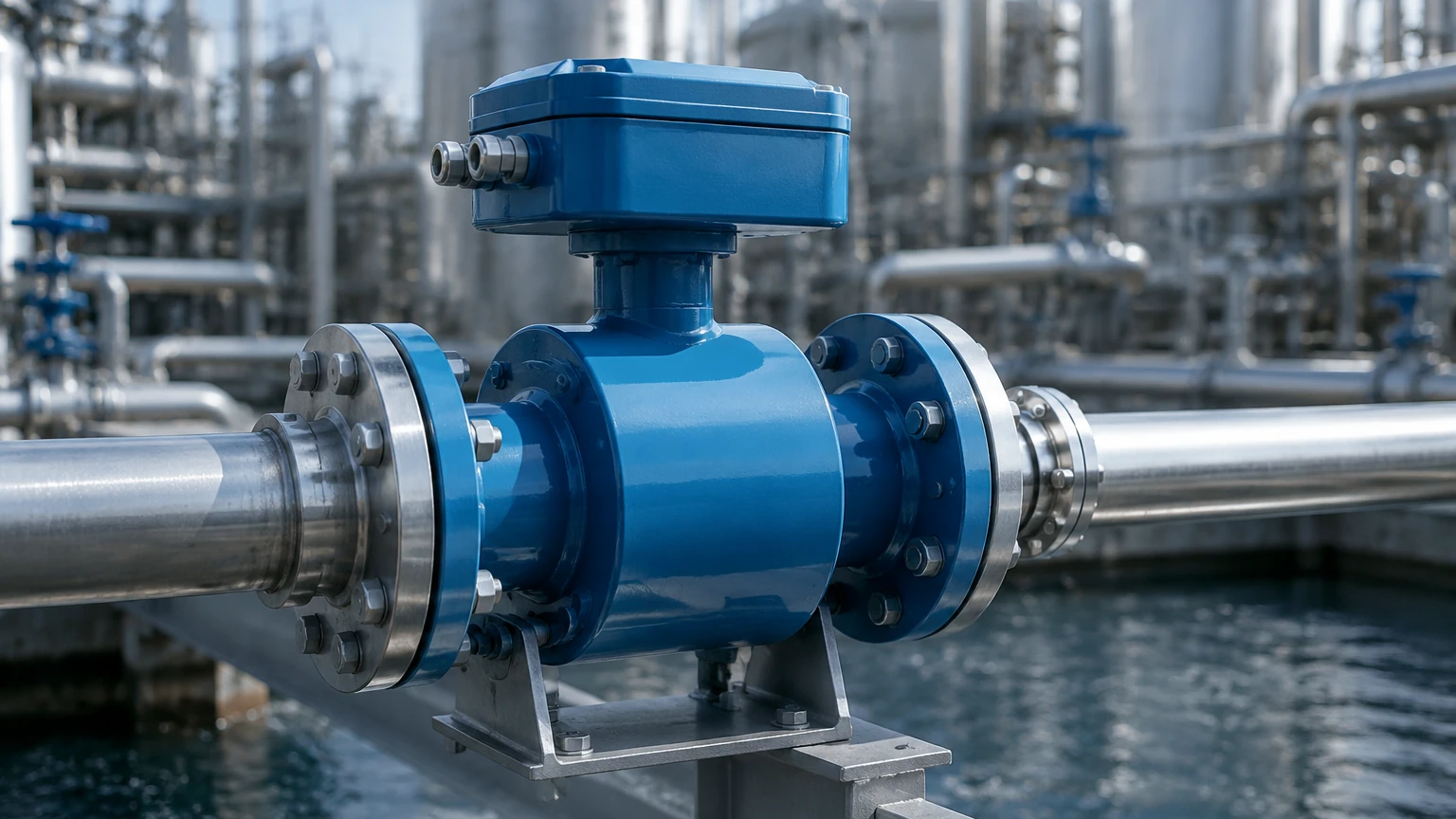
1. Electromagnetic Flow Meters (Mag Meters)
Electromagnetic meters operate on Faraday’s Law of Induction. When a conductive liquid flows through a magnetic field generated by the meter, it produces a voltage proportional to its velocity.
* Best For: Conductive liquids, slurries, and corrosive chemicals.
* Limitations: Cannot measure non-conductive fluids like oils, deionized water, or gases.
* Key Advantage: No moving parts and no pressure drop.
2. Ultrasonic Flow Meters
These meters use sound waves to determine fluid velocity. There are two main types:
* Transit-Time: Measures the time difference between ultrasonic pulses sent upstream and downstream. It is ideal for clean liquids.
* Doppler: Measures the frequency shift of sound waves reflecting off particles or bubbles in the fluid. It is designed for dirty or aerated liquids.
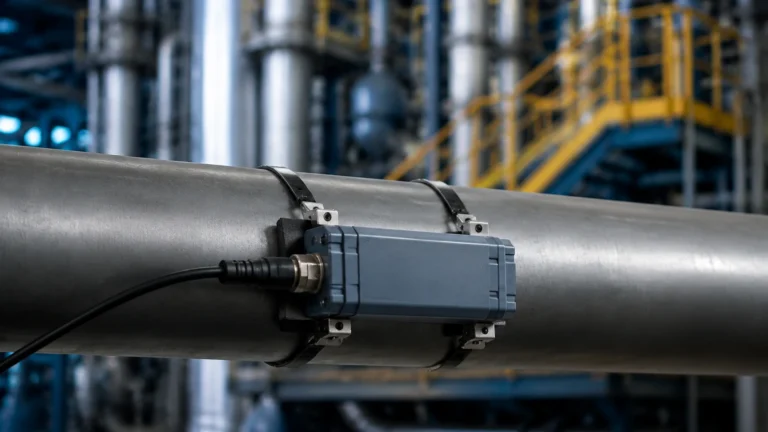
Ultrasonic technology is often available in "clamp-on" configurations, allowing for measurement without cutting into the pipeline.
3. Turbine Flow Meters
A turbine meter features a multi-bladed rotor mounted perpendicular to the flow. As fluid passes through, it spins the rotor. The rotational speed is proportional to the fluid velocity. These meters are prized for their high accuracy in low-viscosity fluids like water, solvents, and light oils.
4. Vortex Shedding Meters
Vortex meters place a "bluff body" (a shedder bar) in the flow stream. As fluid hits the bar, it creates alternating vortices (eddies). The frequency at which these vortices are shed is directly proportional to the fluid velocity. These are robust instruments commonly used for steam, high-temperature gases, and low-viscosity liquids.
5. Positive Displacement (PD) Meters
Common designs include oval gear, nutating disc, and rotary piston meters. These are the "gold standard" for measuring highly viscous fluids like oils, syrups, and fuels where velocity-based meters might struggle with laminar flow profiles.
The Relationship Between Level Measurement and Volumetric Flow
In many industrial scenarios, particularly in water treatment and environmental monitoring, volumetric flow is measured in open channels (flumes or weirs) rather than closed pipes. In these applications, the volumetric flow meter is actually a combination of a primary device (the flume) and a level measurement instrument.
As the fluid passes through a flume of a specific geometry, the height (head) of the liquid correlates to a specific flow rate. Professional level measurement technologies, such as ultrasonic level sensors or radar level meters, are used to monitor this height with high precision. The integrated electronics then apply a programmed curve (such as the Manning equation or specific flume coefficients) to convert the level reading into a volumetric flow rate.
For engineers designing these systems, reviewing advanced sensor options is a critical step. You can Review product options and application support on the Welk Main Page to see how radar and ultrasonic level sensors are integrated into flow calculation systems.
Selection Criteria: Choosing the Right Technology
Selecting a volumetric flow meter requires a detailed analysis of the process conditions. Use the following table as a preliminary screening tool:
| Technology | Fluid Type | Typical Accuracy | Viscosity Range | Pressure Drop |
| :— | :— | :— | :— | :— |
| Electromagnetic | Conductive Liquids | ±0.5% | Medium | Negligible |
| Ultrasonic | Liquids/Gases | ±1.0% | Low to Medium | None |
| Turbine | Clean Liquids/Gases | ±0.25% | Low | Moderate |
| Vortex | Steam/Gas/Liquid | ±1.0% | Low | Moderate |
| Positive Displacement | Viscous Liquids | ±0.5% | High | High |
| Open Channel (Level) | Wastewater/Water | ±2.0% to 5.0% | Low | Low |
Key Evaluation Factors
1. Fluid Conductivity: If the liquid is non-conductive (e.g., oil), electromagnetic meters are ruled out.
2. Viscosity: High-viscosity fluids can cause significant pressure drops in turbine meters and may lead to inaccuracies in vortex meters. PD meters are generally preferred here.
3. Particulate Content: Large solids can damage turbine blades or clog PD meters. In these cases, ultrasonic (Doppler) or electromagnetic meters are superior.
4. Installation Footprint: If you cannot shut down the process to cut pipes, a clamp-on ultrasonic meter is the only viable option.
Installation Considerations and Best Practices
Even the most expensive volumetric flow meter will fail to provide accurate data if installed incorrectly. To ensure reliable performance, follow these engineering guidelines:
* Straight Pipe Runs: Most velocity-based meters require a specific length of straight pipe upstream (typically 10 to 20 diameters) and downstream (5 diameters) to eliminate turbulence caused by valves, elbows, or pumps.
* Full Pipe Requirement: For closed-pipe meters (especially Mag and Ultrasonic), the pipe must be completely full. If the pipe is only partially full, the meter will over-calculate the velocity and provide an erroneous volume reading. Installing the meter at a low point in the piping (a "U" section) can help ensure a full pipe.
* Orientation: Some meters, like PD or turbine meters, may have specific orientation requirements (horizontal vs. vertical) to prevent wear on bearings or to ensure air bubbles do not collect in the sensor chamber.
* Grounding: Electromagnetic flow meters require proper electrical grounding to the fluid to prevent stray currents from interfering with the low-voltage signal generated by the flow.
Common Risks and Limitations
Temperature and Pressure Sensitivity
Volumetric flow is highly sensitive to changes in temperature and pressure, especially in gas applications. As a gas is compressed, its volume decreases, even though the mass remains the same. If your process involves fluctuating temperatures or pressures, you must either use a "compensated" volumetric meter (which includes integrated T and P sensors) or convert the reading to "Standard" or "Normal" volume (e.g., Nm³/h).
Entrained Air and Cavitation
Air bubbles in a liquid line are a common source of error. Since the meter measures the total volume of whatever passes through it, it will count the air as liquid, leading to an artificially high reading. Furthermore, cavitation near the meter can damage internal components like turbine rotors.
Wear and Calibration
Mechanical meters (Turbine, PD) have moving parts that wear over time, especially if the fluid is abrasive. This wear changes the "K-factor" (the ratio of pulses to volume), necessitating regular recalibration against a master meter or a gravimetric weigh scale.
Frequently Asked Questions (FAQ)
Q: Can a volumetric flow meter measure mass flow?
A: Only if the density of the fluid is constant and known. By multiplying the volume ($V$) by the density ($\rho$), you can calculate mass ($m = V \times \rho$). However, if the density changes due to temperature fluctuations, the calculation will be inaccurate unless real-time compensation is used.
Q: What is the difference between "Actual" and "Standard" volume?
A: "Actual" volume refers to the space the fluid occupies at the current operating temperature and pressure. "Standard" volume is a calculated value representing what that volume would be at a reference state (typically 0°C or 15°C and 1.013 bar).
Q: Why is my ultrasonic flow meter giving erratic readings?
A: This is often due to insufficient straight pipe runs, entrained air, or an incompatible fluid. If you are using a transit-time meter on a fluid with too many solids, the signal will be blocked. Conversely, a Doppler meter will not work on high-purity deionized water.
Conclusion
Volumetric flow meters are indispensable tools in the modern industrial landscape. From the precision of positive displacement meters in oil and gas to the versatility of electromagnetic meters in water treatment, there is a solution for every application. However, successful implementation requires more than just purchasing a device; it requires a deep understanding of fluid dynamics, installation geometry, and the specific limitations of each technology.
When planning a flow measurement project, always confirm the fluid properties (viscosity, conductivity, temperature range) and the physical constraints of your piping system. For those utilizing level-based flow measurement in open channels or tanks, selecting high-quality sensors is paramount. For more information on industrial-grade measurement hardware and to consult with application experts, visit the Main Page to explore the full range of available solutions.