Anti Seize for Oxygen Sensors
Anti Seize for Oxygen Sensors
In the landscape of industrial process control, the reliability of instrumentation is paramount. Whether monitoring the liquid level in a chemical storage tank or analyzing the oxygen content in an exhaust flue, sensors must withstand extreme environmental stressors. One of the most common challenges faced by maintenance engineers is the mechanical seizure of threaded components due to high temperatures, corrosion, and pressure. This article examines the critical role of anti seize for oxygen sensors, the principles of sensor measurement, and how these maintenance practices intersect with the broader field of industrial instrumentation, including level measurement solutions provided on the Main Page.
Measurement Principles in Industrial Environments
Before addressing the mechanical maintenance of sensors, it is essential to understand the principles governing their operation. In industrial automation, sensors are the primary interface between the physical process and the control system.
Oxygen Sensor Principles
Oxygen sensors, particularly those used in industrial combustion or water treatment, typically operate on two main principles:
1. Zirconia (Zirconium Dioxide) Sensors: These are high-temperature sensors often found in flue gas analysis. They utilize a solid-state electrolyte (zirconia) that becomes conductive to oxygen ions at temperatures above 300°C (572°F). The voltage generated across the electrolyte is proportional to the difference in oxygen concentration between the process gas and a reference gas (usually ambient air).
2. Electrochemical Sensors: Common in water treatment and ambient air monitoring, these sensors use a chemical reaction to produce an electrical current. Oxygen diffuses through a membrane and is reduced at a cathode, creating a flow of electrons proportional to the oxygen partial pressure.
Level Measurement Principles
Similarly, level measurement instruments utilize diverse physical principles to determine the volume or height of media in a vessel:
* Radar Level Meters: These devices emit high-frequency electromagnetic waves (typically in the GHz range). The waves reflect off the surface of the medium and return to the sensor. By measuring the time-of-flight or the frequency shift (FMCW), the instrument calculates the distance with millimeter precision. This technology is non-contact and highly resistant to changes in temperature or pressure.
* Ultrasonic Level Sensors: These use sound waves rather than electromagnetic waves. They are cost-effective for liquid level measurement in open channels or atmospheric tanks, though they are more sensitive to air temperature fluctuations and vapor layers than radar.
* Hydrostatic Transmitters: These measure the pressure exerted by a liquid column. Based on the density of the fluid, the transmitter converts the pressure reading into a level measurement. This is a contact-based method widely used in water and wastewater applications.
The Role of Anti Seize for Oxygen Sensors
Oxygen sensors are frequently installed in high-heat environments, such as exhaust manifolds, boilers, and industrial kilns. Over time, the metallic threads of the sensor and the mounting boss can undergo "galling" or cold welding. This occurs when the protective oxide layer on the metal surfaces is rubbed away under pressure, allowing the metal atoms to bond across the interface.
Anti seize for oxygen sensors is a specialized lubricant designed to prevent this permanent bonding. However, unlike standard industrial lubricants, anti-seize compounds for sensors must be carefully selected to avoid "poisoning" the sensor element. If a lubricant contains volatile silicone or certain heavy metals, these substances can migrate to the sensor tip, coating the electrode and rendering the measurement inaccurate or the sensor completely non-functional.
Why Anti-Seize is Essential
* Ease of Maintenance: It allows for the removal of sensors without damaging the threads of the expensive mounting boss or the sensor itself.
* Corrosion Protection: It creates a barrier against moisture and corrosive gases that can penetrate the thread interface.
* Conductivity: Some anti-seize compounds are formulated to maintain electrical continuity between the sensor body and the exhaust system, which is critical for sensors that use the body as a ground.
Evaluation Criteria for Anti-Seize Compounds
When selecting an anti seize for oxygen sensors, engineering teams must evaluate several technical factors to ensure compatibility with both the mechanical hardware and the sensing technology.
1. Temperature Rating
Industrial oxygen sensors in combustion processes may encounter temperatures exceeding 600°C (1112°F). The anti-seize base oil will eventually evaporate at these temperatures, leaving behind solid lubricating particles (such as graphite, copper, or nickel). The compound must be rated for the maximum expected process temperature to prevent the solids from sintering and locking the threads.
2. Chemical Compatibility (Sensor Poisoning)
This is the most critical factor. Standard anti-seize often contains silicone, which is a known poison for zirconia-based oxygen sensors. When silicone burns, it forms a silica (glass) coating over the sensor's ceramic element, blocking oxygen ions from reaching the electrode. Engineers should look for products explicitly labeled as "sensor safe."
3. Material of the Threads
If the sensor is made of stainless steel and the mounting boss is also stainless steel, the risk of galling is significantly higher. In these cases, a nickel-based or high-purity graphite compound is often preferred over copper to prevent galvanic corrosion or chemical reactions at high temperatures.
Practical Selection Table for Sensor Lubricants
The following table provides a comparison of common anti-seize types used in industrial instrumentation environments.
| Type | Base Solids | Max Temperature | Best Use Case | Risk Factors |
| :— | :— | :— | :— | :— |
| Copper-Based | Copper flakes, Graphite | 980°C (1800°F) | General high-heat exhaust | Potential for galvanic corrosion with certain alloys. |
| Nickel-Based | Nickel flakes, Graphite | 1,315°C (2400°F) | Stainless steel to stainless steel | Nickel is a carcinogen; requires strict PPE handling. |
| Graphite-Based | High-purity Graphite | 450°C (842°F) | General purpose, non-conductive | Lower temperature limit than metallic versions. |
| Glass/Ceramic | Ceramic microspheres | 1,600°C (2900°F) | Extreme high-heat industrial kilns | Often more expensive; may not provide electrical ground. |
| Sensor-Safe | Varies (often Graphite/Copper) | Varies | Automotive and industrial O2 sensors | Must be verified silicone-free to prevent poisoning. |
Installation Considerations and Best Practices
Proper application of anti seize for oxygen sensors is as important as the selection of the compound itself. Improper application can lead to sensor failure or incorrect readings.
Application Technique
1. Clean the Threads: Before installation, use a wire brush or a thread chaser to remove any old anti-seize, rust, or debris from the mounting boss. This ensures an even application and prevents the new compound from clumping.
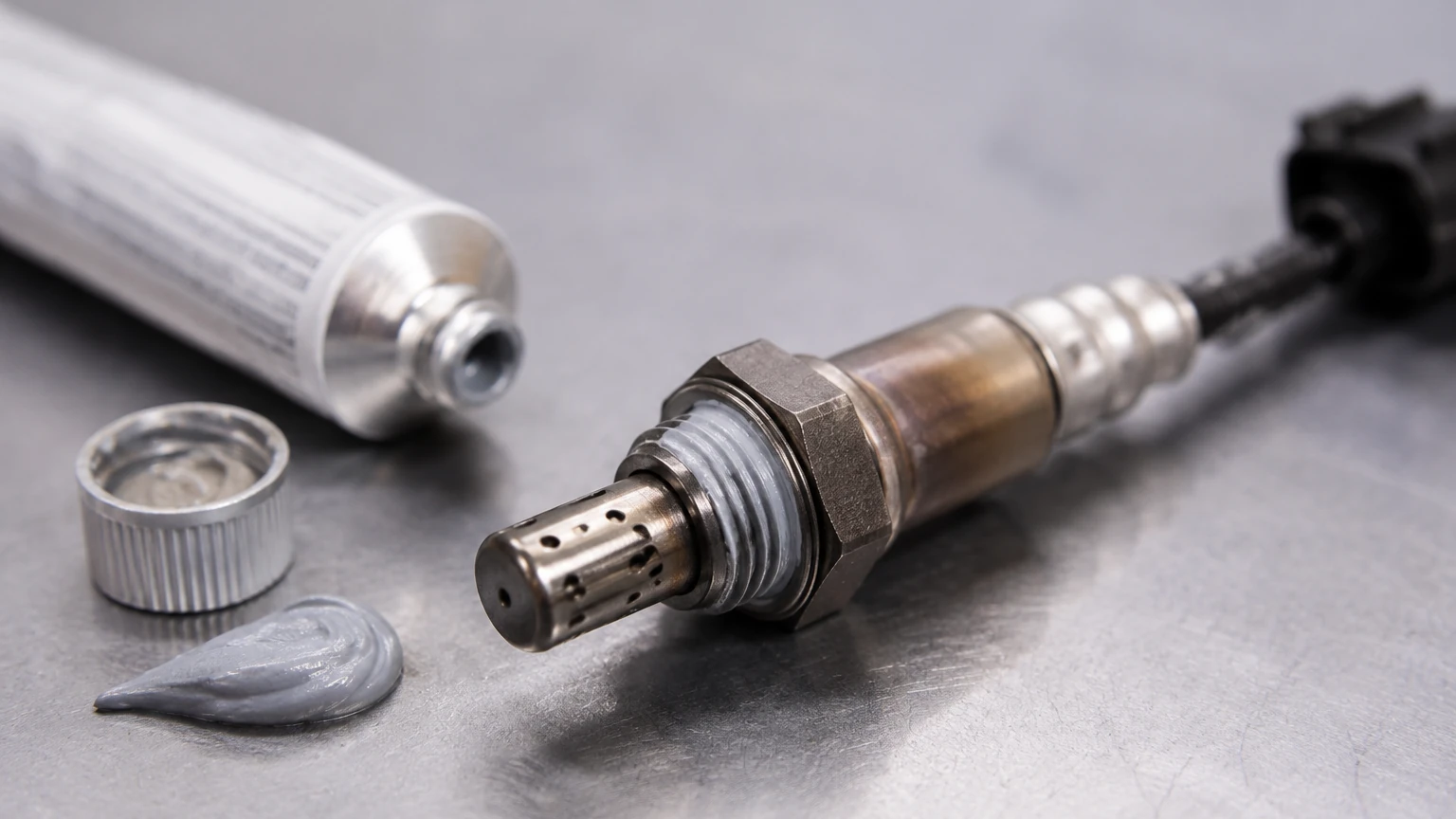
2. Apply Sparingly: Apply the anti-seize only to the threads of the sensor. A common mistake is using too much, which can cause the compound to migrate toward the sensor tip (the "nose") during installation. If the compound covers the sensor's vent holes or the ceramic element, the sensor will fail.
3. Avoid the First Thread: Leave the first one or two threads near the sensor tip clean. This provides a buffer zone to prevent the lubricant from being pushed into the process stream as the sensor is screwed in.
Torque Specifications
Over-tightening is a primary cause of thread deformation and subsequent seizing. Always follow the manufacturer's torque specifications. For a standard 18mm oxygen sensor, the torque is typically between 35 Nm and 45 Nm (approximately 25-33 lb-ft). Note that the presence of anti-seize acts as a lubricant, which reduces friction during installation; this can lead to over-torquing if using a standard torque wrench setting intended for dry threads. Many manufacturers provide "wet" torque values for this reason.
Limitations and Risks
While anti-seize is a vital tool, it is not without limitations. Engineers should be aware of the following risks:
* Electrical Interference: If an oxygen sensor relies on its housing for a ground connection, using a non-conductive ceramic-based anti-seize can increase electrical resistance. This may result in a "low voltage" signal error or erratic readings.
* Environmental Contamination: In food and beverage or pharmaceutical applications, the use of metallic anti-seize may be prohibited due to contamination risks. In these environments, food-grade lubricants or specialized level measurement technologies from the Main Page that do not require threaded immersion (such as non-contact radar) are often preferred.
* False Seating: If the anti-seize is too thick or contains large particles, it can create a false sense of tightness, leading to exhaust leaks. An exhaust leak near an oxygen sensor will introduce ambient air, causing the sensor to report a "lean" condition (high oxygen), which triggers the control system to increase fuel flow unnecessarily.
Integration with Level Measurement Systems
In many industrial settings, gas analysis and level measurement work in tandem. For example, in a wastewater anaerobic digester, level meters monitor the sludge height while oxygen and methane sensors monitor the headspace gas composition.
Maintenance cycles for these instruments should be synchronized. While the oxygen sensor requires thread lubrication, a radar level meter might require checking the antenna for condensation or material buildup. Both types of instrumentation benefit from a standardized approach to mechanical installation—ensuring that flanges are properly gasketed and threaded connections are treated to prevent long-term seizure.
Frequently Asked Questions (FAQ)
Q: Can I use copper anti-seize on all oxygen sensors?
A: Most oxygen sensors come pre-coated with a conductive copper-based anti-seize. However, if you are applying it yourself, ensure the product is labeled "sensor safe" to avoid silicone poisoning. For stainless steel housings in extreme heat, nickel-based may be superior, provided the sensor does not have specific material restrictions.
Q: What happens if I get anti-seize on the sensor tip?
A: If the compound reaches the sensing element, it will likely ruin the sensor. The oils and solids will coat the ceramic or membrane, preventing the gas from reacting with the electrodes. If this happens, the sensor usually cannot be cleaned and must be replaced.
Q: Do level meters require anti-seize?
A: Level meters with threaded connections (like ultrasonic sensors or small-diameter radar) benefit from anti-seize, especially when installed in outdoor environments or corrosive chemical tanks. However, since level meters do not reach the extreme temperatures of exhaust oxygen sensors, a wider variety of industrial anti-seize compounds can be used without the risk of "poisoning" the electronics.
Q: How often should I reapply anti-seize?
A: Anti-seize should be reapplied every time the sensor is removed for inspection or calibration. It is not a permanent coating and can degrade over several years of thermal cycling.
Conclusion
Maintaining industrial instrumentation requires a balance of chemical knowledge and mechanical precision. The use of anti seize for oxygen sensors is a small but vital part of a robust maintenance strategy, preventing costly downtime and equipment damage. By understanding the measurement principles of both gas and level sensors, and applying the correct lubricants with precision, engineers can ensure long-term accuracy and reliability in their process control systems. For further technical specifications on industrial measurement hardware, professionals are encouraged to review the comprehensive resources and product options available at the Main Page.